Drystack Stone Veneer vs Mortared: Installation & Cost Compared
Compare drystack stone veneer and traditional mortared systems. Analyze 2026 installation costs, structural performance, and best-use scenarios.

The Core Difference: Interlocking Precision vs. Traditional Masonry
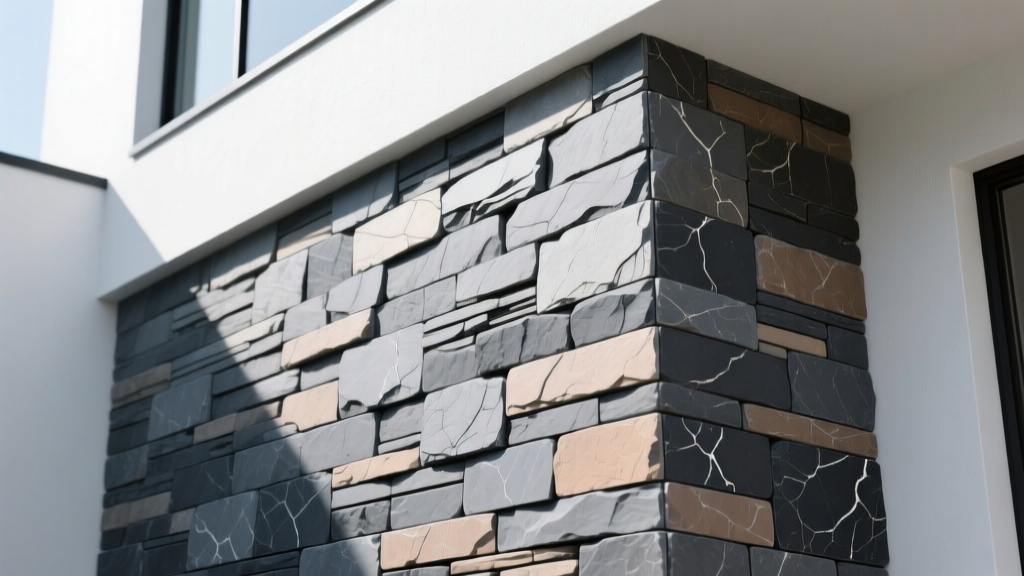
The fundamental distinction between drystack stone veneer and traditional mortared stone lies in manufacturing tolerances and joint mechanics. Drystack stone veneer relies on Z-shaped interlocking lips, shiplap edges, or precise dimensional uniformity (typically held within 1/16th of an inch) to create a seamless, mortar-less facade. Traditional mortared veneer, conversely, depends on the plastic deformation of Type N or Type S mortar to bridge dimensional gaps, secure the masonry units, and provide lateral shear resistance.
While mortared systems have dominated exterior cladding for centuries, the advent of high-density polyurethane molds and CNC-calibrated concrete casting has elevated drystack stone veneer from a niche interior product to a viable, code-compliant exterior cladding option. However, the absence of mortar fundamentally alters how the system manages structural loads, moisture ingress, and thermal expansion.
Head-to-Head Comparison Matrix
The following matrix breaks down the physical and operational differences between the two systems based on current 2026 building material specifications.
| Specification | Drystack Stone Veneer | Traditional Mortared Veneer |
|---|---|---|
| Joint Width | 0" (Tight fit / Interlocking) | 0.5" to 1.5" (Standard masonry joint) |
| Average Weight | 8 - 11 lbs per sq. ft. | 12 - 18 lbs per sq. ft. (including mortar) |
| Substrate Prep | WRB, metal lath, and precise scratch coat | WRB, metal lath, scratch coat, and mortar bed |
| Install Speed (Pro Crew) | 40 - 60 sq. ft. per man-hour | 15 - 25 sq. ft. per man-hour |
| Primary Adhesion | Construction adhesive + mechanical interlock | Mortar suction + mechanical lath embedment |
| Freeze-Thaw Vulnerability | High (if capillary wicking occurs) | Moderate (mortar joints act as sacrificial buffers) |
Cost Breakdown: The Material vs. Labor Paradox
When evaluating project budgets, contractors frequently encounter the drystack paradox: the material itself is more expensive, but the total installed cost is often lower. Manufacturing drystack profiles requires higher-grade aggregates, tighter quality control to ensure uniform thickness, and specialized coloring techniques to hide the lack of grout lines. However, the elimination of mortar mixing, troweling, pointing, and post-installation acid washing drastically reduces labor hours.
2026 National Average Cost Estimates
| Cost Category | Drystack Veneer | Mortared Veneer | Variance |
|---|---|---|---|
| Material (per sq. ft.) | $8.50 - $15.00 | $6.00 - $12.00 | Drystack is ~20% higher |
| Labor (per sq. ft.) | $4.00 - $8.00 | $12.00 - $22.00 | Drystack is ~60% lower |
| Auxiliary Supplies | $1.50 (Adhesive, lath) | $3.50 (Mortar, sand, lath) | Drystack is ~55% lower |
| Total Installed | $14.00 - $24.50 | $21.50 - $37.50 | Drystack saves ~30% |
Drystack stone veneer demands a perfectly plumb and flat substrate. Because there is no mortar bed to absorb deviations, any bowing in the framing or unevenness in the scratch coat exceeding 1/8th of an inch over 4 feet will result in visible shadow lines and failed interlocking joints. Budget an additional $1.50 to $2.50 per square foot for substrate leveling and shimming if working on older, out-of-plumb structures.
Structural Performance and Moisture Management
Adhered manufactured stone masonry veneer (AMSMV) is governed by ASTM C1670 standards, which dictate compressive strength, flexural strength, and water absorption limits. While both drystack and mortared systems must meet these baseline physical requirements, their behavior in the presence of bulk water differs significantly.
The Moisture Trap: Capillary Wicking in Drystack
In a mortared system, the mortar joints are intentionally designed to be slightly more porous and softer than the stone itself. This allows the mortar to act as a sacrificial buffer that absorbs thermal expansion and facilitates moisture evaporation. Drystack systems lack this evaporation pathway. When exposed to wind-driven rain, the tight, unmortared seams of drystack veneer can actually induce capillary wicking—drawing water sideways into the wall cavity through microscopic gaps between the stones.
To mitigate this, modern building codes mandate a continuous weather-resistive barrier (WRB), a minimum 1-inch air space (in some jurisdictions), and a corrosion-resistant weep screed at the base of the wall. As detailed in best practices outlined by Fine Homebuilding, failing to install a weep screed with a minimum 4-inch clearance from grade or 2 inches from paved surfaces will almost guarantee moisture rot in the bottom plate of the wall assembly.
Top Product Lines Compared: 2026 Market Leaders
Not all drystack profiles are created equal. The market has consolidated around a few major manufacturers who have perfected the shadow-line aesthetics required to make mortar-less joints look natural.
- Eldorado Stone (Dry-Stack Profile): Known for their 'Alderwood' and 'Chardonnay' colorways, Eldorado utilizes a proprietary shiplap edge on their larger fieldstones that completely hides the horizontal seams. Their panels require a specialized polyurethane construction adhesive applied in a continuous bead, rather than spot-bonding.
- Cultured Stone (Dressed Fieldstone): Cultured Stone focuses on a more rugged, split-face aesthetic. Their drystack equivalent relies on precise Z-lip interlocking. It is slightly heavier than Eldorado but offers superior impact resistance, making it ideal for high-traffic commercial wainscoting.
- Coronado Stone (Dry Stack): Offers the most budget-friendly entry point, utilizing a simpler butt-joint system rather than complex interlocking lips. While cheaper, it requires a highly skilled installer to maintain consistent horizontal reveals, as there is no mechanical lip to guide the placement.
Decision Framework: Which System Fits Your Project?
Selecting between drystack stone veneer and traditional mortared applications should be driven by the specific environmental and architectural constraints of the project, not just aesthetic preference.
Choose Drystack Stone Veneer When:
- Interior Accent Walls & Fireplaces: The lack of mortar eliminates the need for messy troweling, acid washing, and sealing in finished living spaces. It also reduces the overall weight load on interior floor joists.
- Tight Labor Markets: If you are in a region where skilled masons are scarce or prohibitively expensive, drystack allows competent carpenters or general contractors to achieve a high-end masonry look using standard carpentry adhesives and precision cutting.
- Modern / Contemporary Architecture: The clean, shadow-lined aesthetic of drystack perfectly complements modern stucco, fiber cement siding, and large-format glazing without the visual 'noise' of thick grout lines.
Choose Traditional Mortared Veneer When:
- High-Moisture / Splash Zones: For retaining walls, water features, or exterior walls subjected to heavy sprinkler irrigation, mortared systems (specifically with a waterproofing admixture in the grout) provide a superior bulk-water barrier.
- Rustic / Old-World Aesthetics: If the design calls for deep, recessed joints, over-grouting, or irregular, highly variable stone shapes (like uncut fieldstone), mortar is mandatory to bridge the dimensional gaps.
- Seismic Zones with High Shear Requirements: While both systems require metal lath, the monolithic nature of a fully mortared wall provides marginally better lateral shear distribution during minor seismic events, provided the mortar is properly tooled and cured.
A common failure mode in drystack installations is 'spot-bonding'—applying adhesive only to the corners of the stone. According to Eldorado Stone's technical installation guidelines, drystack veneer requires 100% back-buttering. The adhesive must be troweled across the entire back surface of the stone with a 1/4-inch notched trowel to prevent void spaces where condensation can pool and freeze, ultimately popping the stone off the substrate.
Final Verdict on Longevity and Maintenance
Both systems, when installed over a properly flashed and weeped substrate, will easily exceed a 50-year lifespan. However, drystack stone veneer demands a higher degree of precision during the initial substrate preparation phase. If you are willing to invest in flawless framing and leveling, drystack offers a faster, cleaner, and ultimately more cost-effective route to achieving premium masonry aesthetics in 2026. If your project involves complex curves, high water exposure, or historically accurate rustic profiles, traditional mortared masonry remains the undisputed standard.
Written by
James ThorntonJames Thornton is a construction industry veteran with 25 years of hands-on experience in wood framing, lumber grading, and residential building codes. He started as a framing carpenter in rural Oregon, earned his ICC Residential Building Inspector certification, and eventually became a senior plan reviewer for the City of Portland Bureau of Development Services. James holds a B.S. in Wood Science & Technology from Oregon State University and is a certified lumber grader through the West Coast Lumber Inspection Bureau (WCLIB). He has inspected over 3,000 residential construction sites and authored the city's internal guide on advanced framing techniques (2x6 at 24" O.C.). James lives in Bend, OR, where he builds custom timber-frame cabins and competes in lumberjack sports.
More from James Thornton
View all
Insulation
Best Home Insulation Materials: Complete 2026 Guide
Compare top home insulation materials for 2026. Find R-values, installed costs per square foot, and best uses for fiberglass, spray foam, and mineral wool.
Aug 4, 2026

Sustainable Building
Certify Your Green Building Material for LEED and WELL
Step-by-step guide to certifying a green building material for LEED v5 and WELL v2. Master EPDs, HPDs, and VOC limits for 2026 project specifications.
Aug 4, 2026

Stone & Masonry
Veneer Stacked Stone Panels: Interior Design & Style Showcase
Discover how veneer stacked stone panels transform interiors. Explore modern design profiles, material pairings, and technical installation specs.
Aug 4, 2026