Stone Veneer Las Vegas NV: Desert Climate Maintenance Guide
Expert maintenance guide for stone veneer in Las Vegas, NV. Learn to combat Mojave heat, hard water efflorescence, and monsoon dust with proven care steps.
The Mojave Microclimate: Why Standard Stone Care Fails in Southern Nevada
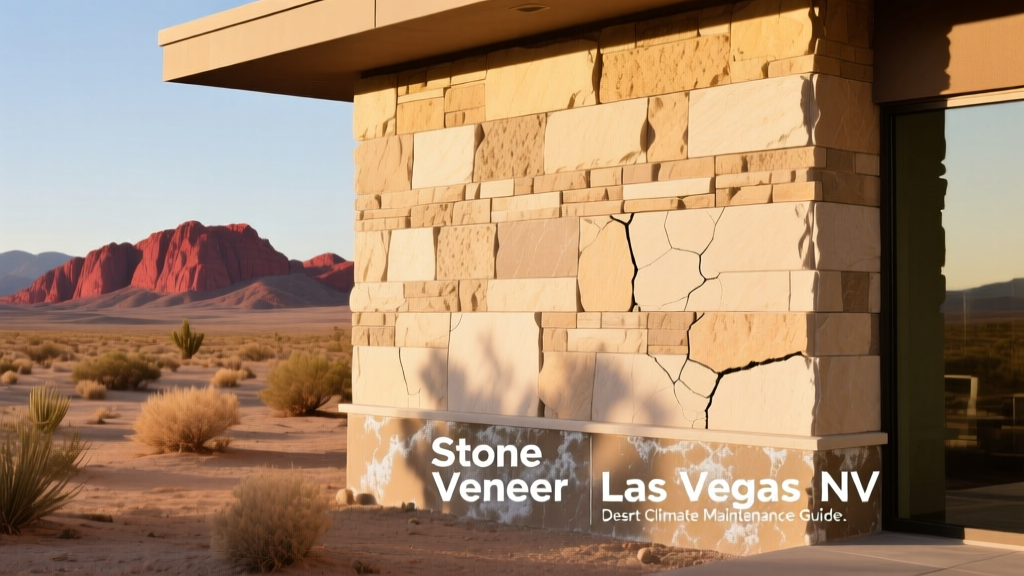
Maintaining stone veneer in the Las Vegas Valley requires abandoning generic masonry advice. The Mojave Desert presents a hostile microclimate characterized by extreme thermal cycling, intense ultraviolet radiation, and highly alkaline hard water. Summer surface temperatures on south-facing veneer walls frequently exceed 160°F, while winter nights can plunge below freezing. This massive thermal delta causes continuous expansion and contraction, placing immense shear stress on the mortar matrix and the veneer substrate.
Furthermore, the National Weather Service notes that Southern Nevada experiences fierce monsoon storms in late summer, driving micro-fine alkaline dust deep into the pores of natural and manufactured stone. When homeowners attempt to clean this dust using standard tap water and high pressure, they inadvertently trigger severe efflorescence and surface spalling. Understanding these localized failure modes is the first step in preserving your investment.
Seasonal Maintenance Matrix for Clark County
Rather than a generic annual wash, stone veneer in Las Vegas, NV requires a season-specific approach tailored to the desert's unique weather patterns.
| Season | Primary Threat | Required Maintenance Action |
|---|---|---|
| Spring | High winds & pollen | Dry-brush crevices with a soft nylon bristle brush to remove impacted dust before summer bakes it into the pores. |
| Summer | UV fading & monsoon mud | Low-pressure rinse (max 400 PSI) using a 40-degree white nozzle tip. Apply UV-inhibiting siloxane sealer if due. |
| Fall | Irrigation overspray buildup | Inspect base courses for hard water calcium deposits. Treat with a specialized chelating masonry cleaner. |
| Winter | Freeze-thaw micro-cracking | Inspect mortar joints (Type N) for hairline fractures. Repoint immediately before rare freezing rain infiltrates. |
Cleaning Protocols: Beating Monsoon Dust and Caliche
The Hard Water Dilemma
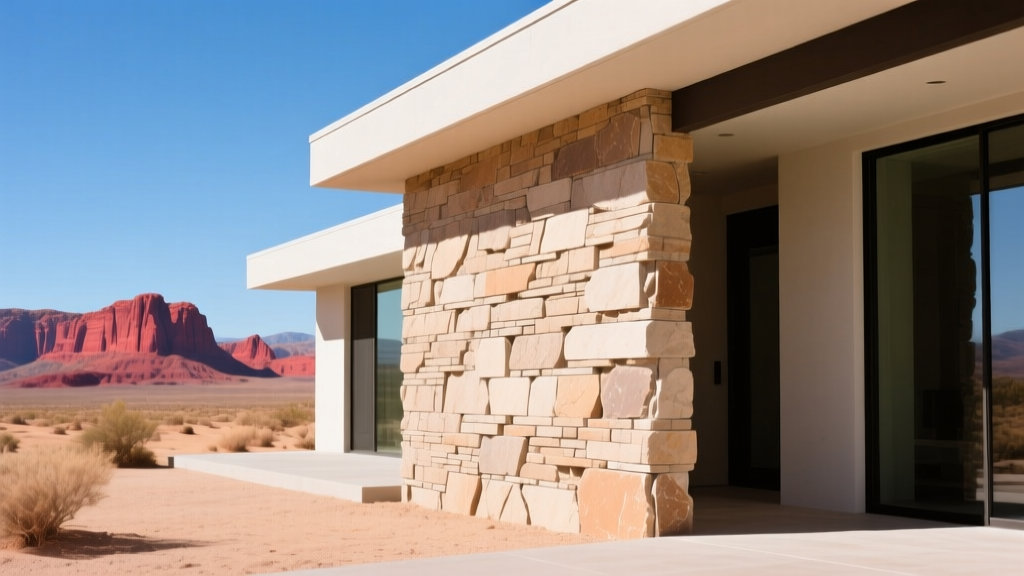
The Las Vegas Valley Water District supplies water with an average hardness of 280 parts per million (approximately 16 grains per gallon). When you spray this water onto stone veneer and allow it to evaporate in the desert heat, it leaves behind heavy calcium carbonate deposits. Over time, this creates a white, crusty film known as caliche buildup, which is notoriously difficult to remove without damaging the stone's face.
Step-by-Step Desert Cleaning Flow
The National Park Service Preservation Brief on Masonry Cleaning emphasizes using the gentlest means possible. For Las Vegas properties, follow this exact protocol:
- Pre-Wet the Substrate: Thoroughly soak the veneer with clean water. This prevents the stone from absorbing the cleaning solution too deeply, which can cause internal staining.
- Apply Alkaline Cleaner: Use a neutral-to-alkaline cleaner specifically formulated for manufactured stone, such as Prosoco SureKlean EnviroKlean. Avoid acidic etchers.
- Agitate Gently: Use a nylon masonry brush. Never use wire brushes, which will leave behind iron particles that rapidly oxidize and cause rust stains in the dry desert air.
- The Final Rinse: Keep pressure washer settings at or below 400 PSI with a 12-inch minimum standoff distance. High pressure will strip the colored mortar paste from manufactured stone, exposing the ugly aggregate beneath.
Sealing and UV Protection: What Actually Works at 115°F
A common and catastrophic mistake made by local contractors is applying acrylic, film-forming sealers to exterior stone veneer. In the Mojave Desert, acrylic sealers trap moisture vapor inside the masonry. When surface temperatures hit 150°F, that trapped moisture flashes into steam, creating hydrostatic pressure that literally blows the face off the stone—a failure mode known as spalling.
For manufactured stone veneer, which relies on iron oxide pigments for color, ensure your penetrating sealer includes UV inhibitors. The relentless Nevada sun will break down synthetic pigments over a 7-to-10-year period, causing south and west-facing walls to turn a washed-out, chalky grey.
Troubleshooting Common Desert Failures
Even with proactive care, the extreme environment of Las Vegas, NV can cause specific issues. Here is how to diagnose and rectify them:
- Symptom: White, powdery residue on lower courses.
Diagnosis: Efflorescence caused by landscape irrigation overspray. Las Vegas drip systems frequently mist onto the veneer base, drawing soluble salts out of the mortar.
Fix: Adjust sprinkler heads immediately. Remove the powder with a dry, stiff nylon brush. If calcified, apply Prosoco SureKlean Limestone Restorer (diluted 1:4 with distilled water), agitate, and rinse. - Symptom: Hairline stepping cracks in the mortar joints.
Diagnosis: Thermal expansion failure. The mortar is too rigid for the substrate movement.
Fix: Rake out the cracked joints and repoint using a Type N mortar mix. Type N has a higher lime content than Type S, providing the necessary flexibility to absorb desert thermal cycling without cracking. - Symptom: Fading and chalking on west-facing elevations.
Diagnosis: UV degradation of the stone's topical color coat.
Fix: Clean the surface thoroughly, allow 48 hours of drying, and apply a UV-stabilized, color-enhancing penetrating sealer to restore depth and protect against further solar bleaching.
Professional Maintenance Costs in the Las Vegas Valley
For homeowners who prefer to hire licensed masonry restoration specialists, pricing in Clark County reflects the specialized equipment and chemical knowledge required for desert stone care. Below are the current average market rates for professional services:
| Service Type | Average Cost per Sq. Ft. | Frequency Recommendation |
|---|---|---|
| Low-Pressure Chemical Wash | $0.85 - $1.40 | Every 2-3 Years |
| Efflorescence Removal & Treatment | $1.50 - $2.75 | As Needed (Spot Treatment) |
| Silane/Siloxane Sealing Application | $1.25 - $2.10 | Every 5-7 Years |
| Mortar Joint Repointing (Type N) | $8.00 - $14.00 (Linear Ft) | As Needed (Inspection Annually) |
For comprehensive, long-term technical specifications regarding manufactured stone installation and care limits, always refer to the guidelines published by the Masonry Veneer Manufacturers Association (MVMA). Adhering to these localized protocols will ensure your stone veneer withstands the brutal Nevada climate while maintaining its architectural beauty for decades.
Written by
Marcus ChenMarcus Chen is a licensed structural engineer (PE) and building materials analyst with over 12 years of experience across residential, commercial, and industrial construction. He holds a Master of Science in Civil Engineering from UC Berkeley and spent six years at Thornton Tomasetti before transitioning to independent consulting and technical writing. Marcus specializes in material selection for seismic-prone regions, concrete reinforcement strategies, and lifecycle cost analysis. His work has been cited by the American Concrete Institute (ACI) and the Structural Engineers Association of California (SEAOC). When he is not on a job site or at his desk, you will find him hiking the Sierra Nevada or restoring a 1920s craftsman bungalow in Oakland, CA.
More from Marcus Chen
View all
Construction Cost
How Much Did the Eiffel Tower Cost to Build?
How much did the Eiffel Tower cost to build in 1889? We adjust for inflation and compare its budget to modern skyscraper construction.
Aug 4, 2026

Fire Resistance
What Is a Fire Resistant Material? Testing & Certification Guide
Discover what is a fire resistant material through ASTM and UL testing. Learn how fire ratings, certifications, and assemblies work in construction.
Aug 4, 2026

Construction Cost
How Much Did the Burj Khalifa Cost to Build?
How much did the Burj Khalifa cost to build? We break down the $1.5B project and extract 5 money-saving strategies for your next build.
Jul 30, 2026