Thin Stone Veneer Exterior Selection Guide: Costs & Best Brands
Compare natural vs. manufactured thin stone veneer exterior cladding. Discover 2026 costs, top brands, and critical moisture management tips.
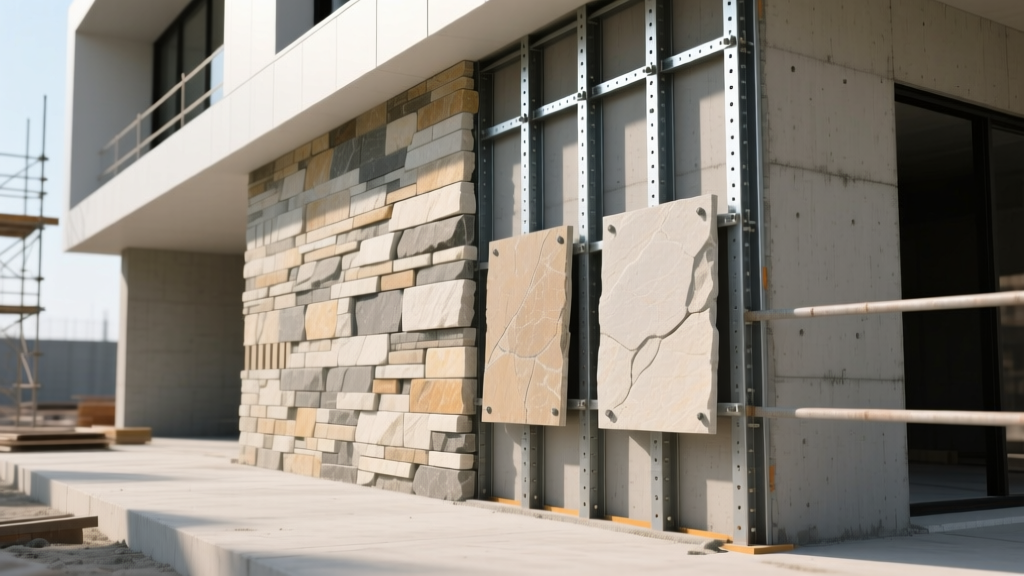
The Shift to Thin Stone Veneer Exterior Cladding
Full-bed masonry requires structural footings, specialized masons, and significant wall thickness. Thin stone veneer eliminates these barriers, delivering the authentic texture of masonry at a fraction of the weight and structural cost. Ranging from 0.5 to 1.5 inches in thickness and weighing between 8 and 15 pounds per square foot, thin stone veneer exterior applications can be installed over standard wood or steel stud framing. This guide breaks down the material science, brand landscape, and critical installation protocols required to specify and purchase thin stone veneer for exterior facades.
Natural vs. Manufactured: The Core Material Decision
The first fork in the buyer's journey is choosing between quarried natural stone and cast manufactured stone. Both meet exterior durability requirements when installed correctly, but their physical properties and cost structures differ significantly.
| Specification | Natural Thin Stone Veneer | Manufactured Stone Veneer (MSV) |
|---|---|---|
| Composition | Quarried limestone, granite, slate, or fieldstone sliced to thickness. | Portland cement, lightweight aggregates, and iron oxide pigments. |
| Weight | 12 – 15 lbs / sq. ft. | 8 – 12 lbs / sq. ft. |
| Thickness | 0.75" – 1.5" (varies by stone type) | 0.5" – 2.5" (mold-dependent) |
| Color Fastness | Permanent; may oxidize or weather naturally over decades. | Excellent, but UV exposure can fade pigments after 30+ years. |
| Material Cost (2026) | $9.00 – $16.00 per sq. ft. | $6.50 – $11.00 per sq. ft. |
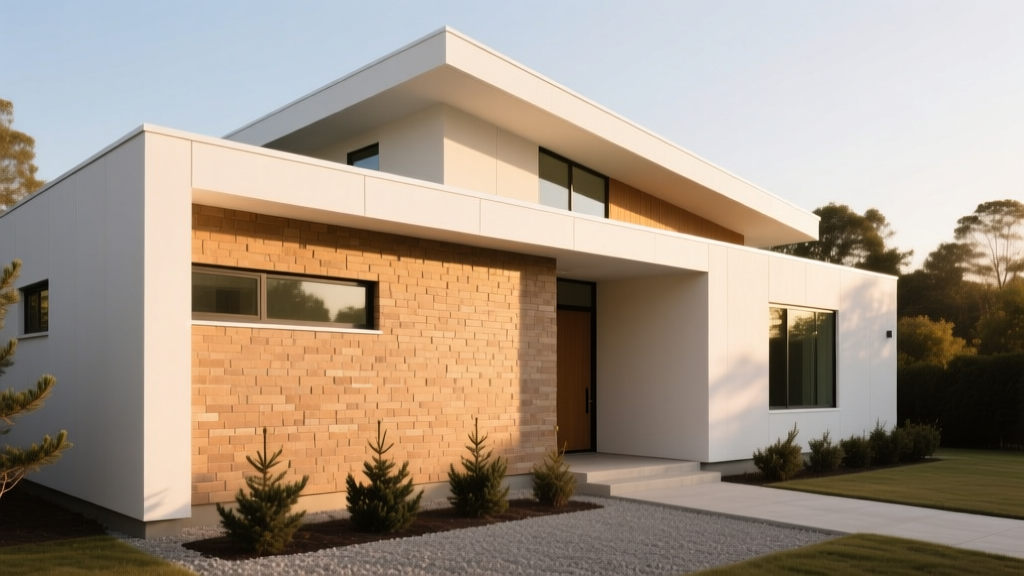
Top Exterior Thin Stone Veneer Brands to Specify
Not all veneers are engineered for exterior freeze-thaw cycles. When sourcing materials, prioritize manufacturers that test to ASTM C1670 (Standard Specification for Adhered Manufactured Stone Masonry Veneer) or equivalent natural stone standards.
1. Eldorado Stone (Manufactured)
A market leader in architectural profiles. Their Country Rubble and Fieldstone profiles feature deep, varied shadow lines that mimic dry-stacked historic masonry. Eldorado utilizes high-density concrete mixes that resist moisture absorption, a critical factor for exterior cladding in northern climates.
2. Real Stone Thin Veneer (Natural)
Specializing in natural stone sliced to thin-veneer specifications. Their Ozark Mountain profile provides authentic, multi-colored fieldstone without the 40 lbs/sq. ft. structural penalty of full-bed masonry. Ideal for high-end custom residential exteriors.
3. Boral Cultured Stone (Manufactured)
Known for their Dressed Fieldstone and Nantucket Stacked Stone lines. Boral integrates proprietary pigment blending during the casting process, ensuring that if a stone is chipped during installation or by landscaping equipment, the interior color matches the surface.
Moisture Management: The Anatomy of a Failure-Proof Wall
The most common cause of thin stone veneer exterior failure is not the stone itself, but trapped moisture behind the cladding. According to the Masonry Veneer Manufacturers Association (MVMA), adhered veneer must be treated as a drainage system, not a waterproof barrier.
The Required Exterior Wall Assembly (Bottom to Top)
- Structural Sheathing: OSB or plywood, properly taped.
- Weather-Resistant Barrier (WRB): Two layers of Grade D paper or a high-performance commercial wrap (e.g., Tyvek CommercialWrap).
- Corrosion-Resistant Weep Screed: Installed at the base of the wall, minimum 4 inches above grade and 2 inches above paved surfaces per ASTM C1063.
- Metal Lath: Minimum 2.5 lb/sq. yd galvanized or stainless steel woven wire lath, fastened every 6 inches into the framing studs.
- Scratch Coat: 3/8-inch to 1/2-inch layer of Type S mortar, scored horizontally to provide a mechanical key for the setting bed.
- Setting Bed & Veneer: Type S or Type N mortar applied to both the wall and the back of the stone (back-buttering is mandatory for exterior applications).
2026 Installed Cost Breakdown
Budgeting for thin stone veneer requires looking beyond the per-square-foot material tag. The prep work, mortar systems, and specialized labor significantly impact the final ledger. Below is the average installed cost per square foot of wall area for a standard two-story residential exterior in 2026.
| Cost Component | Manufactured Stone | Natural Thin Stone |
|---|---|---|
| Veneer Material | $6.50 - $11.00 | $9.00 - $16.00 |
| Lath, WRB & Screeds | $2.50 - $3.50 | $2.50 - $3.50 |
| Mortar & Scratch Coat | $1.50 - $2.50 | $1.50 - $2.50 |
| Labor (Masonry Contractor) | $14.00 - $22.00 | $18.00 - $28.00 |
| Scaffolding & Equipment | $2.00 - $4.00 | $2.00 - $4.00 |
| Total Installed Cost | $26.50 - $43.00 / sq. ft. | $33.00 - $54.00 / sq. ft. |
Note: Natural stone labor costs are higher because masons must spend additional time sorting, trimming, and fitting irregular quarried pieces to maintain consistent joint widths.
Buyer's Decision Framework
Use this matrix to finalize your specification based on project constraints:
- Choose Manufactured Thin Veneer if: Your budget caps at $35/sq. ft. installed, the structure is in a high seismic zone where lower dead loads are required, or you need a highly specific, uniform color palette.
- Choose Natural Thin Veneer if: You are renovating a historic property, the local architectural review board mandates authentic regional materials, or you prioritize the unique, non-repeating thermal mass and geological variations of real stone.
- Choose Panelized Systems (e.g., Evolve Stone) if: You are managing a commercial facade with strict timeline constraints. Panelized polyurethane or lightweight concrete systems can be installed by standard carpenters using pneumatic nailers, bypassing the need for mortar and masonry unions entirely.
Frequently Asked Questions
Does thin stone veneer require a brick ledge or structural footing?
No. Because thin stone veneer weighs less than 15 lbs per square foot, it is considered an adhered cladding system. It transfers its load directly to the wall sheathing and framing, eliminating the need for expensive concrete brick ledges required by full-bed masonry.
Can I install thin stone veneer over existing brick or stucco?
Yes, but only if the existing substrate is structurally sound, unpainted, and thoroughly cleaned. If the existing brick is painted or sealed, you must mechanically fasten metal lath directly through the masonry into the structural framing before applying a scratch coat. The Natural Stone Institute strongly advises against adhering directly to painted surfaces due to delamination risks.
How do I maintain exterior thin stone veneer?
Exterior veneer requires minimal maintenance. Avoid using acid-based cleaners or high-pressure power washers (over 1,000 PSI), which can erode mortar joints and damage the surface of manufactured stones. An annual rinse with a garden hose and a soft-bristle brush is sufficient to remove dirt and organic buildup.
Written by
Priya KapoorPriya Kapoor is a real estate market analyst and construction economics researcher with expertise in housing affordability, development feasibility, and infrastructure investment. She holds a Master of Regional Planning from Cornell University and previously worked as a senior analyst at CBRE's Investment Properties group, where she modeled returns for $4B in mixed-use development pipelines. Priya now runs an independent research practice advising developers, municipalities, and REITs on construction cost forecasting and market timing. She publishes the quarterly "BuildMat Market Pulse" report tracking material price indices across 12 commodity categories. Based in Austin, TX, Priya serves on the board of Habitat for Humanity Austin and is a marathon runner.
More from Priya Kapoor
View all
Construction Cost
Cost to Build a 1600 Sq Ft Home in 2026: Full Breakdown
Accurate 2026 cost to build a 1600 sq ft home—material, labor, and regional pricing breakdowns included. Plan your budget with real-time estimates.
Aug 11, 2026

Wood & Lumber
Name the Types of Wood for Pressure Treatment and Preservation
Learn how to name the types of wood best suited for pressure treatment. Compare species treatability, chemical retention levels, and 2026 preservation costs.
Aug 4, 2026

Stone & Masonry
Stone Veneer Suppliers Lindenhurst: 2026 Cost Analysis
Analyze 2026 stone veneer costs in Lindenhurst, NY. Compare local supplier pricing, delivery fees, and Suffolk County installation labor rates.
Aug 4, 2026