Stone Veneer Fireplace Surrounds: The Ultimate Buyer's Guide
Discover the best stone veneer fireplace surrounds for your home. Compare costs, materials, and installation tips in our expert buyer's selection guide.
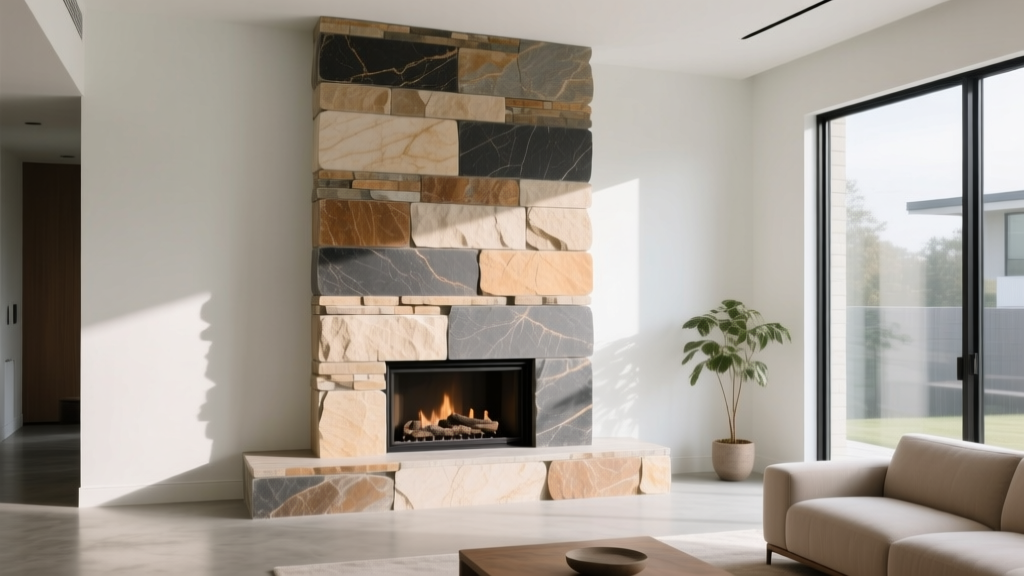
Selecting the right stone veneer fireplace surround transforms a basic heating appliance into the architectural anchor of your living space. Unlike full-thickness natural stone, modern stone veneer offers the same rugged aesthetic at a fraction of the weight and cost, eliminating the need for expensive structural footings or wall reinforcements. However, the market is saturated with varying qualities of manufactured and natural veneers, each requiring specific substrate preparations and mortar applications.
This buyer’s guide cuts through the marketing jargon to provide exact material specifications, 2026 pricing data, and critical building code clearances you need to make an informed purchase and ensure a lasting installation.
The Core Decision: Manufactured vs. Natural Stone Veneer
The first fork in the road for any buyer is choosing between Manufactured Stone Veneer (MSV) and Natural Stone Veneer (NSV). While both are installed using similar masonry techniques, their physical properties and long-term maintenance profiles differ significantly.
Quick Comparison Matrix
| Feature | Manufactured (MSV) | Natural (NSV) |
|---|---|---|
| Weight | 10 – 12 lbs / sq. ft. | 15 – 40+ lbs / sq. ft. |
| Thickness | 0.5" – 1.5" | 0.75" – 2.5" |
| Color Consistency | High (Batch controlled) | Low (Natural variation) |
| UV Fading | Moderate (Over 15+ years) | None (Pigment is solid) |
For interior fireplace surrounds, Manufactured Stone Veneer (MSV) is the industry standard. It is cast in molds taken from real stone and colored with iron-oxide pigments. Because it is lighter, it places less shear stress on interior wall framing. Natural Stone Veneer (NSV) is quarried and sawn to a thin profile. It is harder and more impact-resistant, making it ideal for high-traffic commercial spaces or exterior applications, but it commands a 30% to 50% price premium over MSV.
Top Material Profiles & Brand Recommendations
When sourcing materials, avoid unbranded big-box store generics if you want precise color matching and interlocking consistency. Premium manufacturers offer specialized lines designed specifically for the tight tolerances of fireplace surrounds.
1. Stacked Ledger Stone (Dry-Stack Look)
Stacked stone features linear, rectangular panels that fit together without visible mortar joints, creating a clean, modern, or craftsman aesthetic.
- Top Pick: Eldorado Stone’s Stacked Stone - Granite profile. It features high-density molding that captures the micro-fissures of real granite.
- Installation Note: Ledger panels require a perfectly level scratch coat. Even a 1/8-inch deviation in your substrate will compound over a 4-foot run, resulting in misaligned horizontal lines.
2. Fieldstone & River Rock
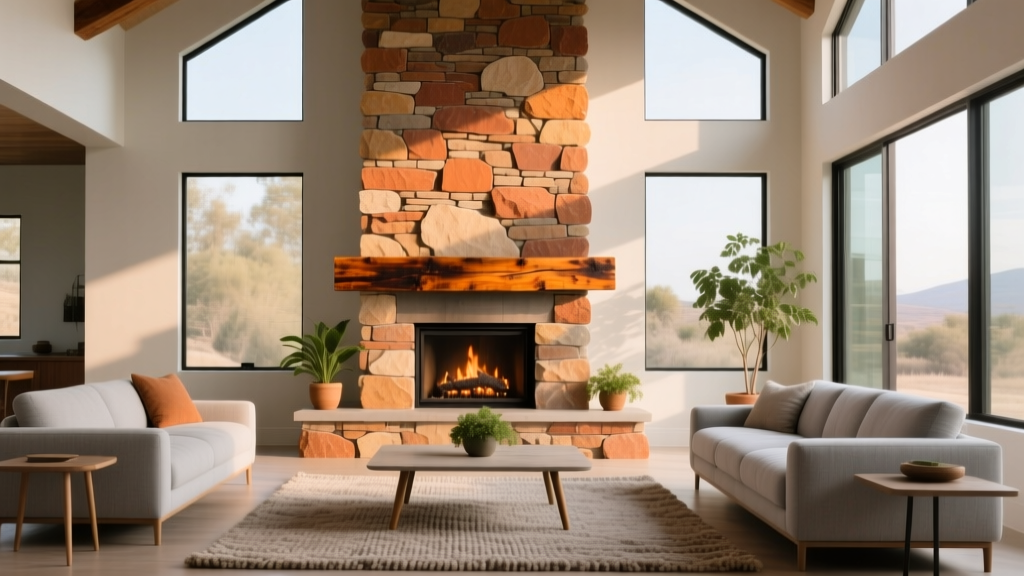
Fieldstone offers an organic, rustic profile with rounded edges and varied shapes, typically installed with a prominent, raked mortar joint.
- Top Pick: Cultured Stone (by Westlake Royal) Dressed Fieldstone. This line provides a mix of large and small stones that reduce the repetitive patterns common in cheaper manufactured rocks.
- Installation Note: Requires a wider joint (typically 1/2" to 1"). You will need roughly 30% more mortar by volume compared to dry-stack profiles.
3. Cut Ashlar & Limestone
Ashlar veneers mimic cut, squared stone blocks, providing a traditional, old-world, or European chateau aesthetic.
- Top Pick: Coronado Stone Classic Ashlar. The varying heights and lengths allow for a randomized running bond pattern that avoids the "brick-like" repetition of inferior molds.
2026 Cost Analysis: Material, Labor, and ROI
Pricing for stone veneer fluctuates based on regional freight costs (stone is heavy and expensive to ship) and local masonry labor rates. The following table reflects national averages for a standard 30-square-foot fireplace surround (including the hearth extension and chimney chase face) in 2026.
| Cost Category | Manufactured (MSV) | Natural (NSV) |
|---|---|---|
| Material Cost (per sq. ft.) | $9.00 – $14.00 | $15.00 – $25.00 |
| Substrate & Lath Materials | $2.50 – $3.50 | $2.50 – $3.50 |
| Mortar & Accessories | $1.50 – $2.00 | $1.50 – $2.00 |
| Professional Labor (per sq. ft.) | $14.00 – $22.00 | $18.00 – $28.00 |
| Total Installed (30 sq. ft. surround) | $810 – $1,245 | $1,110 – $1,755 |
Note: If your fireplace requires demolition of an existing brick or tile surround, add $300 to $600 for tear-out and disposal.
Critical Building Codes & Clearance Requirements
A fireplace surround is not just a decorative element; it is a critical fire-safety component. The NFPA 211 (Standard for Chimneys, Fireplaces, Vents, and Solid Fuel-Burning Appliances) dictates strict clearances to combustible materials.
⚠️ Warning: Mantel & Trim Clearances
For wood-burning fireplaces, NFPA 211 requires that any combustible material (such as a wood mantel or wood casing) located above the fireplace opening must be placed at least 12 inches from the top of the firebox opening. Furthermore, for every 1/8 inch the combustible material protrudes beyond the face of the surround, an additional inch of clearance is required. Always verify local amendments to the International Residential Code (IRC), as some municipalities enforce stricter 18-inch clearance rules.
For gas inserts and direct-vent fireplaces, clearances are determined by the specific appliance manufacturer's testing (often UL or CSA listed). Always consult the installation manual for your specific firebox unit before framing the surround, as zero-clearance gas units may allow stone veneer to abut the metal chassis directly, while others require a 1-inch non-combustible gap.
Substrate Preparation: Avoiding Delamination
The most common cause of stone veneer failure on interior fireplace surrounds is improper substrate preparation. The Masonry Veneer Manufacturers Association (MVMA) explicitly warns against applying stone veneer directly to standard paper-faced drywall or painted surfaces.
The 4-Layer Substrate System
- Structural Framing: Standard 16-inch on-center wood or metal studs are sufficient for MSV. If using heavy NSV, verify the wall can support the added dead load (up to 1,200 lbs for a 30 sq. ft. surround).
- Moisture Barrier: Apply a layer of Grade D building paper or 6-mil polyethylene sheeting. While interior fireplaces don't face rain, this protects the drywall from moisture in the mortar during the curing process.
- Metal Lath: Staple or nail self-furring 2.5 lb galvanized woven wire lath over the barrier. The "self-furring" dimples keep the lath 1/4 inch away from the wall, allowing the mortar to squeeze through and create a mechanical lock.
- Scratch Coat: Apply a 1/2-inch layer of Type S masonry mortar over the lath. Score the surface horizontally with a rake while it is semi-wet to provide a gripping texture for the final stone application. Allow to cure for 24 to 48 hours.
Pro-Tip: For a faster, cleaner installation over existing flat surfaces, consider using a cement backer board (like HardieBacker or USG Durock) screwed directly to the studs, eliminating the need for a moisture barrier and wire lath. However, you must still apply a thin scratch coat or use a polymer-modified veneer mortar specifically rated for direct-to-cement-board application.
Buyer’s Technical FAQ
Can I install stone veneer over an existing brick fireplace?
Yes, but not directly. Unpainted, unsealed brick is porous and will suck the moisture out of your veneer mortar before it can cure, leading to bond failure. You must first apply a concrete bonding adhesive, or ideally, attach metal lath directly into the brick using masonry screws (like Tapcons) and apply a scratch coat before setting the veneer.
Do I need to seal my interior stone veneer surround?
Sealing is optional for interior applications but highly recommended if you have a wood-burning fireplace. Soot, smoke, and ash can stain the porous surface of both manufactured and natural stone. Apply a breathable, matte-finish silane/siloxane penetrating sealer (such as 511 Impregnator Sealer) after the mortar has fully cured for 28 days. Avoid glossy film-forming sealers, which trap moisture and look unnatural.
What type of mortar should I use for the setting bed?
Do not use standard thinset tile adhesive. You must use a Type S masonry mortar or a specialized polymer-modified veneer mortar (like Custom Building Products ProLite or LATICRETE Masonry Veneer Mortar). These products contain additives that prevent the heavy stones from sliding down the wall while the mortar sets, a critical feature when working on vertical chimney chases.
Written by
Elena RodriguezElena Rodriguez is a civil engineer and technical writer specializing in concrete technology, masonry systems, and ASTM/ACI compliance. She earned her B.S. in Civil Engineering from Texas A&M University and spent a decade at a materials testing laboratory, performing over 2,000 concrete compressive strength tests and masonry prism evaluations. Elena is an ACI-certified Field Testing Technician (Grade I) and a member of ASTM Committee C12 on Natural Building Stone. She currently consults on forensic engineering cases involving concrete failures and moisture intrusion. Based in San Antonio, TX, Elena is a proud member of the Society of Women Engineers (SWE) and coaches her daughter's FIRST Robotics team.
More from Elena Rodriguez
View all
Walls & Panels
Cost Analysis: Light Gauge Steel Framing Advantages and Disadvantages
Evaluate light gauge steel framing advantages and disadvantages through a strict cost analysis lens, comparing material, labor, and lifecycle expenses.
Aug 4, 2026

Walls & Panels
Gypsum Board Types: Exact Specifications, Thickness & Dimensions
Compare standard, Type X, and moisture-resistant gypsum board types. Get exact specifications, thicknesses, dimensions, and ASTM standards for your project.
Aug 4, 2026

Fire Resistance
Best Fire-Resistant Outdoor Decking Materials: 2026 Buyer Guide
Discover the best fire-resistant outdoor decking materials for 2026. Compare Class A PVC, aluminum, and hardwood options for WUI compliance and safety.
Aug 4, 2026