Fieldstone Stone Veneer Cost Analysis & Pricing Guide 2026
Discover the true cost of fieldstone stone veneer in 2026. We break down material prices, labor rates, and hidden expenses for interior and exterior projects.

The True Cost of Fieldstone Stone Veneer in 2026
The national average cost to install fieldstone stone veneer in 2026 ranges from $18.50 to $34.00 per square foot, fully installed. This pricing encompasses material acquisition, substrate preparation, and professional masonry labor. However, treating stone veneer as a simple per-square-foot commodity leads to severe budget overruns. The final invoice is heavily dictated by the choice between natural quarried stone and manufactured architectural profiles, the complexity of corner detailing, and regional masonry labor rates.
Quick Cost Snapshot (Per Square Foot)
- Manufactured Fieldstone Veneer: $16.00 – $26.00 installed
- Natural Fieldstone Veneer: $24.00 – $38.00 installed
- Material Only (Manufactured): $5.50 – $9.50
- Material Only (Natural): $11.00 – $18.00
Material Costs: Manufactured vs. Natural Fieldstone
The term 'fieldstone' historically refers to naturally rounded, irregular stones gathered from fields. In modern construction, you must choose between authentic sliced natural stone and cast manufactured alternatives. Both offer distinct cost structures and structural implications.
Manufactured Fieldstone Veneer
Manufactured stone veneer (MSV) is cast in molds taken from real fieldstone, utilizing Portland cement, lightweight aggregates, and iron oxide pigments. Leading manufacturers like Eldorado Stone and Coronado Stone produce specific 'Fieldstone' profiles that replicate the rounded, irregular shapes of authentic gathered stone. Manufactured fieldstone typically weighs between 6 and 9 pounds per square foot, reducing the need for structural reinforcement or specialized wall ties on standard wood-frame construction.
Natural Quarried Fieldstone Veneer
Natural fieldstone veneer is sliced from real quarried stone (commonly sourced from Pennsylvania, Oklahoma, or the Carolinas) to a thickness of 0.75 to 1.5 inches. While it offers unparalleled authenticity and thermal mass, it weighs between 12 and 18 pounds per square foot. This increased weight often requires enhanced structural support, heavier-duty metal lath, and stricter adherence to masonry anchoring standards outlined by The Masonry Society and local building codes.
| Material Type | Average Cost (Sq. Ft.) | Weight (Lbs/Sq. Ft.) | Thickness Profile |
|---|---|---|---|
| Manufactured Fieldstone | $5.50 – $9.50 | 6 – 9 lbs | 1.0" – 2.5" |
| Natural Sliced Fieldstone | $11.00 – $18.00 | 12 – 18 lbs | 0.75" – 1.5" |
| Mortarless Stacked Systems | $8.00 – $14.00 | 9 – 12 lbs | 1.5" – 2.0" |
Labor & Hidden Installation Expenses
Professional masonry labor accounts for 55% to 65% of your total project cost. In 2026, skilled masons charge between $75 and $125 per hour, translating to $12.00 to $22.00 per square foot for veneer installation. However, the square-foot rate rarely tells the whole story. The following hidden variables frequently inflate labor budgets:
- Substrate Preparation ($2.50 – $4.50/sq ft): Fieldstone veneer cannot be applied directly to drywall or painted wood. Installers must apply a weather-resistive barrier (WRB), attach 2.5 lb self-furring galvanized steel lath, and trowel on a 0.5-inch scratch coat of Type S mortar. This prep work is mandatory and non-negotiable for long-term adhesion.
- Corner Pieces (The Linear Foot Trap): While flat stones are sold by the square foot, interlocking corner pieces are sold by the linear foot. Manufactured fieldstone corners cost $7.00 to $13.00 per linear foot. A standard 8-foot-tall exterior column requires 16 linear feet of corners, adding $112 to $208 to the material cost per column, entirely separate from the square-footage estimate.
- Scaffolding and Access ($500 – $1,500+): For exterior applications above the first story, scaffolding erection and teardown will add a fixed premium to the labor quote.
- Weep Screeds and Flashing ($1.50 – $3.00/LF): At the base of exterior wood-frame walls, a metal weep screed must be installed to allow trapped moisture to escape. Omitting this leads to catastrophic rot behind the veneer.
Complete Project Cost Scenarios
To provide actionable budgeting frameworks, here are three common fieldstone stone veneer applications with estimated 2026 turnkey costs (materials, prep, labor, and cleanup).
Scenario A: Interior Fireplace Surround (40 Sq. Ft.)
Applying manufactured fieldstone to a standard 4x10 foot interior fireplace face. This project requires minimal prep work (drywall scoring and lath) and no weatherproofing or scaffolding.
Estimated Total Cost: $1,400 – $2,200
Timeline: 2 days (Day 1: Prep and scratch coat; Day 2: Setting and grouting).
Scenario B: Exterior Wainscot / Accent Wall (250 Sq. Ft.)
Covering the lower 3 feet of a 80-foot-long exterior facade, including two outside corners and one door wrap. Requires full WRB integration, weep screed installation, and exterior-grade lath.
Estimated Total Cost: $6,500 – $9,200
Timeline: 4 to 6 days.
Scenario C: Full Home Facade Overlay (1,800 Sq. Ft.)
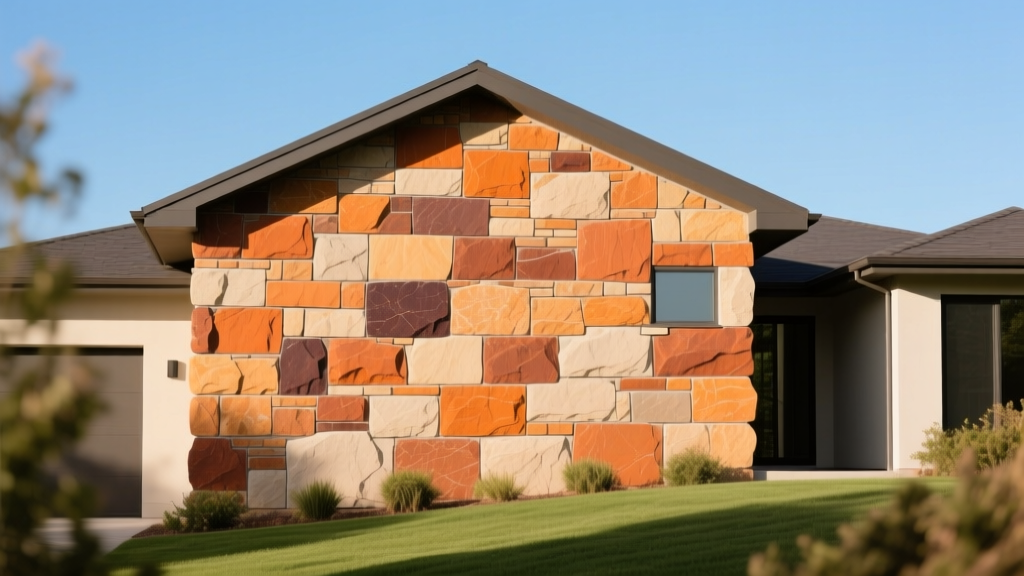
Complete exterior cladding replacement on a single-story ranch home. This scale triggers volume discounts on manufactured stone (typically 10-15% off material costs) but requires extensive scaffolding and a multi-week crew commitment.
Estimated Total Cost: $38,000 – $55,000
Timeline: 3 to 5 weeks.
Long-Term ROI and Maintenance Costs
Stone veneer is one of the highest-performing exterior upgrades regarding return on investment. According to historical and ongoing data tracked in the Remodeling Magazine Cost vs. Value Report, manufactured stone veneer consistently recoups between 88% and 95% of its installation cost at resale, significantly outperforming vinyl siding, fiber cement, and even wood decking.
Maintenance costs for fieldstone veneer are exceptionally low, but not zero. Budget for the following long-term upkeep:
- Efflorescence Treatment ($30 – $60): White, powdery salt deposits may appear on natural stone during the first year as moisture migrates through the masonry. This is cosmetic and can be cleaned with a specialized masonry efflorescence remover and a stiff nylon brush.
- Penetrating Sealer ($150 – $300 per application): While manufactured stone is largely impervious, natural fieldstone is porous. Applying a siloxane-based penetrating sealer every 5 to 7 years prevents water ingress and freeze-thaw spalling in northern climates.
- Mortar Joint Repointing ($400 – $800): After 15 to 20 years, exterior mortar joints may degrade. Spot-repointing with Type S mortar is required to maintain structural integrity.
Expert Strategies for Reducing Veneer Costs
If your project budget is constrained, implement these specific adjustments without compromising structural integrity:
- Opt for Mortarless Stacked Systems: Brands like Panel Stone or GenStone offer interlocking, mortarless fieldstone panels. These systems eliminate the need for a mason, allowing skilled carpenters or advanced DIYers to install them using structural screws and construction adhesive. This cuts labor costs by up to 60%.
- Limit Corner Complexity: Design your accent walls to terminate at natural breaks (like rooflines or trim) rather than wrapping around multiple outside corners. Reducing linear feet of corner pieces directly slashes both material and fitting time.
- Calculate Overage Accurately: Fieldstone profiles are highly irregular. While standard flat veneer requires a 10% waste factor, the cuts required to fit rounded fieldstone pieces together tightly can push waste to 15% or 20%. Order 15% overage upfront; returning unopened boxes is easy, but paying for a second freight delivery for a shortage will erase any savings.
Frequently Asked Questions
Can fieldstone stone veneer be installed over existing brick?
Yes, but not directly. Existing brick must be structurally sound, free of efflorescence, and cleaned via pressure washing. A layer of building paper and galvanized lath must be mechanically fastened through the brick into the structural studs behind it using masonry anchors before applying the scratch coat and veneer.
Does natural fieldstone veneer require a brick ledge?
Traditional full-thickness natural fieldstone requires a structural brick ledge or concrete footing. However, modern 'thin veneer' natural fieldstone (sliced to under 1.5 inches and weighing under 15 lbs/sq ft) can be installed on standard wood or steel stud framing using metal lath and mortar, without a foundational ledge, provided local building codes permit the specific weight load.
How does fieldstone veneer perform in freeze-thaw climates?
Manufactured fieldstone veneer is rigorously tested to ASTM C1670 standards for freeze-thaw durability and performs exceptionally well in harsh climates when installed with proper weep screeds and flashing. Natural fieldstone varies by quarry source; stones with high porosity can spall and crack if water penetrates and freezes. Always specify 'exterior-rated' natural stone and apply a breathable siloxane sealer post-installation.
Written by
Elena RodriguezElena Rodriguez is a civil engineer and technical writer specializing in concrete technology, masonry systems, and ASTM/ACI compliance. She earned her B.S. in Civil Engineering from Texas A&M University and spent a decade at a materials testing laboratory, performing over 2,000 concrete compressive strength tests and masonry prism evaluations. Elena is an ACI-certified Field Testing Technician (Grade I) and a member of ASTM Committee C12 on Natural Building Stone. She currently consults on forensic engineering cases involving concrete failures and moisture intrusion. Based in San Antonio, TX, Elena is a proud member of the Society of Women Engineers (SWE) and coaches her daughter's FIRST Robotics team.
More from Elena Rodriguez
View all
Walls & Panels
Cost Analysis: Light Gauge Steel Framing Advantages and Disadvantages
Evaluate light gauge steel framing advantages and disadvantages through a strict cost analysis lens, comparing material, labor, and lifecycle expenses.
Aug 4, 2026

Walls & Panels
Gypsum Board Types: Exact Specifications, Thickness & Dimensions
Compare standard, Type X, and moisture-resistant gypsum board types. Get exact specifications, thicknesses, dimensions, and ASTM standards for your project.
Aug 4, 2026

Fire Resistance
Best Fire-Resistant Outdoor Decking Materials: 2026 Buyer Guide
Discover the best fire-resistant outdoor decking materials for 2026. Compare Class A PVC, aluminum, and hardwood options for WUI compliance and safety.
Aug 4, 2026