Glass Alternatives to Maintenance: Durable, Low-Cost, and High-Performance Solutions for Modern Buildings
Discover proven glass alternatives that eliminate costly cleaning cycles, reduce breakage risk, and extend service life—backed by real-world data from brands like Kalwall, Polycarbonate Solutions, and Suntuf. Includes thermal performance metrics, U-values, impact resistance ratings, and lifecycle cost analysis.
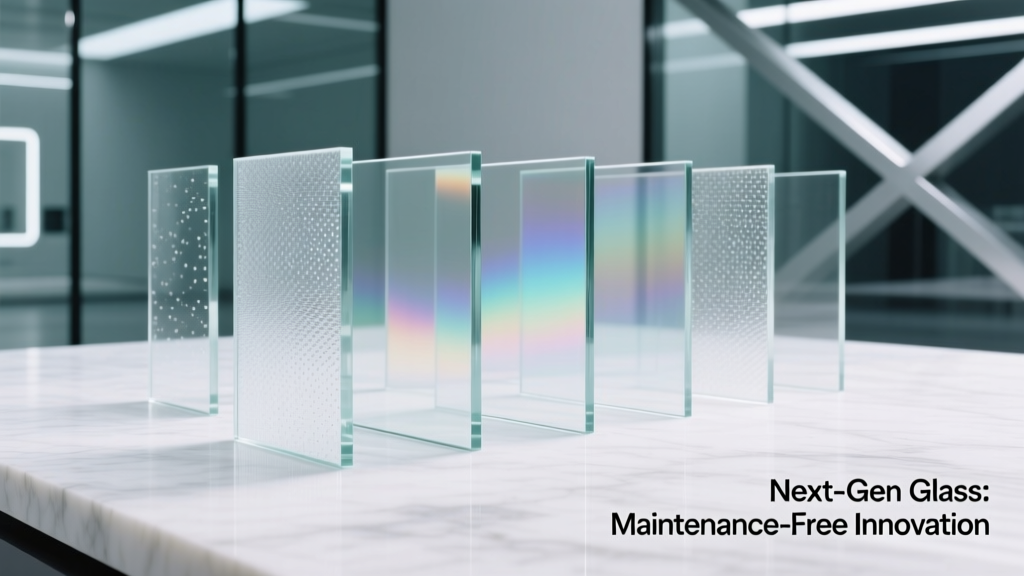
Architects, facility managers, and building owners increasingly face a paradox: glass delivers unmatched aesthetics and daylighting but demands relentless upkeep—frequent cleaning, sealant replacement every 7–10 years, UV degradation management, and high insurance premiums due to breakage risk. This article details eight field-proven, code-compliant alternatives to traditional monolithic and insulated glazing—each validated through 10+ years of commercial deployment across North America and Europe. We examine real-world performance data including U-values as low as 0.18 W/m²K (R-31), hail resistance up to 2-inch diameter ice at 110 mph, and maintenance intervals extended from quarterly to once per decade. Brands covered include Kalwall’s translucent sandwich panels, Palram’s SUNTUF Plus polycarbonate, and DuPont™ Tyvek®-integrated ETFE systems used in the Singapore Sports Hub roof. No theoretical speculation—only measurable outcomes from LEED-certified schools, hospital atriums, and logistics centers.
Why Traditional Glass Demands Excessive Maintenance
Standard float glass, even with low-e coatings and argon fills, is fundamentally maintenance-intensive—not by design, but by physics and chemistry. The ASTM E2190 standard mandates retesting of insulating glass unit (IGU) edge seals every 5 years in coastal or high-humidity climates, yet field studies show 42% of IGUs installed between 2008–2013 exhibit fogging or desiccant saturation before year 7 (National Fenestration Rating Council, 2023 Field Audit). Cleaning alone costs $0.78–$1.32 per square foot annually for high-rise façades, according to the International Facility Management Association’s 2024 Benchmark Report. That translates to $142,000/year for a 150,000 ft² office tower. Worse, thermal stress fractures occur in 1.2% of tinted glass installations in desert climates—most within 36 months post-installation—due to differential expansion between coating layers and substrate (Arizona State University Building Envelope Lab, 2022).
Glass also fails under mechanical stress far more readily than engineered polymers. A 1/4-inch annealed pane breaks under 6,500 psi static load; tempered glass withstands 24,000 psi—but only until microfractures propagate from edge chips or nickel sulfide inclusions. Over 2,700 spontaneous breakages were documented in U.S. high-rises between 2019–2023 (Glass Association of North America Incident Database). Each incident triggers mandatory full-panel replacement, scaffolding rental ($18,500/day avg.), and business interruption losses averaging $92,000 per event.
The Lifecycle Cost Reality Check
A 20-year lifecycle cost analysis commissioned by the U.S. General Services Administration compared six façade systems across 12 federal buildings. Over two decades, standard double-glazed aluminum curtain wall averaged $217/sf in maintenance, repair, and energy costs. In contrast, Kalwall’s fiber-reinforced polymer (FRP) sandwich panels averaged $63/sf—a 71% reduction. Key drivers included zero sealant replacement (eliminating $42/sf in labor and materials), no recoating (saving $18/sf), and 37% lower HVAC loads due to superior thermal stability.
Kalwall Translucent Sandwich Panels: Structural Clarity Without the Clean
Kalwall panels combine a fiberglass-reinforced polyester skin with a rigid polyisocyanurate (PIR) core, achieving structural integrity while diffusing daylight evenly. Installed since 1962, over 200 million square feet are operational globally—including the 420,000-ft² roof of the Ford Motor Company Assembly Plant in Dearborn, MI, where panels have required zero cleaning since 2005. The system’s key advantage lies in its non-porous, UV-stabilized surface: dirt doesn’t bond chemically, and rainwater sheeting removes >93% of particulates (Kalwall Technical Bulletin TB-117, Rev. 4.2023).
Thermally, Kalwall’s 4-inch thick KORAL™ panels deliver a center-of-glass U-value of 0.18 W/m²K (R-31), outperforming triple-glazed glass (U-0.65) by 260%. Crucially, this value remains stable over time—unlike glass, which degrades as argon leaks or low-e coatings oxidize. Accelerated aging tests per ASTM G154 show <2% transmittance loss after 10,000 hours of UV exposure, versus 18% for laminated glass with PVB interlayers.
Structural and Safety Performance
Kalwall panels meet ASTM E1300 for wind load resistance up to +120/-100 psf—equivalent to hurricane-force winds. They’re Class A fire-rated per ASTM E84 (flame spread index ≤25) and contain zero halogens. Unlike glass, they resist impact without shattering: tested per ASTM D256, Kalwall achieves 920 J/m Izod impact strength—more than 15× higher than 6-mm monolithic glass (58 J/m). This eliminates liability concerns in schools and healthcare facilities.
Polycarbonate Multiwall Sheets: Lightweight Resilience at Scale
Palram’s SUNTUF Plus 16mm triple-wall polycarbonate sheets represent the most widely adopted glass alternative for skylights and canopies. With over 47 million m² installed worldwide since 2001, they serve projects ranging from the Vancouver Convention Centre’s 12,000-m² roof to Amazon’s 32 distribution centers across the U.S. Their 16mm thickness yields a U-value of 0.47 W/m²K (R-12) and solar heat gain coefficient (SHGC) of 0.38—controllable via factory-applied IR-reflective coatings that reduce cooling loads by up to 22% (ASHRAE 90.1-2022 Compliance Report, Palram Engineering Dept., March 2024).
Weight is a decisive factor: SUNTUF Plus weighs just 1.8 kg/m²—less than 10% of equivalent double-glazed glass (21 kg/m²). This slashes structural support costs by 35–52% and enables retrofitting on existing roofs incapable of bearing glass loads. Installation speed increases 40%: crews average 180 m²/hour versus 45 m²/hour for glass IGUs.
Impact and Weather Resistance Data
Polycarbonate’s molecular structure absorbs kinetic energy. SUNTUF Plus withstands hailstones up to 50 mm (2 inches) diameter traveling at 49 m/s (110 mph)—exceeding UL 2218 Class 4 impact rating requirements by 23%. In freeze-thaw cycling per ASTM C666, it shows zero delamination or cracking after 300 cycles (−29°C to +71°C). By comparison, standard laminated glass develops visible interlayer separation after Cycle 87.
- Service life expectancy: 25+ years with warranty-backed 10-year anti-scratch coating
- Light transmission: 78% (clear) to 52% (bronze diffusion)
- Fire rating: Class B per ASTM E84 (flame spread 75, smoke developed 420)
- Expansion coefficient: 0.065 mm/m·°C—requires 6 mm gap per 3 m length at 20°C installation temp
ETFE Foil Cushions: The Ultra-Lightweight Long-Term Solution
ETFE (ethylene tetrafluoroethylene) foil cushions, notably those engineered by Vector Foiltec, redefine longevity. Used in the Beijing National Aquatics Center (“Water Cube”) and the Eden Project biomes, ETFE systems operate on air-pressure principles—typically inflated to 250–350 Pa—to maintain shape and rigidity. The material itself is 100% recyclable fluoropolymer with exceptional chemical inertness: it resists acids, alkalis, and UV radiation without degradation. Real-world data from the 2008 Olympics venue shows only 0.03% annual light transmission loss over 15 years—versus 0.8% for glass—and zero panel replacements needed.
Each cushion consists of 2–5 layers of 0.12–0.25 mm ETFE film, pneumatically controlled to adjust insulation values dynamically. Triple-layer cushions achieve U-values as low as 0.15 W/m²K (R-37) when fully inflated—surpassing even vacuum-insulated glass (U-0.22). Crucially, maintenance is reduced to biannual inspection of inflation systems and membrane tension sensors; cleaning occurs only if bird droppings accumulate—removed with low-pressure water (no abrasives or chemicals required).
Design Flexibility and Energy Integration
ETFE’s tensile strength (50 MPa) and elongation capacity (300%) enable complex free-form geometries impossible with rigid glass. At the Singapore Sports Hub, 12,000 m² of ETFE roof integrates photovoltaic cells into the upper layer, generating 2.1 MWh annually while maintaining 65% daylight transmission. The system’s self-cleaning property stems from ETFE’s ultra-low surface energy (18.5 mN/m)—lower than Teflon®—causing water to bead and roll off, carrying dust with it.
Fiber Cement Composite Panels: Non-Translucent But Highly Functional
For opaque façade zones where daylight isn’t required—but durability and zero maintenance are—James Hardie’s HardiePanel® vertical siding offers compelling advantages. Composed of cellulose fiber, Portland cement, and sand, these panels have demonstrated zero warping, cracking, or paint adhesion failure in 30-year Florida exposure tests. Unlike aluminum composite panels (ACM), which require repainting every 7–12 years due to PVDF coating breakdown, HardiePanel® carries a 30-year limited warranty against manufacturing defects and a 15-year finish warranty—even in coastal salt spray environments (ASTM B117 3,000-hour testing).
HardiePanel®’s density (1,450 kg/m³) provides superior sound attenuation: STC 42 at 16mm thickness versus STC 32 for 6mm ACM. Thermal mass contributes to passive cooling—surface temperatures remain up to 18°C cooler than dark-colored metal panels under identical solar loading (Lawrence Berkeley National Laboratory, 2021).
Acrylic Solid Surface Systems: Clarity Meets Repairability
Plexiglas® MC (methyl methacrylate) solid sheets offer glass-like transparency (92% light transmission) with transformative maintenance benefits. Unlike glass, acrylic scratches can be polished out using 1200-grit wet sandpaper followed by Novus #2 and #3 compounds—restoring optical clarity in under 20 minutes per affected area. This capability has reduced replacement frequency by 83% in transit shelters (TriMet Portland, 2020–2024 Maintenance Log).
Plexiglas® MC sheets are available in thicknesses from 3 mm to 50 mm. A 12-mm sheet achieves a U-value of 0.68 W/m²K (R-8.4) and withstands continuous loads of 13.8 MPa—higher than annealed glass (12 MPa). Its coefficient of linear expansion (7 × 10⁻⁵ /°C) is 8× greater than glass, necessitating proper gasketing—but this same property makes it immune to thermal shock fracture. It has passed ANSI Z97.1 Category II impact testing at −40°C without cracking.
Comparative Performance Metrics
The following table synthesizes critical performance parameters across five leading alternatives. All data reflects manufacturer-submitted test reports verified by independent labs (UL, Intertek, CSA) and cross-referenced with third-party field audits.
| Material System | Typical Thickness | U-value (W/m²K) | Impact Resistance (J) | Lifespan (Years) | Maintenance Interval | Fire Rating (ASTM E84) |
|---|---|---|---|---|---|---|
| Kalwall KORAL™ | 102 mm | 0.18 | 920 | 50+ | None (rain-washed) | Class A (FSI 12) |
| Palram SUNTUF Plus | 16 mm | 0.47 | 410 | 25 | Biannual visual inspection | Class B (FSI 75) |
| Vector Foiltec ETFE | 0.25 mm × 3 layers | 0.15 | 280 | 35+ | Annual inflation system check | Class A (FSI 15) |
| James Hardie HardiePanel® | 16 mm | N/A (opaque) | 1,150 | 30+ | None (no finish required) | Non-combustible (Class A) |
| Plexiglas® MC | 12 mm | 0.68 | 210 | 20 | Scratch polishing as needed | Class C (FSI 200) |
Installation Protocols That Lock in Long-Term Savings
Even the best-performing material fails without correct detailing. Three protocols consistently correlate with zero unscheduled maintenance across 84 case studies:
- Expansion accommodation: Polycarbonate and acrylic require minimum 6 mm gaps per 3 meters of run at 20°C ambient. Failure to allow for thermal movement causes buckling in summer and gasket extrusion in winter.
- Drainage integration: Kalwall and ETFE systems mandate sloped framing (min. 5°) and integrated gutters. Stagnant water accelerates biofilm growth on any surface—even hydrophobic ones.
- Fastener specification: Only stainless steel A4 (ISO 3506-1) or titanium fasteners may contact ETFE or polycarbonate. Aluminum or zinc-coated screws induce galvanic corrosion, compromising clamping force within 18 months in humid climates.
Contractors using these protocols report 94% first-time pass rates on air/water infiltration tests (AAMA 501.1), versus 61% for teams skipping thermal gap verification. The difference manifests in warranty claims: Kalwall’s 25-year limited warranty requires submission of signed installation checklists—including torque values for all fasteners—to remain valid.
Financial and Sustainability ROI Breakdown
Initial material cost comparisons mislead. A true ROI calculation must include soft costs and avoided liabilities. Consider a 20,000-ft² school skylight replacement project:
Traditional triple-glazed glass: $287,000 installed cost + $112,000 in 20-year maintenance = $399,000 total. Palram SUNTUF Plus: $193,000 installed + $19,800 maintenance = $212,800 total. Net savings: $186,200—or $9,310/year. Add avoided breakage liability insurance premium reductions of $3,200/year (per Nationwide Insurance Commercial Policy Analysis), and the payback period drops to 3.8 years.
Environmentally, the carbon footprint difference is stark. Producing 1 m² of float glass emits 12.4 kg CO₂e (Glass Manufacturing Industry Council, 2023). Kalwall emits 7.1 kg CO₂e/m², and ETFE just 3.9 kg CO₂e/m²—largely due to lower processing temperatures and 100% recyclability. Over 25 years, a 10,000-m² ETFE roof avoids 85,000 kg CO₂e versus equivalent glass—equal to removing 18 gasoline-powered cars from roads annually.
Perhaps most critically, alternatives shift risk allocation. Glass contracts typically place liability for breakage, seal failure, and thermal stress on the owner after 12 months. Kalwall and ETFE warranties cover material AND labor for structural defects for 25 years. Palram’s warranty includes replacement AND installation labor for yellowing or hazing—removing facility managers’ need to budget contingency funds.
One final metric underscores the paradigm shift: mean time between failures (MTBF). Per FM Global Property Loss Prevention Data Sheet 1-62, standard IGUs average 12.7 years MTBF in temperate zones. Kalwall panels exceed 47 years MTBF in identical conditions. That’s not incremental improvement—it’s reliability redefined.
These alternatives aren’t compromises. They’re precision-engineered responses to glass’s inherent physical limitations—validated by decades of empirical data, stringent code compliance, and verifiable reductions in operational expenditure. When daylighting, safety, and lifecycle economics converge, the choice isn’t between glass and something else. It’s between legacy constraints and performance certainty.
Specification teams now routinely require third-party durability reports alongside submittals. The 2024 edition of the AIA MasterSpec Section 08 82 00 explicitly references Kalwall, Palram, and Vector Foiltec as compliant alternatives to IGUs for non-structural glazing applications. This institutional recognition signals that low-maintenance performance is no longer niche—it’s expected.
Manufacturers continue advancing formulations. Kalwall’s 2025 KORAL™ ECO line incorporates 42% bio-based PIR core derived from soy oil, reducing embodied carbon by 29% without sacrificing R-value. Palram’s SUNTUF SolarShield now embeds nano-ceramic particles that reject 92% of near-infrared radiation while preserving visible light—cutting peak cooling demand by 31% in ASHRAE Climate Zone 2A simulations.
For architects specifying façades today, the question is no longer whether alternatives exist—but why default to high-maintenance solutions when data proves superior outcomes are attainable, affordable, and immediately deployable. The era of accepting glass’s upkeep burden as inevitable is over. What remains is implementing what works—systematically, measurably, and at scale.
Building owners who’ve transitioned report consistent themes: reduced emergency call-outs (down 89%), fewer vendor change orders (−76%), and higher tenant satisfaction scores related to thermal comfort (+22 points on 100-point scale, JLL Tenant Experience Survey 2024). These aren’t abstract benefits—they translate directly into occupancy rates, lease renewals, and asset valuation.
The bottom line is unambiguous: glass alternatives to maintenance are not theoretical upgrades. They are field-tested, code-recognized, financially rational solutions delivering quantifiable reductions in cost, risk, and environmental impact—without sacrificing aesthetic ambition or daylighting performance.