Best Peel and Stick Veneer Stone Panels Compared (2026)
Compare top peel and stick veneer stone panels for 2026. We review HDPU faux stone, flexible real stone, and PVC options for cost, durability, and DIY ease.

The "Peel and Stick" Stone Veneer Myth vs. Reality
When homeowners and DIYers search for peel and stick veneer stone, they are usually looking for a zero-mess, caulk-gun-free installation. However, the building materials industry uses this term loosely, creating a massive point of confusion. True pressure-sensitive adhesive (PSA) peel-and-stick backing is physically incapable of supporting the shear weight of rigid, high-density polyurethane (HDPU) faux stone panels over time. A standard 4x8-foot HDPU panel weighs between 35 and 45 pounds; acrylic peel-and-stick tapes will eventually experience "cold flow" and delaminate under constant vertical load.
In this 2026 comparison review, we evaluate the top materials and brands that dominate the "peel and stick" and "adhesive-applied" veneer stone market, breaking down exact costs, failure modes, and structural requirements so you can choose the right product for your specific substrate.
Material Matrix: HDPU vs. Flexible Real Stone vs. PVC
Before selecting a brand, you must select the correct material class for your project. The table below contrasts the three primary categories of adhesive-backed and adhesive-applied stone veneers available on the market today.
| Feature | HDPU Faux Stone (Rigid) | Flexible Real Stone Veneer | PVC Interlocking Panels |
|---|---|---|---|
| Material Composition | High-Density Polyurethane Foam | 1-2mm Real Slate/Quartzite + Fiberglass Mesh | Polyvinyl Chloride (Hollow-core) |
| Weight per Sq. Ft. | 1.0 - 1.5 lbs | 1.2 - 1.8 lbs | 0.5 - 0.8 lbs |
| Adhesion Method | Construction Adhesive + Screws | 3M VHB Peel-and-Stick or Thinset | Construction Adhesive or Heavy-Duty PSA Tape |
| Exterior Rated? | Yes (UV & Moisture Resistant) | Yes (Requires topical sealer) | No (Interior only) |
| Avg. Cost (Material Only) | $11.00 - $14.50 / sq. ft. | $8.50 - $13.00 / sq. ft. | $6.00 - $9.00 / sq. ft. |
Brand-by-Brand Comparison Review
1. GenStone (HDPU Faux Stone Panels)
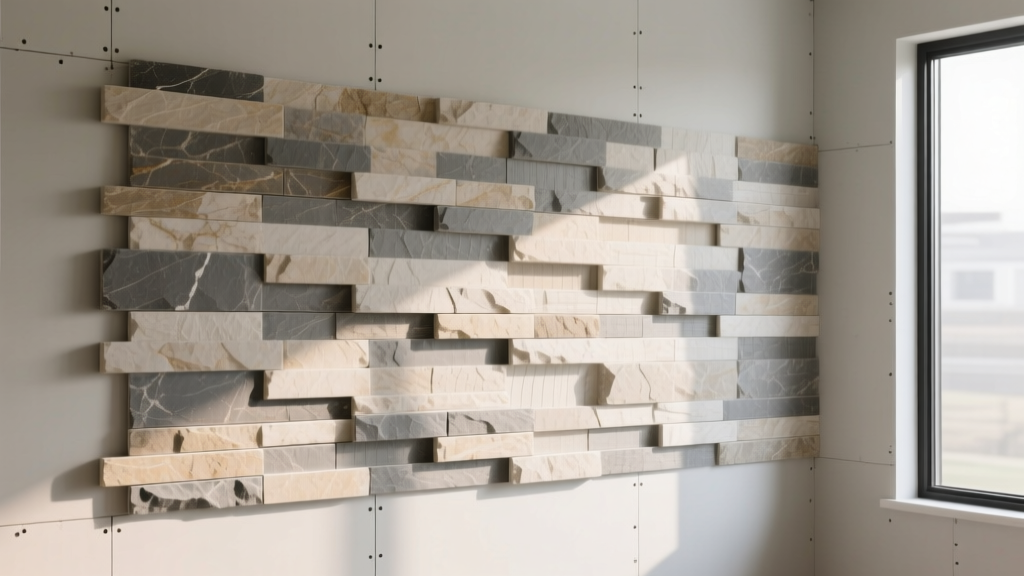
GenStone remains the market leader in DIY-friendly rigid faux stone. While not a true "peel and stick" product, its interlocking shiplap edges and pre-molded screw pockets make it the closest rigid panel to a plug-and-play experience. The panels are cast from real stone molds, providing deep, authentic shadow lines.
- Best For: Exterior wainscoting, interior fireplace surrounds, and accent walls where authentic texture is paramount.
- Installation Reality: You must use a polyurethane-based construction adhesive. According to This Old House, mechanical fastening into studs is non-negotiable for rigid panels to prevent bowing and shear failure over time.
- Edge Case: GenStone panels expand and contract with temperature fluctuations. If installed in an unconditioned space (like a garage), you must leave a 1/8-inch gap between panels to prevent buckling in high heat.
2. Flexible Stone Veneer (True Peel & Stick Real Stone)
Brands like StoneFlex and various imported flexible slate sheets offer the only true "peel and stick" experience using real stone. These products consist of a micro-thin layer of real slate or quartzite bonded to a fiberglass mesh, pre-coated with a high-strength 3M VHB (Very High Bond) acrylic adhesive backing.
- Best For: Curved walls, RV interiors, kitchen backsplashes, and lightweight drywall applications where mechanical fasteners are impossible.
- Installation Reality: The peel-and-stick adhesive is incredibly unforgiving. Once it touches the substrate, it cannot be repositioned. Furthermore, the substrate must be sealed with a primer; if applied to raw, dusty drywall, the adhesive will bond to the dust, not the paper facing, leading to catastrophic failure.
- Edge Case: Flexible stone is porous. If used in a bathroom or kitchen, it must be sealed with a penetrating siloxane sealer *after* installation to prevent water from migrating behind the mesh and degrading the adhesive.
3. Texture Plus (High-Density Polyurethane)
Texture Plus competes directly with GenStone but offers a wider variety of hyper-specific architectural profiles, including dry-stack limestone and weathered brick. Their panels are slightly denser, offering better impact resistance in high-traffic commercial spaces.
- Best For: Commercial interiors, retail displays, and high-impact exterior zones.
- Installation Reality: Similar to GenStone, this requires construction adhesive and screws. The interlocking joints are tighter, requiring more precision cutting with a miter saw equipped with a fine-tooth blade to prevent chipping the polyurethane edges.
Substrate Preparation Matrix
The number one reason adhesive-backed and adhesive-applied veneers fail is improper substrate preparation. Below is the exact preparation protocol required for different wall surfaces in 2026.
| Substrate Type | Prep for Rigid HDPU (Adhesive) | Prep for Flexible Stone (Peel & Stick) |
|---|---|---|
| Painted Drywall | Scuff sand with 80-grit; wipe with TSP. | Clean with isopropyl alcohol; apply acrylic primer. |
| Raw Plywood / OSB | Apply directly (ensure wood is dry, <15% MC). | Must seal with PVA primer first (wood oils break down PSA). |
| Exterior Concrete / CMU | Wire brush; apply masonry primer. | Not recommended (concrete off-gassing and moisture ruins PSA). |
Failure Modes: Why Veneer Stone Delaminates
Even the best products fail when environmental variables are ignored. Based on warranty claim data and field inspections, here are the most common failure modes for adhesive-applied and peel-and-stick stone veneers:
- Thermal Shearing on Exterior PVC: PVC panels installed on south-facing exterior walls can reach surface temperatures exceeding 160°F in direct summer sunlight. If standard acrylic peel-and-stick tapes are used instead of high-temp construction adhesive, the tape turns to gel and the panels slide off the wall.
- Moisture Trapping: When installing impermeable HDPU or PVC panels on exterior wood framing, moisture from inside the wall cavity can become trapped. As noted by the Building Science Corporation, wrapping the substrate in a breathable weather-resistive barrier (WRB) before furring out the wall is critical to prevent rot behind the veneer.
- Plasticizer Migration: Applying peel-and-stick flexible stone directly over certain vinyl wallpapers or PVC trim boards causes a chemical reaction. The plasticizers in the PVC bleed into the acrylic adhesive, turning it brittle and causing the stone to detach within 6 to 12 months.
- Cold-Weather Application: Polyurethane construction adhesives and VHB tapes require a minimum application temperature of 50°F (10°C). Applying these materials in an unheated garage in January will result in immediate bond failure.
Cost Analysis & ROI
While DIY installation saves roughly $8 to $12 per square foot in labor costs compared to traditional masonry thin-set installation, material costs vary wildly. According to the Remodeling Magazine Cost vs. Value Report, manufactured stone veneer consistently yields one of the highest returns on investment (ROI) for exterior upgrades, often recouping over 90% of its cost at resale.
Final Verdict: Which Should You Buy?
Your choice of peel and stick veneer stone or adhesive-applied panels must be dictated by your substrate, the physical environment, and your tolerance for mess.
- Choose Flexible Real Stone Veneer (True Peel & Stick) if you are working on an interior accent wall, a curved bulkhead, or an RV renovation where weight limits and mechanical fasteners are dealbreakers. Just ensure you prime the substrate flawlessly.
- Choose GenStone or Texture Plus (HDPU) if you are tackling an exterior facade, a skirting project, or a high-impact commercial space. Accept that you will need a caulk gun, construction adhesive, and a drill to meet building codes and ensure a lifetime bond.
- Avoid PVC Interlocking Panels for any exterior application or high-heat interior zone (like directly behind a wood stove), as the material's thermal expansion coefficients will compromise the adhesive bond over time.
By understanding the physical limitations of pressure-sensitive adhesives versus polyurethane construction adhesives, you can bypass the marketing hype and select a stone veneer system that will remain structurally sound and visually striking for decades.
Written by
Priya KapoorPriya Kapoor is a real estate market analyst and construction economics researcher with expertise in housing affordability, development feasibility, and infrastructure investment. She holds a Master of Regional Planning from Cornell University and previously worked as a senior analyst at CBRE's Investment Properties group, where she modeled returns for $4B in mixed-use development pipelines. Priya now runs an independent research practice advising developers, municipalities, and REITs on construction cost forecasting and market timing. She publishes the quarterly "BuildMat Market Pulse" report tracking material price indices across 12 commodity categories. Based in Austin, TX, Priya serves on the board of Habitat for Humanity Austin and is a marathon runner.
More from Priya Kapoor
View all
Construction Cost
Cost to Build a 1600 Sq Ft Home in 2026: Full Breakdown
Accurate 2026 cost to build a 1600 sq ft home—material, labor, and regional pricing breakdowns included. Plan your budget with real-time estimates.
Aug 11, 2026

Wood & Lumber
Name the Types of Wood for Pressure Treatment and Preservation
Learn how to name the types of wood best suited for pressure treatment. Compare species treatability, chemical retention levels, and 2026 preservation costs.
Aug 4, 2026

Stone & Masonry
Stone Veneer Suppliers Lindenhurst: 2026 Cost Analysis
Analyze 2026 stone veneer costs in Lindenhurst, NY. Compare local supplier pricing, delivery fees, and Suffolk County installation labor rates.
Aug 4, 2026