Stone Veneer Dealers Near Me: A Maintenance & Repair Guide
Discover when to search for stone veneer dealers near me for expert maintenance, exact stone matching, and professional-grade sealers to protect your exterior.

Why Homeowners Search for Stone Veneer Dealers Near Me
When exterior or interior stone veneer begins to show signs of wear, a standard big-box hardware store cannot provide the specialized materials required for proper restoration. Searching for stone veneer dealers near me is typically a high-intent move triggered by specific maintenance crises: severe efflorescence, spalling from freeze-thaw cycles, or the need to source exact-match replacement stones for damaged sections. Local specialty masonry yards and authorized veneer dealers possess the technical inventory, custom pigment blends, and professional-grade chemical cleaners necessary to execute lasting repairs.
This guide details exactly when to bypass general contractors and engage local stone veneer dealers for maintenance, how to source matching materials for aging installations, and which professional-grade sealers to request to protect your investment through 2026 and beyond.
The 4 Maintenance Triggers Requiring a Specialty Dealer
Routine cleaning with a soft brush and mild detergent is sufficient for the first few years of a stone veneer's life. However, when structural or chemical anomalies appear, you need the inventory and expertise of a dedicated masonry supplier.
1. Severe Efflorescence and Mineral Staining
Efflorescence occurs when water-soluble salts migrate through the mortar and stone substrate, leaving white, crystalline deposits on the surface. While mild cases can be brushed away,顽固 (stubborn) efflorescence requires specialized chemical cleaners. Local dealers stock professional masonry cleaners like PROSOCO Sure Klean Vana-Trol or EnviroKlean formulations, which dissolve salts without etching the stone face or degrading the mortar joints.
2. Mortar Joint Degradation (Repointing)
Mortar joints in stone veneer typically last 20 to 30 years, but harsh weather can cause premature cracking and crumbling. Repointing requires specific mortar mixes. A local dealer will supply polymer-modified, shrinkage-compensated veneer mortars (such as SPEC MIX Stone Veneer Mortar) that match the original joint profile and color, preventing the micro-cracks common with standard Type N masonry cement.
3. Spalling and Freeze-Thaw Damage
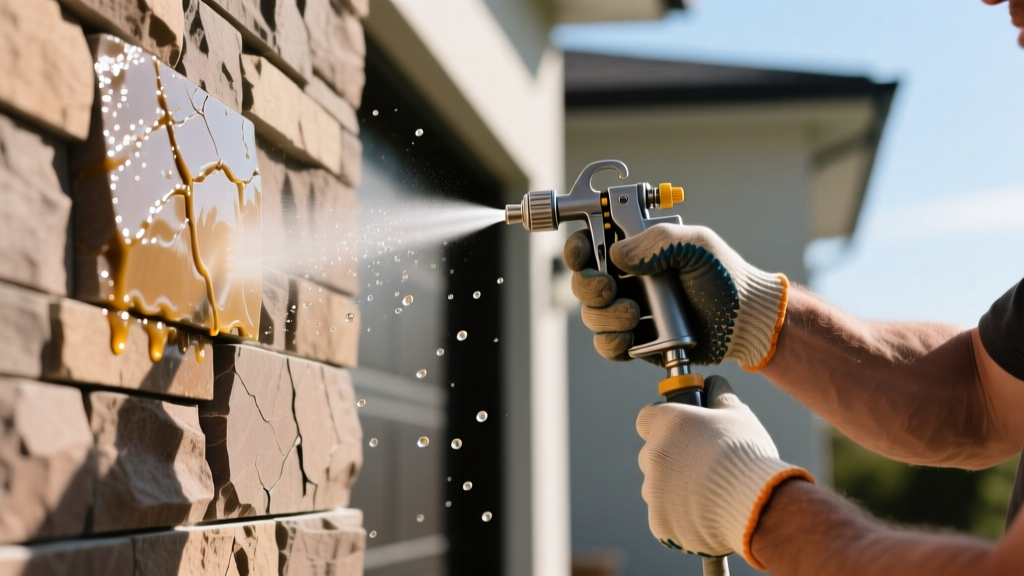
Spalling happens when moisture penetrates the stone, freezes, and expands, causing the face of the stone to pop off. This is often the result of an improper, film-forming sealer applied years prior. Dealers supply breathable, penetrating silane/siloxane sealers that allow trapped moisture to escape, halting further spalling.
4. Impact Damage and Missing Stones
Landscaping equipment, vehicle impacts, or foundation settling can crack or dislodge individual stones. Sourcing a single replacement stone that matches a 10-year-old, UV-weathered installation is nearly impossible from a standard catalog. Specialty dealers offer custom color-matching and batch-blending services.
Sourcing Exact Matches for Veneer Repairs
Manufactured stone veneer (MSV) from brands like Cultured Stone, Eldorado, or Coronado fades and weathers over time. If you simply order the original color name from a dealer, the new stones will look jarringly bright compared to the weathered wall. When you visit local stone veneer dealers, utilize these professional matching methods:
| Matching Method | Success Rate | Best Application | 2026 Cost Estimate |
|---|---|---|---|
| Physical Batch Sampling | 70% | Recent installs (under 3 years old) | $0 - $50 (sample fee) |
| Custom Oxide Pigment Blending | 95% | Weathered, faded, or discontinued colors | $150 - $350 per custom batch |
| Spectrophotometer Scanning | 90% | High-end natural stone or complex multi-color MSV | $75 - $125 per scan |
| Acid Wash / Antiquing | 85% | Blending new stones into an older, dirty wall | $40 - $80 (materials only) |
Pro Tip: Always bring a physical, broken piece of your existing stone to the dealer. Photographs on a smartphone are distorted by ambient light and screen calibration, leading to inaccurate color matching by the yard's batch mixers.
Professional-Grade Sealers: What to Ask Your Dealer For
The most common mistake homeowners make is applying an acrylic or polyurethane "wet look" sealer to exterior stone veneer. These film-forming products trap moisture inside the masonry assembly. When the sun heats the wall, the trapped vapor pushes against the acrylic film, causing blistering, peeling, and eventually, stone spalling. According to guidelines supported by the Brick Industry Association (BIA), masonry must be allowed to breathe.
When consulting with stone veneer dealers near you, request penetrating silane/siloxane sealers. These chemicals react with the silica in the stone and mortar to form a hydrophobic barrier beneath the surface, repelling liquid water while allowing water vapor to escape.
| Sealer Type | Active Ingredient | Breathability | Lifespan | Top Pro Brand (2026) |
|---|---|---|---|---|
| Penetrating Siloxane | Silane/Siloxane Blend | High (Vapor Permeable) | 5-7 Years | PROSOCO Weather Seal Siloxane PD |
| Consolidating | Silicic Acid / Alkoxysilane | Very High | 10+ Years | Conservare OH (Natural Stone Only) |
| Fluoropolymer | Fluorochemical | High (Oil & Water Repellent) | 5-8 Years | Stain-Proof Dense Stone Impregnator |
| Film-Forming (Avoid) | Acrylic / Polyurethane | Low (Traps Moisture) | 1-3 Years | N/A (Not recommended for exterior veneer) |
Vetting Local Dealers for Maintenance Expertise
Not all building material suppliers understand the nuances of masonry restoration. When searching for local dealers, use these criteria to ensure you are getting expert advice rather than just a retail transaction:
- Ask About Moisture Meter Testing: A knowledgeable dealer will advise you to test the moisture content of your wall (using a pinless masonry moisture meter) before applying any sealer. Applying siloxane to a wall with >15% internal moisture will trap the water and cause catastrophic failure.
- Check for MCAA Affiliations: Dealers who supply members of the Mason Contractors Association of America (MCAA) are typically stocked with commercial-grade, ASTM-compliant repair materials rather than consumer-grade DIY products.
- Inquire About Mortar Colorants: For repointing, ask if they stock integral mortar colorants (like Davis Colors or Solomon Colors). If your existing mortar is a custom buff or charcoal gray, standard gray Portland cement will ruin the aesthetic.
2026 Cost Breakdown for Dealer-Sourced Maintenance
Budgeting for professional-grade maintenance materials sourced from a local specialty yard requires understanding current market pricing. While dealer-sourced products cost more upfront than hardware store alternatives, their longevity drastically reduces the cost per year of protection.
Estimated Material Costs (2026)
- Penetrating Siloxane Sealer: $55 - $85 per gallon (covers 100-150 sq. ft. depending on stone porosity).
- Polymer-Modified Veneer Mortar (80 lb bag): $28 - $42 (yields approx. 15-20 linear feet of 1/2" repointing).
- Professional Efflorescence Cleaner: $40 - $65 per gallon (must be diluted 1:4 or 1:10 with water).
- Custom Color-Matched Replacement Stones: $12 - $25 per square foot (minimum batch fees usually apply, averaging $250).
Frequently Asked Questions
Can I use a power washer to clean my stone veneer before sealing?
No. High-pressure washing (above 1,500 PSI) can erode the cementitious face of manufactured stone and blast out weakened mortar joints. Use a low-pressure garden sprayer to apply a dealer-sourced masonry cleaner, agitate gently with a natural bristle brush, and rinse with a standard garden hose.
How often should I reseal exterior stone veneer?
If you use a high-quality penetrating siloxane sealer sourced from a specialty dealer, reapplication is typically only required every 5 to 7 years. You can test the sealer's efficacy by splashing water on the stone; if it beads up and rolls off, the sealer is intact. If the stone darkens as it absorbs the water, it is time to visit your local dealer for a fresh supply.
Do local stone dealers offer repair services, or just materials?
Most dealers are strictly material suppliers. However, established specialty yards maintain vetted referral lists of certified masons who specialize in veneer restoration, repointing, and sealant application. Always ask the counter staff for their preferred restoration contractor.
Written by
Marcus ChenMarcus Chen is a licensed structural engineer (PE) and building materials analyst with over 12 years of experience across residential, commercial, and industrial construction. He holds a Master of Science in Civil Engineering from UC Berkeley and spent six years at Thornton Tomasetti before transitioning to independent consulting and technical writing. Marcus specializes in material selection for seismic-prone regions, concrete reinforcement strategies, and lifecycle cost analysis. His work has been cited by the American Concrete Institute (ACI) and the Structural Engineers Association of California (SEAOC). When he is not on a job site or at his desk, you will find him hiking the Sierra Nevada or restoring a 1920s craftsman bungalow in Oakland, CA.
More from Marcus Chen
View all
Construction Cost
How Much Did the Eiffel Tower Cost to Build?
How much did the Eiffel Tower cost to build in 1889? We adjust for inflation and compare its budget to modern skyscraper construction.
Aug 4, 2026

Fire Resistance
What Is a Fire Resistant Material? Testing & Certification Guide
Discover what is a fire resistant material through ASTM and UL testing. Learn how fire ratings, certifications, and assemblies work in construction.
Aug 4, 2026

Construction Cost
How Much Did the Burj Khalifa Cost to Build?
How much did the Burj Khalifa cost to build? We break down the $1.5B project and extract 5 money-saving strategies for your next build.
Jul 30, 2026