White Stacked Stone Veneer: Natural vs Manufactured vs Faux
Compare natural quartzite, manufactured concrete, and polyurethane white stacked stone veneer. Expert insights on costs, weight, and installation.

The Shift Toward Monochromatic Masonry
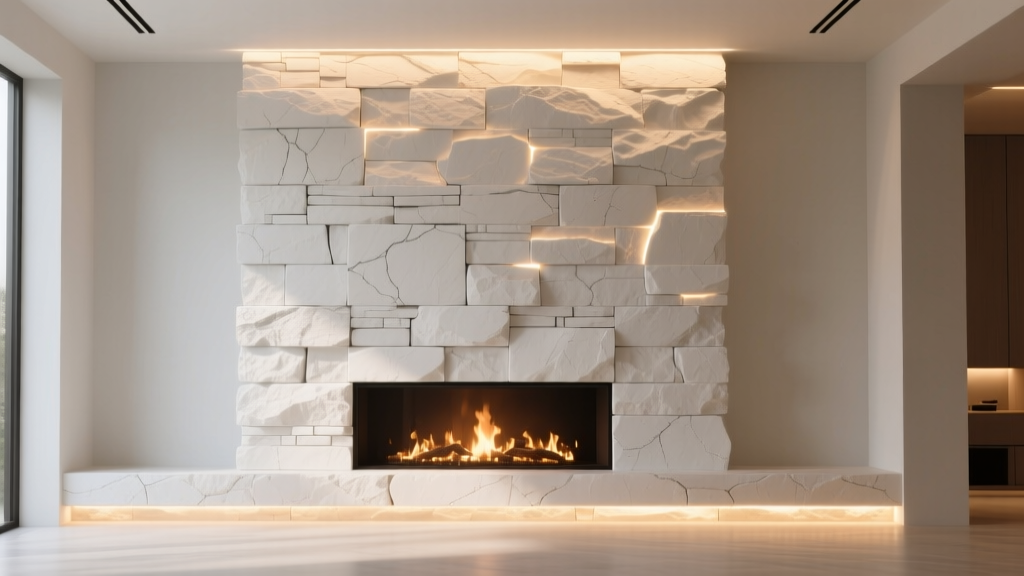
White stacked stone veneer has dominated architectural feature walls, exterior wainscoting, and modern farmhouse facades. However, specifying the right material requires navigating a complex matrix of structural loads, moisture management, and budget constraints. While the visual profile of a tight-stack ledger stone remains consistent across product lines, the substrate requirements and long-term durability vary drastically between natural quartzite, manufactured concrete, and high-density polyurethane alternatives. This comparison breaks down the material science, installation realities, and true lifecycle costs of each category.
Material Breakdown and Performance Profiles
1. Natural White Quartzite Stacked Stone
Natural quartzite is a metamorphic rock formed from sandstone under extreme heat and pressure, resulting in a highly dense, non-porous material. White quartzite profiles, such as those quarried in the Appalachian regions or imported from Brazil, offer unmatched crystalline reflectivity and edge-to-edge color consistency.
Structural Realities: Natural stacked stone is exceptionally heavy, averaging 10 to 14 pounds per square foot. According to structural engineering guidelines referenced by the National Association of Home Builders, any adhered masonry veneer exceeding 10 feet in height or 40 pounds per square foot requires independent structural support. For natural stone, this typically means pouring a dedicated concrete footing or installing heavy-gauge steel angle iron ledgers bolted directly into the foundation.
Installation & Maintenance: Installation requires a traditional scratch coat, Type S or Type N mortar, and meticulous jointing. Because quartzite is naturally low-porosity, it does not strictly require sealing for interior use. However, exterior applications in freeze-thaw climates demand a breathable silane/siloxane penetrating sealer to prevent subsurface moisture entrapment and subsequent spalling.
2. Manufactured Concrete Stone Veneer (MSV)
Manufactured stone veneer is cast from lightweight aggregates, Portland cement, and iron-oxide pigments in molds taken from real stone. Premium white profiles, like Eldorado Stone’s 'Cliffstone' in Arctic White, achieve a highly realistic stacked ledger look while cutting weight significantly.
Compliance and Weight: High-quality MSV must comply with ASTM C1670, the standard specification for adhered manufactured stone masonry veneer units. This standard mandates strict limits on water absorption, freeze-thaw durability, and flexural strength. Compliant MSV typically weighs between 6 and 9 pounds per square foot, allowing it to be adhered directly to properly prepared wood or steel stud walls without supplemental footings, provided the total weight of the wall assembly remains within code limits.
Moisture Management: The critical failure point for MSV is moisture trapping. When installed over weather-resistive barriers (WRB) on exterior walls, a weep screed at the base and a 2.5 lb self-furring galvanized metal lath are mandatory. The lath must be overlapped by 1 inch horizontally and 2 inches vertically to ensure the scratch coat keys properly, preventing the veneer from delaminating during thermal expansion cycles.
3. High-Density Polyurethane (Faux) Panels
Faux stacked stone panels are molded from high-density polyurethane foam. Brands like NextStone and GenStone produce interlocking panels that mimic the shadow lines and texture of white stacked ledger stone without the mineral composition.
Weight and Adhesion: Weighing a mere 1 to 1.5 pounds per square foot, these panels bypass all structural masonry requirements. They are installed using a zigzag bead of polyurethane construction adhesive (such as Loctite PL Premium 3X) directly over OSB, plywood, or even painted drywall. The interlocking shiplap edges conceal fasteners and create a continuous visual plane.
UV and Thermal Stability: Early generations of faux stone suffered from UV degradation and chalking. Modern 2026 formulations incorporate titanium dioxide (TiO2) and advanced UV inhibitors directly into the polyurethane matrix, preventing the bright white finish from yellowing. However, polyurethane expands and contracts at a much higher rate than masonry; installers must leave a 1/8-inch expansion gap at panel ends and use color-matched exterior caulk rather than rigid grout.
Head-to-Head Comparison Matrix
| Feature | Natural White Quartzite | Manufactured Concrete (MSV) | Polyurethane Faux Panels |
|---|---|---|---|
| Material Cost | $14.00 – $22.00 / sq ft | $8.00 – $15.00 / sq ft | $11.00 – $18.00 / sq ft |
| Weight | 10 – 14 lbs / sq ft | 6 – 9 lbs / sq ft | 1 – 1.5 lbs / sq ft |
| Installation Method | Mortar set over lath/scratch coat | Mortar set over lath/scratch coat | Construction adhesive over substrate |
| Structural Support | Requires engineered footing/ledger | Standard framing (up to code limits) | None required |
| Exterior Durability | Excellent (requires breathable sealer) | Very Good (requires weep screed) | Good (requires UV-stable formulation) |
| Install Speed (100 sq ft) | 3 – 5 Days (including curing) | 2 – 3 Days (including curing) | 4 – 6 Hours |
Hidden Costs and Installation Realities
Material price per square foot is only a fraction of the total project cost. When budgeting for white stacked stone veneer, contractors and homeowners must account for the ancillary materials and labor specific to each system.
The Mortar System Premium (Natural & Manufactured)
For natural and manufactured stone, the 'hidden' costs lie in the prep work. A proper mortar-based installation requires:
- Weather-Resistive Barrier (WRB): Two layers of Grade D building paper or a high-performance fluid-applied membrane.
- Corrosion-Resistant Lath: 2.5 lb self-furring galvanized metal lath, fastened every 6 inches into studs.
- Scratch Coat: A 1/2-inch layer of Type S mortar, scored horizontally, requiring 24 to 48 hours of curing before stone application.
- Weep Screed & Flashing: Mandatory at the base of exterior walls to allow hydrostatic pressure to escape. As noted in building science guidelines from the Journal of Light Construction, omitting a weep screed is the leading cause of rot and mold behind manufactured stone veneer.
These prep materials add $2.50 to $4.00 per square foot, and the specialized masonry labor can double the overall installation budget compared to carpentry-based faux stone.
The Faux Stone Adhesive and Trim Factor
While faux stone eliminates the need for masons and mortar mixers, the adhesive and trim requirements add up. A single 28 oz tube of premium polyurethane adhesive covers approximately 15 to 20 square feet. Furthermore, faux systems require proprietary color-matched trim pieces for outside corners, inside corners, and starter strips, which are often priced at a 30% premium over the flat panels.
Brand Spotlight: Top Contenders in the Market
Eldorado Stone (Manufactured) - Profile: Cliffstone in Arctic
Pros: Exceptional color consistency; deep shadow lines that mimic real ledger stone; widely available through national masonry distributors; fully ASTM C1670 compliant.
Cons: Requires strict adherence to moisture management protocols; heavy enough to require structural review for multi-story exterior applications.
NextStone (Faux) - Profile: Slatestone in White
Pros: Integrated polyurethane insulation adds R-value (approx. R-4.5); interlocking design hides fasteners; can be installed directly over brick or concrete block using masonry screws.
Cons: The repeating pattern can become visible on large, uninterrupted walls if panels are not staggered and flipped during installation; lacks the thermal mass and acoustic dampening of real stone.
Dutch Quality Stone (Natural) - Profile: Alpine White Quartzite
Pros: 100% authentic geological variation; zero VOC off-gassing; impervious to UV fading; adds verifiable appraisal value to luxury residential builds.
Cons: Highest material and labor cost; requires heavy equipment for delivery and staging; limited to specialized masonry contractors.
Expert Verdict: Which Should You Choose?
The optimal choice for white stacked stone veneer depends entirely on the structural reality of your project and the intended environment.
If you are designing a new-build exterior facade with engineered masonry ledgers, natural white quartzite provides an unmatched, permanent architectural statement that will outlast the structure itself. For exterior retrofits over existing wood framing where weight is a concern but a mineral aesthetic is required, ASTM-compliant manufactured concrete veneer is the industry standard, provided the weep screed and WRB details are executed flawlessly. Finally, for interior fireplace surrounds, basement renovations, or DIY commercial accent walls where wet masonry is prohibited, high-density polyurethane panels offer the fastest, cleanest, and most structurally forgiving solution.
Always verify the specific weight loads with a structural engineer before specifying natural or manufactured stone for elevations exceeding single-story heights, and ensure your local building department has approved the specific weep screed and flashing details for exterior adhered masonry veneers.
Written by
James ThorntonJames Thornton is a construction industry veteran with 25 years of hands-on experience in wood framing, lumber grading, and residential building codes. He started as a framing carpenter in rural Oregon, earned his ICC Residential Building Inspector certification, and eventually became a senior plan reviewer for the City of Portland Bureau of Development Services. James holds a B.S. in Wood Science & Technology from Oregon State University and is a certified lumber grader through the West Coast Lumber Inspection Bureau (WCLIB). He has inspected over 3,000 residential construction sites and authored the city's internal guide on advanced framing techniques (2x6 at 24" O.C.). James lives in Bend, OR, where he builds custom timber-frame cabins and competes in lumberjack sports.
More from James Thornton
View all
Insulation
Best Home Insulation Materials: Complete 2026 Guide
Compare top home insulation materials for 2026. Find R-values, installed costs per square foot, and best uses for fiberglass, spray foam, and mineral wool.
Aug 4, 2026

Sustainable Building
Certify Your Green Building Material for LEED and WELL
Step-by-step guide to certifying a green building material for LEED v5 and WELL v2. Master EPDs, HPDs, and VOC limits for 2026 project specifications.
Aug 4, 2026

Stone & Masonry
Veneer Stacked Stone Panels: Interior Design & Style Showcase
Discover how veneer stacked stone panels transform interiors. Explore modern design profiles, material pairings, and technical installation specs.
Aug 4, 2026