Board and Batten Vinyl Siding Performance Specs and Wind Ratings
Analyze board and batten vinyl siding performance specs, including ASTM wind ratings, thermal expansion metrics, and thickness grades for 2026 builds.
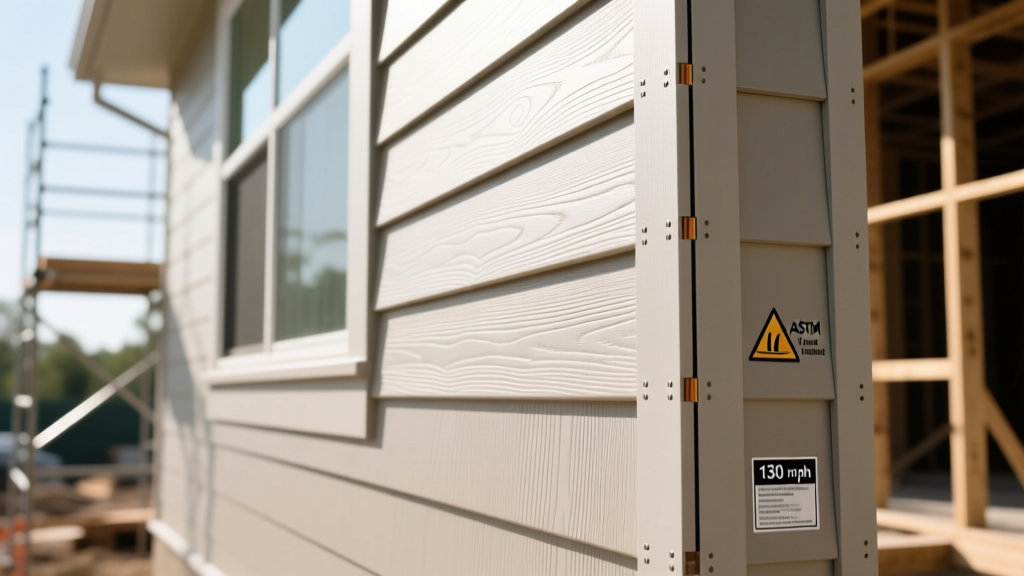
Dimensional Anatomy and Projection Depths
When evaluating board and batten vinyl siding, the aesthetic appeal of vertical lines is entirely dependent on the underlying dimensional engineering. Unlike horizontal lap siding, vertical board and batten panels rely on deep projection depths to create structural rigidity and authentic shadow lines. Standard industry profiles feature an exposed board face width ranging from 6 to 8 inches, paired with a 2-inch or 3-inch batten strip.
The most critical specification to examine is the projection depth—the distance the batten strip extends outward from the flat board face. Builder-grade products often feature a shallow 3/4-inch projection, which looks flat under midday sun and offers minimal structural ribbing. Premium architectural grades push this projection to 1.25 or even 1.5 inches. This deeper profile not only mimics the authentic shadow cast by real 5/4-inch rough-sawn cedar but also acts as a structural rib, increasing the panel's moment of inertia and resistance to bending under negative wind pressure.
Thickness Grading and Impact Resistance
Vinyl siding thickness is measured in inches (often expressed in mils, where 1 mil = 0.001 inches). For board and batten vinyl siding, thickness directly correlates with impact resistance, stiffness, and the panel's ability to lay flat without oil-canning (visible rippling). According to Vinyl Siding Institute (VSI) guidelines, thickness must be measured at the thickest point of the cross-section, excluding the nailing hem.
| Grade Classification | Nominal Thickness | ASTM D4226 Impact Rating | Best Application |
|---|---|---|---|
| Builder / Economy | 0.040" - 0.042" | Class 1 (Standard) | Interior accents, low-budget flips |
| Residential Standard | 0.044" - 0.046" | Class 2 (Enhanced) | Standard suburban residential builds |
| Premium / Architectural | 0.048" - 0.052" | Class 3/4 (Severe Hail) | Hail-prone regions, custom luxury homes |
Premium 0.048-inch+ panels are typically extruded with acrylic modifiers or higher concentrations of impact modifiers (like MBS - Methacrylate Butadiene Styrene) blended into the PVC resin. This allows the thicker vinyl to absorb kinetic energy from hail strikes without shattering, a vital specification for builds in Tornado Alley or the Midwest.
Wind Load Capacity and Nailing Hem Engineering
Vertical siding profiles face unique aerodynamic challenges. When wind hits a building corner, it accelerates, creating massive negative pressure (suction) on the side walls. Board and batten vinyl siding must resist being pulled off the sheathing. This is governed by ASTM D3679, the standard specification for rigid polyvinyl chloride (PVC) siding.
The primary defense against wind uplift is the nailing hem. Manufacturers engineer two types of hems:
- Single Hem: The vinyl is folded over once. It provides standard pull-through resistance (typically around 75-90 lbs per fastener) and is rated for basic wind speeds up to 110 mph.
- Double Hem (Rolled Hem): The vinyl is folded over twice, creating a reinforced, multi-layered channel. This design doubles the pull-through resistance (exceeding 150 lbs per fastener) and is mandatory for high-wind zones.
For coastal builds or regions subject to hurricane-force winds, specify board and batten panels with a double-rolled nailing hem and verify that the specific product line holds a Miami-Dade Notice of Acceptance (NOA) or meets the IBHS FORTIFIED Home high-wind standards for 150+ mph exposure.
Fastener Penetration Depth
Even a premium double-hem panel will fail if the fastener specifications are ignored. The wind load rating assumes the use of 1.5-inch to 2-inch galvanized or aluminum siding nails, penetrating a minimum of 3/4 inch into solid wood framing or structural sheathing. Fastening only into OSB or foam insulation voids the wind warranty and compromises the structural tie-back.
Thermal Expansion Coefficients and Installation Tolerances
Polyvinyl chloride is highly susceptible to thermal expansion and contraction. The coefficient of linear expansion for rigid PVC is approximately 3.3 x 10^-5 in/in/°F. In practical terms, a 10-foot board and batten vinyl panel will expand and contract by roughly 5/8 of an inch across a 100°F temperature swing (e.g., from a 20°F winter night to a 120°F summer afternoon surface temperature in direct sun).
If the installation specifications do not account for this movement, the panels will buckle, warp, or tear at the locks. The universal specification for accommodating this movement includes:
- Center Nailing: Fasteners must be driven precisely in the center of the nailing slots.
- Clearance Gap: A strict 1/32-inch gap must be left between the nail head and the vinyl hem to allow the panel to slide laterally.
- Perimeter Gaps: A minimum 1/4-inch expansion gap must be maintained at all J-channels, corner posts, and rooflines. In extreme climates (e.g., the Upper Midwest), a 3/8-inch gap is recommended during winter installations.
Fire Performance and Flame Spread Indices
While vinyl is a petroleum-based plastic, rigid PVC used in exterior cladding contains roughly 57% chlorine by weight, making it inherently flame retardant. When evaluating fire performance specifications, look for the ASTM E84 (Surface Burning Characteristics of Building Materials) test results.
High-quality board and batten vinyl siding typically achieves a Flame Spread Index (FSI) of 15 to 25 and a Smoke Developed Index (SDI) of less than 450. This classifies the material as Class A (the highest rating), meaning it will not readily ignite, will self-extinguish once the heat source is removed, and will not act as a primary fuel source in an exterior fire event. However, it will melt and fall away at temperatures exceeding 350°F, which can expose the underlying weather-resistive barrier (WRB).
2026 Material Cost and ROI Matrix
Pricing for board and batten vinyl siding has stabilized following the supply chain disruptions of the early 2020s, but premium architectural grades command a distinct premium due to the higher volume of PVC resin and acrylic modifiers required per square foot.
| Material Grade | Material Cost (per sq. ft.) | Expected Lifespan | Warranty Coverage |
|---|---|---|---|
| Builder Grade (0.040") | $2.80 - $3.50 | 20 - 25 Years | Limited Lifetime (Prorated) |
| Residential (0.044") | $4.00 - $5.20 | 30 - 40 Years | Lifetime (Non-Prorated 50yr) |
| Premium Architectural (0.050") | $6.50 - $8.50 | 50+ Years | Lifetime + Fade/Hail Transferable |
Climate-Specific Selection Framework
Do not default to the cheapest option if your build site dictates otherwise. Use this decision matrix to specify the correct board and batten vinyl siding for your regional climate:
- Pacific Northwest & Coastal Zones: Prioritize high wind ratings (double nailing hem) and integrated moisture channels behind the panel to prevent trapped condensation. UV resistance is secondary.
- Southwest & High-UV Zones: Specify premium grades with high concentrations of titanium dioxide (TiO2) UV stabilizers to prevent chalking and thermal warping. Lighter colors (white, light gray) are mandatory to reduce thermal expansion cycles.
- Midwest & Tornado Alley: Mandate 0.048-inch minimum thickness with Class 3 or 4 impact ratings to withstand severe hail. Ensure the sub-sheathing is properly braced to prevent panel puncture from blunt force.