Evaluate CertainTeed Exterior Siding: Complete Guide
Evaluate CertainTeed exterior siding with our complete guide. Compare Monogram, CedarBoards, and Grand Manor lines for cost, durability, and ROI.
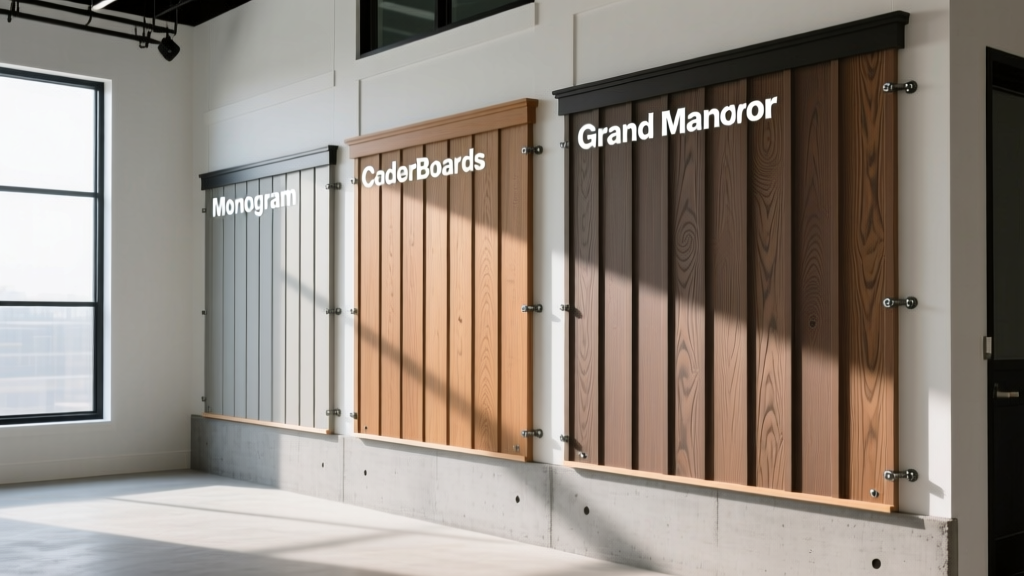
When professionals and homeowners evaluate the building materials company CertainTeed on exterior siding, they are looking at one of the most expansive vinyl and polymer cladding portfolios in the North American market. As a subsidiary of Saint-Gobain, CertainTeed leverages advanced manufacturing to produce siding that competes directly with fiber cement and engineered wood. However, navigating their tiered product lines—from entry-level builder grades to premium insulated profiles—requires a clear understanding of material thickness, thermal performance, and long-term structural integrity.
This complete material guide breaks down the technical specifications, real-world installed costs, and performance metrics of CertainTeed's core exterior siding offerings, providing the exact data you need to specify the right product for your next residential or light-commercial project.
The CertainTeed Vinyl Siding Portfolio: Line-by-Line Breakdown
CertainTeed segments its vinyl siding into distinct architectural and performance tiers. The primary differentiator across these lines is the panel thickness (measured in inches), the presence of integrated foam insulation, and the complexity of the surface texture. Thicker panels resist wind-load deflection and minimize the 'oil-canning' effect (visible waviness) under direct sunlight.
| Product Line | Thickness | Profile Options | Insulation | Material Cost (per sq. ft.) |
|---|---|---|---|---|
| Monogram | .044" | Clapboard, Dutchlap | None | $2.50 - $3.20 |
| CedarBoards | .044" (Panel) | D4", D5", Board & Batten | Contoured EPS Foam | $4.00 - $5.50 |
| Grand Manor | .052" | Hand-Split Shakes | None | $5.00 - $6.50 |
| ICON | .048" | Clapboard, Dutchlap | Optional | $3.50 - $4.50 |
| Carolina | .042" | Clapboard, Dutchlap | None | $2.00 - $2.60 |
The Monogram line remains the company's volume leader, utilizing a .044-inch thickness that meets the ASTM D3679 standard for rigid vinyl siding. For projects demanding higher impact resistance and a deeper shadow line, Grand Manor provides a .052-inch premium shake profile that closely mimics hand-split cedar, making it ideal for accent walls, gables, and coastal architecture.
Performance Metrics: Wind, Impact, and Thermal Resistance
Wind Load and Structural Integrity
Vinyl siding failures during severe weather events are rarely due to the material tearing; they occur when panels detach at the nailing hem. CertainTeed addresses this with their proprietary STUDfinder nailing hem, which features reinforced, elongated slots designed to center fasteners directly over wall studs. When installed correctly with 1.5-inch galvanized roofing nails driven into 16-inch-on-center framing, premium lines like Monogram and CedarBoards can withstand wind loads up to 190 mph, exceeding the requirements for most Hurricane Wind Zone 2 and 3 coastal building codes.
Thermal Insulation and Energy Compliance
Standard uninsulated vinyl siding offers a negligible R-value (approximately R-0.61). To bridge this gap, the CedarBoards Insulated Siding line integrates a custom-contoured expanded polystyrene (EPS) foam backing. This backing serves two purposes: it increases the overall wall assembly R-value by up to R-3.0, and it provides continuous structural support behind the vinyl panel, virtually eliminating impact cracking from hail or stray projectiles. According to data published by the Vinyl Siding Institute, insulated vinyl siding also reduces thermal bridging through wood studs, improving the overall energy efficiency of the building envelope.
Cost Analysis: Material vs. Installed Pricing
Evaluating the financial scope of a CertainTeed siding project requires separating material costs from labor, trim, and waste factors. While material prices fluctuate based on regional distribution and resin costs, the following baseline reflects current market averages for 2026.
Average Installed Cost Breakdown (Per Square Foot)
- Economy (Carolina/Monogram): $6.50 - $8.50 installed
- Mid-Tier Insulated (CedarBoards D5"): $9.00 - $12.50 installed
- Premium Accent (Grand Manor Shakes): $13.00 - $17.00 installed
Note: These figures assume standard two-story residential construction. Complex rooflines, extensive custom trim work (using CertainTeed's Cellular PVC trim lines), and scaffolding requirements will push costs toward the higher end of the spectrum.
When comparing these figures to the annual Remodeling Magazine Cost vs. Value Report, vinyl siding replacement consistently yields one of the highest returns on investment in exterior remodeling, often recouping 75% to 85% of the project cost at resale. CertainTeed's premium lines, particularly those featuring their darker PermaColor formulations, tend to appraise higher due to enhanced curb appeal and fade-resistant warranties.
Installation Nuances and Common Contractor Pitfalls
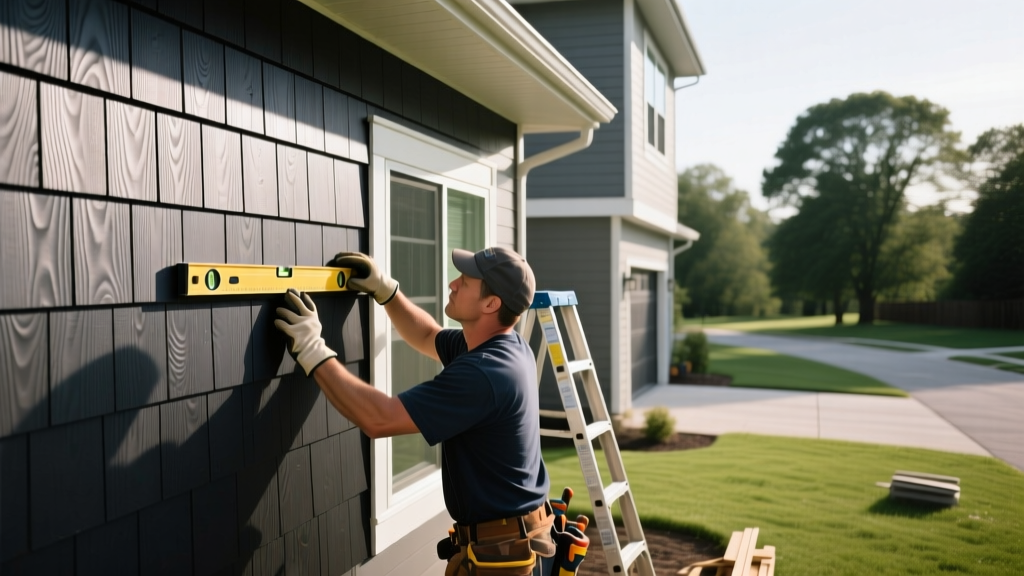
Even the highest-grade CertainTeed siding will fail prematurely if installation tolerances are ignored. Vinyl expands and contracts significantly with temperature fluctuations (up to 5/8 of an inch per 12-foot panel). Evaluate your contractor's methodology against these critical installation benchmarks:
- The 1/32-Inch Gap Rule: Panels must never be pulled taut. Fasteners should be centered in the nailing slots with a 1/32-inch gap between the nail head and the vinyl hem to allow for lateral movement. Driving nails flush or tight will cause the siding to buckle in the summer heat.
- J-Channel and Trim Clearances: When cutting panels to fit into J-channels or around window casings, installers must leave a minimum 1/4-inch expansion gap. In colder climates, this gap should be increased to 3/8-inch to accommodate winter contraction.
- Flashing Integration: CertainTeed's siding systems are not waterproof barriers; they are water-shedding claddings. Proper integration of the weather-resistive barrier (WRB) and Z-flashing above windows, doors, and deck ledges is mandatory to prevent moisture intrusion behind the foam backing of insulated lines.
Warranty Evaluation: What the PermaColor Guarantee Actually Covers
CertainTeed backs its premium siding lines with a lifetime limited warranty that is transferable to a second homeowner within the first 50 years. However, the true value lies in the PermaColor Guarantee. Unlike standard vinyl warranties that prorate fade protection after five years, the PermaColor system utilizes advanced titanium dioxide (TiO2) UV inhibitors mixed throughout the resin, not just on the surface.
This guarantee ensures that the siding will not fade beyond a specific Delta E (color difference) threshold for the life of the product. It is crucial to note that this warranty is voided if the siding is painted post-installation or if it is exposed to abnormal chemical runoff (such as un-diluted chlorine from pool maintenance or unauthorized herbicide spraying). Always review the official CertainTeed siding documentation for the exact exclusion clauses before signing a contract.
Final Verdict: Is CertainTeed Right for Your Project?
If your project requires a balance of architectural authenticity, low maintenance, and strict budget controls, CertainTeed offers a highly competitive solution. The Monogram line is the undisputed workhorse for full-home renovations where budget is a primary constraint, offering excellent wind resistance and a massive color palette. For projects in colder climates or homes facing busy streets where noise dampening and impact resistance are priorities, upgrading to CedarBoards Insulated Siding justifies the 30% to 40% material premium through improved thermal performance and structural rigidity. By strictly enforcing ASTM-compliant installation practices, a CertainTeed exterior will reliably protect and beautify a structure for decades.
Written by
James ThorntonJames Thornton is a construction industry veteran with 25 years of hands-on experience in wood framing, lumber grading, and residential building codes. He started as a framing carpenter in rural Oregon, earned his ICC Residential Building Inspector certification, and eventually became a senior plan reviewer for the City of Portland Bureau of Development Services. James holds a B.S. in Wood Science & Technology from Oregon State University and is a certified lumber grader through the West Coast Lumber Inspection Bureau (WCLIB). He has inspected over 3,000 residential construction sites and authored the city's internal guide on advanced framing techniques (2x6 at 24" O.C.). James lives in Bend, OR, where he builds custom timber-frame cabins and competes in lumberjack sports.
More from James Thornton
View all
Insulation
Best Home Insulation Materials: Complete 2026 Guide
Compare top home insulation materials for 2026. Find R-values, installed costs per square foot, and best uses for fiberglass, spray foam, and mineral wool.
Aug 4, 2026

Sustainable Building
Certify Your Green Building Material for LEED and WELL
Step-by-step guide to certifying a green building material for LEED v5 and WELL v2. Master EPDs, HPDs, and VOC limits for 2026 project specifications.
Aug 4, 2026

Stone & Masonry
Veneer Stacked Stone Panels: Interior Design & Style Showcase
Discover how veneer stacked stone panels transform interiors. Explore modern design profiles, material pairings, and technical installation specs.
Aug 4, 2026