Drywall Cutter Maintenance: The Ultimate Cleaning Playbook
Master drywall cutter maintenance with this pro cleaning playbook. Learn to prevent gypsum dust calcification, clear motor vents, and extend tool life.
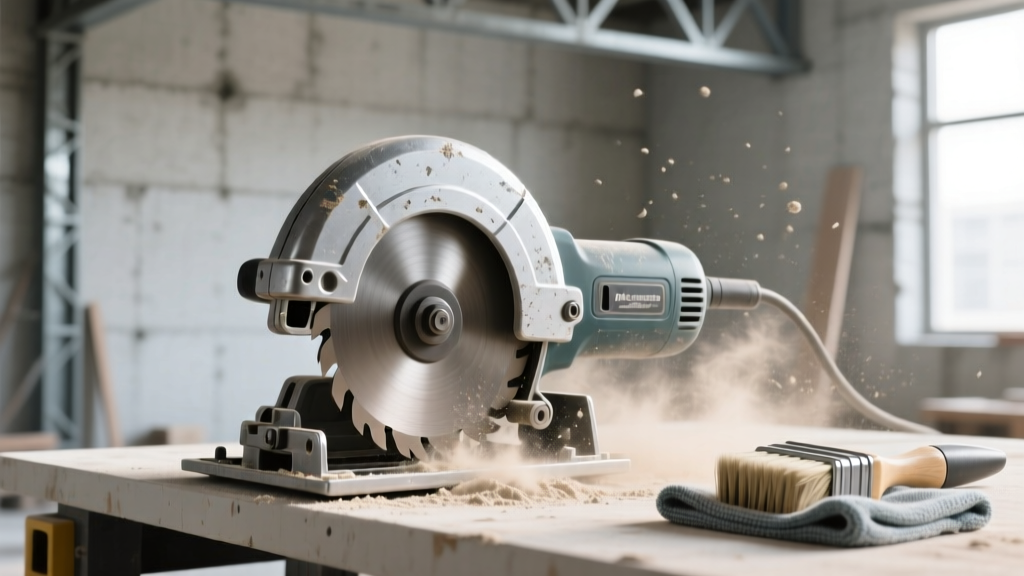
The Chemistry of Tool Failure: Gypsum Dust Calcification
A dedicated drywall cutter—whether a corded spiral saw like the DeWalt DW660 or a cordless rotary tool like the Makita XRU02—operates in one of the most hostile environments on a construction site. Unlike wood shavings or metal filings, gypsum dust (calcium sulfate dihydrate) presents a unique chemical threat to power tool internals. According to the Gypsum Association, the core material of gypsum board is highly hygroscopic, meaning it readily absorbs moisture from the ambient air.
When microscopic gypsum dust infiltrates the motor housing and cooling vents of a drywall cutter, it mixes with atmospheric humidity and the operator's sweat. This triggers a calcification process where the dust transforms into a hard, cement-like crust. This crust binds to the armature shaft, seizes the ball bearings, and insulates the copper windings, leading to thermal runaway and catastrophic motor failure. Most contractors assume their drywall cutters burned out from overuse; in reality, they suffocated from calcified dust.
The Daily Blow-Out Protocol
Preventing calcification requires daily displacement of dust before it has time to absorb moisture and harden. The most effective method is compressed air, but it must be applied with strict parameters to avoid damaging the tool's internal seals.
Air Pressure and Nozzle Selection
OSHA regulates the use of compressed air for cleaning to prevent both tool damage and operator injury. Following OSHA Hand and Power Tools guidelines, the static pressure at the nozzle must not exceed 30 PSI when used for cleaning purposes. Higher pressures can force fine gypsum particles past the rubber bearing seals and directly into the lubricated bearing races, grinding them from the inside out.
- Equipment: Use an air compressor regulated to exactly 25-30 PSI.
- Nozzle: Attach a static-dissipative rubber tip. Hard plastic or metal tips can crack the ABS plastic motor housings common on tools like the Bosch Colt.
- Technique: Blow air into the rear exhaust vents first, then the side cooling slots, and finally the collet area. Keep the nozzle at a 45-degree angle to dislodge dust without packing it deeper into the crevices.
- PPE Requirement: Because cutting drywall often involves routing through joint compound (which may contain crystalline silica), blowing out the tool aerosolizes hazardous particulates. A NIOSH-approved P100 respirator is mandatory during this process, per CDC/NIOSH silica and dust guidelines.
The Drywall Cutter Maintenance Matrix
Consistent maintenance requires a structured schedule. The following matrix outlines the exact intervals, actions, and supplies required to keep a rotary drywall cutter operating at peak RPM and torque.
| Frequency | Component | Action Required | Required Supplies |
|---|---|---|---|
| Daily | Motor Vents & Collet | Low-PSI compressed air blow-out | Regulated compressor (30 PSI), P100 mask |
| Weekly | Exterior Housing & Depth Guide | Wipe down with dry microfiber; vacuum depth-adjustment threads | Microfiber cloth, shop vac with brush attachment |
| Every 50 Hours | Internal Switch & Electronics | Spray contact cleaner into trigger assembly to prevent arcing | CRC QD Contact Cleaner (plastic-safe) |
| Every 100 Hours | Collet & Shaft Bearings | Apply dry PTFE lubricant to prevent rust and dust adhesion | WD-40 Specialist Dry Lube with PTFE |
Bit Care: Clearing the Flutes
The cutting bits on a drywall cutter—typically 1/8-inch for standard 1/2-inch board and 3/16-inch for 5/8-inch Type X fire-rated board—are single-flute or twin-flute carbide spiral bits. When the flutes pack with gypsum, the bit stops cutting and starts burning, generating enough friction heat to snap the carbide tip or melt the board's paper facing.
Never use a steel wire brush to clean carbide bits; steel is harder than the cobalt binder used in carbide manufacturing and will strip the cutting edges. Instead, use a brass wire brush. For heavily calcified bits, soak them in a biodegradable degreaser like Simple Green for 15 minutes, then scrub with the brass brush. For high-volume production crews, investing in a commercial ultrasonic cleaner filled with a mild alkaline solution will restore bits to factory sharpness in under three minutes without any manual scrubbing.
Pro Insight: Store your drywall cutter bits in a sealed, silica-gel-lined case. Because the bits are often coated in microscopic gypsum dust after use, leaving them in a damp tool belt pouch guarantees the dust will calcify onto the flutes overnight, rendering the bit useless by the next morning.
Cordless vs. Corded: Divergent Maintenance Paths
As of 2026, the market has shifted heavily toward 18V and 20V brushless cordless drywall cutters. While brushless motors eliminate the need for carbon brush replacements, they introduce new maintenance requirements regarding battery terminals and electronic speed controllers (ESCs).
Corded Tool Maintenance (e.g., DeWalt DW660)
Corded spiral saws rely on carbon brushes to transfer electricity to the armature. These brushes wear down physically. Inspect the brushes every 6 months. If the carbon block measures less than 1/4 inch (6mm), replace them immediately. Running a corded tool with depleted brushes causes the copper commutator to arc, scoring the metal and destroying the armature permanently.
Cordless Tool Maintenance (e.g., Makita XRU02)
Brushless cordless cutters do not have carbon brushes, but their battery contacts are highly susceptible to gypsum dust. Gypsum is slightly conductive when damp. If dust builds up on the battery terminals, it can create a micro-short circuit that drains the battery or fries the tool's ESC board. Wipe the battery contacts on both the tool and the battery pack weekly with a dry, lint-free cloth. If corrosion appears, clean it with a cotton swab dipped in 90% isopropyl alcohol.
Troubleshooting: Seized Bearings and Motor Whine
Even with rigorous maintenance, drywall cutters operating in high-humidity environments may develop mechanical issues. Recognizing the auditory symptoms of failure allows you to intervene before the tool is destroyed.
- High-Pitched Whining: This indicates the front collet bearing is drying out or has been infiltrated by fine dust. Apply two drops of a high-speed synthetic bearing oil (not standard WD-40) directly to the bearing seal and run the tool at no-load for 30 seconds to distribute the lubricant.
- Intermittent RPM Drops: Usually caused by dust packing inside the trigger switch mechanism, preventing full electrical contact. Remove the housing screws, open the handle, and blast the switch assembly with plastic-safe electronic contact cleaner.
- Burning Odor (Corded): Immediately cease operation. This is the smell of ozone and melting insulation caused by severe arcing at the commutator due to worn carbon brushes or a seized rear bearing putting excessive load on the armature.
Maintaining a drywall cutter is not about fixing it when it breaks; it is about aggressively managing the hygroscopic nature of gypsum dust. By implementing strict PSI limits during daily blow-outs, utilizing brass brushes for bit care, and adhering to the 50-hour electronic cleaning matrix, contractors can easily double the operational lifespan of their rotary cutting tools, saving hundreds of dollars in annual replacement costs.