Venetian Plaster Walls Cost & Gypsum Substrate Calculator 2026
Calculate the exact cost to install venetian plaster walls over gypsum board. Includes 2026 pricing, Level 5 drywall prep, and material quantities.
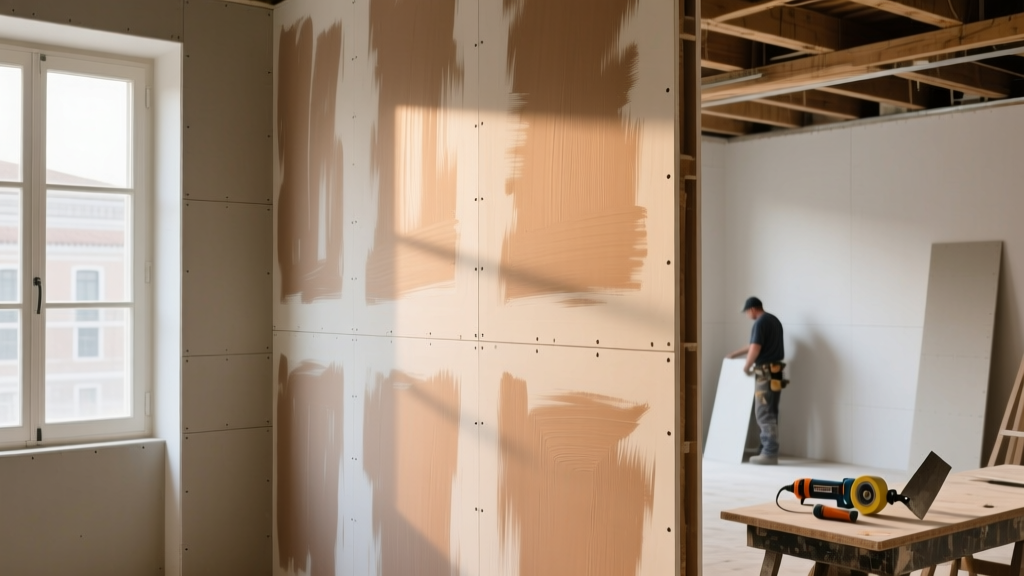
The Hidden Cost: Gypsum Board Substrate Preparation
Applying authentic lime-based venetian plaster directly to standard drywall is a guaranteed path to structural failure. Venetian plaster walls require an impeccably rigid, perfectly smooth, and chemically compatible substrate. In 2026, the industry standard for this application is a Level 5 gypsum board finish over 1/2-inch or 5/8-inch Type X panels. Standard Level 4 taping and mudding will result in 'joint ghosting,' where the seams become visible through the translucent plaster layers due to differential porosity and light refraction.
To achieve a Level 5 finish, the gypsum board must be taped, coated with three layers of joint compound, and then covered with a continuous skim coat of setting-type compound (such as USG Topping or Easy Sand) or a specialized skim product like Roman Pro-999. According to the Gypsum Association, the framing behind the drywall must also meet strict L/360 deflection limits. If the wall flexes beyond this threshold under lateral pressure, the rigid, cured lime plaster will develop micro-fractures that cannot be patched seamlessly.
Authentic venetian plaster (Marmorino or Grassello) is highly alkaline, with a pH between 12 and 13. Standard PVA drywall primers will saponify (turn to soap) and delaminate when exposed to this alkalinity. You must prime the Level 5 gypsum board with a high-alkali-resistant sealer (e.g., Roman ECO-PRO Aqua Seal) followed by a quartz-sand acrylic primer to provide the mechanical 'tooth' required for the plaster to adhere.
2026 Cost Breakdown: Venetian Plaster Walls
The cost to install venetian plaster walls over a gypsum board substrate is heavily weighted toward specialized labor and meticulous substrate preparation. Below is the current 2026 national average pricing matrix for residential and light commercial projects.
| Project Phase | Material Cost (per sq. ft.) | Labor Cost (per sq. ft.) | Total Range (per sq. ft.) |
|---|---|---|---|
| Gypsum Board & Framing (1/2' Type X) | $0.60 - $0.85 | $1.20 - $1.80 | $1.80 - $2.65 |
| Level 5 Skim Coat Preparation | $0.40 - $0.60 | $1.50 - $2.50 | $1.90 - $3.10 |
| Alkali-Resistant & Quartz Primer | $0.35 - $0.50 | $0.50 - $0.80 | $0.85 - $1.30 |
| Authentic Lime Plaster (2-3 Coats) | $3.50 - $6.00 | $8.00 - $15.00 | $11.50 - $21.00 |
| Natural Beeswax Burnishing | $0.50 - $0.90 | $2.00 - $4.00 | $2.50 - $4.90 |
| Estimated Project Total | $5.35 - $8.85 | $13.20 - $24.10 | $18.55 - $32.95 |
Master plasterers in major metropolitan areas currently charge between $95 and $145 per hour. Because a single artisan can typically only cover 80 to 120 square feet per day when executing a multi-coat Marmorino finish with burnishing, labor quickly becomes the dominant line item. For a comprehensive look at finishing techniques and material handling, USG Corporation's finishing guidelines provide excellent baseline metrics for drywall prep prior to specialty coatings.
Material & Quantity Calculator Framework
Estimating material quantities for venetian plaster requires accounting for the specific coverage rates of lime-based products, which differ significantly from standard acrylic paints. The table below provides a baseline calculator for a standard two-coat Marmorino application with a final wax seal over a Level 5 gypsum substrate.
| Wall Area (Sq. Ft.) | Quartz Primer (Gallons) | Base Coat Plaster (Gallons) | Finish Coat Plaster (Gallons) | Burnishing Wax (Lbs) |
|---|---|---|---|---|
| 250 | 2.0 | 3.5 | 2.5 | 1.5 |
| 500 | 3.5 | 6.5 | 5.0 | 3.0 |
| 750 | 5.0 | 10.0 | 7.5 | 4.5 |
| 1,000 | 6.5 | 13.0 | 10.0 | 6.0 |
| 1,500 | 10.0 | 20.0 | 15.0 | 9.0 |
Note: Coverage rates assume a porosity-neutral Level 5 substrate. If the skim coat is overly porous or sanded too aggressively (below 180-grit), primer and base coat consumption will increase by up to 20%. For more insights on historical and modern applications of these materials, Bob Vila's guide to Venetian Plaster offers a solid overview of the material's evolution and basic handling properties.
Real-World Failure Modes on Drywall Substrates
When venetian plaster fails, it is almost never the fault of the plaster itself. The failure originates in the gypsum board assembly. Below are the three most common edge cases and failure modes encountered in the field:
- Fastener Popping and Haloing: If drywall screws are spaced wider than 12 inches on-center (O.C.) in the field, the gypsum board will flex when the plasterer applies pressure during the burnishing phase. This flexing breaks the calcite bonds in the curing lime, resulting in spider-web cracking radiating from the screw heads. Always specify 1-1/4-inch Type S screws at 12-inch O.C. maximum.
- Joint Ghosting (Picture Framing):strong> This occurs when the joints absorb moisture from the wet plaster at a different rate than the paper face of the drywall. Even with a Level 5 skim coat, failing to use an alkali-resistant primer will allow the lime to eat through the skim coat, revealing the tapered edges and butt joints beneath.
- Delamination at Inside Corners: Standard paper drywall tape is highly susceptible to moisture degradation under thick, wet lime coats. All inside corners must be taped with fiberglass mesh embedded in a setting-type compound (like USG Durabond 90) rather than standard all-purpose mud, followed by the Level 5 skim coat.
Step-by-Step Bidding Workflow for Contractors
To accurately bid venetian plaster walls and protect your margins, follow this sequential estimation workflow:
- Assess Framing Rigidity: Verify the wall framing meets L/360 deflection. If not, factor in the cost of adding structural blocking or upgrading to 5/8-inch gypsum board to increase stiffness.
- Calculate Substrate Prep: Measure the exact square footage and multiply by the Level 5 prep rate ($1.90 - $3.10/sq. ft.). Do not assume the drywall subcontractor's 'smooth' finish is sufficient; you must visually inspect under raking light.
- Determine Plaster Complexity: A standard two-coat Marmorino finish is the baseline. If the client requests a three-coat Grassello finish, metallic wax additives, or complex stenciling, increase the labor multiplier by 1.5x to 2.0x.
- Factor in Scaffolding and Protection: Venetian plaster cannot be rolled or sprayed. It requires hand-troweling. Factor in the cost of interior scaffolding for walls over 9 feet, and extensive floor masking, as lime plaster dust and wet drops can permanently etch hardwood and polished concrete.
- Apply the Artisan Premium: Base your final labor calculation on the specific master plasterer's hourly rate and historical square-footage output, not standard painting labor rates.
When writing the architectural specs, explicitly mandate that the gypsum board installer and the plaster applicator sign a 'Substrate Acceptance Certificate' before the primer is applied. This shifts the liability for joint ghosting and flex-cracking away from the plaster artisan and onto the drywall contractor if the Level 5 finish is deemed inadequate.