Choosing the Right Gypsum Board Trim: Profiles, Costs & Installation
Master gypsum board trim selection with our 2026 guide. Compare metal, vinyl, and paper-faced profiles, costs, and expert installation tips.
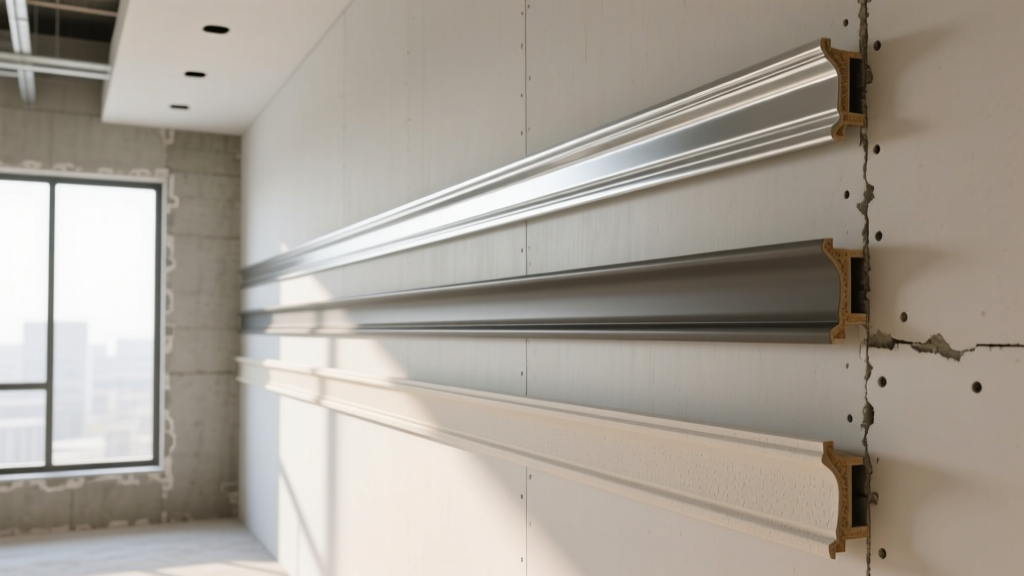
The Critical Role of Gypsum Board Trim
Gypsum board trim—often categorized under drywall accessories or corner beads—is the unsung hero of interior finishing. While the gypsum panels provide the fire rating and sound attenuation, the trim system dictates the impact resistance, aesthetic crispness, and long-term structural integrity of the wall assembly. Selecting the wrong profile or material for a specific environmental condition is the leading cause of corner cracking, rust bleeding, and edge telegraphing in Level 5 finishes.
This comprehensive guide breaks down the exact profiles, material sciences, and 2026 installation protocols required to specify and install gypsum board trim correctly, referencing Gypsum Association guidelines and ASTM C1047 standards.
Profile Selection Matrix: Where and When to Use Each Trim
Drywall accessories are not one-size-fits-all. Each profile is engineered to solve a specific geometric or structural problem. Below is the decision matrix for specifying the correct trim.
| Profile Type | Primary Application | Key Specification Detail |
|---|---|---|
| L-Bead (Face Flange) | Terminating drywall against dissimilar materials (brick, window frames, stone). | Requires a 1/8-inch gap between the bead and the dissimilar material, filled with flexible sealant to prevent cracking from differential movement. |
| J-Bead | Tight reveals where a face flange cannot be accommodated or mudded. | Wraps the edge completely. Often used in commercial plenums or behind HVAC grilles where finishing space is restricted. |
| Square Corner Bead | Standard 90-degree outside corners in high-traffic corridors. | Provides maximum impact resistance. Must be set perfectly plumb to avoid wavy reflections under grazing light. |
| Bullnose Bead | Radiused outside corners (typically 1/2-inch to 1-inch radius). | Softens transitions. Highly popular in modern residential and healthcare settings to reduce injury risk from sharp corners. |
| Reveal / Shadowline | Creating decorative horizontal grooves or perimeter ceiling isolation. | Acts as a mini-expansion joint. Requires precise leveling during installation to maintain a consistent shadow depth. |
| Control / Expansion Joint | Long, uninterrupted wall or ceiling runs. | Mandatory per code every 30 feet in walls and 50 feet in ceilings, or where the substrate changes (e.g., masonry to steel stud). |
Material Science: Steel vs. Vinyl vs. Paper-Faced
The substrate material of the trim dictates both the installation method and the long-term failure risk. Leading manufacturers like ClarkDietrich and Trim-Tex offer distinct material solutions.
1. Galvanized Steel & Zinc
Best for: Commercial projects, high-abuse zones, and budget-conscious bids.
- Pros: Highest rigidity; holds a straight line over long spans; excellent fire-resistance compatibility.
- Cons: Susceptible to denting during construction; prone to rust-bleed if exposed to moisture before mudding; requires mechanical fastening (nails, screws, or clinching) which can pop if the framing shrinks.
2. PVC / Vinyl
Best for: Moisture-prone areas (bathrooms, pools), curved walls, and dent-prone residential spaces.
- Pros: 100% rust-proof; highly flexible for arches and radius walls; bounces back from minor impacts without permanent deformation.
- Cons: Lower rigidity than steel (can follow wavy framing if not shimmed); requires specific spray adhesives or heavy embedment in joint compound for adhesion.
3. Paper-Faced (Composite)
Best for: Level 5 finishes, luxury residential, and environments with high temperature fluctuations.
- Pros: The paper face merges seamlessly with the drywall paper, completely eliminating 'metal telegraphing' (where the metal bead shows through the paint due to thermal expansion differences). Easy to cut and fold.
- Cons: Highest material cost; requires careful embedding to avoid blisters under the paper layer.
2026 Cost Analysis: Material and Labor Rates
Budgeting for drywall accessories requires separating material costs from the labor required to finish them. Paper-faced trims cost more upfront but reduce finishing labor and callback risks. The following rates reflect 2026 national averages for commercial and high-end residential markets.
| Trim Material / Profile | Material Cost (per LF) | Labor Cost (per LF) | Total Installed Cost |
|---|---|---|---|
| Vinyl L-Bead (Mud-On) | $0.65 | $1.20 | $1.85 |
| Galvanized Steel Corner Bead (Nail-On) | $1.10 | $1.50 | $2.60 |
| Paper-Faced Bullnose (e.g., Trim-Tex) | $2.40 | $2.10 | $4.50 |
| Zinc Expansion Joint (1/2 inch) | $3.80 | $2.90 | $6.70 |
| Flexible Vinyl Arch Bead | $1.95 | $3.40 | $5.35 |
Installation Protocols and Failure Mode Mitigation
Proper installation of gypsum board trim is governed by USG and industry technical data sheets. Below are the specific protocols to avoid the three most common trim failures.
Failure Mode 1: Corner Popping and Nail Rust
The Cause: Using drywall nails to secure metal corner beads too close to the edge, or using un-galvanized fasteners in humid environments. As the wood framing dries and shrinks, the nails back out, pushing the bead away from the corner and cracking the mud.
The Fix:
- Transition to clinched metal beads. Use a specialized drywall clinching tool that mechanically crimps the metal flange to the gypsum core without penetrating the backside of the board.
- If nailing is required, use 1-1/4 inch galvanized ring-shank drywall nails spaced no more than 6 inches apart, and dimple the head slightly below the flange surface.
- For ultimate stability, switch to mud-set vinyl beads embedded in a continuous bed of setting-type compound (e.g., Durabond 45).
Failure Mode 2: Metal Telegraphing in Level 5 Finishes
The Cause: Metal expands and contracts with temperature changes at a different rate than the gypsum core and the joint compound. Under critical (grazing) light, the outline of the metal corner bead becomes visible through the paint.
The Fix: Specify paper-faced corner beads for all walls receiving Level 5 finishes or dark, matte paint colors. The paper facing acts as a transitional membrane, moving in unison with the drywall face paper and eliminating the thermal differential.
Failure Mode 3: Control Joint Tearing
The Cause: Failing to align control joints in the drywall with the control joints in the underlying framing, or omitting them entirely in long corridor runs. When the building sways or the trusses deflect, the drywall snaps at its weakest point rather than flexing at the joint.
The Fix: Install zinc or vinyl expansion joints featuring a flexible center membrane. Ensure the joint is backed by a continuous framing member or a dedicated slip-track system. Leave a strict 1/2-inch gap between the two gypsum panels inside the joint to allow for compression.
Code Compliance and ASTM Standards
When specifying gypsum board trim for commercial or multi-family projects, ensure all accessories comply with ASTM C1047 (Standard Specification for Accessories for Gypsum Wallboard and Gypsum Veneer Base). This standard dictates the minimum thickness of the metal (typically 0.0179 inch for galvanized steel), the tensile strength of vinyl extrusions, and the geometry of the flanges.
For fire-rated assemblies, the trim profile must not compromise the integrity of the firestop. Bullnose and square metal beads are generally accepted in 1-hour and 2-hour rated partitions, but vinyl beads must be verified against the specific UL Design number, as some plastics melt at lower temperatures, potentially exposing the gypsum core to direct flame impingement prematurely.

Summary Decision Framework
To finalize your trim schedule, apply this rapid decision framework:
- Standard Residential / Budget Commercial: Galvanized steel nail-on corner beads; vinyl L-beads at windows.
- High-Moisture / Healthcare / Pools: 100% PVC/Vinyl trim system. Zero metal.
- Level 5 / Luxury / Dark Paint Colors: Paper-faced composite beads on all outside corners and reveals.
- Long Corridors / Multi-Story Atriums: Zinc expansion joints aligned with structural deflection tracks, spaced per Gypsum Association limits.
By matching the precise material and profile to the environmental and aesthetic demands of the space, contractors eliminate callbacks and deliver flawless, monolithic wall surfaces.
Written by
Priya KapoorPriya Kapoor is a real estate market analyst and construction economics researcher with expertise in housing affordability, development feasibility, and infrastructure investment. She holds a Master of Regional Planning from Cornell University and previously worked as a senior analyst at CBRE's Investment Properties group, where she modeled returns for $4B in mixed-use development pipelines. Priya now runs an independent research practice advising developers, municipalities, and REITs on construction cost forecasting and market timing. She publishes the quarterly "BuildMat Market Pulse" report tracking material price indices across 12 commodity categories. Based in Austin, TX, Priya serves on the board of Habitat for Humanity Austin and is a marathon runner.
More from Priya Kapoor
View all
Construction Cost
Cost to Build a 1600 Sq Ft Home in 2026: Full Breakdown
Accurate 2026 cost to build a 1600 sq ft home—material, labor, and regional pricing breakdowns included. Plan your budget with real-time estimates.
Aug 11, 2026

Wood & Lumber
Name the Types of Wood for Pressure Treatment and Preservation
Learn how to name the types of wood best suited for pressure treatment. Compare species treatability, chemical retention levels, and 2026 preservation costs.
Aug 4, 2026

Stone & Masonry
Stone Veneer Suppliers Lindenhurst: 2026 Cost Analysis
Analyze 2026 stone veneer costs in Lindenhurst, NY. Compare local supplier pricing, delivery fees, and Suffolk County installation labor rates.
Aug 4, 2026