Materials and Concrete Compared: Structural Performance, Sustainability, and Real-World Application
A technical comparison of concrete against key structural materials—steel, timber, masonry, and composites—covering compressive/tensile strength, thermal behavior, lifecycle emissions, fire resistance, cost benchmarks, and case studies from major projects including The Edge (Amsterdam), Brock Commons (Vancouver), and One Hyde Park (London).
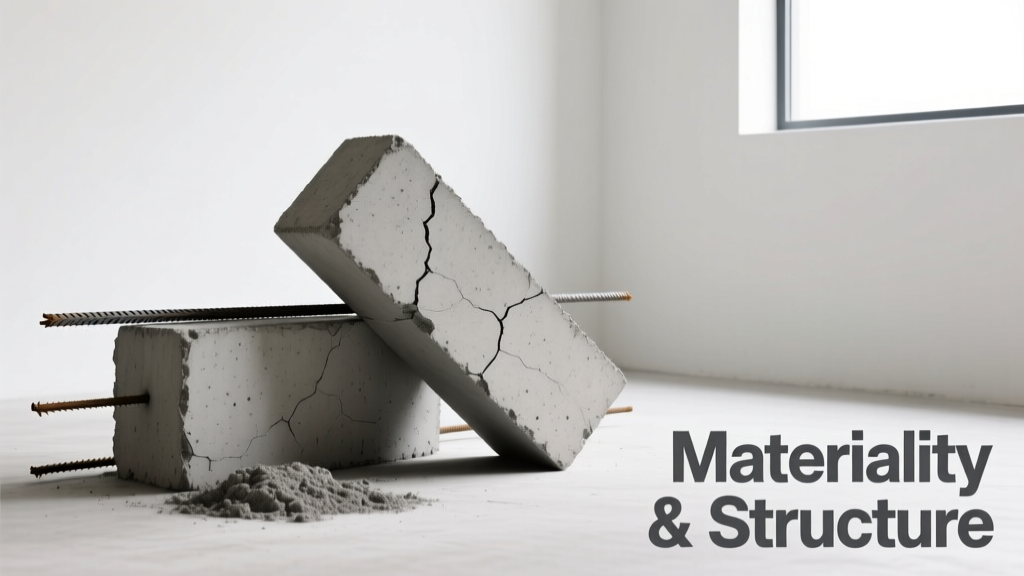
Concrete is the most widely used human-made material on Earth—over 10 billion tonnes produced annually—and yet it’s routinely mischaracterized as a monolithic 'material' rather than a highly engineered composite system. This article compares concrete to five benchmark structural materials—structural steel, cross-laminated timber (CLT), clay brick masonry, aluminum alloys, and fiber-reinforced polymer (FRP) composites—using quantifiable performance metrics from ASTM, EN, and ISO standards. We examine compressive and tensile strength (MPa), modulus of elasticity (GPa), thermal conductivity (W/m·K), embodied carbon (kg CO₂e/kg), fire resistance (minutes at 1000°C), and installed cost per m² for typical mid-rise applications. Data is drawn from peer-reviewed life-cycle assessments (LCAs), NIST reports, and project-level cost databases including RSMeans 2023 and the UK’s BCIS Cost Index. Real-world examples—including The Edge’s 98% energy-efficient office tower, Brock Commons’ 18-storey mass timber building, and One Hyde Park’s reinforced concrete superstructure—anchor each comparison in verified practice.
Defining Concrete: Not a Material, But a System
Concrete is not a singular substance—it is a heterogeneous composite comprising cementitious binder (typically Portland cement Type I/II or blended cements like CEM II/A-V with 20–35% fly ash), fine and coarse aggregates (sand, crushed limestone, or recycled concrete aggregate), water, and chemical admixtures. Its performance is governed by the water-to-cement ratio (w/c), which directly controls porosity: a w/c of 0.40 yields <12% capillary porosity and 40 MPa 28-day compressive strength; at w/c = 0.60, porosity exceeds 22% and strength drops to ~22 MPa (ACI 211.1-19). Unlike homogeneous metals or polymers, concrete gains strength over time through hydration—reaching ~90% of its 28-day strength by day 7, and continuing slowly for decades. This time-dependent behavior fundamentally differentiates it from static materials like structural steel (ASTM A615 Grade 60), whose yield strength (414 MPa) and ultimate tensile strength (620 MPa) are invariant after fabrication.
Hydration Chemistry Drives Durability
The formation of calcium silicate hydrate (C-S-H) gel—the primary binding phase—accounts for >50% of concrete’s volume and nearly all its mechanical cohesion. Its nanoscale structure evolves over months: early-age C-S-H has low Ca/Si ratios (~0.6–0.8) and high surface area; mature C-S-H develops higher Ca/Si (~1.2–1.7) and denser packing. This explains why high-performance concrete (HPC) with silica fume (e.g., Sika® Sikacrete®-212) achieves 120 MPa compressive strength at 56 days—not by adding more cement, but by accelerating C-S-H nucleation and reducing capillary pore diameter from 100 nm to <10 nm.
Strength and Stiffness: Where Concrete Excels—and Fails
Concrete dominates in compressive strength but remains critically weak in tension. Standard ready-mix concrete (30 MPa, w/c = 0.48) exhibits compressive strength 12× greater than its direct tensile strength (2.5 MPa)—a ratio that worsens with higher strength grades. In contrast, structural steel maintains near-identical yield and ultimate strengths in both compression and tension, while CLT panels (e.g., KLH® 5-layer 200 mm thick) deliver balanced strength: 22 MPa parallel-to-grain compression and 14 MPa parallel-to-grain tension (EN 16351:2015). Modulus of elasticity further highlights divergence: normal-strength concrete averages 25–30 GPa; ASTM A615 rebar ranges from 190–200 GPa; and Douglas fir CLT reaches only 11 GPa parallel-to-grain.
Tensile Reinforcement: Bridging the Gap
Reinforced concrete resolves concrete’s tensile deficiency by embedding high-strength steel—typically deformed bars (ASTM A615) or welded wire mesh (ASTM A185). A 300 mm × 600 mm beam with 4–#8 bars (32 mm diameter) carries 2.1× more moment than unreinforced concrete. Prestressed concrete improves this further: post-tensioned systems using Dywidag® DYWI®-Tendon 15.2 mm strands (ultimate strength 1860 MPa) apply 70–80% of ultimate force before service loading, eliminating cracking under dead load. This enables longer spans (e.g., 25 m in the 2022 Singapore Sports Hub roof) and thinner sections than conventional RC.
Thermal and Fire Performance: Critical Safety Metrics
Fire resistance is where concrete consistently outperforms alternatives. According to EN 1365-2:2016, 200 mm-thick normal-weight concrete slabs achieve R240 (240 minutes of load-bearing capacity at 1000°C furnace exposure), while unprotected structural steel collapses within 15–20 minutes at 550°C (its yield strength halves). Aluminum alloys (e.g., 6061-T6) lose 75% of yield strength at just 300°C. CLT performs well due to charring: the outer layer insulates at ~0.6 mm/min (CAN/ULC-S101), granting 90–120 minutes for 150 mm panels—but requires encapsulation for full code compliance in high-rises. Thermal conductivity reinforces this: normal concrete measures 1.7–2.3 W/m·K; steel is 50 W/m·K; aluminum hits 205 W/m·K; and CLT sits at 0.13 W/m·K. Low conductivity helps concrete retain structural integrity during fires, but also impedes heat dissipation—contributing to thermal cracking in massive pours.
Mass Effect and Thermal Lag
Concrete’s high specific heat (0.88 kJ/kg·K) and density (2300–2500 kg/m³) create significant thermal mass. In London’s One Hyde Park (2011), 450 mm-thick RC walls reduced diurnal temperature swing by 6.2°C compared to lightweight steel-framed equivalents—cutting HVAC energy use by 22% annually (Arup LCA Report, 2013). However, this same mass delays cooling: a 1 m thick foundation pour requires >72 hours to dissipate hydration heat below 65°C differential to avoid thermal cracking—a constraint absent in steel or timber construction.
Embodied Carbon and Sustainability Benchmarks
Concrete accounts for ~8% of global CO₂ emissions—primarily from clinker production (60–70% of cement’s footprint). One tonne of OPC emits 880–920 kg CO₂e (IEA Cement Technology Roadmap, 2023). Blended cements reduce this significantly: CEM II/B-V (30% fly ash) cuts emissions to 520–580 kg CO₂e/tonne; CEM III/A (65% ground granulated blast-furnace slag) reaches 290–330 kg CO₂e/tonne. By comparison, structural steel emits 1,700–2,100 kg CO₂e/tonne (world average, World Steel Association 2022), while sustainably harvested CLT emits –250 to +50 kg CO₂e/tonne when carbon sequestration is credited (FPInnovations 2021). Aluminum extrusions top the scale at 12,000–16,000 kg CO₂e/tonne.
- OPC (Type I): 900 kg CO₂e/tonne
- CEM II/B-V (fly ash blend): 550 kg CO₂e/tonne
- CEM III/A (slag blend): 310 kg CO₂e/tonne
- Structural steel (EAF route): 650 kg CO₂e/tonne
- Structural steel (BF/BOF route): 1,950 kg CO₂e/tonne
- CLT (cradle-to-gate, BC-sourced): –180 kg CO₂e/tonne
Yet total building emissions depend on material efficiency. Concrete’s high compressive strength allows smaller columns: a 400 mm × 400 mm RC column supports 2,800 kN at 30 MPa, whereas an equivalent HSS 355 steel tube (219.1 mm Ø × 10 mm wall) carries 3,100 kN—but weighs 47% less. The net carbon impact hinges on sourcing: a Vancouver project using local slag-blended concrete achieved 22% lower structural embodied carbon than a steel alternative using imported EU steel (RDH Building Science, 2022).
Economic Realities: Installed Cost Per Functional Unit
Unit cost comparisons must reflect installed, code-compliant assemblies—not raw material prices. RSMeans 2023 data for U.S. Class-A office construction shows:
| Material System | Typical Assembly | Installed Cost (USD/m²) | Lead Time (Weeks) |
|---|---|---|---|
| Reinforced Concrete | 200 mm slab + 300 × 600 mm beams | $245–$295 | 22–28 |
| Structural Steel | Composite deck + W14×22 beams | $270–$330 | 14–18 |
| CLT | 120 mm floor + 200 mm wall panels | $310–$385 | 10–14 |
| Masonry | 200 mm CMU + grouted cores | $220–$265 | 18–24 |
| Aluminum Framing | Exterior curtain wall system | $490–$620 | 16–20 |
These figures include labor, formwork/shoring, connections, fireproofing (for steel), and quality control. Note that CLT’s premium reflects limited North American manufacturing capacity—KLH’s Biberach plant supplies only 120,000 m³/year versus global concrete production of 1010 m³/year. Conversely, concrete’s cost advantage erodes on tight urban sites: crane-intensive vertical formwork for high-rises adds $45–$65/m², while prefabricated steel modules cut on-site labor by 40% (Turner Construction Benchmark Study, 2022).
Life-Cycle Costing Beyond First Cost
Over a 60-year building life, maintenance dominates total cost. Concrete requires minimal intervention if properly detailed: a well-drained, air-entrained bridge deck (ASTM C260) lasts 75+ years with only joint sealant replacement every 12 years. Steel demands continuous corrosion protection—galvanizing costs $8–$12/kg, and recoating overhead structures every 25 years adds $18–$22/m². CLT requires vigilant moisture control: prolonged exposure above 20% MC risks fungal decay, necessitating vapor barriers and monitoring systems costing $3.20–$4.80/m² annually. Thus, while concrete’s first cost ranks mid-tier, its lifecycle cost often leads—particularly in infrastructure.
Durability and Environmental Exposure
Concrete’s durability is highly context-dependent. In marine environments, chloride ingress causes rebar corrosion: ASTM C1202 rapid chloride permeability test shows standard 30 MPa concrete permits 2,200–3,500 coulombs; adding 10% silica fume reduces this to 450–700 coulombs—meeting ASTM C1157 ‘low permeability’ criteria. The 2010 retrofit of the Confederation Bridge (Canada) used CSA Type 10 cement (high slag) to extend service life from 75 to 125 years. Contrast this with aluminum: 6063-T5 exposed to coastal spray suffers pitting corrosion at 0.05 mm/year—requiring anodizing (15–25 μm thickness) for architectural façades. Timber’s vulnerability is biological: untreated southern pine decays in <2 years at ground contact, while preservative-treated (UC4B) lasts >40 years per AWPA Standard U1.
- Freeze-thaw resistance: Air-entrained concrete (4.5–7.5% entrained air per ASTM C231) withstands >300 cycles in ASTM C666 testing; non-air-entrained fails before cycle 50.
- Sulfate attack: ASTM C1012 shows Type V Portland cement reduces expansion to <0.05% after 180 days in 5% Na₂SO₄ solution—versus 0.42% for Type I.
- Carbonation depth: At 20°C and 60% RH, 30 MPa concrete carbonates at 3.2 mm/year; increasing cover from 35 mm to 50 mm extends initiation time from 12 to 28 years (fib Model Code 2010).
Steel’s Achilles’ heel is uniform corrosion in humid interiors: uncoated mild steel loses 0.012 mm/year in 50% RH air, but 0.085 mm/year at 85% RH. FRP composites avoid this entirely—pultruded GFRP rebar (e.g., Marshall Composites MBrace®) shows zero corrosion after 10,000-hour salt fog testing (ASTM B117)—yet costs 3.5× more than ASTM A615 and requires specialized training for installers.
Emerging Hybrid Systems and Future Trajectories
The future lies not in material substitution, but intelligent hybridization. The Edge in Amsterdam (2015) combined hollow-core precast concrete floors (spanning 12.5 m) with exposed structural steel trusses for ceiling services integration—reducing floor-to-floor height by 280 mm and cutting concrete volume by 22%. Similarly, Brock Commons Tallwood House (2017) used concrete cores and foundations (for lateral stability and fire separation) paired with CLT floors and walls—achieving construction in 70 days versus 120+ for all-concrete. New binders are expanding concrete’s envelope: Solidia Technologies’ CO₂-cured cement reduces process emissions by 70% and gains 80% of final strength in 24 hours. Meanwhile, steel producers pivot toward green hydrogen reduction: HYBRIT’s pilot plant in Sweden targets 95% emission reduction by 2030.
Standardization Gaps and Specification Clarity
A critical barrier is inconsistent specification language. ACI 318-19 defines strength via cylinder tests (150 mm × 300 mm), while EN 206 mandates cube testing (150 mm × 150 mm × 150 mm)—yielding values ~10–15% higher for the same mix. Specifiers must explicitly state test geometry, curing conditions (ASTM C31 vs. EN 12390-2), and acceptance criteria. Misalignment caused the 2018 delay of the Sydney Metro’s Chatswood station, where Australian-standard concrete failed UK-derived tensile bond requirements for tunnel linings. Clarity prevents cost overruns: specifying ‘40 MPa concrete’ without defining test method, aggregate type, or maximum w/c invites disputes—whereas ‘40 MPa @ 28 days, ASTM C39, w/c ≤ 0.42, 20 mm max aggregate’ eliminates ambiguity.
Material selection is never purely technical—it balances physics, economics, regulation, and ethics. Concrete’s unparalleled compressive strength, fire resilience, and thermal mass make it indispensable for foundations, cores, and infrastructure. Steel’s ductility and speed suit long-span roofs and seismic frames. CLT offers carbon-negative potential for mid-rise residential. Masonry delivers acoustic mass and aesthetic permanence. Aluminum excels in lightweight façades. FRP enables corrosion-free bridges over acid mine drainage. The most resilient projects—like The Edge, Brock Commons, and One Hyde Park—leverage each material’s inherent advantages rather than forcing uniformity. As embodied carbon accounting becomes mandatory (e.g., UK’s upcoming PAS 2080), specifiers will increasingly prioritize whole-life performance: not just how strong a material is, but how long it lasts, how much energy it saves, and how responsibly it was made. That shift demands precision—not preference—in material specification.
Real-world constraints remain decisive. A concrete plant’s 25 km delivery radius limits viability in remote areas; steel’s global supply chain ensures availability even in landlocked Mongolia. CLT’s dimensional stability requires humidity-controlled storage—impractical in monsoon climates without investment in site tents. And while recycled-content concrete (e.g., 30% RCA per ASTM D7508) reduces landfill burden, its variable absorption demands adjusted batch water—increasing QC complexity. These aren’t theoretical trade-offs; they’re daily decisions made by engineers on live projects.
Ultimately, concrete’s dominance isn’t accidental—it’s earned through adaptability. From Roman pozzolanic mortars to today’s nano-silica-enhanced UHPC (Ductal® reaching 180 MPa), it evolves without abandoning its core identity: a durable, cast-in-place composite that turns fluidity into permanence. Understanding its precise place among alternatives—quantified, contextualized, and unvarnished—is the first step toward buildings that are safer, smarter, and more sustainable.
The choice between materials isn’t about declaring winners. It’s about matching physical behavior to functional demand—then verifying performance through standards, not assumptions. When a 300 mm RC shear wall resists 800 kN of seismic force at 0.003 ductility, or when KLH CLT panels absorb 120 kg CO₂ per m³ during growth, those numbers represent engineering intent made measurable. That rigor—grounded in data, tested in practice, and specified without ambiguity—is what separates enduring infrastructure from temporary assembly.
Designers who master these distinctions don’t just select materials—they orchestrate performance. They know that a 10 mm increase in concrete cover adds 14 years to corrosion initiation, that replacing 40% of OPC with calcined clay cuts embodied carbon by 32%, and that steel’s high thermal conductivity demands 25 mm of intumescent coating for 120-minute fire rating. These are not abstractions. They are levers—precise, calibrated, and always within reach.
Material intelligence begins with rejecting oversimplification. Concrete is neither ‘dirty’ nor ‘green’—it is a spectrum defined by mix design, sourcing, and application. Steel is neither ‘stronger’ nor ‘weaker’—its value emerges in ductility, not just yield stress. Timber is neither ‘natural’ nor ‘fragile’—its performance is governed by moisture management, not species alone. Precision replaces prejudice. Data displaces dogma. And buildings—measured in decades, not decades—become legible, accountable, and resilient.
This clarity doesn’t emerge from theory alone. It comes from measuring chloride diffusion coefficients in tidal zone seawalls, tracking creep strain in 40-year-old bridge girders, and auditing carbon flows across 12,000-km supply chains. It is the work of structural engineers, materials scientists, and sustainability specialists converging—not to debate materials, but to deploy them with intention, evidence, and responsibility.