Top Metal Roof Paint Brands and Coating Systems Compared
Compare top metal roof paint brands and coating systems. Discover PVDF, SMP, and acrylic options, pricing, and application specs for steel roofs.
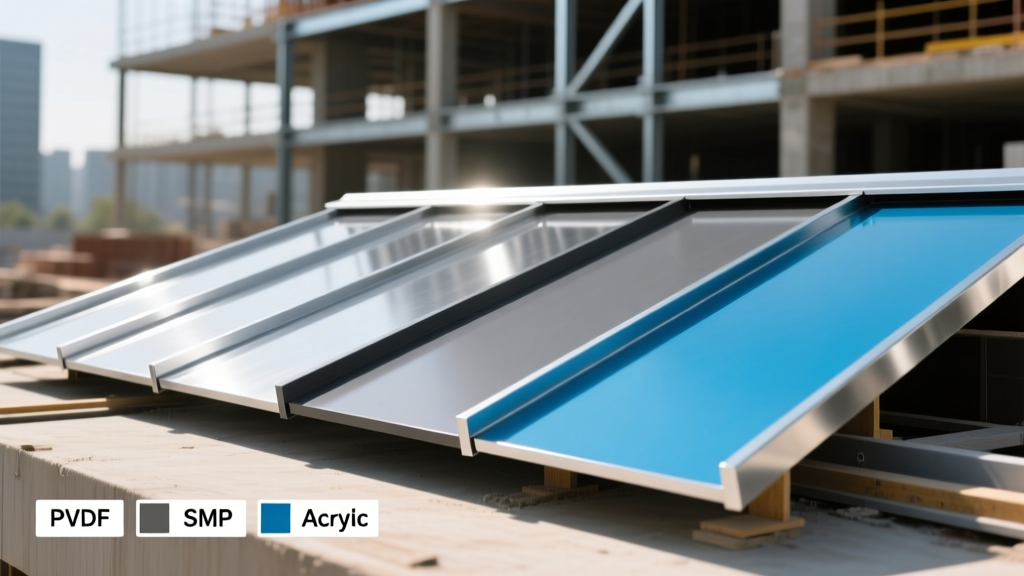
The Chemistry Matrix: PVDF vs. SMP vs. Acrylic Elastomeric
Selecting the correct metal roof paint requires understanding the underlying resin chemistry. The performance, chalk resistance, and lifespan of a coating are dictated by its polymer backbone. In 2026, the industry standard for premium steel roofing remains fluoropolymer technology, while field-applied restorations rely heavily on elastomeric acrylics.
| Coating Chemistry | Resin Standard | Expected Lifespan | Chalk Resistance | Avg. Cost (Material) | Best Application |
|---|---|---|---|---|---|
| PVDF (Polyvinylidene Fluoride) | 70% Kynar 500® / Hylar 5000® | 40+ Years | Exceptional (AAMA 2605) | $2.50 - $4.00 / sq ft | Factory coil coating, premium architectural panels |
| SMP (Silicone Modified Polyester) | Polyester / Silicone blend | 15 - 25 Years | Moderate (AAMA 2604) | $1.50 - $2.50 / sq ft | Agricultural, light commercial, residential standing seam |
| Acrylic Elastomeric | 100% Acrylic Polymer | 10 - 15 Years | High (Reflective whites) | $1.00 - $2.00 / sq ft | Field-applied restoration, low-slope retrofits |
According to the Metal Construction Association (MCA), PVDF coatings must contain a minimum of 70% PVDF resin by weight in the binder to achieve the weathering characteristics specified in AAMA 2605. SMP coatings, governed by AAMA 2604, offer superior hardness and scratch resistance during fabrication but will eventually chalk and fade in high-UV environments.
Factory-Applied Coil Coating Leaders
For new steel roof installations, paint is rarely applied on-site. Instead, galvanized or Galvalume steel coils are factory-painted via continuous coil coating lines. Two chemical giants dominate this space.
Sherwin-Williams: Fluropon® and Shercryl® Lines
Sherwin-Williams’ Fluropon line is their flagship 70% PVDF metal roof paint. It is engineered for extreme UV resistance and color retention, specifically formulated to meet AAMA 2605 specifications. For projects with tighter budgets, their Shercryl line provides a high-build acrylic alternative for field touch-ups and roll-formed panels. Fluropon typically requires a two-coat system: a 0.2-mil epoxy primer and a 0.8-mil PVDF topcoat, yielding a total Dry Film Thickness (DFT) of 1.0 mil.
PPG Industries: Duranar® and Duracron® Systems
PPG’s Duranar XL is a four-coat PVDF system that includes an extruded mica or metallic flake layer, providing deep color shifts while maintaining the fluoropolymer's protective capsheet. For standard SMP applications, PPG’s Duracron line is the industry workhorse. Duracron utilizes a polyester resin fortified with melamine cross-linkers, providing excellent adhesion to Galvalume substrates and high resistance to abrasion during the roll-forming process.
If your steel roof is within 1,500 feet of a saltwater coastline, standard SMP and 2-coat PVDF systems will suffer from edge creep and micro-blistering due to chloride ingress. Specify a 3-coat or 4-coat PVDF system (like PPG Duranar XL or Sherwin-Williams Fluropon Air-Dry) featuring a heavy-duty polyurethane primer to block salt spray penetration.
Field-Applied Restoration Systems
When an existing metal roof begins to fail, field-applied metal roof paint is required. Unlike factory coatings measured in fractions of a mil, field-applied coatings are measured in tens of mils to bridge gaps, seal fasteners, and reflect heat.
Henry Company: Henry 887 Cool Roof Elastomeric
Henry 887 is a 100% acrylic, high-solids elastomeric coating. It is designed to stretch up to 300% without tearing, accommodating the extreme thermal expansion and contraction of steel decking. At a wet film thickness (WFT) of 22 mils, it cures to roughly 14 mils DFT. It is highly effective at reflecting UV radiation, aligning with the Department of Energy's Cool Roof guidelines to reduce building cooling loads by up to 15%.
Rust-Oleum: 301994 Commercial Acrylic Roof Coating
For smaller commercial footprints or DIY agricultural restorations, Rust-Oleum’s commercial acrylic line offers a highly accessible, high-albedo white coating. It features built-in mildewcides and a lower viscosity than Henry 887, making it easier to spray through standard airless rigs without requiring specialized high-pressure pumps.
Critical Failure Modes in Steel Roof Painting
Applying the wrong metal roof paint to a steel substrate guarantees catastrophic failure. Avoid these three common chemical and environmental pitfalls:
- Saponification (The Alkyd Mistake): Never apply alkyd (oil-based) paints directly to galvanized steel. The zinc in the galvanized coating reacts with the fatty acids in alkyd resins, creating a soapy film that destroys adhesion. Always use an acrylic, epoxy, or specialized galvanized metal etching primer.
- Dew Point Trapping: Applying elastomeric roof paint when the ambient temperature is dropping and the steel surface is below the dew point traps microscopic moisture under the film. This causes blistering within 48 hours. Always apply coatings when the surface temperature is at least 5°F above the dew point and rising.
- Mill Scale and Rust Bloom: Painting over structural steel that has not been abrasive blasted or treated with a phosphoric acid converter leaves active oxidation beneath the coating. The rust will bleed through acrylics within months. Use a direct-to-metal (DTM) rust-inhibitive epoxy primer before topcoating.
Calculating Coverage and DFT for Field Applications
Contractors frequently under-order metal roof paint because they misunderstand the math behind Dry Film Thickness (DFT). The theoretical coverage of any liquid coating is 1,604 square feet per gallon at 1.0 mil DFT.
If your specification calls for 12 mils DFT of Henry 887 elastomeric coating, the theoretical coverage is 1,604 ÷ 12 = 133 square feet per gallon. However, you must factor in transfer efficiency. An airless sprayer on a corrugated steel roof typically yields 65% to 75% transfer efficiency due to wind loss and overspray. Therefore, your practical coverage drops to roughly 90 square feet per gallon. Failing to calculate this results in mid-job shortages and thin, non-compliant coats.
Procurement & Specification Framework
Use this decision matrix to specify the correct metal roof paint system based on your project parameters:
| Project Scenario | Recommended Chemistry | Brand / Product Line Target | Required Primer |
|---|---|---|---|
| New architectural standing seam (High UV) | 70% PVDF (Factory) | PPG Duranar / SW Fluropon | Factory-applied Epoxy |
| New agricultural pole barn (Budget focus) | SMP (Factory) | PPG Duracron / SW WeatherXL | Factory-applied Polyester |
| Existing roof restoration (Flat/Low Slope) | Acrylic Elastomeric (Field) | Henry 887 / GAF United Coatings | Acrylic Rust-Inhibitive Primer |
| Coastal environment (Salt spray exposure) | 3-Coat PVDF (Factory) | PPG Duranar XL | Heavy-Duty Polyurethane |
As VOC regulations continue to tighten globally, with the EPA continuously updating limits on ground-level ozone precursors, specifying high-solids, low-VOC waterborne acrylics for field applications is no longer just an environmental choice—it is a legal requirement in most jurisdictions. Always verify the VOC content (g/L) of your chosen metal roof paint against local 2026 air quality management district (AQMD) limits before procurement.