2026 Cost Guide for Steel Framing Jobs & Labor Rates
Analyze 2026 costs for steel framing jobs. Breakdowns of labor rates, material pricing, and hidden expenses for structural and cold-formed steel.
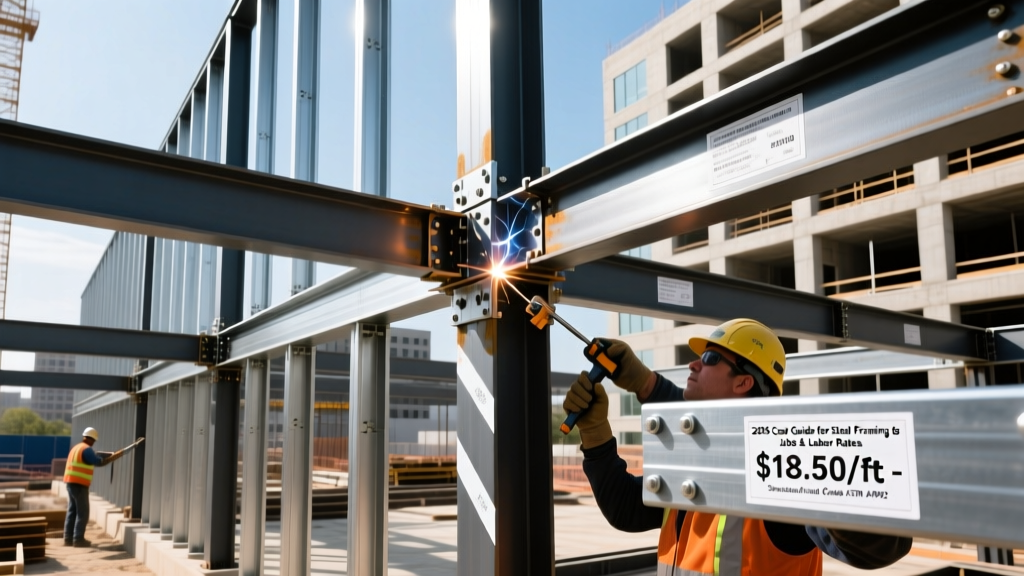
The True Economics of Steel Framing Jobs in 2026
Securing accurate pricing for steel framing jobs requires moving beyond generic square-foot averages. In 2026, the cost landscape is defined by a bifurcated labor market, stabilized but elevated material baselines, and stringent code requirements that dictate secondary finishing costs. Whether you are estimating a mid-rise commercial build using cold-formed steel (CFS) or a heavy industrial facility requiring structural W-shapes, understanding the granular cost drivers is critical for protecting project margins.
According to the Steel Framing Industry Association (SFIA), the shift toward prefabricated CFS panels has altered on-site labor dynamics, reducing erection time but increasing off-site manufacturing costs. Meanwhile, structural steel erection remains heavily dependent on local union density and crane availability. This analysis breaks down the exact labor rates, material costs, and hidden expenses defining steel framing jobs this year.
- Cold-Formed Steel (CFS) Interior Framing: $3.70 – $5.80 per linear foot (installed)
- CFS Exterior Load-Bearing: $6.10 – $10.00 per linear foot (installed)
- Structural Steel Erection (Labor Only): $850 – $1,450 per ton
- Average Ironworker Hourly Rate (Non-Union): $45 – $75 per hour
- Average Ironworker Hourly Rate (Union/Prevailing): $85 – $135+ per hour
Material vs. Labor: Where the Budget Actually Goes
Historically, material costs dominated steel framing budgets. In 2026, the ratio has inverted for many commercial projects; skilled labor shortages have pushed installation costs to represent 55% to 65% of the total framing package. The table below details the current installed cost breakdown based on data cross-referenced with Gordian RSMeans construction cost databases.
| Framing Type & Specification | Material Cost | Labor Cost | Total Installed |
|---|---|---|---|
| 25-ga CFS Studs (Interior Non-Load) | $1.20 – $1.80 / LF | $2.50 – $4.00 / LF | $3.70 – $5.80 / LF |
| 20-ga CFS Studs (Exterior Load-Bearing) | $2.10 – $3.50 / LF | $4.00 – $6.50 / LF | $6.10 – $10.00 / LF |
| 16-ga CFS Joists (Floor/Ceiling) | $3.80 – $5.20 / LF | $5.50 – $8.00 / LF | $9.30 – $13.20 / LF |
| Structural W-Shapes (Erection Labor) | N/A (Priced per ton) | $850 – $1,450 / ton | $850 – $1,450 / ton |
The Impact of Galvanization and Coatings
When specifying CFS for exterior or high-moisture applications, the galvanization grade directly impacts both material and labor costs. Standard ASTM A653 G60 coating is sufficient for interior drywall cavities. However, exterior sheathing applications require G90 or higher. While the material premium for G90 is only $0.15 to $0.30 per linear foot, the labor cost increases because G90 coatings require specific self-drilling screw types to prevent zinc stripping and subsequent corrosion at the connection points.
Hidden Cost Drivers That Derail Steel Framing Budgets
General contractors frequently experience budget overruns on steel framing jobs not from the steel itself, but from secondary requirements and site logistics. Identifying these edge cases during the pre-construction phase is vital.
- Fireproofing and Intumescent Coatings: Structural steel requires fire ratings per ASTM E119. While spray-applied fire-resistive materials (SFRM) cost $2.50 to $4.50 per square foot, exposed architectural steel requires intumescent paint, which skyrockets the budget to $8.00 – $15.00 per square foot due to the meticulous surface preparation and multi-coat application required.
- Crane Mobilization and Demobilization: For structural steel jobs, crane costs are rarely included in the base erection tonnage. Mobilizing a 100-ton mobile crane costs $2,500 to $5,000 per day, plus transport permits. If the framing schedule is delayed, daily crane rentals ($1,800 – $3,000/day) will rapidly consume contingency funds.
- Moment Frame Connection Detailing: Standard shear tab connections are fast and inexpensive. However, seismic or high-wind zones requiring moment-resisting frames demand complete joint penetration (CJP) welds. This requires certified AWS D1.1 welders and ultrasonic non-destructive testing (NDT), adding $150 to $300 per connection in labor and inspection fees.
- Thermal Bridging Mitigation: Modern energy codes (like IECC 2024/2025 adoptions) strictly penalize thermal bridging through steel studs. Framing jobs now require the installation of continuous exterior insulation or specialized thermal break pads between the steel framing and exterior sheathing, adding $0.80 to $1.50 per square foot to the envelope cost.
Union vs. Non-Union and Prevailing Wage Impacts
Labor classification is the single largest variable in steel framing jobs. The Bureau of Labor Statistics (BLS) tracks structural iron and steel worker wages, revealing stark contrasts based on project funding and local labor agreements.
| Factor | Non-Union / Open Shop | Union / Prevailing Wage |
|---|---|---|
| Base Hourly Rate | $45 – $75 | $65 – $95 |
| Fully Burdened Rate (w/ Benefits) | $65 – $105 | $110 – $165+ |
| Productivity & Rework | Variable; higher risk of rework | High; standardized apprenticeship training |
| Equipment & Rigging | Often billed separately or rented | Usually included in contractor package |
Estimator Warning: When bidding public works or federally funded projects subject to Davis-Bacon prevailing wage laws, non-union contractors must artificially inflate their base labor rates to match union equivalents. Failing to account for the mandatory fringe benefit contributions in your steel framing estimate will result in severe compliance penalties and margin erosion.
Regional Labor Rate Variations
Geography dictates the availability of certified steel framers. In 2026, the most acute labor shortages—and consequently the highest premium rates—are concentrated in the following regions:
- Northeast Corridor (NY, MA, PA): High union density, strict site access logistics, and prevailing wage mandates push fully burdened structural erection rates to $145–$185 per ton.
- Pacific Northwest & California: Seismic detailing requirements (OSHPD/HCAI standards in healthcare) demand highly specialized ironworkers, commanding a 20-30% premium over national averages.
- Southeast (TX, FL, GA): Open-shop environments and a high volume of tilt-up/steel hybrid construction keep CFS framing labor rates highly competitive, often 15-25% below the national mean.
Actionable Framework: Estimating Your Specific Steel Framing Job
To build a resilient budget for your next steel framing project, follow this sequential estimation framework:
- Define the Gauge and Yield Strength: Confirm if your CFS schedule calls for 33 ksi or 50 ksi steel. Upgrading to 50 ksi allows for wider stud spacing (e.g., 24" on-center instead of 16"), which reduces both material linear footage and labor installation time by up to 30%.
- Audit the Connection Schedule: Count the number of moment connections, knee braces, and specialized hold-downs. Assign a specific labor-hour multiplier to these connections rather than rolling them into a generic per-ton or per-square-foot rate.
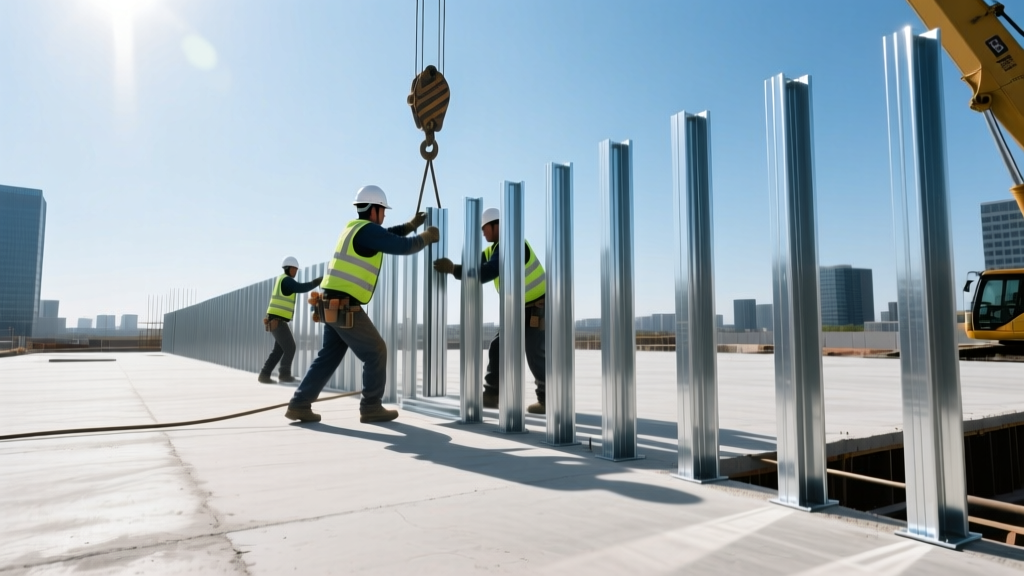
- Factor in Panelization: For CFS jobs exceeding 10,000 square feet, evaluate off-site panelization. While the manufacturing cost is higher, the reduction in on-site labor, crane time, and weather delays often yields a net savings of 8% to 12% on the total framing package.
- Apply the Waste and Off-Cut Multiplier: Standard CFS waste is calculated at 5-8%. However, complex geometries with numerous headers, jack studs, and blocking can push physical waste to 12-15%. Price your material takeoffs accordingly.
Frequently Asked Questions on Steel Framing Costs
Is steel framing cheaper than wood framing in 2026?
Material costs for cold-formed steel are generally 15% to 30% higher than dimensional lumber. However, when factoring in the reduced risk of fire, termite damage, warping, and the speed of panelized installation, the total lifecycle and installed costs for commercial and multi-family residential projects often favor steel. For single-family residential, wood typically remains the more cost-effective option.
How do tariffs affect structural steel pricing?
While Section 232 tariffs initially caused massive price volatility, the domestic steel production capacity has adapted. In 2026, structural steel prices are largely driven by domestic scrap metal indices and regional mill capacity rather than import tariffs. Expect domestic W-shape pricing to remain stable, fluctuating within a 5% band based on quarterly scrap markets.
What is the cost impact of using self-tapping screws vs. welding for CFS?
Welding cold-formed steel is rare and highly inefficient due to the thinness of the material, which easily burns through. The industry standard relies on self-drilling, self-tapping screws. Using high-quality, coated screws with hex-washer heads costs roughly $0.03 to $0.05 more per fastener than basic bugle-head screws, but prevents fastener stripping and reduces installer fatigue, ultimately lowering labor costs by improving installation speed.
Written by
James ThorntonJames Thornton is a construction industry veteran with 25 years of hands-on experience in wood framing, lumber grading, and residential building codes. He started as a framing carpenter in rural Oregon, earned his ICC Residential Building Inspector certification, and eventually became a senior plan reviewer for the City of Portland Bureau of Development Services. James holds a B.S. in Wood Science & Technology from Oregon State University and is a certified lumber grader through the West Coast Lumber Inspection Bureau (WCLIB). He has inspected over 3,000 residential construction sites and authored the city's internal guide on advanced framing techniques (2x6 at 24" O.C.). James lives in Bend, OR, where he builds custom timber-frame cabins and competes in lumberjack sports.
More from James Thornton
View all
Insulation
Best Home Insulation Materials: Complete 2026 Guide
Compare top home insulation materials for 2026. Find R-values, installed costs per square foot, and best uses for fiberglass, spray foam, and mineral wool.
Aug 4, 2026

Sustainable Building
Certify Your Green Building Material for LEED and WELL
Step-by-step guide to certifying a green building material for LEED v5 and WELL v2. Master EPDs, HPDs, and VOC limits for 2026 project specifications.
Aug 4, 2026

Stone & Masonry
Veneer Stacked Stone Panels: Interior Design & Style Showcase
Discover how veneer stacked stone panels transform interiors. Explore modern design profiles, material pairings, and technical installation specs.
Aug 4, 2026