Metal Roofing Installation: Matching Profiles to Pitch and Climate
Match your metal roofing installation to the right scenario. Compare standing seam vs. exposed fastener profiles for roof pitch, climate, and budget.
The Scenario-Matching Framework: Pitch, Climate, and Budget
Metal roofing installation is not a monolithic trade; it is a discipline of scenario matching. A steel panel system that performs flawlessly on a steep-slope alpine cabin will catastrophically fail on a low-slope commercial warehouse. The core variables dictating your installation strategy are roof pitch, thermal movement, and regional weather loads. Selecting the wrong profile for your specific scenario leads to capillary water intrusion, fastener back-out, and severe oil-canning. According to the Metal Construction Association (MCA), the majority of metal roof failures are not material defects, but rather application mismatches and improper detailing during installation.
Exposed Fastener Panels: The Budget & Steep-Slope Scenario
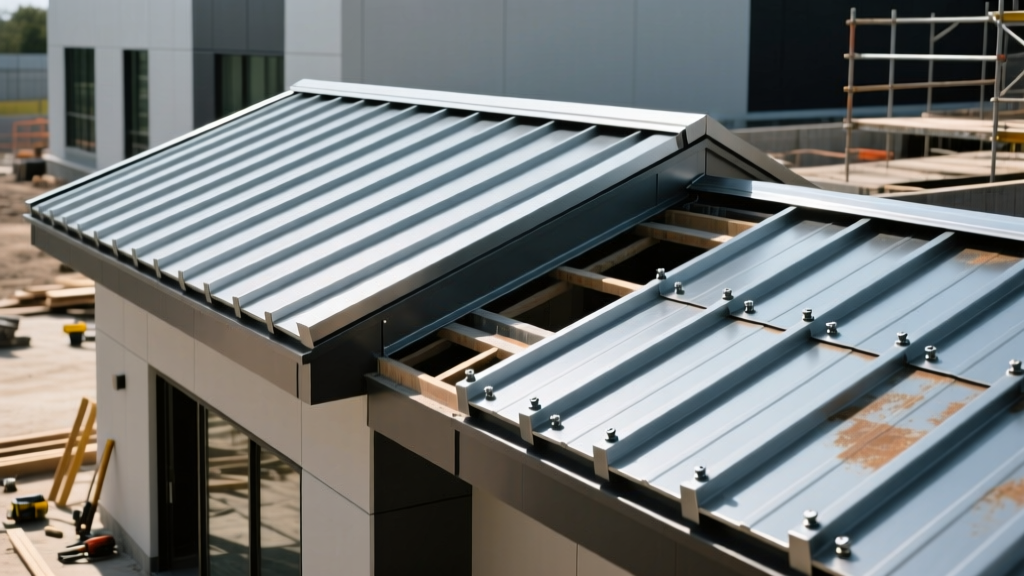
Exposed fastener profiles, commonly known as R-Panel, Agri-Roof, or corrugated steel, are the workhorses of agricultural, residential, and light-commercial steep-slope applications. They are cost-effective and relatively forgiving to install, but they demand strict adherence to fastener protocols.
Best Fit Scenarios
- Roof Pitch: 3:12 or greater (4:12 is ideal for heavy snow regions).
- Structure: Post-frame buildings, barndominiums, and residential retrofits over existing shingles (with battens).
- Budget: $7.50 to $11.00 per square foot installed (2026 market rates for 26-gauge Galvalume).
Known Failure Modes & Mitigation
The most common failure in exposed fastener metal roofing installation is fastener back-out and washer degradation. Steel panels expand and contract with temperature fluctuations. Because the fastener pins the panel directly to the purlin, this thermal movement creates shear stress on the screw. Over time, the screw backs out, and the UV-exposed EDPM (neoprene) washer cracks and crumbles.
The Fix: Use #12 x 1.5-inch hex-washer head screws with oversized, high-grade EDPM washers (such as those meeting ASTM D2000 standards) rather than the standard #10 x 1-inch screws. Furthermore, fastener torque is critical. Overdriven fasteners compress the washer until it extrudes out the sides, exposing the rubber to UV degradation. Underdriven fasteners leave the washer uncompressed. The washer should be compressed just enough to form a seal without bulging past the metal washer head.
Standing Seam Systems: The Low-Slope & Extreme Weather Scenario
Standing seam metal roofing utilizes concealed clips to attach the panels to the deck, allowing the steel to float and expand independently of the fasteners. This profile is the undisputed standard for low-slope applications, hurricane zones, and heavy snow-load environments.
Clip Selection: Fixed vs. Floating
A critical decision in standing seam installation is clip selection. Steel expands at a rate of approximately 0.0000065 inches per inch per degree Fahrenheit. A 30-foot steel panel can easily move 1/4 to 1/2 of an inch between winter and summer extremes.
- Fixed Clips: Only use fixed clips on panels shorter than 20 feet, or at the exact center of longer panels to pin the roof while allowing outward expansion.
- Sliding (Floating) Clips: Mandatory for panels exceeding 20 feet. These clips feature a two-piece design where the base is screwed to the deck, and the top piece slides within a track as the panel expands. If a contractor uses fixed clips on a 40-foot run, the panel will eventually tear at the seams or buckle violently (oil-canning).
Scenario Matrix: Choosing Your Metal Roof Profile
| Scenario | Recommended Profile | Min. Pitch | Fastener / Clip | Est. Cost (Sq Ft) |
|---|---|---|---|---|
| Low-Slope Commercial (1/4:12 to 2:12) | Standing Seam (Factory Sealant) | 1/4:12 | Concealed Floating | $14 - $19 |
| Steep-Slope Residential (4:12+) | Standing Seam or Stone-Coated | 3:12 | Concealed Fixed/Floating | $12 - $22 |
| Agricultural / Barndominium (3:12+) | R-Panel / Corrugated | 3:12 | Exposed #12 w/ EDPM | $7.50 - $11 |
| Heavy Snow / Alpine (6:12+) | 24-Gauge Standing Seam | 6:12 | Concealed + Snow Guards | $16 - $21 |
Stone-Coated Steel: The Aesthetic & Hail-Resistant Scenario
For homeowners who require the impact resistance of steel but are restricted by HOA architectural guidelines banning vertical rib profiles, stone-coated steel (e.g., Decra or Gerard) is the optimal scenario match. These panels are stamped to mimic clay tile, wood shake, or architectural shingles and are coated with acrylic-bonded stone granules.
Installation Nuance: Stone-coated steel requires a highly specific batten and counter-batten grid system. The panels interlock laterally and hook onto the horizontal battens. Unlike standing seam, which relies on continuous clips, stone-coated panels are face-nailed or edge-nailed into the battens using ring-shank nails. Because the granules hide the fastener heads, the aesthetic is preserved, but the installation labor is significantly higher, pushing costs to $18–$25 per square foot.
Underlayment & Ventilation: Where Installations Fail
The metal panel is only the first line of defense; the underlayment and ventilation strategy dictate the longevity of the roof assembly. Metal roofs are highly susceptible to condensation (sweating) on the underside of the panels due to rapid temperature drops at night.
The Underlayment Protocol
Never use traditional asphalt-saturated felt paper (15lb or 30lb) directly beneath a metal roof. The high surface temperatures of steel (which can exceed 160°F in direct summer sun) will bake the asphalt, causing it to melt, adhere to the steel, and eventually tear when the panel expands. Furthermore, felt paper lacks the high-temperature perm ratings required for metal applications.
- Field of Roof: Use a high-temperature synthetic underlayment (e.g., Titanium UDL30 or Epichlorohydrin-based synthetics) rated for temperatures up to 240°F.
- Eaves, Valleys, and Penetrations: Apply a high-temp peel-and-stick ice and water shield (e.g., Malarkey SecuriStik HT or Grace Ice & Water Shield HT). Standard ice and water shields will melt and lose adhesion under metal; you must specify the "HT" (High Temperature) variants.
Venting the Assembly
To prevent condensation rot, the roof must breathe. For exposed fastener roofs over purlins, the natural airspace between the purlins usually suffices. For standing seam roofs installed over solid decking (OSB/Plywood), you must install a vented batten system (like Cor-A-Vent or treated wood counter-battens) to create a continuous 1-inch to 1.5-inch air channel from the eave to the ridge. This allows convective airflow to strip moisture from the underside of the steel. For unvented cathedral ceilings, closed-cell spray foam applied directly to the underside of the deck (leaving an airspace above the foam and below the metal) is required to push the dew point outside the assembly.
Galvanic Corrosion and Flashing Details
A frequent, fatal error in metal roofing installation is the mixing of dissimilar metals. If a contractor uses copper flashings, copper valleys, or untreated aluminum drip edges in direct contact with Galvalume steel panels, galvanic corrosion will occur. Rainwater washing over the copper will carry copper ions down the roof, rapidly eating through the zinc-aluminum coating of the steel and causing rust streaks within a single season.
Rule of Thumb: Only use flashings that match the panel material (Galvalume steel flashings for steel panels). If copper must be used for aesthetic reasons (e.g., on a cupola or chimney cap), a physical separation membrane or a specialized gutter system must be installed to catch the copper runoff and divert it directly to the ground, completely bypassing the steel roof surface. For more on material compatibility and cool roof reflectivity standards, refer to the EPA Energy Star Roof Products database.
Summary: Execute the Match
A successful metal roofing installation is defined by the constraints of the building. Match low slopes and high winds to floating-clip standing seam. Match steep agricultural pitches and tight budgets to exposed fastener R-panels with upgraded #12 screws. Match strict HOA aesthetics and hail zones to stone-coated interlocking systems. By respecting the thermal movement, pitch thresholds, and underlayment requirements of your specific scenario, you ensure the steel roof will outlast the structure it protects.