Choosing the Right Wood Species for Your Custom Cedar Chest
Discover which cedar species—Eastern Red, Western Red, or Northern White—best fits your storage needs for textiles, silver, and documents.
The Big Three: Cedar Species Breakdown for Chest Building
When clients or woodworkers set out to build a custom cedar chest, the most common mistake is treating 'cedar' as a monolith. In reality, the North American lumber market offers three distinct species commonly labeled as cedar, each with vastly different mechanical properties, aromatic oil concentrations, and board-width availabilities. Selecting the correct species is not just an aesthetic choice; it is a critical application-fit decision that dictates what the chest can safely store and how long the joinery will survive seasonal humidity swings.
Eastern Red Cedar (Juniperus virginiana)
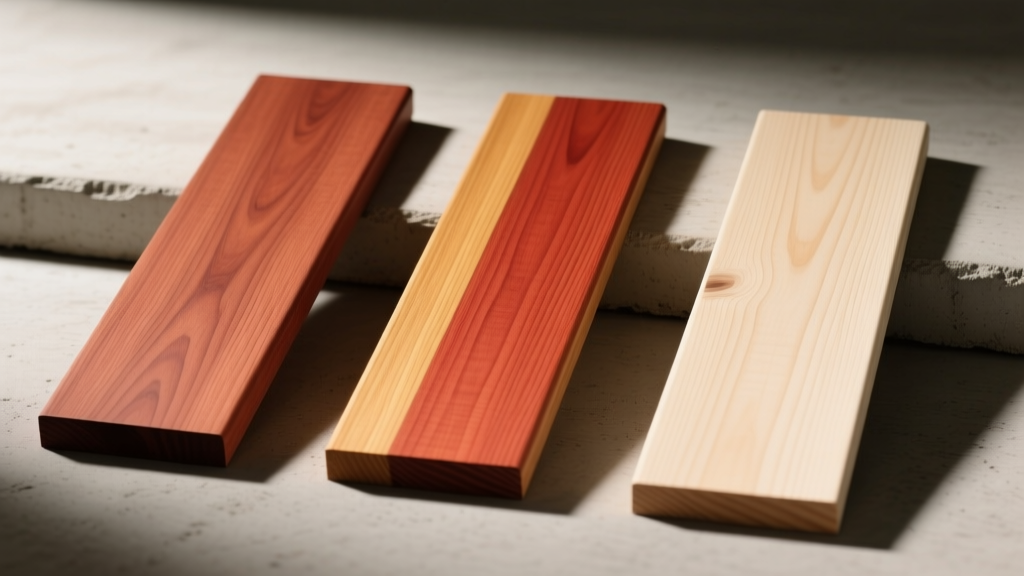
Technically a juniper, Eastern Red Cedar (ERC) is the traditional gold standard for moth-repellent storage. It contains high concentrations of thujopsene and cedrol, the organic compounds responsible for its signature pungent aroma and insect-repelling properties. The heartwood features striking purple and burgundy streaks contrasting with pale yellow sapwood. However, ERC trees are relatively small, meaning wide boards are rare and expensive. Most ERC lumber is available in narrow widths (3 to 6 inches), requiring edge-glued panels for large carcase sides. It is also notoriously brittle, making hand-cut dovetails prone to chipping if tools are not razor-sharp.
Western Red Cedar (Thuja plicata)
Western Red Cedar (WRC) is the workhorse of the cedar family. It grows to massive sizes, yielding wide, clear boards (8 to 12 inches) that are ideal for building large blanket chests without visible glue lines. While it shares a similar rot-resistance profile to ERC, WRC contains significantly lower levels of aromatic moth-repellent oils. It is lighter, softer, and more dimensionally stable, making it an excellent choice for the structural carcase of a chest where maximum insect repellency is a secondary concern to structural integrity and large-scale aesthetics.
Northern White Cedar (Thuja occidentalis)
Often marketed as Aromatic White Cedar, this species is exceptionally lightweight and easy to mill. It is highly resistant to decay but lacks the structural stiffness of WRC and the intense aromatic oils of ERC. It is best utilized as a secondary wood for drawer bottoms, interior dividers, or the underside of chest lids where weight reduction is prioritized.
Scenario Matching: Which Cedar Fits Your Storage Needs?
To ensure the chest performs its intended function, match the wood species to the specific items being stored. The following matrix outlines the optimal application-fit for common storage scenarios.
| Storage Scenario | Recommended Species | Primary Rationale | Construction Modification Required |
|---|---|---|---|
| Wool, Cashmere & Silk Textiles | Eastern Red Cedar (ERC) | High thujopsene content actively repels clothes moths and carpet beetles. | Use 100% solid ERC for all interior-facing surfaces. Do not line with fabric. |
| Heavy Quilts & Large Blankets | Western Red Cedar (WRC) | Wide boards allow for large, seamless panels that won't warp under the weight of heavy bedding. | Line the interior with unbleached cotton muslin to prevent cedar oils from transferring to light fabrics. |
| Silver & Precious Metals | ERC with Pacific Silvercloth Lining | Cedar's low moisture equilibrium prevents tarnishing, but physical barriers are required to stop acid pitting. | Upholster the interior with anti-tarnish flannel; never let silver touch bare cedar. |
| Archival Documents & Photographs | WRC (Exterior only) | Lower acidity than ERC, but all cedar off-gasses organic acids that degrade paper over decades. | Store documents in archival polyester (Melinex) sleeves before placing them inside the chest. |
Critical Construction Specs: Moisture, Joinery, and Fasteners
Building a cedar chest requires strict adherence to moisture content (MC) parameters and fastener chemistry. According to the USDA Forest Products Laboratory Wood Handbook, indoor furniture in climate-controlled environments should be built with wood equilibrated to a 6% to 8% MC. If you mill ERC at 12% MC and assemble the chest, the wood will shrink as it acclimates to the home's interior, causing panel glue joints to fail and the lid to warp, breaking the seal that keeps the aromatic oils contained.
The Iron-Tannin Reaction: A Common Failure Mode
Eastern Red Cedar is rich in tannic acid. If you use standard steel brads, cut nails, or uncoated steel screws in the construction, the moisture in the wood will react with the iron and tannins to create a black, ink-like stain. This stain will bleed through the wood surface and ruin the aesthetic of the chest. The Fix: You must exclusively use brass, silicon bronze, or 304/316 grade stainless steel fasteners. If using pneumatic nails for jigs, ensure they are specifically labeled as stainless or hot-dipped galvanized, though brass screws remain the superior choice for structural hinges and lid supports.
Cedar is a relatively soft wood with low screw-holding strength compared to hardwoods like oak or maple. When installing heavy chest hinges or lid stays, do not rely solely on wood screws driven into the end grain or thin carcase walls. Use threaded brass inserts (such as E-Z Lok brass inserts) embedded in epoxy to provide machine-thread strength for the hinge hardware, preventing the hinges from tearing out over time.
The Chemistry of Cedar Storage: What NOT to Put Inside
The very oils that make a cedar chest valuable can also destroy certain materials. As noted by preservation experts at the National Archives and Records Administration, organic off-gassing from wood can accelerate the degradation of sensitive materials. Cedar chests emit volatile organic compounds (VOCs) and organic acids that will aggressively attack specific plastics and synthetic materials.
- PVC and Vinyl: Never store items wrapped in PVC plastic bags or resting on polyurethane foam inside a cedar chest. The cedar oils will break down the plasticizers in the PVC, resulting in a sticky, melted residue that will permanently ruin textiles and photographs.
- Acetate and Early Plastics: Vintage items made from cellulose acetate or early Bakelite will suffer from acid hydrolysis when trapped in the enclosed, off-gassing environment of a sealed cedar chest.
- Leather Goods: The tannins and oils in cedar can transfer to leather, causing permanent dark staining and altering the pH of the leather, which can lead to premature drying and cracking.
For safe storage of mixed materials, line the chest with washed, unbleached cotton muslin or use archival-quality glassine paper as a barrier between the wood and the stored items.
Finishing Protocols: Preserving the Aroma
The most frequent mistake made by novice woodworkers is applying a film finish to the interior of a cedar chest. Polyurethane, lacquer, and shellac seal the wood pores, effectively trapping the aromatic oils inside the wood and rendering the chest useless for moth prevention. Furthermore, as the wood expands and contracts, interior film finishes will inevitably crack and flake onto the stored textiles.
The Correct Approach to Finishing
- Interior: Leave completely bare. Sand to 180 grit to open the pores. If the aroma fades after a few years, lightly scuff-sand the interior with 120-grit sandpaper to expose fresh oil-rich wood cells.
- Exterior: A penetrating oil finish, such as polymerized tung oil or a high-quality Danish oil, enhances the purple heartwood streaks without forming a thick plastic film. Apply 3 to 4 coats, allowing 24 hours of cure time between coats.
2026 Market Pricing and Sourcing Guidelines
Lumber markets have stabilized following the supply chain disruptions of the early 2020s, but premium clear cedar remains a significant investment. As of early 2026, pricing for kiln-dried, surfaced-two-sides (S2S) cedar is as follows:
| Species | Grade | Average Price per Board Foot (2026) | Best Sourcing Strategy |
|---|---|---|---|
| Eastern Red Cedar | Select & Better (90% clear) | $8.50 - $12.00 | Specialty hardwood dealers; avoid big-box stores which only carry construction-grade knotty stock. |
| Western Red Cedar | Clear All Heart (C-Grade) | $10.00 - $14.50 | Pacific Northwest direct-mill suppliers or specialized architectural lumber yards. |
| Northern White Cedar | Standard & Better | $5.50 - $7.50 | Northeast and Midwestern regional sawmills. |
When sourcing Eastern Red Cedar specifically for a chest interior, request 'mixed heartwood' from your supplier. According to the detailed species profiles on The Wood Database, the insect-repelling oils are concentrated almost entirely in the heartwood. Boards consisting mostly of pale sapwood will look attractive but will lack the functional moth-repellent properties that justify the premium cost of the lumber. Always inspect the end grain at the lumber yard to ensure a high ratio of purple/red heartwood to yellow sapwood before purchasing.