Types of Wood to Burn: A Density and BTU Selection Framework
Master the thermodynamics of heating with our selection framework for the best types of wood to burn, comparing BTU yields, moisture limits, and species.
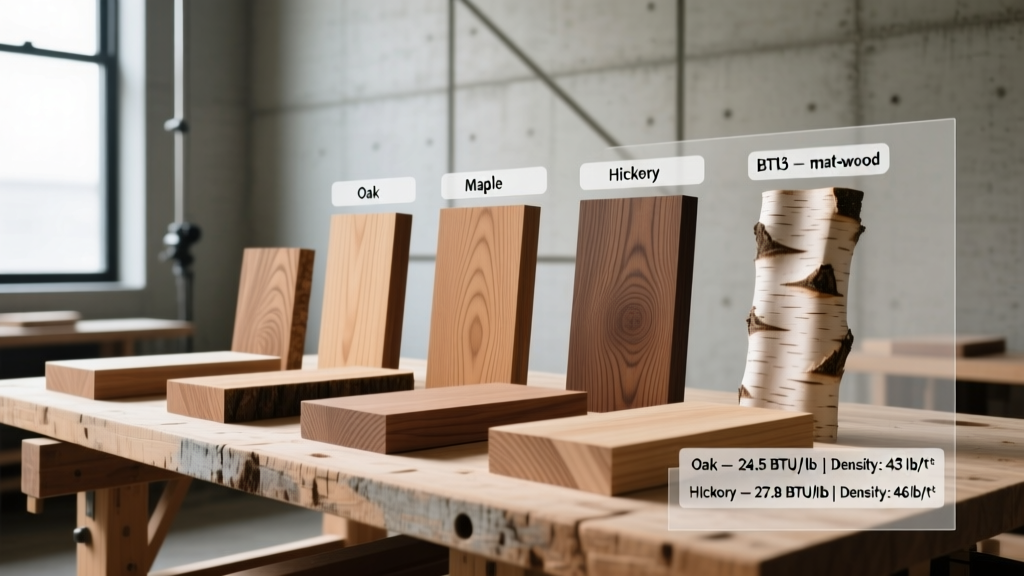
The Thermodynamics of Firewood: Why Density Dictates Performance
Selecting the right firewood is not about picking a favorite tree species; it is an exercise in applied thermodynamics. When evaluating the types of wood to burn for residential heating, masonry stoves, or outdoor boilers, the primary metric of success is energy density. Wood is composed primarily of cellulose, hemicellulose, and lignin. While the chemical composition of these compounds is remarkably similar across all tree species, the physical density of the wood structure varies wildly.
A standard full cord of wood measures 128 cubic feet (typically stacked 4 feet high by 4 feet wide by 8 feet long). Because a cord is a volumetric measurement rather than a weight measurement, a cord of dense hardwood will contain significantly more actual wood fiber—and therefore more potential energy—than a cord of porous softwood. Understanding this volumetric-to-mass relationship is the foundation of the firewood selection framework.
The Firewood Selection Matrix: Hardwoods vs. Softwoods
The following matrix categorizes common North American species by their physical density and resulting thermal output. These figures assume the wood has been properly seasoned to a moisture content (MC) of 20% or less.
| Wood Species | Density (lbs/ft³) | BTU per Full Cord (Millions) | Coal Production | Spark/Pop Factor |
|---|---|---|---|---|
| Osage Orange | 52 | 32.9 | Excellent | High |
| Hickory (Shagbark) | 51 | 30.6 | Excellent | Low |
| Oak (White) | 47 | 29.1 | Excellent | Low |
| Beech (American) | 45 | 27.5 | Good | Medium |
| Maple (Sugar) | 44 | 26.8 | Good | Low |
| Ash (White) | 42 | 25.0 | Good | Low |
| Pine (Ponderosa) | 27 | 17.1 | Poor | High |
| Spruce (White) | 25 | 15.5 | Poor | High |
Moisture Content and the Seasoning Framework
The most common failure point in residential wood burning is ignoring moisture content. Freshly felled 'green' wood can have a moisture content ranging from 45% to over 60% by weight. When you burn green wood, the first phase of combustion does not heat your home; instead, it boils the water trapped inside the cellular structure of the log. This phase change consumes massive amounts of BTUs, drastically reducing your net heat yield and generating thick, corrosive smoke.
According to the EPA BurnWise Program, burning wood with a moisture content above 20% significantly increases particulate matter emissions and accelerates creosote accumulation in your chimney flue. Creosote forms when unburned volatile gases condense on the relatively cool interior walls of your chimney, creating a highly flammable, tar-like substance that is the leading cause of chimney fires.
The 3-Step Verification Protocol for Seasoned Wood
- Visual and Tactile Inspection: Properly seasoned wood exhibits radial checking (cracks) on the end grain. The bark should be loose or falling off, and the wood should sound like a hollow baseball bat when two pieces are struck together, rather than a dull thud.
- Weight Calibration: A seasoned split log of white oak will feel roughly 35% lighter than a green split of the exact same dimensions. Lift and compare.
- Precision Moisture Metering: Do not guess. Use a pin-type moisture meter (such as the General Tools MMD4E or a Wagner Meters MMC220 pinless model). Split a log immediately before testing; surface readings are inaccurate. Drive the pins into the freshly exposed center of the split. The reading must be 20% or lower.
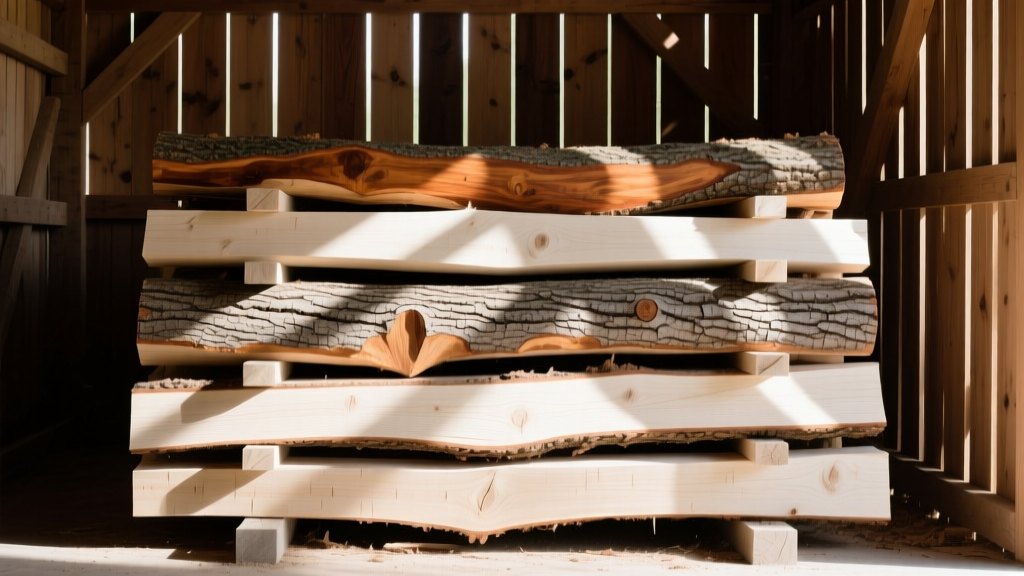
Woods to Avoid: Toxicity, Structural Salvage, and Creosote Risks
Not all types of wood to burn are safe. When sourcing firewood, particularly from demolition sites, landscaping clearances, or salvage yards, you must actively filter out hazardous materials.
Pressure-treated lumber (often identifiable by a green or brown tint and end-tags indicating CCA, ACQ, or CA-C treatments) contains copper, chromium, and arsenic compounds. Burning this wood releases highly toxic heavy metals into the air and leaves concentrated toxic ash that can leach into soil. Similarly, avoid burning plywood, OSB, or MDF, as the urea-formaldehyde and phenol-resorcinol adhesives used in these engineered building materials release carcinogenic gases when combusted.
- Driftwood: Wood recovered from oceans or saltwater bays absorbs sodium chloride and other minerals. Burning driftwood releases dioxins and furans, and the salt rapidly corrodes the metal baffles and catalytic combustors inside modern EPA-certified woodstoves.
- Poison Ivy, Oak, and Sumac: The urushiol oil that causes contact dermatitis does not fully break down during combustion. It can be carried in the smoke, causing severe, potentially life-threatening respiratory reactions if inhaled.
- Unseasoned Softwoods (Pine/Spruce): While dry pine is excellent for kindling due to its high resin content, burning large volumes of unseasoned softwood as primary fuel leads to rapid, severe creosote buildup (Stage 3 glazed creosote) because of the high volume of unburned volatile terpenes.
Application-Specific Selection Guide
The 'best' wood depends entirely on your heating appliance and thermal goals. Use this decision framework to match the species to the application.
1. Masonry Heaters and High-Efficiency Wood Boilers
Target Species: Hickory, White Oak, Beech, Sugar Maple.
Rationale: These appliances are designed for long, slow, high-temperature burns. They require dense hardwoods that produce a substantial, long-lasting coal bed. The high thermal mass of a masonry heater absorbs the intense, sustained heat output of a 30-million BTU cord of oak, radiating it slowly into the living space over 12 to 24 hours.
2. Shoulder Season Heating (Spring/Fall)
Target Species: Ash, Yellow Birch, Cherry, Elm.
Rationale: During mild weather, loading a stove with dense hickory will quickly overheat a modern, tightly insulated home. Medium-density woods like Ash (which uniquely has a low natural moisture content even when green and seasons faster than almost any other species) provide moderate BTU output and are easier to split, making them ideal for quick, temperature-maintaining fires.
3. Fire Starting and Kindling
Target Species: Fatwood (resin-saturated pine heartwood), Eastern Red Cedar, Dry Spruce.
Rationale: Softwoods ignite at lower temperatures due to their volatile resin content. Keep a dedicated bin of kiln-dried cedar or split fatwood strictly for establishing the initial draft and bringing the stove up to operating temperature before adding hardwoods.
Sourcing and Cost Metrics
Understanding firewood economics requires strict attention to volumetric terminology. A common point of friction between buyers and sellers is the confusion between a 'full cord' and a 'face cord' (or rick). A face cord is typically a stack 4 feet high by 8 feet long, but only 16 inches deep (the length of a standard stove log). Therefore, a face cord is exactly one-third of a full cord.
As of current market conditions, pricing for a full cord of mixed hardwood varies significantly by region and preparation method:
- Green, Unsplit Hardwood: $200 - $300 per full cord (Requires 12-18 months of space and labor to season).
- Seasoned, Split Hardwood (Air-Dried): $350 - $500 per full cord (Ready to burn, but verify MC with a meter).
- Kiln-Dried (KD) Hardwood: $550 - $800+ per full cord (Guaranteed <15% MC, pest-free, ideal for immediate use or commercial settings).
"When purchasing firewood, always measure the stack before it is dumped and scattered. A standard pickup truck bed, even when loaded to the top of the cab, holds roughly one-third to one-half of a face cord, not a full cord. Verify dimensions in writing prior to delivery." — University of Missouri Extension Forestry Guidelines
By applying this density, moisture, and application-based framework, you transition from simply buying 'firewood' to procuring a highly efficient, predictable biomass fuel source tailored precisely to your heating infrastructure.
Written by
Priya KapoorPriya Kapoor is a real estate market analyst and construction economics researcher with expertise in housing affordability, development feasibility, and infrastructure investment. She holds a Master of Regional Planning from Cornell University and previously worked as a senior analyst at CBRE's Investment Properties group, where she modeled returns for $4B in mixed-use development pipelines. Priya now runs an independent research practice advising developers, municipalities, and REITs on construction cost forecasting and market timing. She publishes the quarterly "BuildMat Market Pulse" report tracking material price indices across 12 commodity categories. Based in Austin, TX, Priya serves on the board of Habitat for Humanity Austin and is a marathon runner.
More from Priya Kapoor
View all
Construction Cost
Cost to Build a 1600 Sq Ft Home in 2026: Full Breakdown
Accurate 2026 cost to build a 1600 sq ft home—material, labor, and regional pricing breakdowns included. Plan your budget with real-time estimates.
Aug 11, 2026

Wood & Lumber
Name the Types of Wood for Pressure Treatment and Preservation
Learn how to name the types of wood best suited for pressure treatment. Compare species treatability, chemical retention levels, and 2026 preservation costs.
Aug 4, 2026

Stone & Masonry
Stone Veneer Suppliers Lindenhurst: 2026 Cost Analysis
Analyze 2026 stone veneer costs in Lindenhurst, NY. Compare local supplier pricing, delivery fees, and Suffolk County installation labor rates.
Aug 4, 2026