Decoding Cedar Lumber Grades: WRCLA Standards & Product Lines
Master cedar lumber grades with our deep dive into WRCLA standards, brand product lines, and exact specifications for premium exterior cladding.
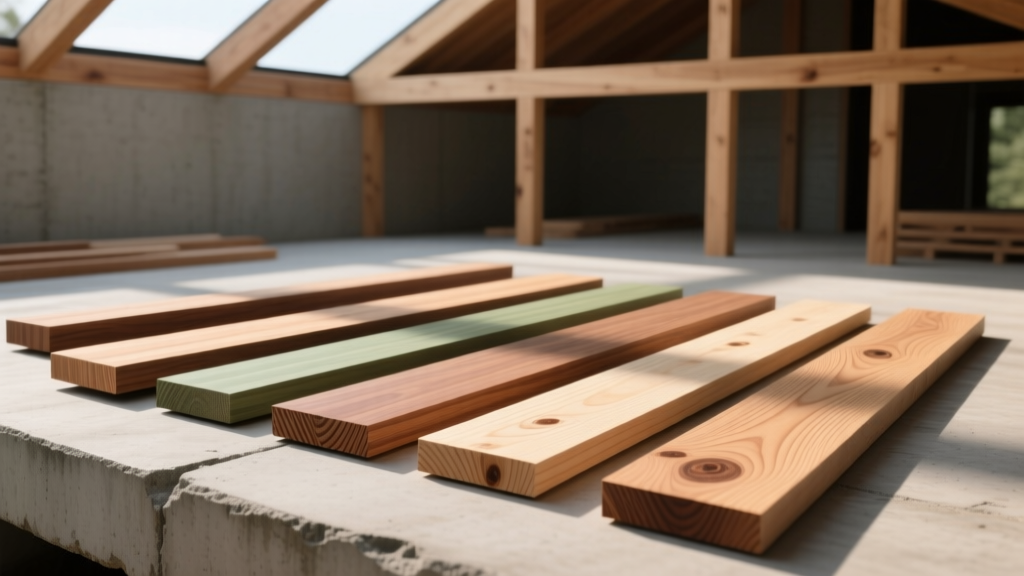
The WRCLA Grading Framework: Clear vs. Knotty
Specifying the correct cedar lumber grades is the single most critical decision in exterior cladding procurement. A misaligned grade specification leads to either severe budget overruns or premature aesthetic degradation. The Western Red Cedar Lumber Association (WRCLA) governs the definitive grading rules for Thuja plicata, dividing the market into two primary visual categories: Clear and Knotty. Understanding the exact tolerances of these grades prevents costly change orders during the build phase.
Clear grades are manufactured to showcase the wood's uniform, straight-grain appearance, completely free of visual defects. Knotty grades celebrate the rustic character of the tree, but strict rules dictate the size, soundness, and frequency of the knots. When reviewing mill certificates, you will encounter specific designations that dictate the board's face and back quality.
Always specify Kiln-Dried (KD) to 12-15% moisture content for Clear grades intended for opaque paints or solid stains. Green (S-GRN) cedar is acceptable for Select Tight Knot (STK) profiles if you plan to use semi-transparent penetrating oils immediately upon installation, but KD STK is mandatory for factory-primed product lines to prevent tannin bleed-through.
Brand Deep-Dive: Product Lines & Pricing Tiers
Major WRCLA-certified mills structure their product lines around the core grading rules, but brand-specific nomenclature often obscures the underlying grade. As of early 2026, supply chain stabilization has normalized Western Red Cedar pricing, though premium clears continue to command a significant premium due to old-growth timber scarcity.
Architect Clear (A & Better)
Market-leading brands like Tealwood and Silva Select package their top-tier clear lumber under names like "Architect Clear" or "Premium Clear." By WRCLA standards, this grade permits no knots on the face and limits sapwood exposure. It is the only grade suitable for high-end commercial facades or luxury residential projects where uniform, dark solid-color staining is required. Expect to pay between $5.20 and $6.80 per linear foot for a 1x6 bevel profile.
Select Tight Knot (STK)
STK is the volume leader for residential siding and fencing. The defining characteristic is that all knots must be "tight"—meaning they are solidly fixed and will not fall out during milling or seasonal shrinkage. Brands often market this as "Rustic Select" or "Heritage Knotty." Pricing for 1x6 STK bevel siding currently ranges from $2.40 to $3.30 per linear foot. According to physical property data cataloged by the Wood Database, Western Red Cedar exhibits excellent dimensional stability (radial shrinkage of 3.9%), which helps keep these knots tight even in fluctuating humidity, provided the lumber is properly detailed.
Grade Comparison Matrix: Specifications & Applications
| Grade Designation | Knot Allowance (Face) | Sapwood Limit | Best Application | Est. Cost/LF (1x6 Bevel) |
|---|---|---|---|---|
| Architect Clear | None permitted | None on face | Modern commercial, solid paint | $5.20 - $6.80 |
| Custom Clear | Pin knots on back only | Up to 25% on face | Residential clear siding, semi-solid stain | $4.10 - $5.00 |
| Select Tight Knot | Tight, sound knots only | Unrestricted | Rustic residential, fencing, decking | $2.40 - $3.30 |
| Quality Knotty | Allows minor knot defects | Unrestricted | Utility structures, interior accent walls | $1.60 - $2.20 |
Edge Cases: Specifying STK in Arid Climates
A frequent failure mode in cedar cladding occurs when Select Tight Knot lumber is specified for projects in high-desert or arid environments (e.g., Nevada, Arizona, or inland California). While the American Wood Council provides robust guidelines for moisture management in exterior wood detailing, the micro-mechanics of knot pull-out require specific attention.
When STK cedar drops below 8% moisture content in dry climates, the differential shrinkage rate between the transverse grain of the knot and the longitudinal grain of the surrounding board can cause the knot to loosen or "push out." To mitigate this in arid zones, specifiers should mandate Kiln-Dried STK and apply a high-build, elastomeric back-priming coat before installation. Alternatively, downgrade the aesthetic expectation and specify a textured, resawn face (like a 1x6 channel rustic) which visually masks minor knot displacement better than a smooth-faced bevel profile.
Never accept "Mill Run" or "Economy" grades as a substitute for STK on exterior envelopes. Mill run is an ungraded mix that frequently includes loose knots, wane (bark edges), and excessive sapwood. When exposed to weather, loose knots will fall out, creating voids that compromise the weather-resistive barrier and invite moisture intrusion into the wall cavity.
Procurement Strategy: Calculating Waste and Lead Times
Ordering cedar lumber grades requires precise waste factor calculations based on the grade selected. Clear grades are milled from the outer, older growth of the log and often come in longer, continuous lengths (12' to 16'). Knotty grades are sourced from younger timber or higher up the tree trunk, resulting in shorter average lengths (6' to 10') and higher defect rates that require cutting around.
- Architect / Custom Clear Waste Factor: Add 7% to 10% for end-trimming and off-cuts.
- Select Tight Knot (STK) Waste Factor: Add 12% to 15% to account for cutting around loose knots discovered during site sorting, and shorter board lengths requiring more lap joints.
- Quality Knotty Waste Factor: Add 18% to 22% due to frequent wane and structural defects.
When writing your procurement specification, explicitly state the grade, the moisture content (e.g., "KD 15%"), the surface texture (e.g., "S4S" for Smooth Four Sides, or "S1S2" for Smooth One Side, Rough One Side), and the required WRCLA grade stamp. Relying on verbal agreements with lumber yards regarding "knotty cedar" will invariably result in the delivery of ungraded Mill Run material. Always require the physical WRCLA grade stamp on at least 20% of the boards in any given bundle to verify compliance upon delivery.
Frequently Asked Questions on Cedar Specifications
Can I paint Select Tight Knot (STK) cedar?
It is highly discouraged. The tannins and resins concentrated in the knots will bleed through almost any standard latex or oil-based paint within 6 to 12 months, creating dark, circular stains on the finished surface. STK should only be finished with penetrating, semi-transparent, or transparent oil-based stains. If a painted finish is required, you must upgrade to Architect Clear or Custom Clear grades.
What is the difference between S1S2 and S4S textures in clear grades?
S4S (Smooth Four Sides) provides a modern, uniform appearance that holds solid-color stains exceptionally well. S1S2 (Smooth on the exposed face, rough-sawn on the back and edges) is preferred by many installers because the rough back provides superior mechanical adhesion for the stain or paint, extending the refinishing cycle by up to 30% compared to smooth-back profiles.