Comparing the Best Types of Wood for Flooring: 2026 Guide
Compare the top types of wood for flooring based on Janka hardness, 2026 installation costs, and durability to choose the right species for your home.
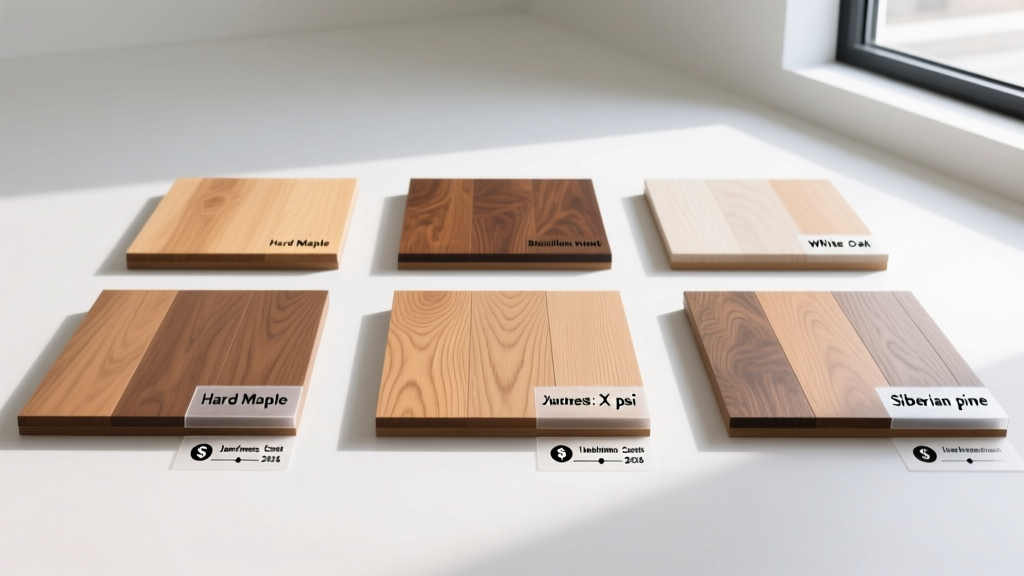
The Hardwood vs. Softwood Flooring Divide
When evaluating types of wood for flooring, the primary biological distinction is between hardwoods (angiosperms) and softwoods (gymnosperms). While the names suggest a strict correlation with physical density, this is not universally true. Balsa is a hardwood, while Longleaf Heart Pine is a softwood. However, in the context of residential and commercial flooring, softwoods like Douglas Fir (Janka rating: 660 lbf) and Eastern White Pine (Janka rating: 380 lbf) are generally relegated to low-traffic or historical restoration projects due to their susceptibility to denting. For high-traffic durability, domestic and exotic hardwoods remain the industry standard, governed by strict grading rules established by the National Wood Flooring Association (NWFA).
Core Wood Species Comparison Matrix
The following matrix evaluates the most prominent wood species used in modern flooring, benchmarking their Janka hardness (measured per USDA Forest Products Laboratory standards), average 2026 material costs, and dimensional stability.
| Wood Species | Janka Hardness (lbf) | 2026 Material Cost (per sq. ft.) | Dimensional Stability | Best Application |
|---|---|---|---|---|
| Red Oak | 1,290 | $4.00 - $7.00 | Moderate | Standard residential living areas |
| White Oak | 1,360 | $6.00 - $10.00 | High | Kitchens, mudrooms, modern builds |
| Hard Maple | 1,450 | $5.50 - $9.00 | Moderate | Basketball courts, high-traffic halls |
| Hickory | 1,820 | $7.00 - $12.00 | Low | Rustic designs, heavy commercial use |
| Brazilian Cherry | 2,350 | $12.00 - $18.00 | High | Luxury residential, exotic aesthetics |
| Teak | 1,000 - 1,155 | $15.00 - $25.00+ | Very High | High-moisture areas, indoor/outdoor transitions |
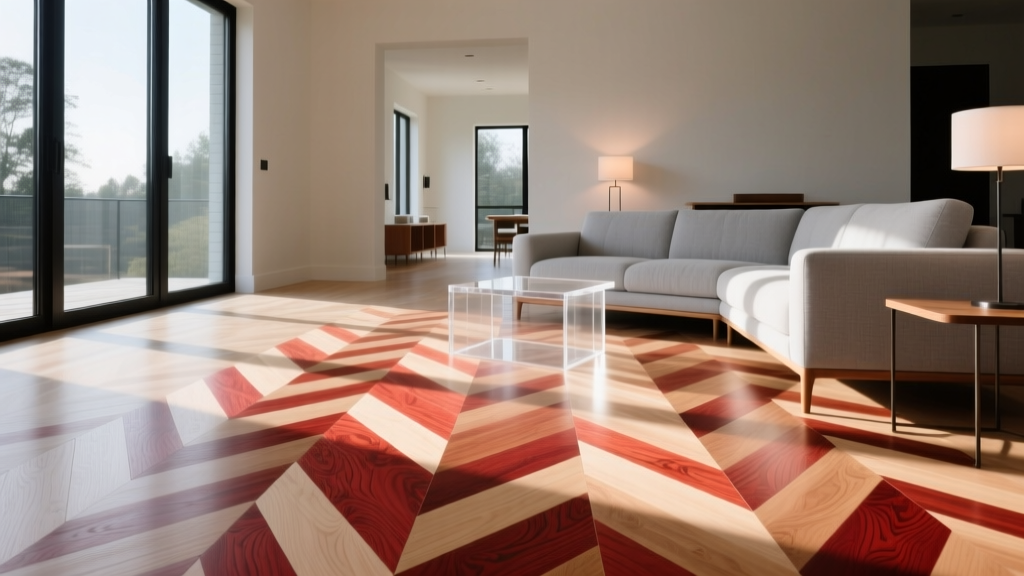
Top Domestic Hardwoods Analyzed
White Oak vs. Red Oak
White Oak has surged in popularity, overtaking Red Oak in premium residential builds. The critical difference lies in the wood's cellular structure. White Oak contains tyloses—membranous growths that plug the xylem vessels, making the wood highly impermeable to water and rot. This is why White Oak is used for whiskey barrels and boat building. Red Oak lacks tyloses, featuring open pores that can wick moisture, making it prone to blackening if exposed to standing water or pet urine. From a finishing perspective, White Oak's high tannin content reacts beautifully with modern chemical treatments like Rubio Monocoat or iron acetate (ebonizing), whereas Red Oak tends to turn muddy or greenish under the same treatments.
Hard Maple
With a Janka rating of 1,450 lbf, Hard Maple (Acer saccharum) is exceptionally dense and features a very tight, closed grain. This density makes it highly resistant to wear, which is why it is the mandated species for professional bowling alleys and basketball courts. However, this same tight grain makes Maple notoriously difficult to stain. The wood resists pigment penetration, frequently resulting in blotchy, uneven color if traditional oil-based stains are applied without a specialized pre-conditioner. For Maple, clear finishes or factory-applied UV-cured stains are highly recommended.
Hickory
Hickory is the hardest commercially available domestic hardwood (1,820 lbf). It features extreme color variation between its pale sapwood and dark reddish-brown heartwood. Due to its density and interlocking grain, Hickory is notoriously hard on tooling. Installers must use carbide-tipped saw blades with a high tooth count (80+ teeth) to prevent tear-out, and pneumatic nailers must be calibrated precisely to avoid splitting the tongues during blind-nailing.
Exotic Species: Performance vs. Sustainability
Exotic woods offer unparalleled hardness and unique grain patterns, but they introduce specific installation and environmental challenges. Brazilian Cherry (Jatoba) boasts a massive 2,350 lbf Janka rating, making it virtually impervious to denting from high heels or dropped tools. However, Jatoba is photosensitive; it will dramatically darken from a pale tan to a deep, rich reddish-brown within the first six months of UV exposure. Area rugs placed immediately after installation will leave permanent light patches if not moved periodically during this curing phase.
Teak, while softer (around 1,100 lbf), contains high levels of natural silica and rubber oils. These oils provide immense resistance to moisture and insect damage but actively repel standard polyurethane adhesives and finishes. Installers must wipe Teak planks with mineral spirits or a specialized solvent immediately before applying glue or finish to remove the surface oils and ensure a mechanical bond. Furthermore, buyers must verify Forest Stewardship Council (FSC) certification when purchasing exotic species to ensure the timber was not illegally logged from endangered old-growth forests.
Solid vs. Engineered Structural Constraints
The choice between solid and engineered wood dictates where the flooring can be installed. Solid wood is typically milled at 3/4-inch thick and is designed to be mechanically fastened (nailed or stapled) to a wood subfloor. It is highly susceptible to hygroscopic expansion and contraction. As a rule, solid wood planks wider than 3.25 inches require specialized face-nailing or gluing to prevent edge-cupping.
Engineered wood features a real hardwood veneer (ranging from 2mm to 6mm thick) bonded over a cross-ply core of birch or eucalyptus. This perpendicular layering neutralizes the wood's natural tendency to expand across the grain, providing superior dimensional stability. Engineered planks can be manufactured in widths up to 10 inches and are the only wood flooring option approved for below-grade installations (basements) and over concrete slabs using elastomeric moisture-barrier adhesives.
Finish Chemistry and Wear Layers
The species of wood is only half the equation; the factory finish determines the floor's actual lifespan in a residential setting.
- Aluminum Oxide: The commercial standard. Ceramic particles are suspended in UV-cured polyurethane, creating a micro-scratch-resistant shell. It cannot be easily spot-repaired; when it fails, the entire floor must be sanded down to bare wood.
- UV-Cured Polyurethane: The standard for high-end residential. Offers excellent clarity and warmth. It scratches more easily than aluminum oxide but can be screened and recoated without a full sanding.
- Hardwax Oils (e.g., Osmo, Rubio): Penetrates the wood fibers rather than sitting on top. While it offers zero surface scratch resistance, it allows for seamless, invisible spot repairs. A dog scratch can be buffed out with a Scotch-Brite pad and a drop of oil in five minutes.
Decision Framework: Matching Wood to Your Environment
Use this framework to finalize your species and construction selection based on your specific structural and environmental constraints:
Scenario A: Installing over Radiant Heat Systems
Solution: Engineered White Oak or Engineered Walnut. Rationale: Solid wood will dry out and crack over radiant heat. Engineered cores resist thermal warping. White Oak and Walnut have excellent dimensional stability coefficients. Avoid Engineered Maple or Hickory, as their high density and tight cellular structure make them prone to checking (micro-cracking) under constant thermal cycling.
Scenario B: High Moisture / Mudroom / Kitchen
Solution: Solid or Engineered White Oak with a penetrating hardwax oil finish. Rationale: The tyloses in White Oak prevent water from wicking into the end-grain. A hardwax oil allows you to easily spot-treat water stains or pet accidents without leaving a visible repair halo, which is impossible with surface-film polyurethanes.
Scenario C: Heavy Commercial or High-Traffic Residential (Large Dogs)
Solution: Solid Hickory or Engineered Brazilian Cherry with an Aluminum Oxide finish. Rationale: You need a Janka rating above 1,800 lbf to prevent physical denting from claws and heavy foot traffic. The aluminum oxide finish will prevent micro-scratches from turning the floor hazy over time.
Written by
James ThorntonJames Thornton is a construction industry veteran with 25 years of hands-on experience in wood framing, lumber grading, and residential building codes. He started as a framing carpenter in rural Oregon, earned his ICC Residential Building Inspector certification, and eventually became a senior plan reviewer for the City of Portland Bureau of Development Services. James holds a B.S. in Wood Science & Technology from Oregon State University and is a certified lumber grader through the West Coast Lumber Inspection Bureau (WCLIB). He has inspected over 3,000 residential construction sites and authored the city's internal guide on advanced framing techniques (2x6 at 24" O.C.). James lives in Bend, OR, where he builds custom timber-frame cabins and competes in lumberjack sports.
More from James Thornton
View all
Insulation
Best Home Insulation Materials: Complete 2026 Guide
Compare top home insulation materials for 2026. Find R-values, installed costs per square foot, and best uses for fiberglass, spray foam, and mineral wool.
Aug 4, 2026

Sustainable Building
Certify Your Green Building Material for LEED and WELL
Step-by-step guide to certifying a green building material for LEED v5 and WELL v2. Master EPDs, HPDs, and VOC limits for 2026 project specifications.
Aug 4, 2026

Stone & Masonry
Veneer Stacked Stone Panels: Interior Design & Style Showcase
Discover how veneer stacked stone panels transform interiors. Explore modern design profiles, material pairings, and technical installation specs.
Aug 4, 2026