3/4 Plywood Selection Guide: Core Types, Grades, and Best Uses
Master 3/4 plywood selection with our taxonomy of core types, face grades, and structural ratings for cabinetry, subfloors, and furniture.
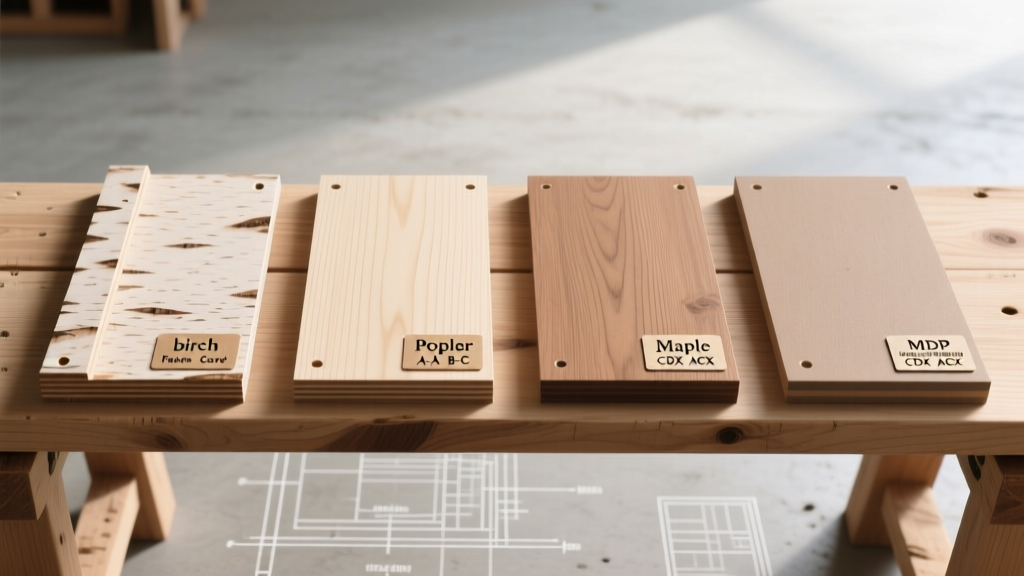
The Nominal vs. Actual Thickness Reality
When specifying materials for structural framing, custom cabinetry, or high-end furniture, understanding the dimensional reality of 3/4 plywood is the first critical step. In the North American lumber market, a sheet sold as "3/4-inch" is almost never exactly 0.750 inches thick. According to the APA - The Engineered Wood Association, sanded softwood and hardwood plywood panels are manufactured to a standard actual thickness of 23/32" (0.71875"). Unsanded structural panels (like CDX) may measure slightly thicker at 25/32" to account for the lack of surface sanding.
This 1/32" variance is negligible for wall sheathing but catastrophic for precision cabinetmaking. If you are building a cabinet box designed for standard 3/4" melamine or MDF, using 23/32" veneer-core plywood will result in misaligned dado joints and gaps in your face frame attachments. Always calibrate your CNC routers and table saw dado stacks to the specific batch thickness of your 3/4-inch plywood before cutting joinery.
Core Taxonomy: What is Inside Your 3/4 Plywood?
The term "plywood" refers to the face veneers and the laminated construction method, but the internal core dictates the panel's weight, machining characteristics, and structural integrity. Selecting the right 3/4 plywood requires matching the core type to the mechanical demands of your project.
| Core Type | Weight (4x8 Sheet) | Edge Screw Holding | Flatness Tolerance | Primary Application |
|---|---|---|---|---|
| Veneer Core | ~70 lbs | Excellent | Moderate (prone to telegraphing) | Structural, shelving, general carpentry |
| MDF Core | ~95 lbs | Poor (requires Confirmat/dowels) | Exceptional | High-end cabinet doors, painted millwork |
| Particleboard Core | ~85 lbs | Poor | High | Budget cabinet boxes, laminated countertops |
| Lumber Core (Blockboard) | ~65 lbs | Very Good | High (resists sagging) | Long horizontal shelves, routed edge profiles |
| Baltic Birch (Multi-Ply) | ~75 lbs (5x5 sheet) | Superior | Exceptional | Precision furniture, CNC machining, jigs |
Veneer Core: The Traditional Standard
Standard veneer core 3/4 plywood consists of 5 to 7 cross-banded layers of softwood (usually fir or pine) or hardwood. It offers the best strength-to-weight ratio and holds screws exceptionally well, even near the edges. However, the internal joints of the core plies can "telegraph" through thin face veneers over time, creating a slightly wavy surface under raking light. Avoid veneer core for high-gloss painted cabinet doors.
MDF and Particleboard Cores: The Cabinetmaker's Choice
For architectural millwork and cabinet doors, MDF (Medium Density Fiberboard) core plywood is the industry standard. The face veneers are glued directly to perfectly flat MDF sheets, eliminating telegraphing and ensuring a glass-smooth finish for opaque paints. The trade-off is weight and edge fragility. Standard wood screws will strip out of an MDF edge. You must use specialized hardware like Hafele Confirmat screws, dowels, or pocket-hole joinery reinforced with glue.
Lumber Core: The Anti-Sag Solution
Lumber core plywood features a center layer made of solid wood strips (often basswood or poplar) glued edge-to-edge, sandwiched between cross-banded veneers. This construction acts similarly to a torsion box, providing immense resistance to deflection. If you are building 36-inch or wider horizontal bookshelves, 3/4-inch lumber core will resist sagging under heavy loads far better than standard veneer core or MDF.
Face Veneer Grades and Selection
The structural integrity of 3/4-inch plywood is determined by the core, but the aesthetic and functional surface is dictated by the face veneer grade. The Architectural Woodwork Institute (AWI) and ANSI/HPVA HP-1-2020 standards classify hardwood faces into four primary grades:
- Grade A (Premium): Smooth, paintable, or stainable. Free of knots, plugs, and patches. Required for high-end clear-finished furniture and visible architectural paneling.
- Grade B (Good): Solid surface with minor, neatly made repairs. Suitable for painted surfaces or secondary furniture parts where minor blemishes can be filled.
- Grade C (Utility): Permits tight knots up to 1 inch and minor discoloration. Used for structural applications where the face will be hidden or painted with heavy textured coatings.
- Grade D (Backing/Structural): Allows knots up to 2.5 inches and knotholes. Strictly for structural sheathing, subfloors, and temporary hoardings.
When ordering 3/4 plywood for cabinetry, specify the face and back grades using a two-letter system (e.g., "A1" means an A-grade face and a 1-grade back, which is a lesser utility back). For cabinet boxes that will have a melamine interior, order "A-Mel" (A-grade hardwood face on one side, pre-finished white melamine on the back).
Application-Specific Selection Framework
Choosing the correct 3/4-inch panel requires balancing environmental exposure, load-bearing requirements, and finish quality. Use this decision matrix to specify the right material:
1. Structural Subflooring and Roof Sheathing
Specify 3/4" CDX Exposure 1 or Advantech/OSB equivalents. CDX uses C-grade and D-grade faces with exterior-rated phenol-formaldehyde glues. It is designed to withstand construction weather exposure but must be covered by flooring or roofing. Do not use CDX for interior furniture; the surface is too rough, and the chemical off-gassing of exterior resins is unnecessary for climate-controlled interiors.
2. Custom Cabinet Boxes and Built-Ins
Specify 3/4" Pre-finished Maple Veneer Core or UV-cured Plywood (like Columbia Forest Products PureBond). Pre-finished panels save dozens of hours in the shop by eliminating the need to paint or seal the interior of cabinet boxes. Ensure the core is formaldehyde-free (NAF - No Added Formaldehyde) to meet strict indoor air quality standards like CARB2 or TSCA Title VI.
3. High-End Painted Cabinet Doors
Specify 3/4" MDF Core with Maple or Poplar faces. The MDF core guarantees the door will remain perfectly flat over decades of humidity fluctuations, preventing the "picture framing" effect where the stile and rail joints become visible through the paint.
4. Precision Furniture and CNC Jigs
Specify 18mm Baltic Birch. While technically metric (18mm is roughly 0.708", slightly thinner than 23/32"), Baltic Birch is the undisputed king of furniture making. It features 13 solid birch plies with zero internal voids, allowing for flawless exposed-edge designs and incredibly strong, precise CNC-machined joinery.
2026 Pricing and Market Availability
Plywood markets remain sensitive to global resin supply chains and timber harvest quotas. As of early 2026, expect the following retail pricing ranges for a standard 4x8 sheet of 3/4-inch plywood (prices vary by regional distribution and volume discounts):
CDX Structural (4x8): $65.00 - $85.00
Sanded Pine/BCX (4x8): $80.00 - $105.00
Maple Veneer Core, A1 (4x8): $110.00 - $145.00
Maple MDF Core, A1 (4x8): $130.00 - $165.00
Baltic Birch 18mm (5x5): $95.00 - $135.00
Note: Pre-finished (UV-cured) interior panels typically command a 15-20% premium over unfinished equivalents, but this is almost always offset by the labor savings in commercial millwork shops.
Edge Treatment and Machining Considerations
The exposed edge of 3/4 plywood is its greatest aesthetic vulnerability. Standard veneer core edges reveal the alternating grain directions of the internal plies, which absorb stain unevenly and look unfinished. For visible edges, you must apply edge banding.
For production environments, use pre-glued PVC or wood veneer edge banding applied with a hot-air edgebander or a dedicated feed-through machine. For site-built carpentry or small shops, iron-on wood veneer banding (typically 7/8" wide to allow for trimming) is the standard. When trimming flush, use a specialized edge-trimming bit with a bearing that rides on the plywood face, or a block plane set to a micro-cut. Never use a standard flush-trim router bit on veneer core without a sacrificial backer, as the exit tear-out will splinter the delicate face veneer.
For a more robust, architectural look on shelving, apply a 1/4" solid wood lipping (banding) using a tongue-and-groove or splined joint. This not only hides the core but adds significant impact resistance to the leading edge of the shelf, protecting it from dings and daily wear. According to the USDA Forest Products Laboratory Wood Handbook, solid wood edging also restricts the dimensional movement of the plywood panel, further stabilizing the overall assembly in fluctuating humidity environments.