Acid-Stained Concrete Maintenance: Cleaning Playbook & Sealer Care
Master acid-stained concrete maintenance with this cleaning playbook. Learn pH-neutral washing, sealer rejuvenation, and stain removal matrices.
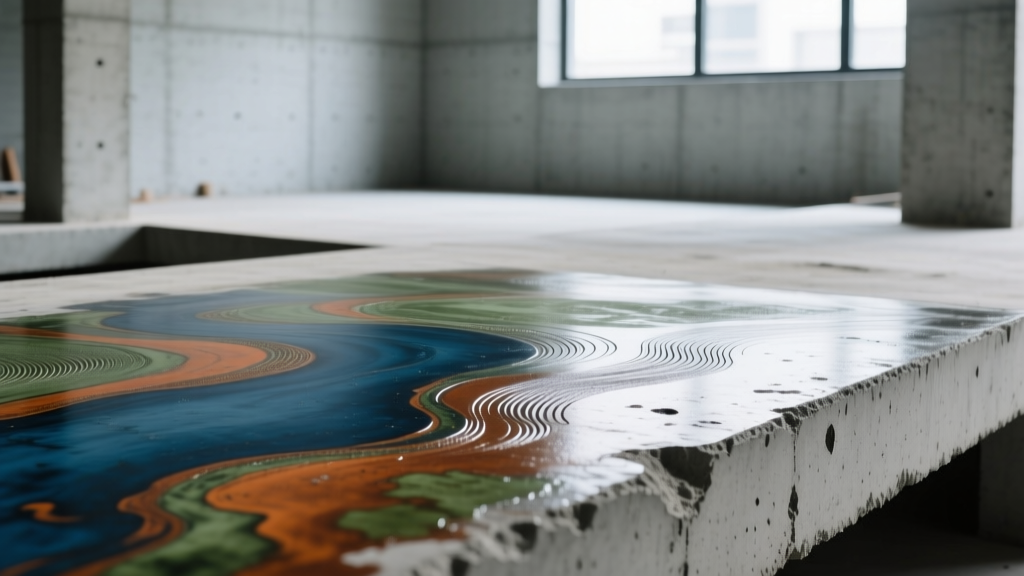
The Chemistry of Sealer Degradation on Stained Floors
Acid staining is a permanent chemical reaction. Metallic salts suspended in a mild hydrochloric or phosphoric acid solution penetrate the concrete matrix, reacting with calcium hydroxide (hydrated lime) to form insoluble, mottled coloration. Because the color is locked into the pores, the stain itself cannot be cleaned away. However, the visual depth, gloss, and protection of acid-stained concrete rely entirely on the topical sealer and sacrificial wax layers applied over it.
The most common maintenance failure occurs when facility managers or homeowners use generic floor cleaners. Alkaline cleaners (pH 9+) and acidic cleaners (pH 4-) systematically break down acrylic and polyurethane sealers. Ammonia-based glass cleaners, vinegar solutions, and citrus degreasers will strip the gloss, cause micro-crazing, and eventually expose the raw stained concrete to abrasion and moisture ingress.
The Routine Cleaning Playbook
Maintaining the optical clarity of the sealer requires a strict two-step mechanical and chemical protocol. This playbook is designed for both residential interiors and high-traffic commercial lobbies.
Step 1: Mechanical Dry Dusting
Silica dust and tracked-in grit act as 100-grit sandpaper underfoot. Before introducing any liquid, remove all particulate matter.
- Tool: 36-inch microfiber dust mop frame with a washable electrostatic pad.
- Prohibited Tools: Stiff-bristle push brooms or corn brooms, which grind silica into the sealer and leave micro-scratches that dull the finish over time.
- Frequency: Daily in commercial spaces; 2-3 times per week in residential settings.
Step 2: pH-Neutral Damp Mopping
When damp mopping, the goal is to lift organic soils without altering the chemical structure of the sealer. Use a specialized, high-surfactant, pH-neutral cleaner. PROSOCO Consolideck DailyKlean or Kemiko NeutraClean are industry standards formulated specifically for decorative concrete.
- Dilution Ratio: 1 ounce of cleaner per 1 gallon of water for routine maintenance. Increase to 2 ounces per gallon for heavy soil.
- Water Quality: If your local water hardness exceeds 7 grains per gallon, use distilled or reverse-osmosis filtered water. Hard water leaves calcium carbonate deposits that appear as cloudy white spots, particularly visible on dark brown or black acid stains.
- Application: Use a flat microfiber mop. Do not flood the floor; the mop should be damp, not dripping. Allow the floor to air dry.
Contaminant Removal Matrix
When routine cleaning is insufficient, targeted spot treatments are required. The following matrix details the exact chemical and mechanical interventions for common contaminants without compromising the underlying sealer.
| Contaminant | Cleaner Type | Application Method | Dwell Time & Rinse |
|---|---|---|---|
| Rubber Tire Scuffs | Mineral Spirits or Melamine Pad | Apply solvent to a white cotton rag; rub in a circular motion. | 1-2 minutes. Wipe dry immediately. |
| Cooking Oil / Grease | Alkaline Degreaser (pH 9-10) | Spray directly on spot. Agitate with a soft nylon brush. | 5-10 minutes. Rinse with distilled water. |
| Pet Urine / Organic Stains | Enzymatic Concrete Cleaner | Flood the area. Cover with plastic wrap to prevent evaporation. | 2-4 hours. Remove wrap and damp mop. |
| Efflorescence (White Salts) | Phosphoric Acid Cleaner (Diluted) | Apply only if sealer is compromised. Agitate with a stiff nylon brush. | 3-5 minutes. Neutralize with baking soda solution. |
Sealer Maintenance: Wax vs. Polyurethane Rejuvenation
The American Society of Concrete Contractors (ASCC) emphasizes that decorative concrete longevity is dictated by the wear layer. Acid-stained floors are typically sealed with either a sacrificial wax system or a high-build polyurethane. Their maintenance protocols differ drastically.
Sacrificial Wax Systems (Acrylic Base)
Acrylic sealers are soft and prone to scratching. They are designed to be topped with a sacrificial floor wax (such as Kemiko Stone Tone Sealer/Wax). The wax takes the abuse from foot traffic, and when it wears thin, it is reapplied.
- Rejuvenation Frequency: Every 3 to 6 months in residential; monthly in commercial.
- Application: Clean the floor thoroughly. Apply a thin, even coat of liquid wax using a lamb's wool applicator. Allow 45 minutes to cure before light foot traffic.
- Stripping: Once a year, or when the wax builds up and yellows, strip the floor using an ammonia-based wax stripper, rinse thoroughly, and reapply fresh wax.
Aliphatic Polyurethane Systems
Polyurethanes do not require wax. Instead, they require mechanical burnishing to maintain gloss and remove micro-scratches.
- Tool: High-speed floor burnisher (1,500 to 2,000 RPM) or a low-speed buffer (175 RPM) for residential.
- Pads: Use diamond-impregnated maintenance pads (e.g., HTC Twister pads). Start with a White pad for light cleaning and gloss enhancement. If scratches are present, step down to a Green pad to aggressively level the micro-scratches, then finish with the White pad.
- Frequency: Burnish quarterly. Do not over-burnish, as excessive friction heat can melt the polyurethane.
Troubleshooting Common Failure Modes
Cause: Acrylic sealers applied in high humidity, or moisture migrating up through the concrete slab (hydrostatic pressure), causes the acrylic polymers to trap water and turn opaque white.
Fix: Perform a xylene solvent bath. Spray pure xylene over the hazy area. The xylene will re-emulsify the acrylic, releasing the trapped moisture. Immediately back-roll the wet xylene with a 3/8-inch nap roller to ensure an even film. Allow 24 hours to flash off and cure.
Cause: UV degradation of a non-UV-stable sealer (like standard epoxy or aromatic polyurethane), or the sealer has worn away completely, exposing the raw stain to oxidation.
Fix: If the sealer is yellowing, it must be chemically stripped or mechanically ground off, and replaced with an aliphatic (UV-stable) polyurethane. If the stain itself has chalked, the concrete must be lightly profiled and re-stained before resealing.
Annual Maintenance Cost Breakdown
Budgeting for decorative concrete requires understanding the lifecycle cost of the wear layer. Below is a comparative analysis of DIY maintenance versus hiring a professional decorative concrete restoration contractor, based on current 2026 material and labor rates.
| Maintenance Tier | Included Services | Estimated Cost (Per Sq. Ft.) | Best Use Case |
|---|---|---|---|
| DIY Routine | pH-neutral mopping, spot cleaning, annual wax reapplication. | $0.15 - $0.30 | Residential interiors, low-traffic boutique retail. |
| Professional Janitorial | Auto-scrubbing, daily dusting, quarterly spray-buffing. | $0.75 - $1.25 | Commercial lobbies, restaurants, showrooms. |
| Specialist Restoration | Deep chemical stripping, diamond burnishing, polyurethane recoating. | $2.50 - $4.50 | Severely damaged floors, 5-year sealer lifecycle renewal. |
Proactive maintenance of acid-stained concrete is significantly less expensive than reactive restoration. By strictly adhering to pH-neutral cleaning protocols and monitoring the sacrificial wear layer, the mottled, variegated aesthetics of the chemical stain will remain vibrant and structurally protected for decades.