Fiberglass vs Concrete Pools Pros and Cons: 2026 Cost Breakdown
Analyze fiberglass vs concrete pools pros and cons with our 2026 cost breakdown. Compare upfront installation, long-term maintenance, and lifetime expenses.
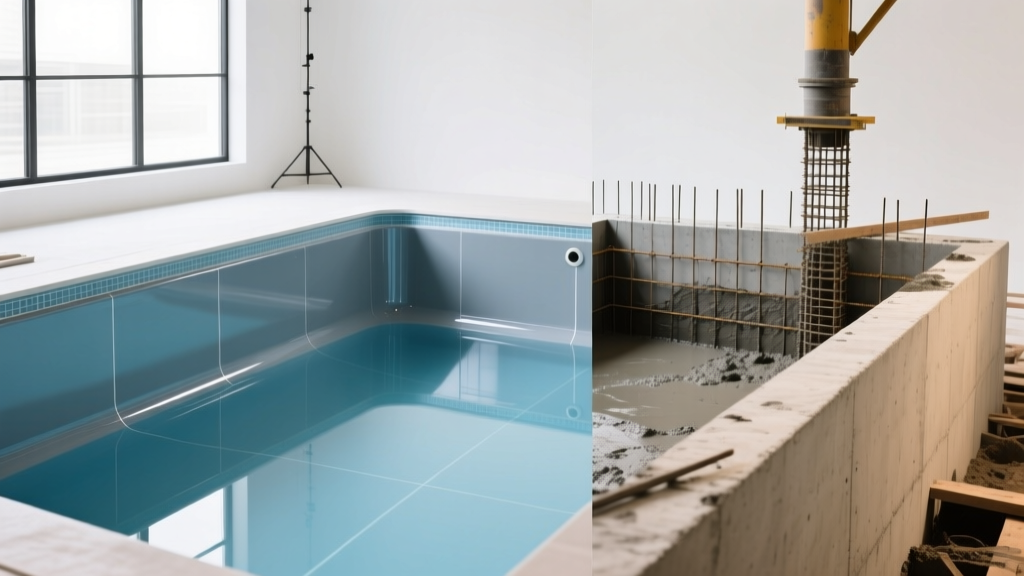
The Upfront Installation Cost Matrix (2026 Data)
Choosing between a pre-manufactured fiberglass shell and a custom-poured concrete (gunite/shotcrete) pool is the most consequential financial decision in backyard construction. While marketing materials often highlight base prices, true project costs are dictated by site access, soil conditions, and material-specific engineering requirements. According to Angi's 2026 Pool Cost Guide, national averages have shifted significantly due to localized labor shortages and material supply chain adjustments.
| Cost Category | Fiberglass Pool (Avg. 14x30 ft) | Concrete / Gunite Pool (Avg. 14x30 ft) |
|---|---|---|
| Base Shell & Materials | $22,000 - $35,000 | $35,000 - $50,000 |
| Excavation & Soil Removal | $4,500 - $8,000 | $6,000 - $12,000 (wider dig required) |
| Crane Rental & Rigging | $1,200 - $2,500 (Mandatory) | $0 |
| Plumbing & Electrical | $5,500 - $8,000 | $7,000 - $11,000 |
| Interior Finish (Plaster/Gelcoat) | Included in shell | $8,000 - $18,000 (Marcite to PebbleTec) |
| Backfill & Structural Support | $3,000 - $5,000 (Clean gravel) | $1,500 - $3,000 |
| Total Estimated Base Cost | $65,000 - $95,000 | $85,000 - $140,000+ |
Fiberglass Pools: Pros, Cons, and Hidden Costs
Fiberglass pools are manufactured off-site in a controlled factory environment using layers of fiberglass mat, woven roving, and vinyl ester resin, finished with a 30-to-40-mil gelcoat surface. The shell arrives at your property as a single, fully cured unit.
The Pros: Speed and Chemical Efficiency
- Rapid Installation: A fiberglass pool can be excavated, set, backfilled, and filled with water in 3 to 6 weeks. The non-porous gelcoat surface requires no curing time, allowing immediate use.
- Reduced Chemical Demand: Because fiberglass is entirely non-porous, algae cannot embed into the surface. This typically reduces chlorine consumption by 40% to 50% compared to concrete, saving $300 to $500 annually on sanitation chemicals.
- Structural Flexibility: High-quality fiberglass shells possess a slight degree of flexural strength, allowing them to tolerate minor ground heaving in freeze-thaw climates without cracking.
The Cons: Size Limits and Logistics
- Dimensional Constraints: Highway regulations limit standard wide-load shipping to 12 feet in width without expensive escort vehicles and special permits. If you want a 16-foot-wide pool, expect to add $3,000 to $6,000 in specialized transport fees.
- Design Limitations: You are restricted to the manufacturer's existing molds. Custom shapes, integrated tanning ledges, or specific depth profiles are impossible to alter once the mold is set.
Many fiberglass quotes omit crane logistics. If your house sits between the street and the backyard, a 200-ton mobile crane must lift the 3,000 lb shell over your roof. This requires street closure permits, power line coordination, and crane rates that can exceed $2,000 for a single half-day lift. Always verify overhead clearance and crane staging access before signing a fiberglass contract.
Concrete (Gunite/Shotcrete) Pools: Pros, Cons, and Hidden Costs
Concrete pools are built entirely on-site. A grid of #3 or #4 steel rebar is tied together on 10-inch centers, and a pneumatic hose is used to spray either gunite (dry-mix concrete, where water is added at the nozzle) or shotcrete (pre-mixed wet concrete) over the steel at high velocity. The shell is typically 8 to 12 inches thick and achieves a compressive strength of 4,000 PSI.
The Pros: Infinite Customization and Structural Mass
- Bespoke Engineering: Concrete allows for zero-compromise design. You can integrate vanishing edges, deep hopper diving wells, integrated spas, and custom beach entries without mold restrictions.
- Structural Longevity: A properly engineered and cured concrete shell can last 50 to 100 years. The sheer mass of the steel-reinforced concrete anchors it firmly against hydrostatic pressure.
The Cons: Curing Timelines and Surface Porosity
- Extended Timelines: Concrete requires a 28-day curing process to reach full structural integrity. The entire project, from excavation to plaster and fill, typically takes 3 to 6 months.
- Surface Porosity: Standard marcite plaster is highly porous. It provides microscopic breeding grounds for algae, requiring aggressive brushing and higher chlorine residuals to maintain water clarity.
- Calcium Leaching: New concrete pools continuously leach calcium hydroxide into the water for the first year, requiring frequent muriatic acid additions to prevent scale buildup on tiles and plumbing.
While both are pneumatically applied, Pool & Hot Tub Alliance (PHTA) guidelines note that wet-mix shotcrete generally yields a higher, more consistent compressive strength with lower rebound (wasted material bouncing off the rebar) compared to dry-mix gunite. If your contractor offers both, specify shotcrete for structural walls and deep ends.
Long-Term Maintenance and Resurfacing Economics
The true financial divergence between fiberglass and concrete occurs in years 10 through 20. Evaluating the fiberglass vs concrete pools pros and cons requires looking past the initial invoice to the lifecycle maintenance matrix.
Concrete Resurfacing Costs
Standard white marcite plaster degrades, etches, and stains within 7 to 12 years. When it fails, the pool must be drained, chipped out, and replastered. Upgrading to an exposed aggregate finish like PebbleTec or 3M Colorquartz extends the lifespan to 15-20+ years but increases the initial and replacement cost significantly.
- Standard Marcite Replastering: $7,000 - $10,000
- PebbleTec / Aggregate Replastering: $12,000 - $18,000
- Acid Washing (Every 3-5 years): $350 - $500 per service
Fiberglass Gelcoat Longevity
Fiberglass gelcoat does not require chipping or replastering. However, after 15 to 25 years of UV exposure and chemical oxidation, the gelcoat may chalk, fade, or develop micro-blistering (osmosis). Restoring a faded fiberglass shell requires professional sanding, reapplication of marine-grade gelcoat, and buffing.
- Gelcoat Refresh / Repair: $4,000 - $7,000 (Typically only needed once in a 30-year lifespan)
Plumbing, Sanitation, and Edge Cases
Material choice dictates specific mechanical requirements that impact both upfront and ongoing costs.
Plumbing Specifications
For both pool types, insist on rigid Schedule 40 PVC for all underground plumbing. Flexible PVC hose is cheaper and easier for installers to route, but it is highly susceptible to crushing under soil settlement and can be destroyed by burrowing rodents or root intrusion. Furthermore, concrete pools require specialized hydrostatic relief valves in the main drain sump to prevent groundwater pressure from cracking the heavy shell during winterization or draining.
Sanitation Systems
If you choose concrete, a Saltwater Chlorine Generator (SWG) is highly recommended to automate the high chlorine demand. However, saltwater accelerates the corrosion of metal fixtures, coping anchors, and surrounding limestone or sandstone decking. You must install a sacrificial zinc anode ($150-$200) in the plumbing line and apply a penetrating silane/siloxane sealer to your stone coping annually to prevent spalling. Fiberglass pools require less chlorine, meaning SWGs run at lower outputs, extending the life of the $800 replacement salt cells from 3 years to 5+ years.
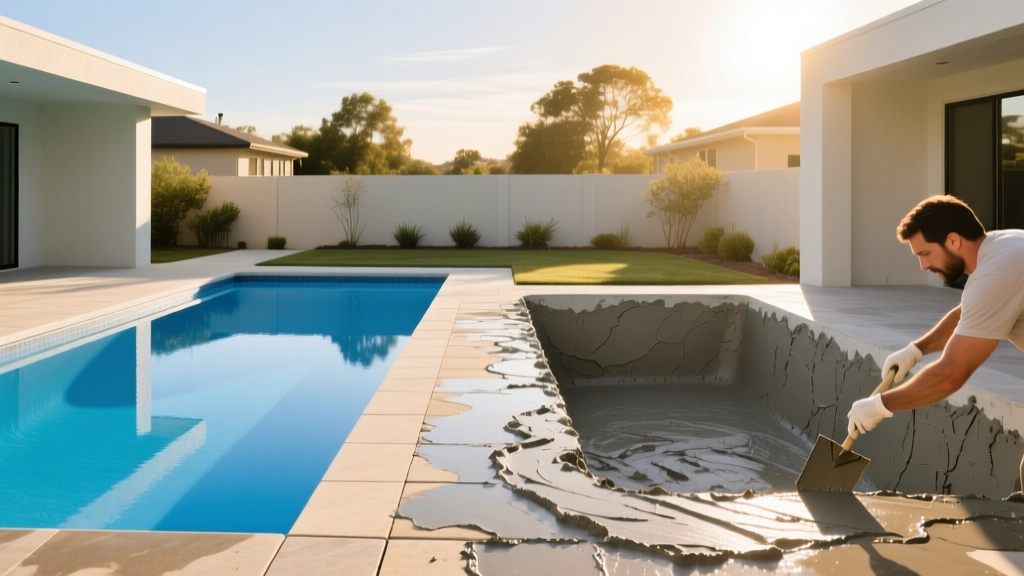
Decision Framework: Which Material Fits Your Project?
Use this diagnostic framework to finalize your material selection based on your specific property constraints and financial priorities.
Choose Fiberglass If:
- You require a functional pool within 45 days due to an upcoming event or home sale.
- Your backyard has standard access (no overhead wires, wide gates) allowing a crane to drop the shell.
- You want to minimize weekly maintenance time and chemical handling.
- Your desired pool footprint fits within a 12-foot width constraint.
Choose Concrete (Gunite/Shotcrete) If:
- You require a highly customized shape, negative edge, or integrated architectural water feature.
- Your site has zero crane access, and the pool must be built entirely by hand through narrow side-yards.
- You are building in an area with extreme, expansive clay soils where a heavily steel-reinforced, monolithic concrete shell is structurally mandated by local engineers.
- You view the pool as a permanent, multi-generational estate addition rather than a medium-term recreational amenity.
'The cheapest pool to build is rarely the cheapest pool to own. Homeowners must align their material choice not just with their current landscaping budget, but with their willingness to manage the chemical and structural maintenance required over a 20-year horizon.'
Written by
David NakamuraDavid Nakamura is a licensed architect (AIA) and construction technology writer focused on sustainable building methods, mass timber engineering, and high-performance building envelopes. He holds a Master of Architecture from the University of Washington and is a certified Passive House Consultant (CPHC). David spent eight years at the Seattle firm Mithun, where he led the design of three LEED Platinum projects, before founding his own practice specializing in net-zero residential design. He serves on the editorial advisory board of GreenBuilder Magazine and has authored peer-reviewed papers on cross-laminated timber (CLT) connections for the Journal of Structural Engineering. In his spare time, David teaches woodworking at Pratt Fine Arts Center and kayaks the Puget Sound.
More from David Nakamura
View all
Construction Cost
Labor Cost to Build a Deck Per Sq Ft: 2026 Installation Guide
Discover the exact labor cost to build a deck per sq ft in 2026. This installation guide breaks down contractor rates, complexity factors, and hidden fees.
Aug 4, 2026

Construction Cost
How Much Does It Cost to Build a 3 Bedroom House? Financing Guide
Learn exactly how much it costs to build a 3 bedroom house and explore 2026 financing options, construction loan types, and budget frameworks for your build.
Aug 4, 2026

Construction Cost
Cost to Build a Tennis Court: 2026 Guide
How much does it cost to build a tennis court in 2026? Breakdowns for asphalt, concrete, and synthetic surfaces plus fencing and lighting.
Jul 30, 2026