Cement Crack Repair Durability: Expected Lifespans and Failure Modes
Analyze cement crack repair durability. Compare epoxy, polyurethane, and hydraulic cement lifespans, failure modes, and long-term cost effectiveness.
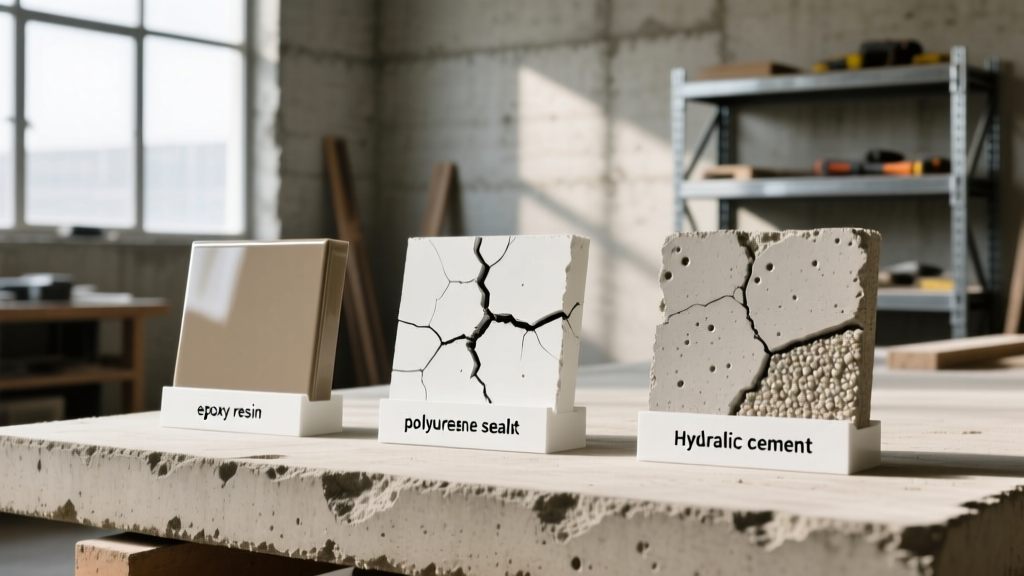
The Reality of Cement Crack Repair Lifespans
Industry data consistently shows that nearly 60% of all cement crack repair applications fail within the first 24 months. This high failure rate is rarely due to defective chemical formulations; rather, it stems from a fundamental mismatch between the repair material's modulus of elasticity and the dynamic behavior of the host concrete substrate. When evaluating cement crack repair durability, contractors and facility managers must look beyond initial adhesion strength and analyze long-term fatigue resistance, thermal cycling tolerance, and moisture vapor transmission rates. As of 2026, advanced polymer-modified repair compounds have extended potential lifespans, but only when paired with rigorous substrate preparation and precise material selection based on the crack's activity level.
Material Lifespan and Performance Matrix
Selecting the correct repair medium requires matching the material's mechanical properties to the structural demands of the crack. The following matrix outlines the expected durability and performance metrics for the three primary repair categories used in modern commercial and residential applications.
| Material Type | ASTM Standard | Expected Lifespan | Modulus of Elasticity | Avg. Cost (2026) |
|---|---|---|---|---|
| High-Modulus Epoxy | ASTM C881 Type I | 10–15+ Years | 1.5 – 2.5 x 10^6 psi | $18 – $28 / lin. ft. |
| Flexible Polyurethane | ASTM C881 Type II | 5–8 Years | 5,000 – 15,000 psi | $12 – $20 / lin. ft. |
| Hydraulic Cement | ASTM C928 | 1–3 Years | 3.0 – 4.0 x 10^6 psi | $4 – $7 / lin. ft. |
Root Causes of Premature Repair Failure
Understanding why cement crack repairs fail is critical for extending their lifecycle. The most common failure modes involve environmental stressors and improper geometric preparation.
Applying non-breathable, high-solids epoxy over a slab with an MVT rate exceeding 3 lbs per 1,000 sq. ft. per 24 hours (measured via ASTM F1869 calcium chloride test) will inevitably result in osmotic blistering. The hydrostatic pressure builds beneath the rigid epoxy plug, causing cohesive failure within the top 1/8-inch of the concrete matrix. Always conduct an MVT test before specifying impermeable crack fillers.
Thermal Expansion Mismatch
Concrete expands and contracts at a rate of approximately 5.5 x 10^-6 inch/inch/°F. If a rigid epoxy (which has a significantly higher thermal expansion coefficient) is used to fill an active thermal joint or a crack subjected to direct solar loading, the differential movement will shear the bond line. For exterior slabs exposed to seasonal temperature swings exceeding 40°F, flexible polyurethane or polysulfide sealants must be utilized to absorb the kinetic energy without debonding.
Improper Routing Geometry
Failing to mechanically route the crack before injection or patching is a primary cause of superficial failure. A simple surface wipe leaves laitance and micro-dust in the fissure. Routing creates a clean, sound substrate. However, routing a sharp V-groove creates a stress concentration point at the apex. Best practice dictates routing a U-groove or a V-groove with a flattened bottom (minimum 1/4-inch width at the base) to distribute tensile stresses evenly across the repair material.
Structural vs. Non-Structural: Epoxy and Polyurethane Deep Dive
The distinction between structural restoration and non-structural sealing dictates the longevity of the repair. According to guidelines published by the American Concrete Institute (ACI) Committee 224 on Cracking, structural cracks that compromise load transfer require materials that restore the original tensile strength of the concrete.
High-Modulus Epoxy Injection
Products like SikaDur-35 Hi-Mod or BASF MasterSeal HLM 5000 (when formulated for structural use) provide compressive strengths exceeding 10,000 psi and tensile strengths up to 7,000 psi. When injected into a dormant, dry crack, epoxy effectively welds the concrete back together, often resulting in a bond strength that exceeds the tensile strength of the parent concrete (typically 400-600 psi). However, epoxy is entirely unforgiving of movement. If the crack is active (experiencing seasonal widening and narrowing), the epoxy will not yield; instead, a new crack will form adjacent to the repair, rendering the initial investment useless.
Polyurethane and Elastomeric Sealants
For active cracks, polyurethane injection foams and elastomeric caulks (such as SikaFlex-1a or MasterSeal NP 1) are mandatory. These materials offer elongation capabilities exceeding 600% and excellent tear resistance. While they do not restore structural load transfer, they provide a durable, watertight seal that prevents the ingress of chlorides and water, thereby protecting the internal rebar from corrosion. The trade-off is a lower compressive strength, meaning these materials are unsuitable for heavy forklift traffic zones unless overlaid with a rigid wear course.
Substrate Preparation: The CSP Requirement
The durability of any cement crack repair is strictly limited by the Concrete Surface Profile (CSP) of the routed channel. The Portland Cement Association (PCA) emphasizes that chemical adhesion cannot compensate for poor mechanical profiling.
- Step 1: Mechanical Routing. Use a diamond-blade crack chaser to route the crack to a minimum depth of 1/2 inch and a width of 3/8 inch. This ensures the repair material has sufficient mass to resist shrinkage and traffic abrasion.
- Step 2: Debris Extraction. Vacuum the routed channel using a HEPA-filtered industrial vacuum. Follow this with compressed air (minimum 90 psi) to blow out embedded silica dust.
- Step 3: Solvent Wiping. Wipe the channel with a lint-free cloth dampened with methyl ethyl ketone (MEK) or denatured alcohol to remove residual oils and micro-fines. Allow the solvent to flash off completely.
- Step 4: Priming (If Required). For deep structural repairs, apply a low-viscosity epoxy primer to penetrate the capillary pores of the concrete, creating a chemical bridge between the substrate and the high-viscosity fill material.
Environmental Degradation and Lifecycle Costs
When calculating the true cost of cement crack repair, facility managers must factor in environmental degradation. In freeze-thaw climates, water ingress into a micro-fracture adjacent to a rigid repair can cause surface scaling and spalling. The National Ready Mixed Concrete Association (NRMCA) notes that improper air-entrainment in the original pour exacerbates this issue, causing the concrete surrounding the repair to fail long before the repair material itself degrades.
From a lifecycle perspective, a $25 per linear foot epoxy injection that lasts 15 years is vastly more economical than a $5 per linear foot hydraulic cement patch that requires reapplication every 18 months. Hydraulic cements (like Quikrete Hydraulic Water-Stop) rely on expansive crystallization to stop active leaks, but they lack long-term flexural strength and are highly susceptible to carbonation and shrinkage cracking in dry environments.
Decision Framework: When to Abandon Repair
Not all cracks are candidates for durable repair. Attempting to patch certain types of concrete degradation is a temporary bandage that will inevitably fail. You must opt for full-depth panel replacement or structural overlay if you observe the following conditions:
D-Cracking: A series of fine cracks parallel to joints and edges, caused by the freeze-thaw expansion of porous aggregate within the concrete mix. No surface crack filler will stop D-cracking; the aggregate itself is failing from within.
Alkali-Silica Reaction (ASR): Characterized by random, map-like cracking and gel exudation. ASR is a continuous internal chemical reaction that causes the concrete to expand indefinitely. Epoxy injection will only delay the inevitable structural failure.
Rebar Corrosion Spalling: If the crack is accompanied by rust staining and delamination (a hollow sound when struck with a hammer), the internal steel reinforcement is oxidizing and expanding. The crack must be saw-cut, the rebar exposed and treated with a zinc-rich primer, and the void filled with a polymer-modified structural repair mortar, rather than a simple liquid crack filler.
By aligning the repair material's mechanical properties with the specific environmental and structural demands of the crack, and by adhering to rigorous substrate preparation protocols, the lifespan of cement crack repairs can be extended from a matter of months to well over a decade.