Cement Siding Materials Cape Cod: Best Alternatives Compared
Compare cement siding materials for Cape Cod homes against cedar, vinyl, and engineered wood. Explore 2026 costs, coastal durability, and installation.

The Cape Cod Dilemma: Tradition vs. Coastal Durability
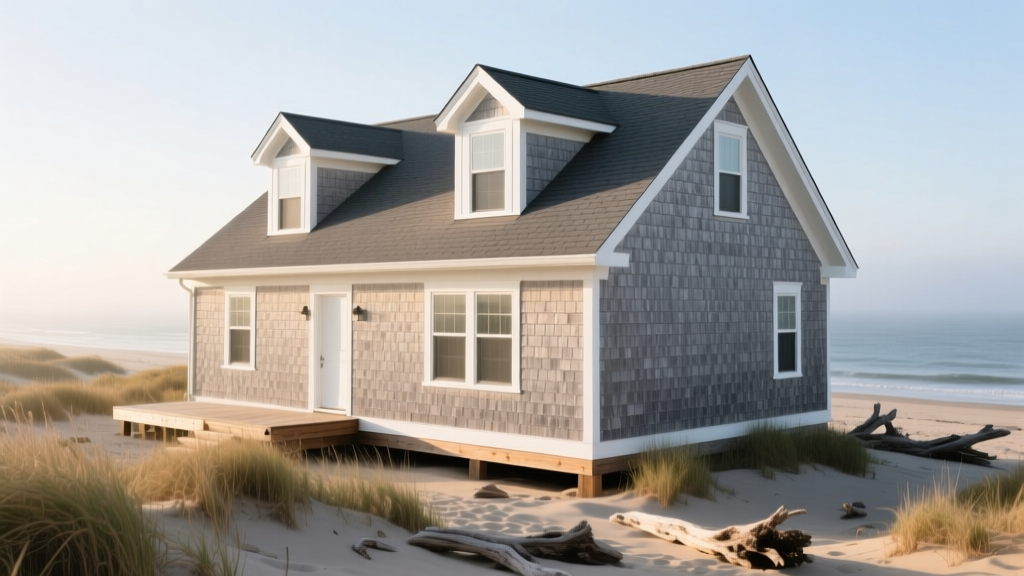
The Cape Cod architectural style—defined by steep pitched roofs, side gables, and prominent dormers—was born out of necessity to shed heavy snow and resist fierce New England coastal winds. Traditionally, these homes were clad in Eastern White Cedar shingles. However, the relentless combination of salt spray, UV degradation, and driving rain has forced a shift in modern building science. When researching cement siding materials cape cod contractors frequently recommend, homeowners are increasingly turning to fiber cement to replicate the historic shingle look without the grueling maintenance cycle of natural wood.
Choosing the right exterior cladding in a coastal zone is not merely an aesthetic decision; it is a structural defense strategy. According to FEMA's Building Science division, coastal structures must be designed to withstand severe moisture intrusion and high-velocity windborne debris. This guide breaks down how modern fiber cement siding stacks up against traditional and contemporary alternatives for Cape Cod properties in 2026.
Head-to-Head: Cape Cod Siding Material Matrix
The following matrix compares the primary exterior cladding options for Cape Cod homes, evaluating them on metrics critical to coastal survival and long-term cost of ownership.
| Material | 2026 Installed Cost (per sq. ft.) | Wind Rating | Salt & Moisture Resistance | Maintenance Cycle |
|---|---|---|---|---|
| Fiber Cement Shingles (e.g., James Hardie Artisan) | $10.50 - $16.00 | Up to 130+ mph (H-V Zone) | Excellent (Impervious to rot/salt) | Paint every 10-15 years |
| Eastern White Cedar (No. 1 Blue Label) | $16.00 - $24.00 | 90 - 110 mph (Highly dependent on nailing) | Moderate (Susceptible to cupping/moss) | Stain/Seal every 3-5 years |
| Engineered Wood (e.g., LP SmartSide Shake) | $8.50 - $13.00 | Up to 120 mph | Good (Zinc borate treated, but OSB core swells if breached) | Paint every 5-7 years |
| Insulated Vinyl Siding | $7.00 - $11.00 | 75 - 90 mph (Unless specialized high-wind profile) | High (But becomes brittle in freezing coastal temps) | Wash annually; no paint |
Deep Dive: Fiber Cement vs. The Alternatives
1. Fiber Cement vs. Traditional Cedar Shingles
The aesthetic benchmark for a Cape Cod home is the weathered cedar shake. Products like James Hardie's Artisan Shingle are engineered with a proprietary Portland cement, silica sand, and cellulose fiber matrix that mimics the shadow lines and staggered exposure of real wood.
The Information Gain: While cedar naturally contains tannins and oils that resist some insects, it is highly porous. In coastal environments, salt crystallization inside the wood pores accelerates splintering and cupping. Fiber cement, being an inorganic mineral composite, does not absorb salt. Furthermore, cedar shingles require face-nailing, which leaves thousands of exposed nail heads prone to rust streaks. Fiber cement shingle panels are often blind-nailed or utilize concealed clip systems, eliminating the primary failure points for moisture intrusion.
2. Fiber Cement vs. Engineered Wood (OSB Substrate)
Engineered wood shakes, such as LP SmartSide, utilize a strand-oriented substrate treated with zinc borate to resist termites and fungal decay. While highly impact-resistant (a benefit during Nor'easter hail), engineered wood remains fundamentally vulnerable to liquid water. If the factory-applied primer is scratched during installation, or if wind-driven rain bypasses the capillary breaks at the joints, the OSB core can absorb moisture and swell irreversibly. Fiber cement will not swell, delaminate, or lose structural integrity when saturated with driving coastal rain.
3. Fiber Cement vs. Vinyl Siding
Vinyl is the budget default, but it is fundamentally mismatched for historic Cape Cod aesthetics and severe coastal wind loads. Standard vinyl expands and contracts significantly with temperature swings (up to 5/8 inch per 10-foot panel). In the freezing, high-wind conditions of a Cape Cod winter, vinyl becomes brittle and susceptible to shattering from windborne debris. Fiber cement exhibits virtually zero thermal expansion, allowing for tighter, more rigid installations that mimic the solid feel of masonry or dense timber.
"In coastal retrofits, we see vinyl siding fail not from UV, but from the negative pressure differentials during coastal storms. The wind gets behind the loose panels and unzips the entire facade. Fiber cement's weight and rigid fastening schedule prevent this catastrophic unzipping."
— Coastal Building Envelope Specialist
Critical Installation Specs for Coastal Zones
Buying premium cement siding materials is only half the battle. The harsh microclimate of Cape Cod demands strict adherence to advanced installation protocols. If your contractor deviates from these specifications, your warranty will likely be voided.
- Fastener Selection: Never use galvanized nails on a coastal Cape Cod home. The salt air will corrode the zinc coating within 3-5 years, leading to rust bleed and structural failure. You must specify Type 316 Stainless Steel nails (Type 304 is insufficient for direct salt spray zones).
- Drainable Housewrap: Standard Tyvek is inadequate. Cement siding can hold moisture against the back of the panel. Install a drainable rain screen membrane like Benjamin Obdyke HydroGap to create a 1mm capillary break, allowing bulk water to drain down and out before it reaches the sheathing.
- Clearance Tolerances: Maintain a strict 2-inch minimum clearance between the bottom edge of the fiber cement siding and any horizontal surface (roofs, decks, steps). Cape Cod winters bring heavy snow accumulation; if the siding wicks meltwater from snowbanks, the bottom edges will degrade.
- Joint Flashing: For vertical butt joints in shingle-style panels, do not rely solely on caulk. Caulk will crack under the thermal movement of the house framing. Use color-matched aluminum joint flashing behind every vertical seam.
Verdict: Which Material Wins for Your Cape Cod?
For homeowners seeking the authentic, historic charm of a Cape Cod exterior without signing up for a perpetual cycle of scraping, staining, and replacing rotted cedar, fiber cement shingles are the undisputed champion in 2026. While the upfront material and labor costs are roughly 20% higher than engineered wood, the elimination of wood-rot vulnerabilities and the ability to withstand 130 mph coastal wind uplift make it the most structurally sound and financially logical investment for coastal New England properties.
Written by
Marcus ChenMarcus Chen is a licensed structural engineer (PE) and building materials analyst with over 12 years of experience across residential, commercial, and industrial construction. He holds a Master of Science in Civil Engineering from UC Berkeley and spent six years at Thornton Tomasetti before transitioning to independent consulting and technical writing. Marcus specializes in material selection for seismic-prone regions, concrete reinforcement strategies, and lifecycle cost analysis. His work has been cited by the American Concrete Institute (ACI) and the Structural Engineers Association of California (SEAOC). When he is not on a job site or at his desk, you will find him hiking the Sierra Nevada or restoring a 1920s craftsman bungalow in Oakland, CA.
More from Marcus Chen
View all
Construction Cost
How Much Did the Eiffel Tower Cost to Build?
How much did the Eiffel Tower cost to build in 1889? We adjust for inflation and compare its budget to modern skyscraper construction.
Aug 4, 2026

Fire Resistance
What Is a Fire Resistant Material? Testing & Certification Guide
Discover what is a fire resistant material through ASTM and UL testing. Learn how fire ratings, certifications, and assemblies work in construction.
Aug 4, 2026

Construction Cost
How Much Did the Burj Khalifa Cost to Build?
How much did the Burj Khalifa cost to build? We break down the $1.5B project and extract 5 money-saving strategies for your next build.
Jul 30, 2026