Cement Siding Materials Nantucket: 2026 Coastal Guide
Explore the best cement siding materials Nantucket homes require for 2026. Compare fiber cement shingles, coastal costs, and HDC approval specs.

The Nantucket Coastal Challenge: Historic Aesthetics vs. Atlantic Weather
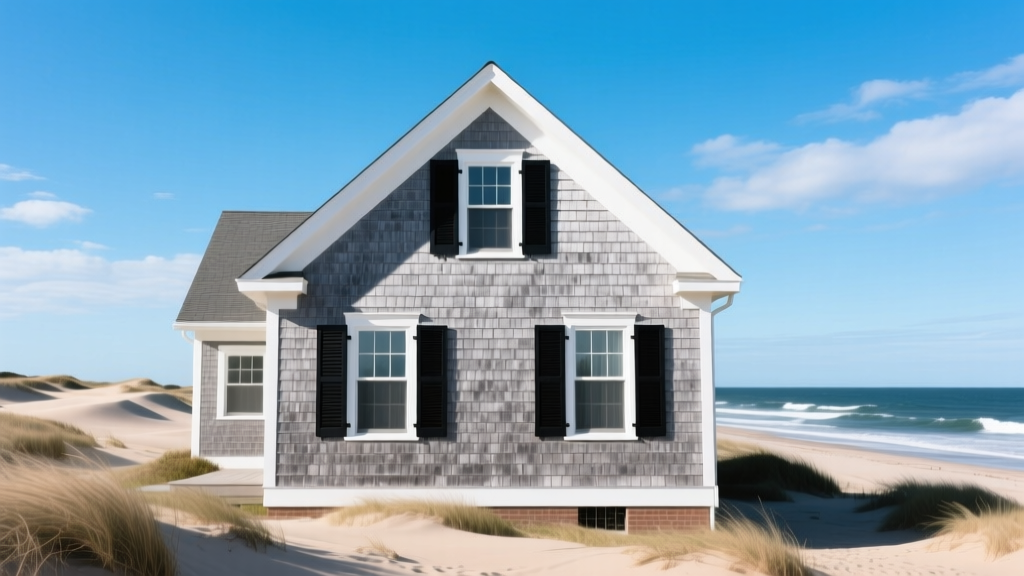
Nantucket’s architectural identity is inextricably linked to the weathered cedar shingle. However, the island's position 30 miles off the coast of Massachusetts subjects structures to extreme environmental stressors: driving salt spray, 130 mph nor'easter wind loads, and relentless UV degradation. While traditional cedar requires constant maintenance and is increasingly vulnerable to moisture-driven rot, modern fiber cement siding materials offer a highly durable alternative that mimics the historic profile. For 2026 coastal construction, selecting the right cement siding involves balancing strict aesthetic mandates from the Nantucket Historic District Commission (HDC) with rigorous structural performance standards outlined in ASCE 7-22 for high-wind coastal zones.
Nantucket HDC Material Mandates
The HDC strictly regulates exterior cladding to preserve the island's historic character. Fiber cement is not universally approved by default. Submissions must prove the cementitious product replicates the shadow lines, exposure, and texture of traditional white cedar shingles. Products with deep, artificial wood-grain embossing are routinely rejected in favor of smooth or subtle cedar-milled finishes.
Top Cement Siding Materials for Nantucket Homes
When specifying cement siding materials for Nantucket projects, contractors and architects rely on three primary manufacturers that meet both coastal durability metrics and historical aesthetic requirements.
1. James Hardie HardieShingle Cedarmill
James Hardie remains the dominant specification for coastal New England. The HardieShingle Cedarmill line is engineered with a subtle wood texture that passes HDC scrutiny when submitted with the correct exposure profile. For Nantucket, the 7-inch exposure staggered shingle is the standard. Manufactured to ASTM C1186 Grade IV standards, these panels resist salt-induced spalling and do not absorb moisture like wood fiber alternatives. Hardie's ColorPlus Technology factory finish is highly recommended here, as the baked-on acrylic coating resists salt-spray fading far better than field-applied paints.
2. Allura Fiber Cement Shingles
Allura offers a premium fiber cement shingle with a slightly thicker profile (5/16 inch) compared to standard industry options. This thickness provides superior impact resistance against wind-borne debris during tropical storms. Allura’s shingles are cured using a specialized autoclave process that yields a denser matrix, reducing the risk of efflorescence (white salt deposits) that can plague lesser cement products in high-humidity marine environments.
3. Nichiha Fiber Cement Shingles
While Nichiha is often recognized for its architectural panels, their fiber cement shingle line provides a highly authentic shadow line. Nichiha utilizes a proprietary fly-ash formulation that enhances fire resistance (achieving a Class A fire rating per ASTM E84) and provides exceptional dimensional stability during the island's freeze-thaw cycles.
Material Comparison Matrix: Coastal Performance
| Feature | HardieShingle Cedarmill | Allura Shingles | Nichiha Shingles |
|---|---|---|---|
| Thickness | 1/4 inch | 5/16 inch | 5/16 inch |
| Wind Load Rating | Up to 130 mph (HUR) | Up to 130 mph | Up to 130 mph |
| Salt Spray Resistance | Excellent | Excellent | Very Good |
| HDC Approval Likelihood | High (with 7" exposure) | Moderate (requires sample) | Moderate |
| Material Cost (per sq. ft.) | $4.50 - $6.00 | $5.50 - $7.50 | $5.00 - $6.80 |
Critical Installation Specs for Coastal Wind & Salt
The highest quality cement siding materials will fail prematurely on Nantucket if installed using mainland standard practices. Coastal installations require strict adherence to FEMA's coastal construction guidelines and manufacturer-specific high-wind protocols.
Fastener Specifications
Electroplated galvanized nails will rust and bleed through the cement finish within 24 months in a marine splash zone. You must specify:
- Stainless Steel (Type 316): Mandatory for all structures within 1,500 feet of the ocean or harbor. Type 304 is insufficient for direct salt spray.
- Hot-Dipped Galvanized (ASTM A153 Class D): Acceptable only for inland island properties (e.g., mid-island areas away from the coast), but 316 stainless remains the best practice.
- Nail Head Profile: Use 1-1/4 inch to 1-1/2 inch roofing nails with a minimum 5/16 inch head diameter to ensure proper wind-uplift grip without fracturing the shingle edge.
Flashing and Clearance Protocols
Capillary action and wind-driven rain are the primary enemies of fiber cement. Maintain a strict 6-inch clearance above finished grade and a 2-inch clearance above adjacent roof lines. At all roof-to-wall intersections, install continuous kick-out flashings made of PVC or marine-grade aluminum to divert water away from the cement siding and into the gutter system. Never allow cement shingles to rest directly on horizontal surfaces without a 1/4 inch air gap to prevent moisture wicking.
2026 Nantucket Installation Cost Analysis
Building on an island incurs significant logistical premiums. The costs below reflect 2026 market rates, factoring in the Steamship Authority freight surcharges for palletized building materials and the local island labor shortage.
| Cost Component | Mainland MA Average | Nantucket Island Premium |
|---|---|---|
| Material (Fiber Cement Shingles) | $4.50 - $6.00 / sq. ft. | $5.50 - $7.50 / sq. ft. (includes freight) |
| Labor (Installation & Prep) | $5.00 - $7.00 / sq. ft. | $9.00 - $14.00 / sq. ft. |
| Scaffolding & Wind Tie-offs | $1,500 - $2,500 | $3,500 - $6,000 |
| Total Installed Cost | $9.50 - $13.00 / sq. ft. | $14.50 - $21.50 / sq. ft. |
Navigating the HDC Approval Process
Securing approval from the Nantucket Historic District Commission for cement siding materials requires meticulous documentation. Do not submit generic manufacturer brochures. Your application must include:
- Physical Samples: Provide actual 12x12 inch cured samples of the specific shingle profile and factory finish color.
- Exposure Documentation: Clearly state the exposure (e.g., 7 inches). HDC reviewers measure shadow lines; a 5-inch exposure on cement will look disproportionately thick and will be rejected.
- Trim Integration: Detail how the cement shingles will interface with PVC or wood trim. Cement expands and contracts differently than wood; show your joint detailing and caulk specifications (use high-grade polyurethane sealants, not cheap acrylics that will crack in winter).
Long-Term Maintenance in a Marine Environment
While fiber cement eliminates the rot and insect issues associated with cedar, it is not entirely maintenance-free. Salt accumulation can degrade the paint film over time. Homeowners should schedule a low-pressure soft wash (under 1,500 PSI) every 18 to 24 months to remove salt crust and organic algae growth. Inspect the polyurethane sealants at the shingle-to-trim joints annually; the island's thermal cycling will eventually cause sealant fatigue, and proactive re-caulking prevents wind-driven rain from infiltrating the weather-resistive barrier behind the cement.
For comprehensive technical data on high-wind fastening schedules and coastal clearances, always consult the James Hardie technical resources library and ensure your contractor holds specific certifications for marine-environment cladding installations.
Written by
Priya KapoorPriya Kapoor is a real estate market analyst and construction economics researcher with expertise in housing affordability, development feasibility, and infrastructure investment. She holds a Master of Regional Planning from Cornell University and previously worked as a senior analyst at CBRE's Investment Properties group, where she modeled returns for $4B in mixed-use development pipelines. Priya now runs an independent research practice advising developers, municipalities, and REITs on construction cost forecasting and market timing. She publishes the quarterly "BuildMat Market Pulse" report tracking material price indices across 12 commodity categories. Based in Austin, TX, Priya serves on the board of Habitat for Humanity Austin and is a marathon runner.
More from Priya Kapoor
View all
Construction Cost
Cost to Build a 1600 Sq Ft Home in 2026: Full Breakdown
Accurate 2026 cost to build a 1600 sq ft home—material, labor, and regional pricing breakdowns included. Plan your budget with real-time estimates.
Aug 11, 2026

Wood & Lumber
Name the Types of Wood for Pressure Treatment and Preservation
Learn how to name the types of wood best suited for pressure treatment. Compare species treatability, chemical retention levels, and 2026 preservation costs.
Aug 4, 2026

Stone & Masonry
Stone Veneer Suppliers Lindenhurst: 2026 Cost Analysis
Analyze 2026 stone veneer costs in Lindenhurst, NY. Compare local supplier pricing, delivery fees, and Suffolk County installation labor rates.
Aug 4, 2026