Precast Concrete Steps: Cleaning & Maintenance Playbook
Discover expert cleaning and maintenance techniques for precast concrete steps. Learn to remove stains, seal surfaces, and prevent winter damage.
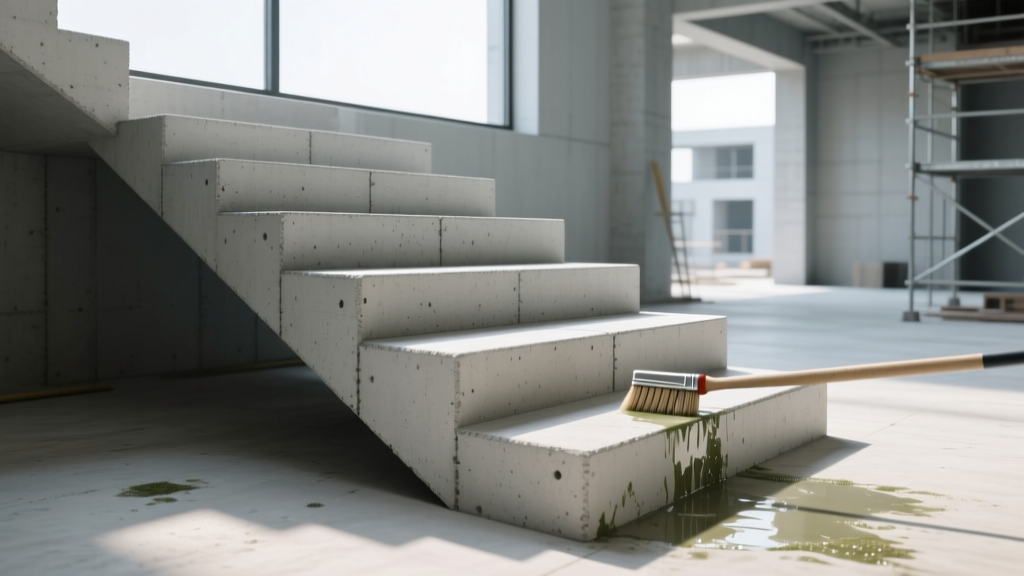
The Precast Advantage and Vulnerability Profile
Precast concrete steps offer superior compressive strength—typically ranging from 5,000 to 6,000 PSI—compared to poured-in-place alternatives. Because they are manufactured in controlled plant environments, the concrete mix is densely consolidated, resulting in a highly durable product. However, this manufacturing process also introduces specific vulnerabilities. The joints where individual step units meet, the lifting anchor cavities, and the interface between the bottom step and the ground are primary ingress points for moisture and chlorides.
Routine Cleaning Protocol
Establishing a bi-annual cleaning routine prevents the accumulation of organic matter and atmospheric pollutants that degrade the concrete matrix over time. Follow this precise protocol to clean without etching the surface.
Step 1: Dry Debris and Pre-Wash
Begin by sweeping the treads and risers with a stiff-bristled synthetic broom. Avoid wire brushes, which can leave behind microscopic steel filaments that will rapidly oxidize and create rust stains. Pre-wet the surrounding vegetation and the concrete itself with clean water. Pre-wetting the steps prevents the porous concrete from absorbing cleaning chemicals too rapidly, which can cause uneven staining.
Step 2: Chemical Application and Agitation
For general grime and light organic growth, use a neutral-pH concrete cleaner or a specialized alkaline degreaser diluted at a 10:1 water-to-cleaner ratio. Apply the solution using a low-pressure garden sprayer. Allow a dwell time of 5 to 10 minutes, keeping the surface wet. Agitate heavily soiled areas, particularly the nosing of the treads where foot traffic concentrates dirt, using a nylon-bristle deck brush.
Step 3: Low-Pressure Rinsing
Rinse the steps thoroughly using a pressure washer equipped with a 25-degree (green) nozzle. Keep the pressure strictly below 1,500 PSI. Exceeding this threshold risks etching the cement paste and creating micro-fissures in the precast surface. Maintain a consistent distance of 12 to 18 inches from the nozzle to the concrete surface.
Stain Identification and Targeted Removal Matrix
General cleaning will not remove deep-set chemical or metallic stains. Use the matrix below to identify the stain type and apply the correct chemical countermeasure.
| Stain Type | Visual Characteristics | Root Cause | Recommended Treatment | Dwell Time |
|---|---|---|---|---|
| Efflorescence | White, powdery crystalline deposits | Water-soluble salts migrating to the surface and evaporating | Dedicated efflorescence remover (e.g., Prosoco Sure Klean) or white vinegar solution | 5-10 mins |
| Rust | Orange/brown streaking, often near corners | Oxidation of exposed steel lifting anchors or rebar bleed | Oxalic acid-based rust remover specifically formulated for masonry | 15-20 mins |
| Organic/Mildew | Green, black, or gray slippery patches | Algae, moss, or fungal growth in shaded, damp areas | Sodium hypochlorite (bleach) diluted 1:4 with water, plus surfactant | 10-15 mins |
| Oil/Grease | Dark, circular spots that darken when wet | Automotive fluid drips or landscaping equipment leaks | Alkaline-based heavy-duty degreaser or poultice powder for deep penetration | 30-60 mins |
Sealing and Waterproofing: The 5-Year Defense
Applying a high-quality sealer is the most critical maintenance step for extending the lifespan of precast concrete steps. However, selecting the wrong chemistry can create severe safety hazards and structural issues.
Penetrating sealers, such as Siloxa-Tek 8500 or equivalent silane-siloxane blends, do not alter the surface texture or traction of the steps. Instead, they react chemically with the free lime in the concrete to form a hydrophobic resin within the pore structure. This reduces water absorption by up to 95%, effectively neutralizing the freeze-thaw damage cycle.
Application Specifications:
- Coverage Rate: Expect to use 1 gallon per 150-200 square feet for the first coat, and 1 gallon per 200-250 square feet for the second coat.
- Timing: Apply two coats wet-on-wet, approximately 5 minutes apart, using a low-pressure sprayer.
- Curing: Keep foot traffic off the steps for a minimum of 6 hours, and allow 7 days for the chemical reaction to fully cure before exposing the steps to heavy rain.
Winterization and De-icing Chemistry
Winter maintenance is where most precast concrete steps suffer catastrophic failure. The use of incorrect de-icing chemicals causes rapid surface scaling and spalling. According to guidelines published by the National Ready Mixed Concrete Association (NRMCA), the chemical composition of the de-icer matters just as much as the concrete's air-entrainment.
Sodium chloride (rock salt) and calcium chloride are highly aggressive. They lower the freezing point of water but create a massive osmotic pressure differential within the concrete pores, leading to explosive micro-cracking. Furthermore, chlorides penetrate the precast matrix and attack the internal steel reinforcement, causing 'concrete cancer' (rust jacking).
The Safe Winter Protocol:
- First Year Restriction: Do not apply any chemical de-icers during the first winter after the precast steps are installed. The concrete is still undergoing its primary hydration and curing process. Use clean sand or non-clumping kitty litter for traction instead.
- Subsequent Years: Transition to Calcium Magnesium Acetate (CMA) or potassium acetate-based ice melters. While CMA is more expensive upfront (often 3 to 4 times the cost of rock salt), it is virtually chloride-free, biodegradable, and does not trigger the destructive freeze-thaw expansion cycles within the concrete matrix.
- Mechanical Removal: Never use metal shovels or steel-blade snow blowers on precast treads. The impact will chip the nosing. Use high-impact polyurethane or polycarbonate snow shovels.
Annual Structural Inspection Checklist
Maintenance is not limited to surface aesthetics; it requires monitoring the structural integration of the precast units. Perform this inspection every spring after the thaw cycle:
- Joint Sealant Integrity: Inspect the caulking where the top step meets the building foundation or porch landing. This joint must be sealed with a high-modulus, self-leveling polyurethane sealant (e.g., Sikaflex-1a). If the sealant is cracked, torn, or pulling away from the substrate, cut it out and re-caulk immediately to prevent water from pooling beneath the steps.
- Settling and Void Checks: Precast steps are often installed over a compacted gravel base. Check for voids beneath the bottom riser. If soil has washed away, inject a flowable fill or polyurethane expanding foam to restore support and prevent the unit from tipping under load.
- Anchor Point Corrosion: Examine the patched lifting anchor holes on the sides of the steps. If the patching compound is cracking or rust stains are bleeding through, chip out the old patch, treat the exposed steel with a zinc-rich rust inhibitor, and refill with a polymer-modified, non-shrink structural repair mortar.
Proactive maintenance of precast concrete steps is fundamentally about moisture management. By controlling water ingress through proper sealing, utilizing safe de-icing chemistry, and maintaining joint sealants, you can easily extend the functional lifespan of a precast stair system beyond 40 years.
For further reading on concrete durability and freeze-thaw resistance mechanisms, consult the technical resources provided by the Portland Cement Association (PCA). Properly maintained precast steps remain one of the most resilient and cost-effective entryway solutions available in modern construction.