How to Clean Grout in Shower Based on Stain and Grout Type
Learn how to clean grout in shower by matching the right cleaner to your specific grout type and stain scenario for lasting results.
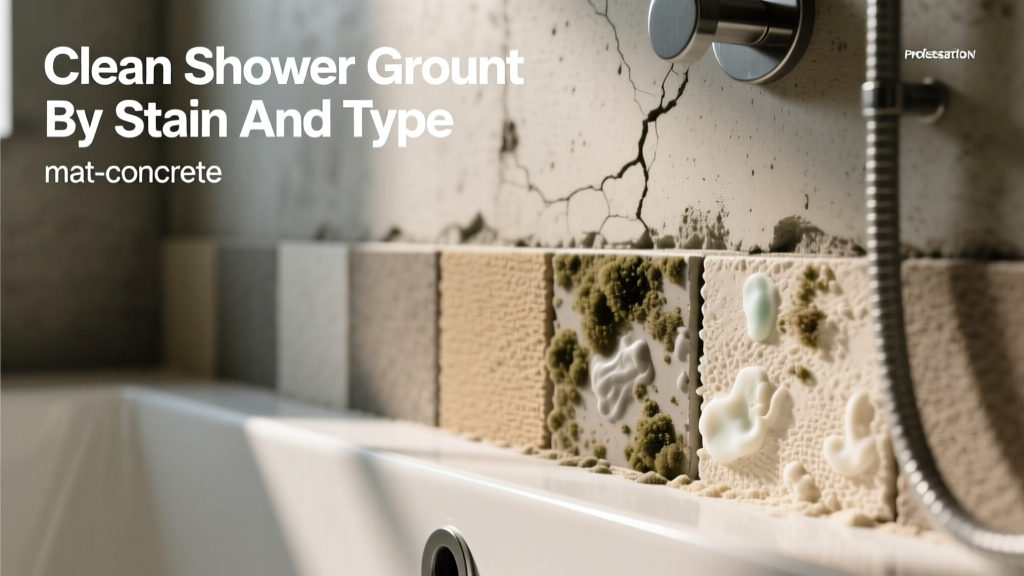
The Chemistry of Shower Grout: Why One Cleaner Fails All
Most shower grout cleaning attempts fail because they treat all grout and all stains as identical. In reality, cleaning requires matching the pH and chemical mechanism of the cleaner to both the grout matrix and the specific soil type. Cementitious grout (sanded and unsanded) is inherently alkaline, typically registering a pH between 10 and 12 due to its Portland cement base. Applying highly acidic cleaners (pH below 4) to cementitious grout dissolves the calcium carbonate binder, causing permanent etching, increased porosity, and accelerated future staining.
Conversely, epoxy and urethane grouts are essentially plastics. They are non-porous and chemically inert to most acids and alkalis, but they are highly vulnerable to abrasive scratching and certain harsh solvents that can degrade the resin surface. Understanding these material differences is the prerequisite for selecting the correct cleaning protocol.
Scenario Matrix: Matching the Cleaner to the Stain and Grout
Use the following decision matrix to identify the correct chemical approach before purchasing any products. This framework prevents material damage and ensures the stain is actually removed rather than just masked.
| Stain Scenario | Grout Type | Required Chemistry | Active Ingredient / Product Example | Dwell Time |
|---|---|---|---|---|
| Soap Scum & Body Oils | Cementitious | Alkaline (pH 9-11) | Zep Heavy-Duty Tile & Grout Cleaner | 5-10 Minutes |
| Black Mold & Mildew | Cementitious | Oxidizing / Alkaline | Sodium Percarbonate (Oxygen Bleach) | 15-20 Minutes |
| Hard Water & Efflorescence | Cementitious | Mild Acidic (pH 4-5) | Sulfamic Acid or Phosphoric Acid | 3-5 Minutes |
| General Grime & Soap Scum | Epoxy / Urethane | pH Neutral / Mild Solvent | Krud Kutter Original or Acetone (spot) | 1-3 Minutes |
Step-by-Step Protocols for Cementitious Grout
Cementitious grout is a porous sponge. It absorbs water, oils, and biological spores deep into its capillary network. Surface wiping is ineffective; the cleaner must penetrate the pores.
Scenario A: Soap Scum and Body Oils (Alkaline Approach)
Soap scum is primarily calcium stearate, formed when the fatty acids in bar soap react with calcium and magnesium ions in hard water. Because it is an organic fatty deposit, it requires an alkaline cleaner to saponify and emulsify the oils.
- Pre-wet the tile: Lightly spray the shower walls with plain water. This prevents the grout from absorbing the cleaning solution too rapidly, allowing it to stay on the surface where the soap scum lives.
- Apply Alkaline Cleaner: Spray a commercial alkaline cleaner (pH 10-12) directly onto the grout lines. Avoid products containing hydrochloric or muriatic acid.
- Dwell and Agitate: Allow a 5-minute dwell time. Agitate using a stiff nylon bristle brush or a drill-attached medium-stiffness nylon brush. Never use wire brushes, which will leave rust-inducing metal fragments embedded in the grout.
- Extraction: Rinse thoroughly with hot water and use a squeegee to remove the suspended soil immediately before it re-settles into the pores.
Scenario B: Black Mold and Mildew (Oxygen Bleach Approach)
A common mistake is using liquid chlorine bleach (sodium hypochlorite) on moldy grout. According to EPA mold cleanup guidelines, chlorine bleach has high surface tension and a high pH, meaning it cannot effectively penetrate porous cementitious materials. It merely bleaches the surface hyphae while the mycelium (roots) survive deep within the grout, leading to rapid regrowth.
Expert Insight: Oxygen bleach (sodium percarbonate) is vastly superior for porous grout. When mixed with water, it releases millions of microscopic oxygen bubbles that mechanically lift dirt and penetrate deep into the capillary network to oxidize mold roots without degrading the cement binder.
- Mix the Solution: Dissolve powdered oxygen bleach (e.g., OxiClean or Bio-Clean) in hot water (110°F to 120°F) at a ratio of 1 scoop per gallon. Hot water accelerates the catalytic release of oxygen.
- Apply and Saturate: Apply the solution to the grout lines using a pump sprayer or a grout syringe to ensure deep saturation.
- Extended Dwell: Allow the solution to dwell for 15 to 20 minutes. Keep the grout wet during this time by misting lightly; if it dries, the chemical reaction stops.
- Scrub and Rinse: Scrub with a nylon brush and rinse completely.
Scenario C: Hard Water Minerals and Efflorescence (Mild Acidic Approach)
Hard water deposits (calcium carbonate) and efflorescence (water-soluble salts migrating from the cement matrix) require an acidic cleaner to dissolve the mineral bonds. The USGS notes that high mineral content in water leads to persistent scale buildup that alkalis cannot remove.
- Dry Brush First: For efflorescence, aggressively brush the dry grout with a stiff nylon brush to remove loose crystalline salts before introducing water.
- Apply Mild Acid: Apply a sulfamic acid-based cleaner. Limit the dwell time to 3 to 5 minutes maximum.
- Neutralize: This is the most critical step. After rinsing the acid, spray the grout with a solution of baking soda and water (1/2 cup per gallon) to neutralize any residual acid trapped in the pores, followed by a final clear water rinse.
Specialized Protocols for Epoxy and Urethane Grouts
Epoxy and urethane grouts do not have capillary pores, meaning stains remain on the surface. However, their resin surfaces are easily scratched by abrasive pads, which creates micro-grooves that trap future dirt.
- For Soap Scum: Use a pH-neutral degreaser (like Krud Kutter Original) and a non-scratch melamine sponge (Magic Eraser). The melamine foam acts like micro-sandpaper at a level that cleans the resin without scratching it.
- For Stubborn Organic Stains: Acetone can be used as a spot treatment on epoxy grout to break down tough resins or dyes. Apply a small amount to a microfiber cloth, wipe the stain, and rinse immediately. Test in an inconspicuous area first, as prolonged exposure to strong solvents can soften some urethane formulations.
- Avoid: Steel wool, pumice stones, and highly alkaline strippers, which will permanently cloud the finish of epoxy grout.
Mechanical Agitation: Tools That Actually Work
Chemical dwell time does the heavy lifting, but mechanical agitation is required to break the physical bond of the soil. The National Tile Contractors Association (NTCA) emphasizes using tools that clean without altering the grout profile.
- Drill-Attached Nylon Brushes: A 3-inch medium-stiffness nylon brush attached to a standard cordless drill (set to low speed, 300-500 RPM) reduces physical fatigue and provides consistent agitation. Ensure the bristles are nylon, not brass or steel.
- Grout Saw (For Failed Grout): If the grout is deeply stained black due to compromised sealer and deep mold penetration, cleaning will not suffice. Use a manual grout saw with a carbide blade to remove the top 1/8-inch of the grout, then apply a color-matched grout stain/sealer or re-grout the joint.
- Steam Cleaners: While effective for sanitizing, high-pressure steam (above 212°F) can degrade older, poorly mixed cementitious grout and melt certain urethane sealants. Use steam only on fully cured, high-quality epoxy or porcelain tile surfaces.
Preventative Sealing: The Final Step
Cleaning cementitious grout opens its pores. To prevent immediate re-staining, the grout must be sealed once it is 100% dry (allow 48 to 72 hours of shower avoidance).
Avoid cheap silicone-based spray sealers, which sit on the surface and peel within months. Instead, use a penetrating fluorochemical sealer (such as Aqua Mix Sealer's Choice Gold or Miracle Sealants 511 Impregnator). Fluorochemicals have a lower surface tension than water, allowing them to penetrate deep into the cement matrix and line the capillary walls, creating an oleophobic (oil-repelling) and hydrophobic (water-repelling) barrier without altering the natural look or slip resistance of the grout.