Concrete Abstract Thinking: Durability in Parametric Design
Explore how concrete abstract thinking in parametric design impacts structural lifespan, mix selection, and long-term durability of complex geometries.
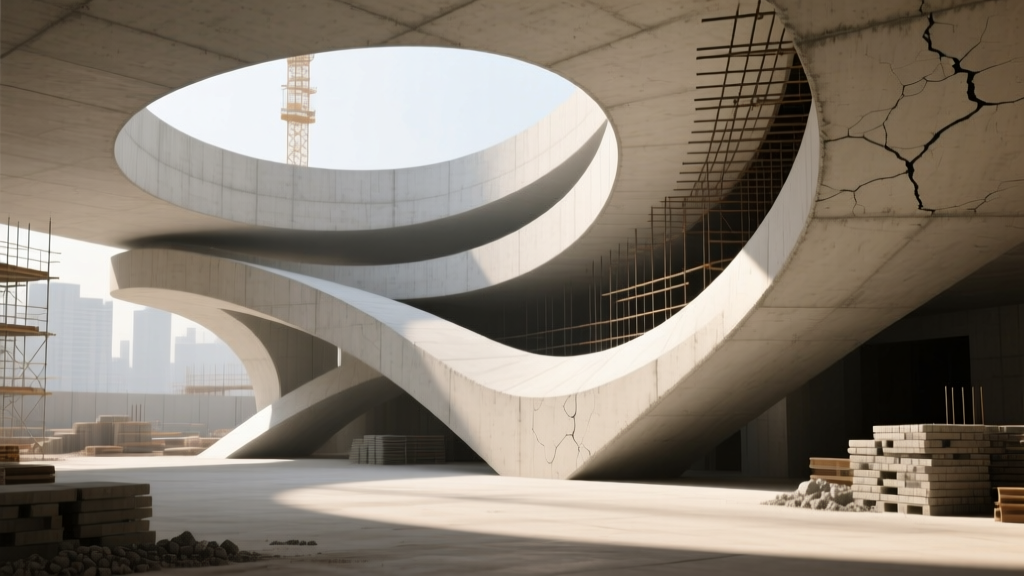
The Paradigm of Concrete Abstract Thinking
In modern structural engineering and computational architecture, concrete abstract thinking refers to the conceptual departure from treating concrete as a mere gravity-bound, rectilinear compressive mass. Instead, it views the material as a fluid, programmable matrix capable of algorithmic, parametric, and non-standard geometries. While this cognitive shift enables breathtaking hyperbolic paraboloids, sweeping shells, and 3D-printed lattices, it fundamentally alters the physical stress vectors and environmental exposure profiles of the structure. When engineers apply concrete abstract thinking, they must simultaneously engineer the durability and lifespan of these complex forms, which behave vastly differently than standard flat slabs or columns.
Durability Fault Lines in Non-Standard Geometries
Abstract geometries introduce unique failure modes that do not exist in traditional Euclidean concrete forms. The lifespan of a parametric concrete structure is rarely dictated by the bulk material's compressive strength; rather, it is governed by localized vulnerabilities inherent to complex shapes.
In abstract folded-plate structures, the intersection of two planes creates an acute or re-entrant corner. Under thermal cycling or dynamic wind loads, these nodes experience severe stress concentrations. Without localized micro-reinforcement, micro-cracking initiates at these folds within the first 3 to 5 years, allowing chloride ingress that compromises the internal rebar long before the 50-year design life is reached.
Furthermore, compound curves and non-standard slopes disrupt natural water runoff. Unlike a standard 2% sloped flat roof, a parametric shell often features varying gradients, including localized low-points or reverse curves where water pools. This prolonged moisture exposure accelerates freeze-thaw degradation and efflorescence, directly reducing the structure's functional lifespan.
Material Matrix: Matching Mix Design to Abstract Forms
Executing concrete abstract thinking requires abandoning standard Portland cement mixes. The formwork complexity demands high flowability, while the thin, curved sections demand high tensile capacity. Below is a comparative analysis of mix designs optimized for parametric durability in 2026.
| Mix Type | Compressive Strength | Flexural Strength | Ideal Abstract Application | Expected Base Lifespan |
|---|---|---|---|---|
| Standard OPC (w/c 0.45) | 4,000 - 5,000 psi | 400 - 500 psi | Mass rectilinear foundations | 50 - 75 years |
| Self-Consolidating (SCC) | 6,000 - 8,000 psi | 600 - 800 psi | Sloped parametric shells, dense rebar cages | 60 - 80 years |
| Ultra-High Performance (UHPC) | 18,000 - 24,000 psi | 1,200 - 1,800 psi | Thin-folded plates, complex cantilevers | 100+ years |
| 3D-Printed Geopolymer | 5,500 - 7,500 psi | 500 - 700 psi (anisotropic) | Lattice structures, non-loadbearing facades | 40 - 60 years |
The UHPC Advantage in Complex Lifespans
For structures born from concrete abstract thinking, Ultra-High Performance Concrete (UHPC) is the definitive material for maximizing lifespan. By incorporating a 2% volume fraction of straight steel fibers and eliminating coarse aggregate, UHPC achieves a dense microstructure with virtually zero capillary porosity. This prevents the chloride ion penetration that typically destroys complex, thin-section concrete shells. According to the Portland Cement Association, the near-zero permeability of UHPC effectively eliminates the need for traditional epoxy-coated rebar in thin parametric facades, relying instead on the matrix's inherent durability and micro-fiber crack bridging.
75-Year Lifecycle and Maintenance Analysis
Designing abstract forms requires a rigorous lifecycle cost analysis. The initial capital expenditure (CapEx) for complex formwork and advanced mixes is high, but the operational expenditure (OpEx) can be minimized if the geometry is optimized for durability.
| Geometric Complexity | Primary Failure Mode (Years 10-30) | 75-Year Maintenance Cost (per sq. ft.) | Required Intervention Frequency |
|---|---|---|---|
| Standard Rectilinear | Carbonation-induced rebar corrosion | $12 - $18 | Every 20-25 years |
| Single-Curve Shells | Formwork deflection leaks, surface scaling | $22 - $35 | Every 12-15 years |
| Complex Folds & Lattices | Node micro-cracking, localized water pooling | $45 - $70 | Every 7-10 years |
Actionable Mitigation Strategies for Extended Lifespan
To ensure that structures born from concrete abstract thinking survive beyond their 50-year design life, engineers must implement specific, non-negotiable mitigation protocols during the design and pouring phases.
- Implement CNC-Milled Formwork: Traditional plywood formwork deflects under the hydrostatic pressure of SCC or UHPC, creating surface undulations that trap water. Use CNC-milled expanded polystyrene (EPS) or high-density polyurethane molds to achieve sub-millimeter tolerances, ensuring perfect water runoff on complex curves.
- Deploy Viscosity Modifying Admixtures (VMAs): When pouring SCC into sloped, abstract forms, the mix is prone to dynamic segregation. Incorporate cellulose-ether or Welan gum-based VMAs at a dosage of 0.05% to 0.15% by weight of cementitious material to maintain homogeneity without sacrificing flowability.
- Apply Silane Penetrating Sealers: For complex folds where physical water pooling is unavoidable, apply a 100% silane-based penetrating sealer. Unlike surface film-forming sealers that peel on curved geometries, silanes penetrate up to 0.4 inches, reacting with the concrete matrix to create a hydrophobic barrier that survives UV degradation and thermal expansion.
- Optimize Cover Depth in Thin Shells: In abstract thin-shell designs, maintaining a standard 2-inch rebar cover is often structurally impossible. Use UHPC to reduce the minimum required cover to 0.75 inches while maintaining equivalent corrosion resistance, preserving the delicate architectural profile.
Decision Framework: Geometric Complexity vs. Durability
Use this practical framework to determine the appropriate material and detailing strategy based on the level of concrete abstract thinking applied to your project:
Scenario A: The geometry features compound curves but maintains a uniform thickness greater than 8 inches.
Decision: Utilize Self-Consolidating Concrete (SCC) with a maximum aggregate size of 3/8 inch. Incorporate synthetic macro-fibers (e.g., polypropylene at 3 lbs/cubic yard) for secondary shrinkage reinforcement. Apply a standard siloxane surface sealer.
Scenario B: The design includes acute folded plates, thin cantilevers (under 4 inches), or complex 3D lattice nodes.
Decision: Standard OPC and SCC will fail prematurely due to stress concentrations and lack of cover. You must specify UHPC with a minimum 2% steel fiber volume. Eliminate traditional rebar in favor of non-corrosive carbon fiber reinforced polymer (CFRP) grids or rely entirely on the UHPC's tensile matrix capacity. Mandate CNC-milled formwork to ensure absolute geometric fidelity.
By aligning advanced material science with the conceptual ambitions of concrete abstract thinking, engineers can deliver parametric structures that are not only visually striking but possess the multi-generational durability required for modern sustainable infrastructure.