Lifespan of Concrete Finishing Tools: Wear Analysis & Care
Analyze the lifespan of concrete finishing tools. Learn wear patterns, material durability, and replacement timelines for trowels, floats, and edgers.
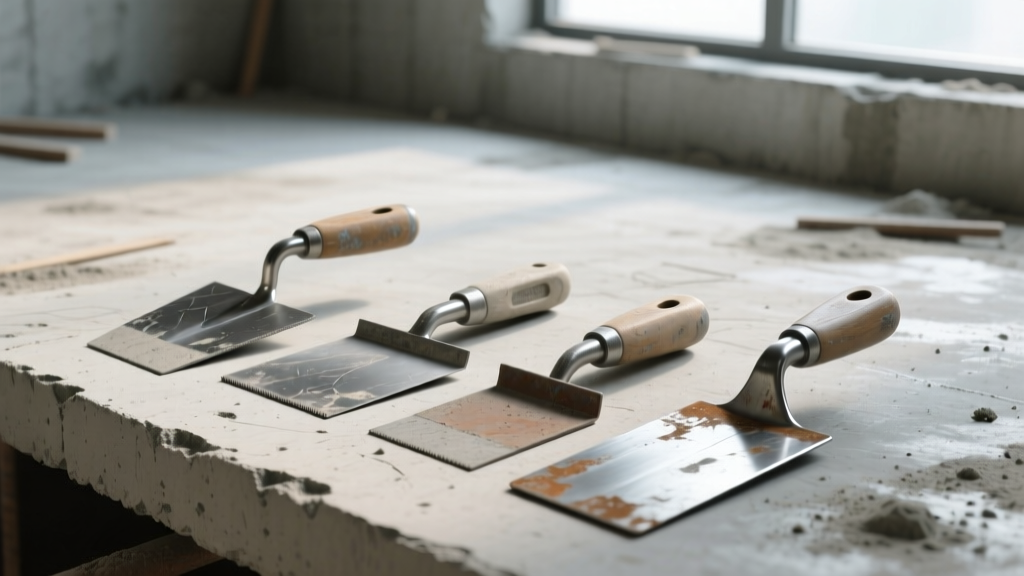
Material Metallurgy and Expected Tool Lifespans
The durability of concrete finishing tools is dictated almost entirely by their metallurgical composition and polymer engineering. When analyzing the lifespan of these implements, contractors must measure longevity not in years, but in square footage covered and the abrasiveness of the aggregate being worked. A tool that fails prematurely does not merely represent a replacement cost; it actively degrades the surface integrity of the slab it is meant to finish.
Below is a comparative analysis of standard finishing tool materials, their expected operational lifespans under normal commercial conditions (standard 4,000 PSI mix with 3/4-inch aggregate), and their 2026 market pricing.
| Tool Material | Primary Application | Expected Lifespan (Sq Ft) | Avg. 2026 Replacement Cost | Primary Failure Mode |
|---|---|---|---|---|
| High-Carbon Steel | Final troweling, burnishing | 12,000 - 15,000 | $14 - $22 (14" hand trowel) | Edge rounding, micro-pitting |
| Stainless Steel | Decorative, white cement, final burnish | 25,000 - 35,000 | $45 - $65 (14" hand trowel) | Shank fatigue, handle detachment |
| Magnesium Alloy | Initial floating, bull floating | 8,000 - 10,000 | $35 - $50 (4' bull float) | Surface gouging, edge chipping |
| Polyurethane / Urethane | Open-texture floating, broom prep | 10,000 - 15,000 | $28 - $40 (16" float) | Hydrolysis, UV degradation, tearing |
| Extruded Aluminum | Screeding, straight-edging | 20,000+ | $80 - $120 (12' screed) | Bowing, torsional warping |
According to guidelines published by the Portland Cement Association (PCA), the selection of floating and troweling materials directly influences the surface paste quality. Magnesium floats, for instance, are prized for their lightweight nature and ability to bring cream to the surface without pulling the paste, but their softer metallurgy makes them highly susceptible to edge chipping when encountering exposed aggregate.
Diagnostic Framework: Identifying Hand Tool Failure Modes
Relying on a visual inspection of the tool's face is insufficient for determining its remaining lifespan. Concrete finishing tools fail in specific, measurable ways that compromise the slab's durability. Use this diagnostic framework to evaluate hand tools before every major pour.
1. Edge Roll and Radius Creep
A new steel trowel features a nearly zero-radius edge. Over 5,000 square feet of use, friction against the cementitious paste causes the leading and trailing edges to roll. Once the edge radius exceeds 1/32 of an inch, the tool ceases to slice through high spots and instead pushes a microscopic wave of bleed water ahead of it. This trapped water creates a high water-to-cement ratio at the surface, guaranteeing future scaling and delamination.
2. Shank Fatigue and Blade Warp
The shank (the metal bracket connecting the handle to the blade) undergoes immense torsional stress. On high-carbon steel trowels, the blade is often thinner (0.035 inches) than the shank. Repeated downward pressure on the handle causes the blade to warp laterally. To test for warp, place the trowel on a known-flat piece of plate glass. If light is visible under the center or corners of the blade when pressure is applied to the handle, the tool will leave trowel marks and ridges that require expensive corrective grinding later.
Many contractors intentionally bend the corners of stainless steel trowels to prevent them from gouging the slab. While common, this introduces stress concentrations at the shank welds. Stainless steel work-hardens when bent; repeated flexing will cause catastrophic shank snap-offs mid-pour, leaving rust-prone carbon steel weld beads exposed to the concrete surface.
Power Trowel Blade Wear: The 1/16-Inch Rule
Ride-on and walk-behind power trowels are the workhorses of commercial flatwork. The lifespan of the machine is measured in decades, but the lifespan of the clip-on or bolt-on blades is measured in hours. The interaction between the rotating blade and the curing concrete dictates the ultimate compressive strength and abrasion resistance of the floor.
The American Concrete Institute (ACI) Committee 302 emphasizes that proper timing and tooling are critical for achieving specified floor flatness (FF) and floor levelness (FL) numbers. Worn power trowel blades destroy these tolerances.
Measuring Clip-On Blade Degradation
Standard 10-inch carbon steel clip-on blades cost between $18 and $25 each in 2026. To maximize ROI without sacrificing surface density, implement the 1/16-inch wear rule:
- Initial Thickness: A new clip-on blade typically measures 1/8-inch (0.125") thick at the edge.
- The Wear Limit: Once the leading edge thins to 1/16-inch (0.0625") and begins to feather or roll, the blade must be flipped.
- End of Life: After flipping and wearing the second edge down to 1/16-inch, the blade must be discarded. Attempting to run a blade thinner than this causes harmonic vibration in the spider assembly, leading to premature failure of the trowel's gearbox bearings.
"Running power trowel blades past their wear limits does not save money. The resulting surface micro-cracking and reduced abrasion resistance will cost ten times the price of a new set of blades in warranty callbacks and floor prep for coatings."
— Industrial Floor Systems Engineering Guidelines
How Degraded Tools Compromise Concrete Lifespan
The lifespan analysis of concrete finishing tools is incomplete without examining how tool wear inversely affects the lifespan of the concrete itself. A tool past its operational prime acts as a destructive force on the cementitious matrix.
Surface Laitance and Freeze-Thaw Vulnerability
When a polyurethane float degrades via UV exposure and hydrolysis, its surface becomes pitted and uneven. Instead of consolidating the surface paste, a degraded float churns it, bringing excessive fines and water to the top. This creates a thick layer of laitance. When this weak surface layer is exposed to freeze-thaw cycles, the expanding ice crystals cause rapid spalling. A slab finished with fresh, firm floats can withstand 300+ freeze-thaw cycles; a slab finished with degraded, pitted floats may begin scaling after fewer than 50 cycles.
Delamination from Premature Sealing
Conversely, using a steel trowel that is too stiff or warped can seal the surface while bleed water is still rising from the slab interior. The trapped water forms a distinct plane of weakness just below the surface. Under heavy wheeled traffic, this top 1/8-inch of concrete will delaminate and peel away, entirely negating the structural design life of the slab.
The 2026 Maintenance Protocol for Maximum ROI
Extending the lifespan of concrete finishing tools requires a strict post-pour maintenance protocol. The alkaline nature of wet concrete (pH 12 to 13) rapidly oxidizes carbon steel and degrades wooden handles.
Do not simply wash tools with water. The residual alkalinity will continue to corrode steel overnight. After washing, spray the metal surfaces with a mild acid solution (such as a 10:1 water-to-white-vinegar mix) to neutralize the pH, rinse with clean water, and dry immediately before applying a protectant.
Step-by-Step End-of-Day Tool Preservation
- Step 1: Mechanical Removal. Use a stiff-bristle nylon brush (never wire, which leaves embedded steel particles that will rust and stain the next decorative pour) to remove bulk concrete.
- Step 2: Chemical Neutralization. Apply the diluted vinegar solution or a commercial concrete dissolver (e.g., Back-Set or Citrus-based cleaners) to break down the silicate bonds of the remaining paste.
- Step 3: Hydration Displacement. Spray the dried tools with a water-displacing corrosion inhibitor. In 2026, fluid-film lanolin sprays or specialized tool oils like Boeshield T-9 are preferred over standard WD-40, as they leave a durable, non-evaporating waxy film that resists the humidity of gang boxes.
- Step 4: Handle Care. For traditional ash wood handles, wipe down with boiled linseed oil once a month to prevent the wood from drying, shrinking, and loosening the threaded ferrule. For modern carbon-fiber or fiberglass handles, inspect the threaded insert for cross-threading or epoxy failure.
Storage Environment Considerations
Storing polyurethane floats in the back of a truck bed exposed to direct sunlight accelerates UV degradation, reducing their lifespan by up to 40%. Always store polymer tools in opaque, climate-controlled gang boxes. Furthermore, never stack heavy magnesium bull floats on top of polyurethane hand floats; the point-load will permanently deform the urethane, rendering it useless for creating a uniform open-texture finish.
By treating concrete finishing tools as precision instruments rather than disposable commodities, contractors can drastically reduce their consumable overhead while simultaneously delivering slabs that achieve their full structural and aesthetic lifespan.