Echelon Masonry Concrete Block Lines: CMU Deep-Dive
Deep-dive into Echelon Masonry concrete block lines. Compare Trenwyth, Spectra, and structural CMU specs, pricing, and ASTM standards for 2026 projects.
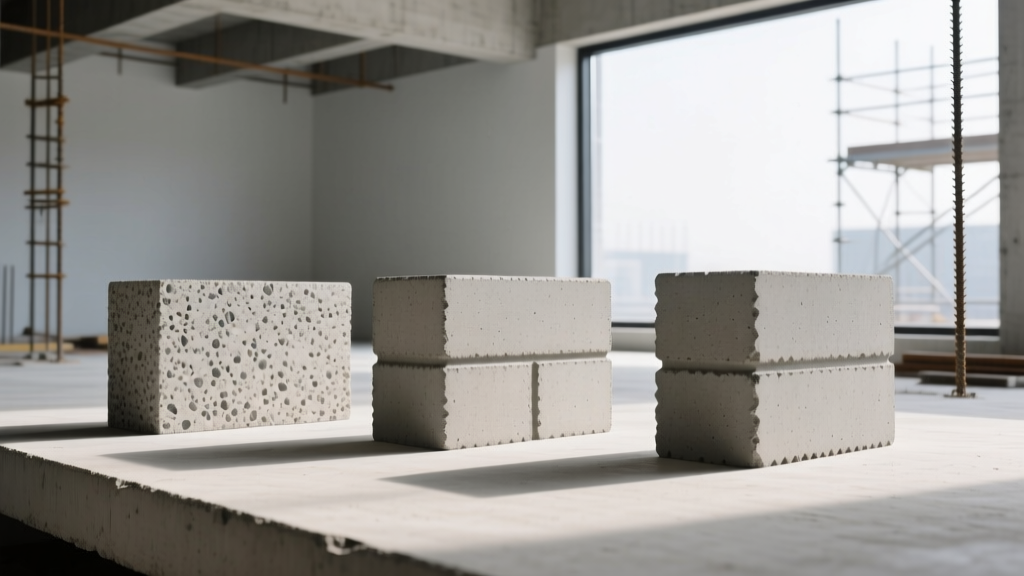
The Echelon Masonry Portfolio: Beyond Standard Gray CMU
Echelon Masonry, a premier brand under the CRH building materials umbrella, manufactures some of the most widely specified Concrete Masonry Units (CMU) in North America. While general contractors often default to standard gray structural blocks, Echelon’s specialized architectural and pre-faced lines solve complex design, hygienic, and structural challenges. This deep-dive examines the technical specifications, manufacturing processes, and 2026 market pricing for Echelon’s core concrete block product lines, providing architects and masonry contractors with actionable data for project specification.
Trenwyth Architectural Concrete Block: Split-Face vs. Ground-Face
The Trenwyth line represents Echelon’s flagship architectural concrete block offerings. Unlike standard CMU, which is stripped from the mold and left with a smooth, manufactured finish, Trenwyth blocks undergo secondary mechanical processing to expose the internal aggregate matrix.
The Hydraulic Splitting Process (Split-Face)
Split-face blocks are created by curing standard CMU and then passing them through a hydraulic guillotine. The immense pressure fractures the block along a natural fault line, exposing the coarse aggregate (typically limestone, granite, or river gravel). This yields a rugged, dimensional profile that mimics natural cut stone. Echelon offers split-face units in standard 8x8x16 dimensions, as well as 4-inch and 6-inch nominal thicknesses for veneer applications.
Diamond Grinding (Ground-Face)
Ground-face blocks are subjected to industrial diamond polishing pads that grind away the top 1/16 to 1/8 inch of the concrete face. This process creates a smooth, terrazzo-like finish that highlights the fine aggregate without the deep shadow lines of a split face. Ground-face units are heavily specified for interior lobbies, school corridors, and exterior wainscoting where a refined, modern aesthetic is required.
Never specify painted architectural block for exterior applications. Echelon’s Trenwyth lines utilize integral liquid iron-oxide pigments mixed directly into the concrete batch. This ensures that if the block is chipped during installation or impacted by landscaping equipment, the exposed core matches the face color identically. Standard color palettes include Autumn, Desert, and Pewter.
Spectra Glazed Concrete Block: High-Traffic & Hygienic Solutions
For environments requiring stringent hygiene and high impact resistance, Echelon’s Spectra line provides a pre-faced concrete masonry unit. Spectra blocks are manufactured to ASTM C90 structural standards, then factory-coated with a thermosetting epoxy resin facing.
- Chemical Resistance: The epoxy face is impervious to quaternary ammonium compounds, bleach, and industrial degreasers, making it the standard for hospital operating wings, food processing plants, and transit authority tunnels.
- ASTM C744 Compliance: Pre-faced masonry units must meet strict impact and abrasion criteria. Spectra blocks undergo rigorous freeze-thaw and adhesion testing to ensure the glazed face does not delaminate under thermal expansion cycles.
- Graffiti Mitigation: The non-porous epoxy surface prevents aerosol paint from penetrating the concrete pores, allowing graffiti to be removed with standard solvent wipes without damaging the block face.
Structural CMU: Lightweight vs. Normal Weight Block Specs
When selecting a concrete block, block weight and aggregate composition fundamentally alter the thermal, acoustic, and structural performance of the wall assembly. Echelon produces both Type I (Normal Weight) and Type II (Lightweight) structural blocks per ASTM C90.
| Property | Normal Weight (ASTM C33) | Lightweight (ASTM C331) |
|---|---|---|
| Aggregate Type | Sand, gravel, crushed stone | Expanded shale, clay, or slate (LWA) |
| Unit Weight (8x8x16) | 38 - 42 lbs | 24 - 28 lbs |
| Density (lb/ft³) | 125 - 145 | 95 - 115 |
| STC Rating (Ungrouted) | ~50 | ~45 |
| Fire Resistance (2-hr) | Requires 4.5" equivalent thickness | Requires 3.2" equivalent thickness |
While normal weight blocks offer superior sound transmission class (STC) ratings due to their mass, specifying them for multi-story commercial builds significantly increases mason fatigue and injury risk. For walls above the second floor where acoustic separation is critical, specify lightweight CMU and fill the cores with mineral wool insulation or sand to artificially boost the STC rating without penalizing the labor force.
Acoustic Performance & Energy Code Compliance
In 2026, commercial energy codes (such as ASHRAE 90.1-2022 and IECC 2024) heavily favor the thermal mass properties of concrete masonry. Echelon’s normal weight blocks provide high heat capacity, allowing buildings to absorb solar gain during the day and release it at night, flattening HVAC peak loads. However, CMU alone does not meet modern continuous insulation (ci) R-value mandates.
To achieve code compliance, Echelon recommends pairing their structural block with rigid mineral wool insulation applied to the exterior face, or utilizing their specialized insulated insert products that fit directly into the block web cavities. Never rely solely on loose-fill core insulation (like perlite or vermiculite) to meet whole-wall R-value requirements, as thermal bridging through the concrete webs will reduce the effective R-value by up to 40%.
Installation & Mortar Joint Specifications
The longevity of any Echelon architectural block installation relies on proper mortar selection and joint tooling. According to the National Concrete Masonry Association (NCMA), the most common cause of premature facade failure is water infiltration through poorly consolidated mortar joints.
Mortar Type Selection
- Type N (Medium Compressive Strength): The default choice for most exterior, above-grade Echelon architectural walls. It provides adequate bond strength while remaining flexible enough to absorb thermal expansion without cracking the block faces.
- Type S (High Compressive Strength): Required for below-grade foundation walls, retaining walls, and seismic zones. Do not use Type S on above-grade architectural facades; its high rigidity can cause the mortar to crack the architectural face of the block during thermal cycling.
Joint Tooling Timing
Mortar joints must be tooled to a concave or V-profile when the mortar is "thumbprint hard"—typically 30 to 60 minutes after laying, depending on ambient humidity. Tooling too early smears cement paste onto the architectural face, while tooling too late fails to compress the mortar against the block edges, creating micro-fissures for water ingress.
Sourcing, Lead Times, and 2026 Pricing Realities
Supply chain stabilization in the masonry sector has improved lead times for standard structural CMU, but architectural lines like Trenwyth and Spectra require extended manufacturing windows due to custom color batching and secondary processing.
| Product Line | Face Texture | Approx. Cost per 8x8x16 Unit | Typical Lead Time |
|---|---|---|---|
| Standard Gray CMU | Smooth / Slump | $2.50 - $3.20 | 2 - 4 Weeks |
| Trenwyth Split Face | Hydraulically Split | $4.50 - $6.00 | 6 - 10 Weeks |
| Trenwyth Ground Face | Diamond Ground | $5.50 - $7.50 | 8 - 12 Weeks |
| Spectra Glazed | Epoxy Resin Coated | $9.00 - $13.50 | 10 - 14 Weeks |
When ordering architectural block, always factor in a 5% to 8% overage for breakage, cutting waste, and color blending. Echelon pallets standard 8x8x16 blocks at 90 units per pallet. Ensure your general contractor verifies that the delivery site can accommodate forklift unloading, as a single pallet of normal weight CMU exceeds 3,800 lbs.
Cleaning and Efflorescence Prevention
Architectural concrete block is highly susceptible to efflorescence—the white, powdery salt deposit that forms when water-soluble alkalies migrate to the surface. To prevent this, the Portland Cement Association mandates strict site storage protocols: block pallets must be elevated on dunnage and covered with breathable, waterproof tarps until the day of installation.
Never use muriatic (hydrochloric) acid to clean Echelon architectural or glazed block. Acid etches the cement paste, permanently altering the color and exposing the aggregate unevenly. For routine cleaning and mild efflorescence removal, use a neutral pH detergent and a stiff nylon brush. For heavy staining, specify a proprietary, acid-based cleaner formulated specifically for concrete masonry (such as Prosoco Sure Klean), applied strictly according to the manufacturer's dilution ratios.
By understanding the distinct mechanical properties, aesthetic profiles, and installation requirements of Echelon’s diverse CMU lines, specifiers can move beyond utilitarian gray block to deliver high-performance, architecturally significant masonry assemblies that endure for decades.