Concrete Block Wall Maintenance: A Complete Cleaning Playbook
Master exterior concrete block maintenance with our step-by-step cleaning playbook. Learn to remove efflorescence, mildew, and stains safely.
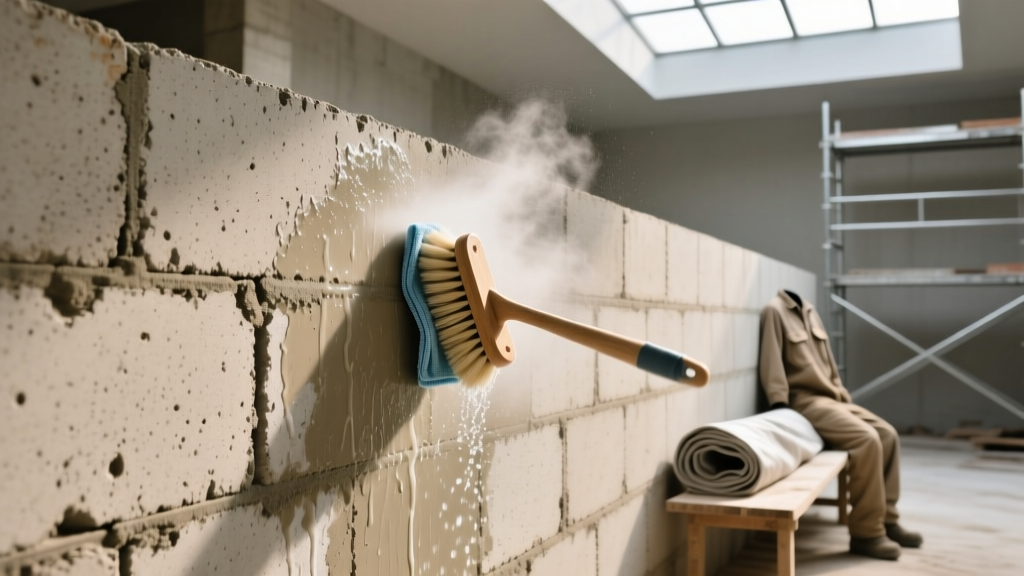
Diagnosing Concrete Block Surface Contaminants
Exterior concrete masonry units (CMU) are highly durable but inherently porous. The capillary network that gives concrete block its structural mass also makes it a sponge for moisture, mineral salts, and biological spores. Before applying any cleaning agent, you must accurately identify the contaminant. Misdiagnosis leads to improper chemical selection, which can permanently etch the cement paste or drive stains deeper into the pore structure.
| Symptom / Appearance | Probable Cause | Field Identification Test |
|---|---|---|
| White, powdery or crystalline deposits | Efflorescence (water-soluble salts) | Apply a drop of water; if it dissolves, it is efflorescence. If it remains, it may be white mold or cement leaching (lime run). |
| Green, black, or gray fuzzy patches | Biological growth (Algae, Mildew, Lichen) | Apply a drop of household bleach; if it lightens or disappears within 60 seconds, it is biological. |
| Rust-colored streaking below metal fixtures | Iron oxidation (Rust staining) | Look for upstream metal sources (wall ties, rebar, light fixtures). Test with a commercial rust remover; standard acids will not work. |
| Dark, uniform soiling in sheltered areas | Atmospheric dirt and carbon buildup | Scrub with a mild alkaline detergent; if it lifts easily, it is surface dirt. |
The Core Cleaning Arsenal: Chemicals and Equipment
According to the National Park Service guidelines on masonry preservation, the golden rule of cleaning CMU is to use the gentlest method possible and only escalate when necessary. High-pressure water and harsh acids are the primary causes of irreversible damage to concrete block facades.
Unbuffered muriatic (hydrochloric) acid attacks the Portland cement binder in the CMU, dissolving the surface and exposing the aggregate. Furthermore, if the block contains iron-bearing aggregates, the acid will trigger a severe secondary rust stain that is nearly impossible to remove. Always use buffered, proprietary masonry cleaners designed specifically for concrete.
Equipment Specifications
- Pressure Washer: Maximum 1,500 PSI. Anything higher will etch the mortar joints and the block face.
- Nozzle Tip: 15-degree (white) or 25-degree (green) fan tip. Never use a 0-degree (red) rotary nozzle, which carves grooves into the masonry.
- Application: Pump-up garden sprayer (for chemicals) and a soft-bristle nylon scrub brush (never wire brushes, which leave embedded iron particles that rust).
Playbook 1: Removing Efflorescence and Mineral Stains
Efflorescence occurs when moisture migrates through the concrete block, dissolving internal salts and depositing them on the surface as the water evaporates. The National Concrete Masonry Association (NCMA) emphasizes that treating the symptom without addressing the moisture source is futile. Ensure roof flashing, weep holes, and grade slopes are functioning before cleaning.
- Dry Brush First: If the efflorescence is powdery (new construction or recent rain), use a stiff nylon brush to remove as much as possible while the wall is completely dry. Wetting it prematurely turns the salt into a solution that soaks right back into the pores.
- Pre-Wet the Wall: Before applying any chemical, thoroughly saturate the concrete block with clean water from the bottom up. This prevents the acidic cleaner from being absorbed too deeply into the dry masonry.
- Apply Buffered Cleaner: Use a proprietary cleaner like PROSOCO SureKlean 600 Detergent or their VanaTrol Concrete Cleaner. Dilute according to the manufacturer's instructions (typically 1 part cleaner to 10 parts water for light efflorescence, up to 1:4 for heavy buildup).
- Dwell and Agitate: Allow the solution to dwell for 3 to 5 minutes. Do not let it dry on the surface. Agitate stubborn areas with a nylon brush.
- Thorough Rinse: Rinse from the top down using your pressure washer set to 800–1,000 PSI, holding the wand at least 12 inches from the block face.
Playbook 2: Eradicating Biological Growth (Algae and Mildew)
Biological growth thrives on the north-facing elevations of concrete block walls where moisture lingers and UV exposure is low. While efflorescence requires acidic cleaners, biological contaminants require alkaline or oxidizing agents.
Chemical Mixing Ratios for Biological Stains
| Contaminant Severity | Sodium Hypochlorite (12.5% Pool Grade) | Water | Surfactant (Dish Soap or TSP) |
|---|---|---|---|
| Light Mildew / Green Algae | 1 Part | 10 Parts | 1 oz per gallon of mix |
| Heavy Black Mold / Lichen | 1 Part | 4 Parts | 2 oz per gallon of mix |
Application Protocol: Apply the bleach solution using a low-pressure pump sprayer. The surfactant is critical—it breaks the surface tension of the water, allowing the bleach to penetrate the biofilm and reach the roots of the lichen or mold embedded in the CMU pores. Allow a 10-minute dwell time, agitate with a brush, and rinse thoroughly. If the block is heavily shaded, consider trimming back foliage to increase UV exposure, which naturally inhibits regrowth.
Post-Cleaning Protection: Sealing CMU Walls
Cleaning strips away surface contaminants but leaves the concrete block's pore network wide open. To reduce future maintenance cycles, applying a breathable water repellent is highly recommended. Film-forming sealers (like acrylics or polyurethanes) should be avoided on exterior CMU; they trap moisture inside the wall, leading to spalling when the trapped water freezes and expands.
Before sealing, ensure the wall is bone dry (wait at least 48 hours after cleaning). Flick a few drops of water onto the block. If it beads up, the block already has a sealer and must be stripped before applying a new coat. If it absorbs instantly, it is ready for a penetrating silane/siloxane sealer.
Penetrating Sealer Specifications and Costs
- Chemistry: Silane/Siloxane blends (e.g., PROSOCO Siloxa-Tek 8500 or equivalent). These react chemically with the free lime and alkalis in the concrete to form a hydrophobic resin deep within the pores.
- Coverage Rate: Expect 100 to 150 square feet per gallon for standard 8-inch CMU, as the rough texture and porosity consume more product than smooth poured concrete.
- Application Cost: Material costs range from $0.15 to $0.35 per square foot. Professional application adds $0.50 to $0.85 per square foot.
- Longevity: A high-quality siloxane sealer will protect the concrete block for 5 to 7 years before reapplication is necessary.
Preventative Maintenance Schedule
Reactive maintenance is always more expensive than proactive care. Implement this schedule to maximize the lifespan and aesthetic of your concrete block structures.
Bi-Annual Inspections (Spring and Fall)
- Inspect all horizontal surfaces, coping stones, and parapet caps for cracked mortar or failed sealant. These are the primary entry points for water that causes efflorescence.
- Clear weep holes at the base of the wall using a piece of wire or compressed air. Blocked weep holes guarantee hydrostatic pressure buildup and subsequent staining.
- Check downspouts and grade slopes to ensure surface water is directed at least 5 feet away from the CMU foundation.
Five-Year Deep Maintenance
- Perform a low-pressure wash with an alkaline detergent to remove atmospheric carbon and light biological spotting before it establishes deep root systems.
- Conduct the water drop test to evaluate the remaining efficacy of the silane/siloxane sealer. If the block absorbs water rapidly, schedule a resealing project during a dry, mild weather window (ideal temperatures between 50°F and 80°F).
- Repoint any mortar joints that show signs of recession greater than 1/8 inch using a Type N or Type S mortar mix that matches the original joint profile and compressive strength.