Henry vs. Black Jack Roofing Cement: 2026 Product Line Deep-Dive
Compare Henry and Black Jack roofing cement product lines for 2026. Expert analysis on formulations, cure times, failure modes, and best use cases.
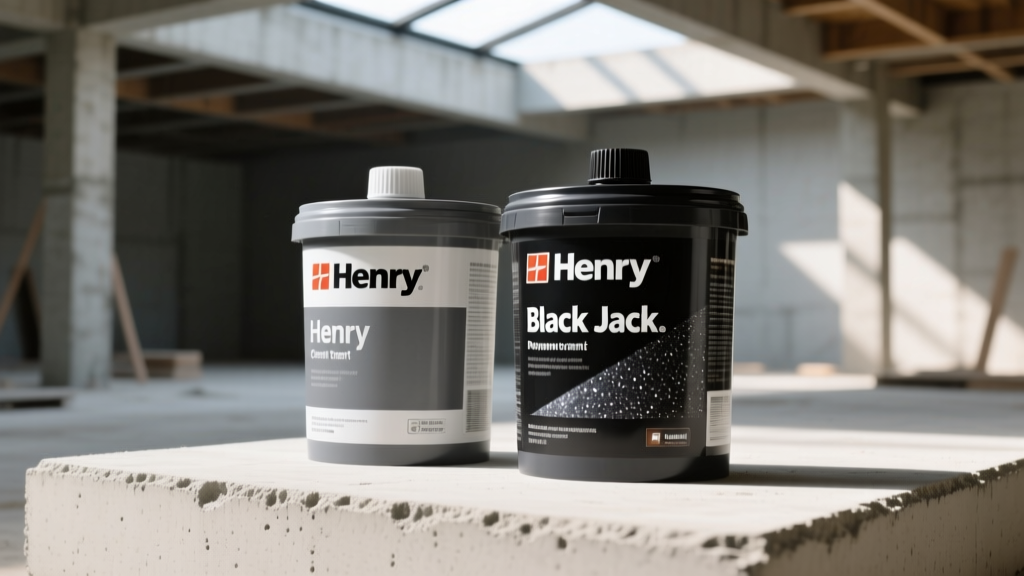
The Chemistry of Roofing Cement: Why Brand Formulation Matters
Roofing cement—often referred to interchangeably as asphalt mastic, flashing cement, or plastic cement—is a critical component in low-slope roof maintenance and repair. Unlike liquid-applied elastomeric coatings that cure via moisture or chemical cross-linking, traditional roofing cement is a cutback asphalt product. It consists of refined asphalt binders suspended in a volatile solvent (typically mineral spirits), fortified with mineral fibers and polymer modifiers. As the solvent evaporates, the mastic sets into a pliable, waterproof seal.
However, not all roofing cements are created equal. The distinction between a basic cutback and a polymer-modified mastic dictates its cold-weather flexibility, UV resistance, and long-term adhesion. According to the National Roofing Contractors Association (NRCA), improper selection of asphalt mastics is a leading cause of premature flashing failure, particularly when incompatible materials are applied to single-ply membranes. This deep-dive analyzes the two dominant players in the North American market for 2026: Henry Company and Black Jack Coatings, dissecting their specific product lines, chemical modifiers, and real-world application parameters.
Henry Company: The Industry Standard-Bearer
Henry Company has long dominated the roofing repair aisle in commercial and residential supply chains. Their product line is segmented primarily by the type of polymer modifier used to enhance the base asphalt binder. Understanding the difference between their flagship products is critical for specifying the correct material for a given repair scenario.
Henry 208 Wet Patch vs. Henry 209 Extreme
The Henry 208 Wet Patch Roof Leak Repair is a rubberized, SBS (Styrene-Butadiene-Styrene) modified asphalt mastic. Its primary selling point is its ability to be applied in wet conditions and at temperatures as low as 10°F (-12°C). The SBS modifier creates a thermoplastic elastomer network within the asphalt, allowing the cured cement to stretch and recover with the thermal expansion and contraction of the roof substrate. It contains roughly 65% solids by volume, meaning a 1/8-inch application will experience moderate shrinkage as the mineral spirits flash off.
Conversely, the Henry 209 Extreme line utilizes a SEBS (Styrene-Ethylene-Butylene-Styrene) polymer modification. SEBS offers superior UV resistance and higher temperature stability compared to SBS. While 208 is ideal for emergency winter leak patches, 209 is better suited for exposed flashing details in high-sun environments where standard asphalt would typically soften and slump at temperatures exceeding 160°F.
Black Jack: The SBS-Modified Challenger
Black Jack Coatings (a division of Gardner-Gibson) approaches the roofing cement market with a heavy emphasis on high-solids, SBS-modified formulations designed to minimize application shrinkage. Their product line is slightly more streamlined than Henry's, focusing on all-season versatility.
All-Weather vs. Siliconeized Formulations
The Black Jack All-Weather Roof Cement is engineered with a higher initial solids content (approaching 72%) compared to standard cutbacks. This higher solids ratio translates to less solvent evaporation, resulting in a thicker final film build with a single trowel pass. Black Jack's proprietary fiber matrix is also denser, providing superior bridging capabilities over gaps up to 1/4-inch wide without the need for an embedded polyester reinforcing fabric.
Recently, Black Jack has expanded into hybrid technologies, introducing silicone-modified asphalt blends. While these products offer enhanced surface weathering and water-beading characteristics, they require strict adherence to cure-time windows. If a siliconeized roofing cement is skinned over before the underlying solvent has fully evaporated, it traps the volatiles, leading to delayed blistering.
Head-to-Head Matrix: Henry vs. Black Jack
When specifying materials for commercial maintenance contracts or large-scale residential repairs, contractors must weigh cure times, temperature limits, and coverage rates. The matrix below compares the flagship wet-patch and all-weather mastics from both brands based on 2026 manufacturer technical data sheets available via Henry Company and Black Jack.
| Specification | Henry 208 Wet Patch | Henry 209 Extreme | Black Jack All-Weather |
|---|---|---|---|
| Polymer Modifier | SBS (Rubberized) | SEBS (Advanced Elastomer) | SBS (High-Density) |
| Min. Application Temp | 10°F (-12°C) | 0°F (-18°C) | 15°F (-9°C) |
| Solids Content (Volume) | ~65% | ~68% | ~72% |
| Max. Recommended Thickness | 1/4 inch per layer | 1/4 inch per layer | 3/8 inch per layer |
| Primary Best Use | Active leaks, wet substrates | High-heat exposed flashing | Dry gaps, heavy bridging |
Real-World Failure Modes and Edge Cases
Even the highest-quality polymer-modified roofing cement will fail if applied incorrectly. Based on forensic roof inspections and contractor feedback, the following failure modes account for over 80% of mastic-related callbacks:
- The 'Alligatoring' Effect (Over-application): Roofing cement must be applied in thin layers (1/8 to 1/4 inch). When a contractor trowels on a 1/2-inch thick glob to fill a void, the surface skins over as the solvent evaporates. This skin traps the remaining liquid solvent underneath. As the sun heats the roof, the trapped solvent expands, causing the surface to crack in a pattern resembling alligator skin. Fix: Always embed a fiberglass or polyester reinforcing mesh if the void exceeds 1/4 inch, and build up the cement in two separate passes.
- Substrate Off-Gassing Blisters: Applying cutback asphalt directly over damp or green plywood traps moisture. As the roof heats up, the moisture turns to steam, creating massive blisters in the mastic. Fix: Ensure wood substrates are completely dry, or use a water-based acrylic primer before applying solvent-based mastics.
- UV Degradation Without Granules: Asphalt is inherently susceptible to ultraviolet degradation. While SEBS and SBS modifiers slow this process, they do not stop it. If roofing cement is used on an exposed parapet or chimney flashing, it must be immediately covered with embedded mineral granules or painted with a compatible aluminum or acrylic elastomeric topcoat once fully cured.
- Incompatibility with Silicone Sealants: Roofing cement will not adhere to existing silicone caulking. If a previous contractor used 100% silicone on a flashing joint, the asphalt mastic will peel off in sheets within months. The old silicone must be mechanically removed and the substrate cleaned with a solvent wipe prior to mastic application.
Cost Analysis and Coverage Rates
For facility managers and estimators, calculating the true in-place cost of roofing cement requires factoring in not just the material price, but the coverage rate at the specified thickness. In 2026, a standard 1-gallon can of premium polymer-modified roofing cement (Henry 208 or Black Jack All-Weather) retails between $28.00 and $36.00, while bulk 5-gallon pails reduce the unit cost to approximately $22.00 per gallon.
At the industry-standard 1/8-inch thickness, 1 gallon of roofing cement covers approximately 12.5 square feet. For linear flashing repairs (e.g., a 6-inch wide band along a parapet wall), 1 gallon will cover roughly 25 linear feet. Factoring in labor at $65/hour and material costs, the fully burdened in-place cost for a standard flashing mastic repair averages $4.50 to $6.00 per linear foot.
Authoritative Standards and Sourcing
When drafting specifications for commercial roofing repairs, ensure that the selected roofing cement complies with ASTM D4586 (Standard Specification for Asphalt Roof Cement). This standard dictates the minimum requirements for consistency, moisture content, and behavior at elevated temperatures. Both Henry and Black Jack's premium lines are formulated to meet or exceed ASTM D4586 Type I and Type II requirements, ensuring they will not slump or run on vertical surfaces during peak summer heat.
Ultimately, the choice between Henry and Black Jack comes down to the specific environmental and substrate conditions of the job site. For emergency, wet-weather winter repairs, Henry 208 remains the undisputed workhorse. For high-solids, dry-condition bridging and gap-filling, Black Jack All-Weather offers superior film build and shrinkage resistance. By matching the polymer chemistry to the environmental demand, contractors can eliminate repeat visits and ensure long-term watertight integrity.