Types of Construction Joints in Concrete: Cost Breakdown
Detailed cost breakdown for types of construction joints in concrete. Compare material, labor, and repair costs for expansion, control, and isolation joints.

The Financial Impact of Concrete Joint Engineering
Concrete is a rigid material that shrinks as it cures and expands or contracts with thermal fluctuations. When internal tensile stresses exceed the concrete's modulus of rupture, uncontrolled cracking occurs. From a project management and estimating perspective, the upfront cost of engineering and installing proper joints is a fraction of the remediation expense required to fix spalled, faulted, or leaking slabs. Understanding the types of construction joints in concrete—and their associated material and labor costs—is critical for accurate 2026 budgeting.
According to the Portland Cement Association, joints are planned cracks that relieve stress. However, the execution method (sawing vs. tooling, sealant selection, and load-transfer mechanisms) drastically alters the final invoice. Below is a comprehensive cost breakdown analysis for the primary joint systems used in commercial and residential slab-on-grade and suspended slab construction.
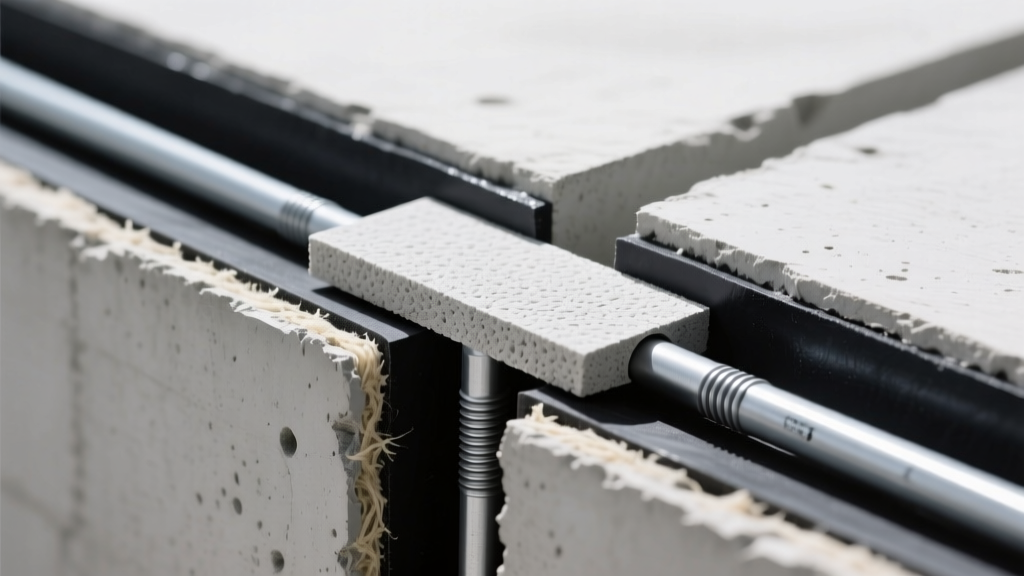
Contraction (Control) Joints: Inducing the Crack
Contraction joints are designed to weaken the concrete in a straight line, forcing shrinkage cracks to occur below the surface where they are hidden and protected. The cost of these joints depends entirely on the formation method.
Early-Entry Saw-Cutting (Soff-Cut)
Early-entry dry-cut saws (such as Soff-Cut machines) allow contractors to cut joints within 1 to 4 hours of finishing, before the concrete has fully set but after it can withstand the blade pressure. This method prevents plastic shrinkage cracking.
- Material Cost: $0.15 - $0.25 per linear foot (LF) for specialized diamond blades.
- Labor & Equipment Cost: $0.70 - $1.15 per LF.
- Total Installed: $0.85 - $1.40 per LF.
Conventional Saw-Cutting
Conventional wet or dry sawing occurs 6 to 18 hours after pouring. It requires heavier equipment and deeper cuts (typically 1/4 to 1/3 of the slab thickness).
- Material Cost: $0.10 - $0.20 per LF (standard diamond blades and water).
- Labor & Equipment Cost: $1.00 - $1.60 per LF (slower production rates and slurry cleanup).
- Total Installed: $1.10 - $1.80 per LF.
Hand Tooling (Residential/Light Commercial)
Using a brass or bronze grooving tool while the concrete is in its plastic state. This is rarely specified for commercial warehouses due to edge-spalling risks but remains common in residential driveways.
- Total Installed: $0.30 - $0.60 per LF (labor only; negligible material cost).
Expansion and Isolation Joints: Managing Movement
While control joints manage shrinkage, expansion and isolation joints accommodate physical growth and isolate the slab from fixed structures (like columns, walls, and machine foundations). The Federal Highway Administration emphasizes that proper load transfer and sealant selection in these joints are paramount for long-term pavement and slab durability.
Pre-Molded Filler Boards
Expansion joints require a compressible material to prevent concrete-to-concrete contact during thermal expansion.
- Asphalt-Impregnated Fiberboard (ASTM D1751): $0.35 - $0.55 per LF (1/2-inch thick). Economical but susceptible to degradation if exposed to UV light before sealing.
- Closed-Cell Polyethylene Foam (ASTM D545): $0.75 - $1.10 per LF. Superior moisture resistance and recovery rate; the standard for 2026 commercial specifications.
- Cork Expansion Joint Filler: $1.50 - $2.20 per LF. Used in specialized water-retaining structures or historic restorations due to its high compressibility.
Pourable and Gun-Grade Sealants
To prevent incompressible debris (like gravel) from entering the joint and causing spalling during expansion, the joint must be sealed.
- Self-Leveling Polyurethane (e.g., Sikaflex-1a, MasterSeal NP 1): $0.90 - $1.30 per LF for material; $1.20 - $1.80 per LF for labor (includes routing, cleaning, and backer rod installation). Total: $2.10 - $3.10 per LF.
- Silicone Highway Sealant: $2.50 - $3.80 per LF (material). Used in heavy-duty industrial floors and airfields due to extreme UV and chemical resistance.
Construction (Cold) Joints: Structural Continuity
Construction joints occur wherever a concrete pour is interrupted, typically at the end of a workday. These joints must transfer shear loads while allowing for slight shrinkage.
Dowel Bars and Diamond Plates
For slabs 6 inches or thicker, smooth steel dowel bars or specialized diamond dowel plates are required to prevent vertical faulting.
- Epoxy-Coated Steel Dowel Bars (1.5-inch diameter x 18-inch long): $3.50 - $5.00 per joint (spaced at 12 inches on center). Requires precise alignment using dowel baskets ($8.00 - $14.00 per basket).
- Diamond Dowel Plates (e.g., Danley Diamond Dowel): $45.00 - $65.00 per unit. While the unit cost is higher, they eliminate the need for dowel baskets, reduce labor time by 40%, and allow for multidirectional lateral movement, making them highly cost-effective for large warehouse slabs.
Waterstops for Below-Grade Joints
When construction joints occur in foundations or retaining walls, waterproofing is mandatory.
- Ribbed PVC Waterstops (8-inch wide): $2.50 - $4.00 per LF. Requires heat-welding at intersections, adding $35 - $50 per intersection in skilled labor.
- Hydrophilic Bentonite Waterstops (e.g., Cetco Waterstop-RX): $4.50 - $6.50 per LF. Expands upon contact with water. Much faster to install (simply nail or adhere to the existing concrete), offsetting the higher material cost in complex formwork scenarios.
2026 Comprehensive Cost Matrix
The following table summarizes the average installed costs per linear foot for standard commercial slab-on-grade applications in 2026. Regional labor variances (e.g., prevailing wage requirements in urban centers) can shift labor costs by ±25%.
| Joint System Component | Material Cost / LF | Labor Cost / LF | Total Installed / LF |
|---|---|---|---|
| Early-Entry Saw Cut (Control) | $0.20 | $0.90 | $1.10 |
| Conventional Saw Cut (Control) | $0.15 | $1.35 | $1.50 |
| Closed-Cell Foam + Polyurethane Seal | $1.60 | $1.80 | $3.40 |
| Diamond Dowel Plate System | $12.00* | $4.50* | $16.50* |
| Hydrophilic Bentonite Waterstop | $5.50 | $2.00 | $7.50 |
*Note: Diamond dowel plate costs are calculated per linear foot of joint, assuming plates are spaced at 24 inches on center at an average unit cost of $55.00.
Hidden Costs and Edge Cases in Joint Execution
Estimators frequently overlook secondary processes required to ensure joint longevity. Failing to budget for these edge cases leads to severe margin erosion.
- Joint Routing and Cleaning: Before applying polyurethane or silicone sealants, the joint must be routed to a precise width-to-depth ratio (typically 2:1) and sandblasted or blown out with oil-free compressed air. Add $0.40 - $0.80 per LF for this preparatory step.
- Primer Application: Porous concrete or aged slabs require a specialized primer (e.g., Sika Primer-207) to ensure chemical adhesion of the sealant. This adds $0.25 - $0.45 per LF in material and an extra labor pass.
- Subgrade Friction Reduction: If the subgrade is not properly prepared with a vapor retarder (like a 15-mil Stego Wrap) or a bond-breaker, the friction will prevent the slab from shrinking freely, causing mid-panel cracking despite perfectly spaced control joints. Vapor retarders add $0.35 - $0.60 per square foot to the overall slab cost but are non-negotiable for joint performance.
Decision Framework: Selecting the Optimal Joint System
Use the following conditional framework to specify the most cost-effective joint system based on project parameters:
- IF the slab is an interior warehouse with heavy forklift traffic (defined as >10,000 lbs axle loads), THEN specify early-entry saw cuts for control joints and diamond dowel plates for construction joints. The premium on diamond plates prevents vertical faulting that destroys forklift wheels and requires $45/LF in future polyurethane mortar repairs.
- IF the slab is an exterior commercial driveway subject to freeze-thaw cycles, THEN specify conventional saw cuts, closed-cell polyethylene expansion fillers, and silicone highway sealant. Silicone outlasts polyurethane by 10+ years in UV-exposed environments, eliminating the $2.50/LF cost of resealing within the first decade.
- IF the joint is a below-grade foundation wall penetration, THEN specify hydrophilic bentonite waterstops over PVC. The labor savings from avoiding heat-welding complex intersections easily justifies the $2.00/LF material premium, while providing superior insurance against hydrostatic water intrusion.
For further technical specifications on joint spacing and load-transfer efficiency, estimators and engineers should consult the National Ready Mixed Concrete Association's Concrete In Practice (CIP) guidelines, which provide standardized protocols for joint execution in modern ready-mix applications.
Written by
Sarah WhitfieldSarah Whitfield is a chartered quantity surveyor (MRICS) and construction cost analyst with 15 years of experience in material pricing, procurement strategy, and project budgeting. She earned her degree in Construction Management from the University of Reading (UK) and has worked on projects ranging from $2M custom homes to $180M mixed-use developments across North America and Europe. Sarah currently leads cost estimating for BuildMat Insight, maintaining a proprietary database of 4,000+ material price points updated quarterly. She is a frequent contributor to RSMeans cost data panels and has presented at the International Cost Engineering Council (ICEC) congress. Based in Denver, CO, Sarah is an avid trail runner and volunteer mentor for Women in Construction.
More from Sarah Whitfield
View all
Wood & Lumber
What Are the Different Types of Wood? A Builder's Guide
Compare structural softwoods, finish hardwoods, and engineered lumber. Analyze Janka ratings, MOE values, and 2026 pricing for construction.
Aug 4, 2026

Walls & Panels
Steel Framing vs Wood Framing: Corrosion and Moisture Defense
Compare steel framing vs wood framing for moisture resistance. Learn about galvanized coatings, condensation risks, and corrosion protection strategies.
Jul 21, 2026

Stone & Masonry
How to Cut Stone Veneer: Wet Saw vs Grinder Comparison
Compare the best tools for cutting stone veneer. We review wet saws, angle grinders, and chop saws to help you achieve clean, chip-free cuts.
Jul 21, 2026