How to Clean Concrete Floors: Best Brand Products & Methods
Discover how to clean concrete floors with our deep-dive into top brands like Prosoco, Zep, and Simple Green. Get exact dilution ratios and protocols.
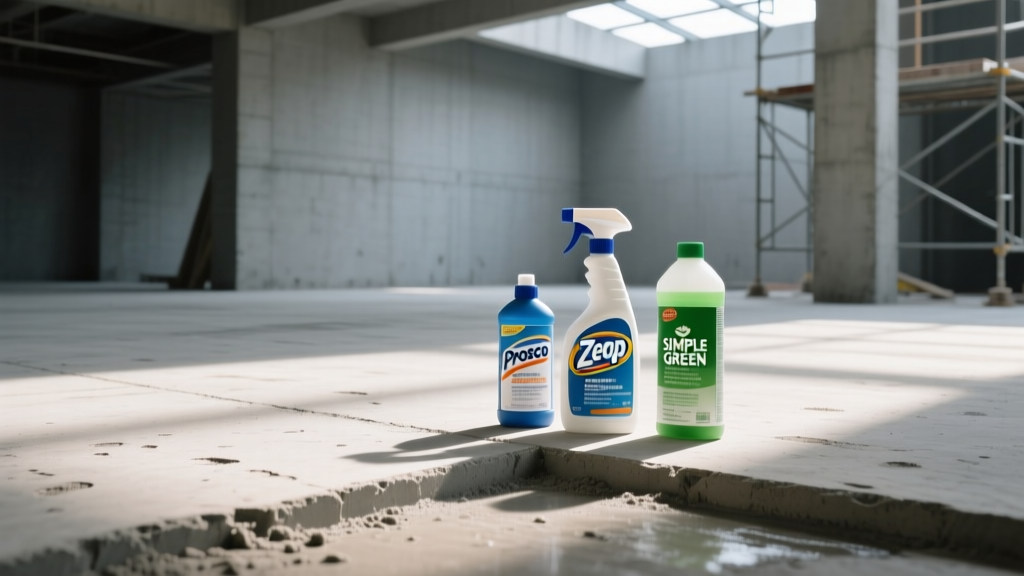
Learning how to clean concrete floors properly requires understanding that concrete is not a monolithic, inert surface. Whether your floor is unsealed, treated with a penetrating lithium silicate densifier, or coated with a polyaspartic or epoxy topical sealer, the chemical composition of your cleaning agent dictates the lifespan of the finish. Using highly alkaline degreasers on acrylic sealers will cause permanent hazing, while acidic cleaners will aggressively etch the calcium hydroxide in unsealed concrete paste. This brand and product line deep-dive examines the exact chemical formulations, dilution ratios, and application protocols for the industry's leading concrete cleaning manufacturers in 2026.
The Chemistry of Concrete: Why Brand and pH Matter
Unsealed concrete is inherently alkaline, typically resting at a pH between 11 and 13. When you introduce an acidic cleaner (pH below 7), such as vinegar or muriatic acid-based bathroom cleaners, a chemical reaction occurs that dissolves the free lime in the concrete matrix. This results in micro-pitting, which traps dirt and accelerates future staining. Conversely, topical sealers like acrylics and polyurethanes are vulnerable to high-alkaline strippers (pH 12+), which break down the polymer chains, leading to yellowing, peeling, and loss of gloss. Therefore, the primary metric for selecting a daily cleaner is a strictly neutral pH (6.5 to 8.0) combined with non-ionic surfactants that lift dirt without attacking the sealer's cross-links.
Brand Deep-Dive: Prosoco (Architectural & Heavy-Duty)
Prosoco is the gold standard for architectural concrete, polished concrete, and floors treated withConsolideck lithium silicate densifiers. Their formulations are specifically engineered to avoid the sodium and potassium salts found in cheaper cleaners, which can leave white, efflorescence-like residues on polished surfaces.
Prosoco DailyKlean
DailyKlean is a neutral-pH (7.0–8.0), biodegradable cleaner designed for daily maintenance of polished and sealed concrete. It contains advanced surfactants that encapsulate soil particles, allowing them to be easily recovered by auto-scrubbers without leaving a filmy residue.
- Dilution Ratio: 1 to 2 oz per gallon of water (1:128 to 1:64).
- Dwell Time: 3 to 5 minutes. Do not allow the solution to dry on the surface.
- Cost Analysis: A 1-gallon concentrate costs approximately $55. At a 1 oz/gallon dilution, the ready-to-use (RTU) cost is roughly $0.42 per gallon, making it highly economical for large commercial footprints.
- Best Application: Polished concrete, dyed concrete, and floors sealed with polyurethane or polyaspartic topcoats.
Brand Deep-Dive: Zep (Commercial Stripping & Maintenance)
Zep dominates the commercial janitorial supply space. While they offer daily cleaners, their true value in concrete maintenance lies in their heavy-duty restoration and stripping products, which are necessary when a topical sealer has reached the end of its lifecycle and requires reapplication.
Zep Heavy-Duty Floor Stripper
With a highly alkaline pH of 12.5 to 13.5, this product is strictly a restoration chemical, not a daily cleaner. It utilizes ethoxylated alcohols and potassium hydroxide to emulsify and lift old acrylic waxes, urethane coatings, and deeply embedded grease.
- Dilution Ratio: 1 part stripper to 4 parts hot water for heavy buildup; 1:10 for light wax removal.
- Equipment Pairing: Must be used with a low-speed floor buffer (175 RPM) and a black or dark green stripping pad. Never use on polished or densified concrete without a topical coating, as it will severely etch the surface.
- Neutralization: After stripping, the floor must be rinsed and neutralized with a slightly acidic rinse (like Zep Neutral Floor Cleaner) to restore the concrete's pH before applying a new sealer.
Brand Deep-Dive: Simple Green (Eco-Friendly & Exterior)
Simple Green is heavily utilized for exterior concrete, driveways, and unsealed warehouse slabs where environmental runoff is a concern. However, formulating distinctions between their product lines are critical to avoid surface damage.
Simple Green Oxy Solve Concrete & Driveway Cleaner
Unlike the original Simple Green All-Purpose Cleaner (which has a pH of 8.5–9.5 and can degrade some acrylic sealers over time), the Oxy Solve line relies on hydrogen peroxide and sodium percarbonate. This oxygen-based bleaching action lifts organic stains (mold, mildew, tire marks) without the caustic burn of sodium hydroxide.
- Application: Apply undiluted or mixed 1:1 with water directly to exterior stains.
- Agitation: Requires mechanical agitation with a stiff-bristle nylon brush.
- Warning: Hydrogen peroxide can bleach adjacent landscaping and wood fencing. Pre-wet surrounding vegetation and rinse immediately.
Product Comparison Matrix: Dilution, pH, and Cost
| Brand / Product | Primary Use Case | pH Level | Dilution Ratio | Est. RTU Cost / Gallon |
|---|---|---|---|---|
| Prosoco DailyKlean | Polished / Sealed Interior | 7.0 - 8.0 | 1-2 oz per gal | $0.42 - $0.85 |
| Zep Neutral Floor Cleaner | General Commercial Maintenance | 7.0 - 7.5 | 2 oz per gal | $0.25 - $0.30 |
| Zep Heavy-Duty Stripper | Acrylic / Wax Removal (Restoration) | 12.5 - 13.5 | 1:4 to 1:10 | $1.50 - $3.00 |
| Simple Green Oxy Solve | Exterior Unsealed / Organic Stains | 7.5 - 8.5 | 1:1 to Undiluted | $4.00 - $8.00 |
| Simple Green All-Purpose | Unsealed Garage / Grease Cutting | 8.5 - 9.5 | 1:10 to 1:30 | $0.20 - $0.60 |
Step-by-Step Protocol: Cleaning Sealed Interior Concrete
For interior concrete protected by a polyurethane, epoxy, or acrylic sealer, follow this exact protocol to maintain the gloss profile and prevent micro-scratching.
- Dry Dust Mopping (Pre-Clean): Use a microfiber dust mop to remove abrasive silica sand and grit. Skipping this step turns your floor buffer into a sanding machine, permanently dulling the sealer.
- Solution Application: Apply a neutral-pH cleaner (e.g., Prosoco DailyKlean) using an auto-scrubber or a flat microfiber mop. Do not flood the floor; use a damp application.
- Controlled Dwell Time: Allow the solution to dwell for 3 to 5 minutes to break the surface tension of oils and scuff marks. Never let the puddle air-dry, as this will redeposit the suspended soil into the concrete's micro-pores.
- Mechanical Recovery: Use an auto-scrubber (like a Tennant T300 or Nilfisk SC351) equipped with a white or red scrubbing pad. White pads polish; red pads lightly scrub. Never use blue or black pads on sealed concrete, as they will strip the topical coating.
- Squeegee and Dry: For areas without an auto-scrubber, use a foam squeegee to push the dirty water into a wet vacuum, followed by a dry microfiber bonnet to prevent water spotting.
Critical Failure Modes and Chemical Incompatibilities
⚠️ Warning: Common Chemical Mistakes
- The Vinegar Myth: Many DIY guides recommend vinegar for concrete stains. Vinegar is acetic acid (pH ~2.5). On unsealed concrete, it dissolves calcium carbonate, leaving a permanent, rough, etched halo that attracts future dirt.
- Ammonia on Epoxy: Ammonia-based glass cleaners are sometimes used for spot-cleaning epoxy floors. Ammonia can cause a chemical reaction with certain epoxies, leading to irreversible streaking and loss of UV stability.
- Surfactant Buildup: Using cheap, high-sudsing dish soaps or un-rinsed degreasers leaves a sticky polymer film. This film acts as a magnet for dirt, causing the floor to look perpetually gray and requiring a full mechanical strip to fix.
Maintenance Schedules and Equipment Pairing
The frequency of cleaning dictates the longevity of your concrete investment. In high-traffic commercial environments (retail, showrooms), daily damp mopping with a neutral cleaner and weekly auto-scrubbing is mandatory. According to the Concrete Network, failing to remove abrasive grit daily can reduce the lifespan of a topical polyurethane sealer by up to 40% due to micro-scratching.
For industrial environments with forklift traffic and tire marks, weekly cleaning with a slightly more aggressive alkaline cleaner (pH 9.0) is acceptable, provided it is thoroughly rinsed. Always pair your chemical choice with the correct floor pad: use white pads for daily burnishing of polished concrete, red pads for general scrubbing of sealed floors, and reserve black pads exclusively for chemical stripping operations prior to resealing. For further guidance on environmentally safe chemical disposal and runoff management, facility managers should consult the EPA Safer Choice Standard when selecting bulk cleaning concentrates for exterior pressure washing.
Ultimately, knowing how to clean concrete floors is less about scrubbing harder and more about aligning the exact pH and surfactant profile of your chosen brand with the specific sealer or densifier protecting your slab. Investing in high-quality concentrates like Prosoco or specialized Zep strippers yields a lower cost-per-square-foot over time by preventing premature sealer failure and costly restoration projects.