Kerr Concrete Hickory NC: 2026 Ready-Mix Products & Pricing
Explore Kerr Concrete in Hickory, NC. This 2026 guide covers ready-mix product lines, Catawba County pricing, delivery logistics, and local spec tips.
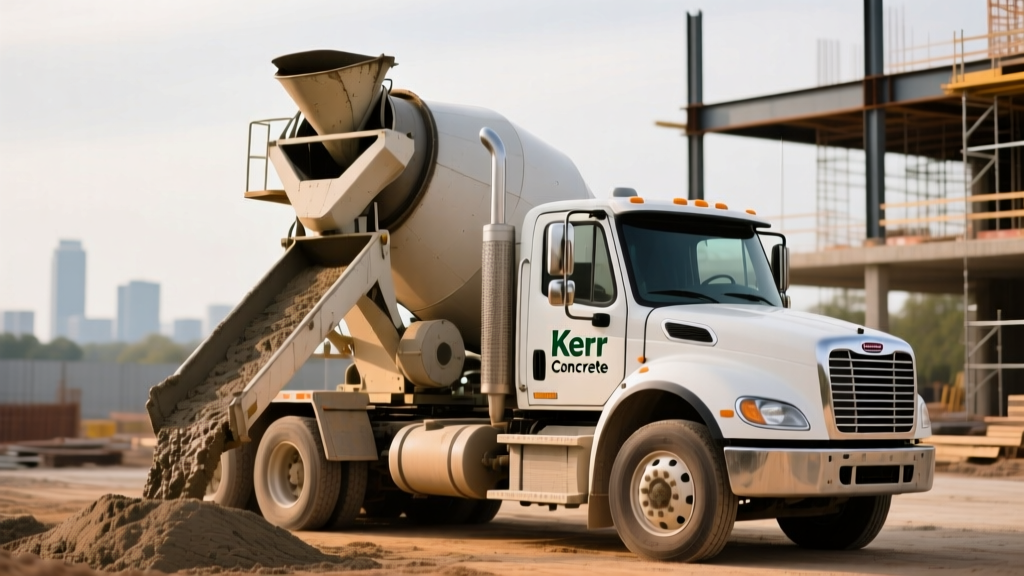
Navigating Ready-Mix Supply in the Catawba Valley
For contractors and owner-builders in Western North Carolina, securing a reliable ready-mix supply chain is the backbone of any structural or flatwork project. Kerr Concrete has maintained a dominant footprint across the Hickory, Lenoir, and Morganton corridors for decades, operating multiple batch plants strategically positioned to minimize transit times. In 2026, with material costs fluctuating and local building codes enforcing stricter freeze-thaw durability standards, understanding exactly what Kerr Concrete offers—and how to spec it for the region's unique topography—is critical for project viability.
This deep-dive analyzes Kerr Concrete's core product lines, current regional pricing matrices, and the technical specifications required to overcome the expansive red clay soils and seasonal temperature swings inherent to the Catawba Valley.
Core Product Lines: Beyond Standard Flatwork
While most residential builders default to standard 3000 PSI mixes, Kerr Concrete's batch plants are calibrated to produce a wide spectrum of specialized blends compliant with American Concrete Institute (ACI) standards. Selecting the right mix design prevents premature cracking, scaling, and structural deflection.
Standard Structural and Flatwork Blends
- 3000 PSI (3/4" Aggregate): The workhorse for interior slabs, standard footings, and non-load-bearing flatwork. Typically batched with a 4-inch slump, offering a balance of workability and finishing time.
- 4000 PSI (3/4" Aggregate): Recommended for exterior driveways, garage floors, and commercial flatwork subject to vehicular traffic. The higher cementitious content provides superior abrasion resistance and a denser surface matrix.
- 5000+ PSI (High-Early Strength): Specified for structural columns, suspended decks, and tilt-wall panels where early form-stripping is required to accelerate project schedules.
Specialty Admixtures and Reinforcements
Kerr Concrete integrates liquid and dry admixtures directly at the batch plant to ensure uniform dispersion. For the Hickory market, two additives are particularly vital:
- Synthetic Macro-Fibers: Added at a rate of 3 to 5 lbs per cubic yard, these fibers provide secondary reinforcement that controls plastic shrinkage cracking and improves impact resistance, often allowing contractors to reduce or eliminate welded wire mesh in light-duty slabs.
- Air-Entraining Agents (AEA): Essential for any exterior concrete in North Carolina. AEA introduces microscopic, evenly distributed air bubbles (typically targeting 4% to 6% air content) that give water room to expand during freeze-thaw cycles, preventing surface spalling.
The Cecil and Appling soil series prevalent around Hickory exhibit high plasticity and significant volumetric changes with moisture fluctuations. Pouring a slab directly on uncompacted native clay guarantees differential settlement and severe cracking. Always over-excavate a minimum of 4 to 6 inches and backfill with compacted Aggregate Base Course (ABC) or #57 crushed stone. Furthermore, a 15-mil polyethylene vapor barrier is mandatory beneath interior slabs to block hydrostatic moisture migration from the clay subgrade.
2026 Pricing & Delivery Logistics Matrix
Ready-mix pricing in Catawba County has stabilized compared to the volatile swings of previous years, but fuel surcharges and labor premiums remain embedded in the base rates. The following table outlines estimated 2026 pricing for Kerr Concrete deliveries within a standard 10-mile radius of their primary Hickory batch plants. Rates conform to regional averages tracked by the National Ready Mixed Concrete Association.
| Item / Mix Design | Estimated 2026 Cost | Notes & Conditions |
|---|---|---|
| 3000 PSI Standard Mix | $142 - $148 / CY | Base rate for full loads (7+ CY) |
| 4000 PSI Driveway Mix | $155 - $162 / CY | Includes standard water reducers |
| Fiber Reinforcement Additive | +$14 - $18 / CY | Macro-synthetic fibers, 3 lbs/CY |
| Short Load Fee (1 - 3 CY) | +$165 flat fee | Applied to loads under 4 cubic yards |
| Saturday / Weekend Delivery | +$85 surcharge | Requires 72-hour advance scheduling |
| Concrete Pump (Line/Boom) | $450 mobilization + $135/hr | Third-party pump operators usually required |
Ordering Framework: Specifying for the Foothills Climate
Ordering ready-mix is not a one-size-fits-all transaction. The NCDOT Concrete Guidelines and local engineering standards require precise specifications based on ambient conditions and placement methods. Use this decision framework when calling the Kerr Concrete dispatch desk:
Step 1: Determine Slump and Placement Method
Slump dictates the workability of the concrete. If you are direct-chuting from the truck into forms, request a standard 4-inch slump. If you are utilizing a boom pump to reach a backyard patio or a suspended deck, you must request a 5.5 to 6-inch slump. Do not simply ask the driver to add water on-site to increase slump. Adding water at the job site drastically increases the water-cement ratio, destroying the compressive strength and guaranteeing future shrinkage cracks. Instead, ask the batch plant to dose a High-Range Water Reducer (HRWR) or superplasticizer to achieve high flowability without sacrificing structural integrity.
Step 2: Adjust for Seasonal Temperature Extremes
Western North Carolina experiences significant thermal shifts that directly impact concrete hydration.
- Summer Batching (June - September): High ambient temperatures accelerate the set time, leading to cold joints and plastic shrinkage. Request a retarding admixture and ask if the plant is utilizing chilled batch water or flaked ice to lower the initial pouring temperature below 85°F.
- Winter Batching (November - March): When temperatures drop below 40°F, the hydration process stalls. Request hot water batching and a non-chloride accelerating admixture to ensure the concrete reaches 500 PSI before it is exposed to freezing temperatures. Ensure you have insulated curing blankets ready to deploy immediately after finishing.
Step 3: Calculate Volume and Buffer for Waste
Calculate the geometric volume of your forms (Length × Width × Depth in feet, divided by 27 to yield cubic yards). Always add a 7% to 10% buffer for spillage, subgrade inconsistencies, and form deflection. Running short on a pour forces you to order an emergency short-load, which incurs heavy premiums and leaves a visible cold joint where the old and new concrete meet.
Common Pitfalls for Catawba County Contractors
Even experienced crews make logistical errors when coordinating with local batch plants. Avoid these frequent missteps:
- Ignoring Truck Clearance and Weight: A fully loaded ready-mix truck weighs over 65,000 pounds. Driving onto a freshly backfilled trench or an unsupported driveway apron will result in the truck sinking, tearing up the subgrade, or getting stuck. Always provide a stable, compacted staging area for the truck to discharge.
- Improper Jointing on Large Slabs: Kerr Concrete delivers the material, but the finishing crew controls the cracking. In the Hickory climate, exterior slabs must be saw-cut or tooled with control joints at intervals no greater than 10 feet (or 1.5 times the slab thickness in inches). Failing to cut joints forces the concrete to crack randomly as it cures and shrinks.
- Over-Finishing the Surface: Adding water or dry cement to the surface during the troweling process to achieve a smoother finish creates a weak, flaky top layer that will scale and peel within two winters. Use a proper bull float and wait for the bleed water to evaporate before hard troweling.
Frequently Asked Questions
What is the minimum lead time to schedule a delivery?
During the peak 2026 construction season (April through October), Kerr Concrete typically requires 48 to 72 hours advance notice to secure a specific time slot. For large commercial pours exceeding 50 cubic yards, a minimum of one week's notice is required to coordinate multiple trucks and ensure raw material inventory at the batch plant.
Do they offer colored concrete or exposed aggregate mixes?
Yes, Kerr Concrete can batch integral colors using liquid or powder pigments added directly to the drum. However, exposed aggregate mixes (which require a surface retarder sprayed on after screeding) are usually handled via specialized architectural concrete divisions and require a consultation with their technical sales team prior to ordering.
How long does the truck have to discharge before the concrete expires?
Per ASTM C94 standards, concrete must be discharged within 90 minutes of the initial introduction of water to the cementitious materials. In high-summer heat, this window shrinks rapidly. Have your forms, reinforcement, and finishing crew 100% ready before the truck arrives on-site.