Landscaping Ideas for Concrete Driveway with Brick Borders by Scenario
Discover tailored landscaping ideas for concrete driveway with brick borders. Match plants, lighting, and hardscapes to your specific climate and site conditions.
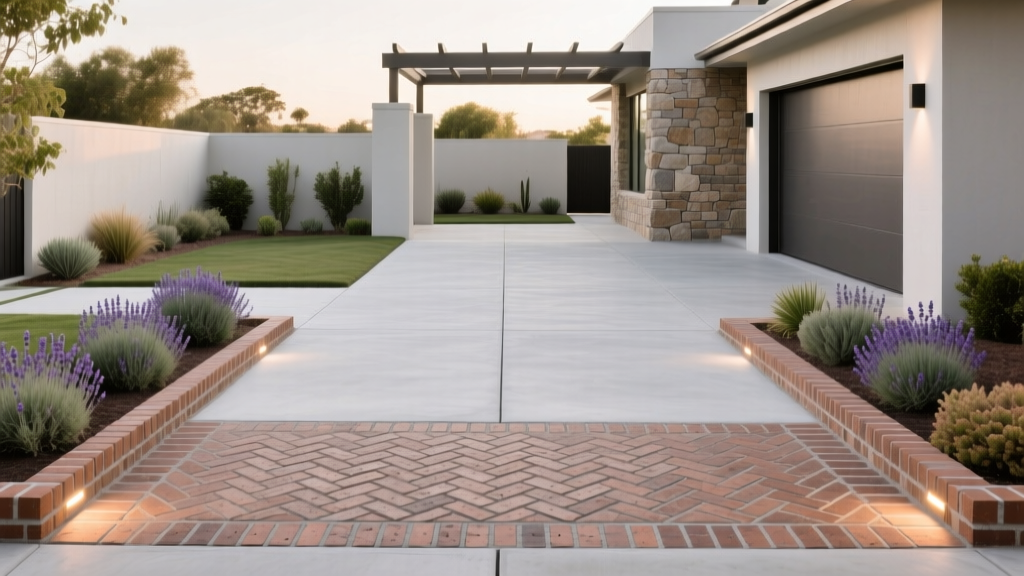
The Intersection of Hardscape and Softscape
Concrete driveways offer a low-maintenance, high-load-bearing surface, but expansive gray slabs often lack aesthetic warmth. Integrating brick borders softens the transition to the landscape while providing a structural edge restraint. However, selecting the right landscaping ideas for concrete driveway with brick borders requires more than aesthetic preference; it demands scenario-matching based on soil mechanics, microclimates, and maintenance tolerance. A border that thrives in a temperate coastal zone will quickly fail in a freeze-thaw climate if the wrong materials and plant species are selected.
This guide moves beyond generic design advice, providing application-fit frameworks to match specific landscaping strategies to your driveway's structural and environmental realities.
Scenario Matrix: Matching Flora to Brick Border Microclimates
Brick borders create unique microclimates. The thermal mass of clay brick absorbs and radiates heat, while the adjacent concrete edge reflects UV radiation. Furthermore, winter de-icing salts often migrate from the concrete slab into the adjacent soil. Selecting plants requires matching species to these specific stressors.
| Site Scenario | Environmental Stressors | Recommended Species (Botanical) | Key Traits & Maintenance |
|---|---|---|---|
| Full Sun / High Heat Reflection | Radiant heat from concrete, rapid soil drying, high UV exposure. | Muhlenbergia capillaris (Pink Muhly Grass), Russelia equisetiformis (Firecracker Fern) | Drought-tolerant, deep root systems. Requires minimal watering once established. Cut back annually in late winter. |
| Winter Salt Exposure Zone | Sodium chloride runoff from driveway de-icing, soil compaction. | Liriope muscari (Big Blue Lilyturf), Juniperus horizontalis (Creeping Juniper) | High salt tolerance. Evergreen foliage provides year-round border definition. Low water requirements. |
| Shaded / Moisture Retained | North-facing driveways, canopy cover, poor air circulation, damp soil. | Helleborus orientalis (Lenten Rose), Hosta plantaginea (August Lily) | Thrives in low light. Resistant to fungal issues common in damp borders. Requires annual division to prevent overcrowding. |
| High Wind / Exposed Coastal | Salt spray, desiccating winds, sandy or fast-draining soils. | Salvia nemorosa (Woodland Sage), Agave parryi (Parry's Agave - Zones 8+) | Low profile to avoid wind shear. Succulent or semi-succulent leaves retain moisture. Zero fertilizer required. |
Structural Edge Cases: Preventing Border and Slab Failure
The most common failure in driveway landscaping is not plant death, but hardscape destruction caused by biological and environmental forces. Addressing these edge cases during the design phase prevents costly repairs.
⚠️ Warning: Tree Root Uplift and Brick Displacement
Planting shade trees too close to a brick border is a primary cause of edge failure. As lateral roots expand, they will easily lift 4-inch thick clay pavers and crack the adjacent concrete slab. Rule of Thumb: Keep large canopy species (e.g., Acer rubrum, Quercus rubra) a minimum of 15 feet from the brick edge. If you must plant closer, install a 24-inch deep high-density polyethylene (HDPE) root barrier between the planting bed and the brick base course.
💡 Pro Tip: Frost Heave and Edge Restraints
In climates with severe freeze-thaw cycles (USDA Zones 3-6), brick borders must be installed on a compacted aggregate base (minimum 6 inches of crushed angular stone) rather than directly on soil. According to guidelines from the Brick Industry Association, using a poured-in-place concrete edge restraint or a heavy-duty plastic paver restraint secured with 10-inch steel spikes every 12 inches is mandatory to prevent the bricks from "walking" outward during spring thaws.
Drainage Integration: Managing the Concrete-to-Brick Transition
A concrete driveway must be pitched at a minimum 2% cross-slope to shed water. When this water hits a solid brick border, it can pool, leading to subgrade erosion or ice damming in winter. Landscaping must incorporate drainage solutions.
- Scenario A: Permeable Border Joints. Instead of using polymeric sand (which seals the joints), use open-graded, angular jointing stone (e.g., ASTM No. 8 or No. 9 aggregate). This allows surface water to infiltrate through the brick border into a sub-base French drain, reducing runoff by up to 30%.
- Scenario B: Weep Hole Integration. If the brick border is mortared to a concrete curb, install 1/2-inch PVC weep holes every 4 feet along the base of the brick course. Backfill the landscape side with washed gravel to prevent soil from clogging the weep holes.
- Scenario C: Trench Grates. For driveways with heavy clay soils, install a 4-inch wide decorative cast-iron trench drain immediately behind the brick border, integrating it into the planting bed's grading plan.
Hardscape Continuity: Expanding the Brick Theme
To maximize curb appeal, the brick border should not exist in isolation. Extending the material into adjacent landscape features creates a cohesive design. When selecting brick, ensure it meets ASTM C902 (Standard Specification for Pedestrian and Light Traffic Paving Brick) to withstand occasional vehicular overhang and snowplow impacts.
Decision Framework for Hardscape Extensions
- Walkway Ribbons: Use the exact same clay paver (e.g., Pine Hall Brick's English Edge series) to create a 3-foot wide walkway branching from the driveway to the front door. This costs roughly 40% less than pouring a new concrete walkway and allows for easier utility access.
- Planter Box Caps: Build adjacent raised planting beds using CMU (concrete masonry units) and cap them with the same brick used in the driveway border, laid in a soldier course. This ties the vertical and horizontal planes together.
- Apron Accents: At the street apron, transition the brick border into a 2-foot deep band of permeable interlocking concrete pavers (PICP) to meet municipal stormwater management requirements while maintaining the visual rhythm.
Lighting Scenarios for Brick-Edged Driveways
Illumination highlights the texture contrast between smooth concrete and rough clay brick. Avoid stake-mounted path lights that interfere with snow removal and landscaping maintenance.
Recommended Lighting Specifications
- Fixture Type: Low-voltage (12V) LED brass well lights or hardscape strip lights.
- Placement: Install well lights in the planting bed exactly 18 inches from the brick edge. Aim the beam at a 45-degree angle to "wash" the concrete surface, highlighting the broom finish.
- Color Temperature: 2700K to 3000K (warm white) to complement the red/brown iron oxide tones of the clay brick.
- Concealment: If using hardscape strip lights, route them under a soldier-course brick overhang, hiding the fixture while casting light downward onto the concrete edge.
2026 Cost Breakdown: Brick Borders and Planting Beds
Budgeting for a driveway border project requires separating the hardscape installation from the softscape materials. The following table outlines average 2026 pricing for a standard 50-foot double-sided driveway border (100 linear feet total). Data reflects national averages; coastal and high-cost-of-living areas may see a 15-25% premium.
| Line Item | Material Cost | Labor / Equipment Cost | Total Estimated Cost |
|---|---|---|---|
| Excavation & Base Prep (6" aggregate) | $1.50 / linear ft | $4.50 / linear ft | $6.00 / linear ft |
| ASTM C902 Clay Brick Pavers | $4.00 - $7.50 / sq ft | $6.00 / sq ft | $10.00 - $13.50 / sq ft |
| Plastic Edge Restraint & Spikes | $1.20 / linear ft | $1.50 / linear ft | $2.70 / linear ft |
| Polymeric Sand or Open-Graded Jointing | $0.80 / sq ft | $1.20 / sq ft | $2.00 / sq ft |
| Topsoil, Mulch, & Plant Installation | Varies by species | $45 - $85 / hour | $15 - $40 / linear ft |
Source context: Pricing aggregated from contractor estimates and material suppliers aligned with National Ready Mixed Concrete Association and landscape industry benchmarks for 2026.
Long-Term Maintenance Protocols
To ensure the landscaping and brick border remain structurally sound and visually appealing, implement a seasonal maintenance protocol. According to sustainable landscape practices advocated by the American Society of Landscape Architects, minimizing chemical interventions and managing water flow are paramount.
- Spring: Inspect brick joints for washout. Reapply jointing sand if necessary. Edge the planting bed to prevent turf grass from creeping over the brick border.
- Summer: Monitor the thermal stress on plants adjacent to the concrete. Apply a 2-inch layer of organic mulch to retain soil moisture and keep root zones cool.
- Fall: Clear fallen leaves from the brick joints to prevent organic decay and weed germination. Cut back ornamental grasses to 4 inches above the crown.
- Winter: Avoid using calcium chloride or rock salt directly on the brick borders, as it causes spalling and efflorescence. Use calcium magnesium acetate (CMA) or clean sand for traction, and shovel snow parallel to the brick edge to avoid catching and lifting the pavers.
By treating the concrete driveway, brick border, and adjacent planting beds as a single, integrated system, you ensure both structural longevity and high-impact curb appeal tailored precisely to your property's unique environmental conditions.