Maintaining Concrete Stain Colors: A Cleaning Playbook
Protect your investment with our expert cleaning playbook for concrete stain colors. Learn pH-safe washing, sealing, and stain-specific maintenance.
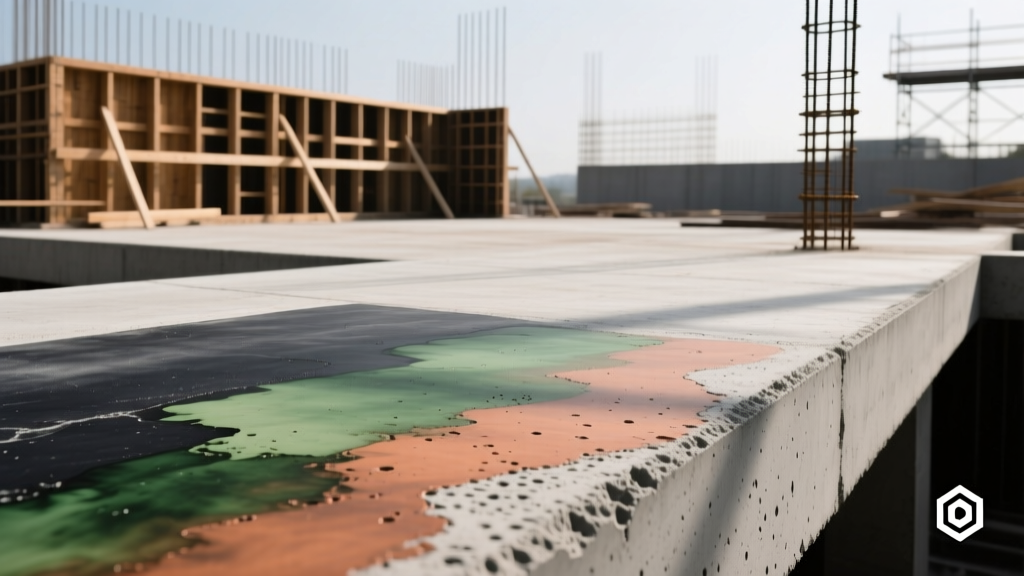
The Chemistry of Fading: Why Concrete Stain Colors Degrade
Improper cleaning is the primary catalyst for premature fading in decorative concrete. To maintain vibrant concrete stain colors, you must first understand the chemical distinction between the two dominant staining systems. Acid stains (reactive) and water-based stains (non-reactive) interact with the concrete substrate entirely differently, dictating their specific maintenance vulnerabilities.
Acid stains utilize metallic salts dissolved in an acidic solution to react with the free lime (calcium hydroxide) in the concrete. This reaction creates permanent, variegated color within the pores. However, because the color is chemically bound to the lime, any cleaning agent that dissolves or neutralizes lime will strip the color. High-alkaline cleaners (pH above 8.5) and acidic etchers (pH below 4.0) will permanently bleach or muddy acid-stained surfaces.
Water-based acrylic stains, conversely, rely on microscopic pigment particles suspended in a carrier that penetrates the pores without a chemical reaction. While immune to the pH extremes that destroy acid stains, water-based pigments are highly susceptible to ultraviolet (UV) degradation and mechanical abrasion. If the protective sealer fails, UV rays will break down the organic pigments, and foot traffic will physically scour the color from the pores.
The Routine Cleaning Playbook for Stained Concrete
Routine maintenance should focus on removing abrasive grit and neutralizing surface soils without compromising the protective sealer. Follow this strict protocol for weekly or bi-weekly cleaning.
Step 1: Dry Extraction
Sand, silt, and gravel act like sandpaper under foot traffic, mechanically wearing through the sealer and exposing the concrete stain colors to UV and chemical damage. Use a microfiber dust mop or a commercial vacuum with a hard-floor brush attachment. Avoid stiff-bristled push brooms, which can micro-scratch high-gloss acrylic sealers.
Step 2: pH-Neutral Wet Mopping
For wet cleaning, the solution must maintain a pH between 6.5 and 7.5. Dilute a dedicated neutral-pH cleaner, such as Zep Neutral Floor Cleaner or PROSOCO DailyKlean, exactly to the manufacturer's specifications (typically a 1:64 dilution ratio). Over-concentrating the cleaner leaves a soapy residue that attracts dirt and creates a dull, cloudy film over the stain colors.
Step 3: The Two-Bucket Rinse
Use a two-bucket system: one for the cleaning solution and one for clean rinse water. Wring the mop thoroughly in the rinse bucket before dipping it back into the soap bucket. This prevents redistributing suspended soils back onto the concrete surface.
Deep Cleaning Matrix: Matching the Solution to the Stain Type
When routine mopping fails to remove embedded soils, oil spills, or organic growth, deep cleaning is required. The chemical profile of the deep cleaner must be matched to the specific stain system to protect the underlying concrete stain colors.
| Stain System | Target Soil | Approved Cleaner Type | Max pH Limit | Agitation Tool |
|---|---|---|---|---|
| Acid (Reactive) | Organic / Algae | Oxygenated Bleach (e.g., Simple Green Oxy Solve) | 8.0 | Soft nylon brush (medium bristle) |
| Acid (Reactive) | Grease / Oil | Alkaline Degreaser (buffered) | 8.5 | White scrubbing pad |
| Water-Based Acrylic | Organic / Algae | Quaternary Ammonium Algaecide | 9.0 | Soft nylon brush |
| Water-Based Acrylic | Grease / Oil | Solvent-based Citrus Degreaser | N/A (Solvent) | White scrubbing pad |
| Dye (Solvent/Water) | Tire Marks / Scuffs | Isopropyl Alcohol (diluted 50/50) | N/A | Microfiber cloth |
Equipment Calibration: Pressure Washing Without Damage
Pressure washing is highly effective for exterior stained concrete (patios, pool decks, driveways), but improper calibration will blast the sealer off and erode the stained pores. The National Ready Mixed Concrete Association (NRMCA) emphasizes that surface erosion occurs rapidly when water pressure exceeds the tensile strength of the concrete paste.
- PSI Limit: Never exceed 1,500 PSI for routine cleaning of sealed stained concrete. For stripping old sealer prior to resealing, cap the pressure at 2,500 PSI.
- Nozzle Selection: Use a 25-degree (green) or 40-degree (white) fan tip. Never use a 0-degree (red) or 15-degree (yellow) pinpoint nozzle, as the concentrated force will etch permanent lines into the stain colors.
- Distance: Maintain a strict 12-inch to 18-inch distance between the nozzle and the concrete surface. Moving closer exponentially increases the impact pressure.
Sealer Maintenance: The True Protector of Concrete Stain Colors
The sealer takes the physical and chemical abuse so the stain colors do not have to. Maintaining the sealer is synonymous with maintaining the color. As of 2026, the decorative concrete industry relies heavily on three primary topical sealer categories, each with distinct maintenance lifecycles.
1. Water-Based Acrylics
These are breathable, UV-stable, and enhance color with a low-gloss finish. They typically build 1 to 3 mils of thickness. Lifespan: 1 to 2 years on exterior surfaces. Maintenance: Requires a sacrificial coat of polymer floor finish (e.g., ChemMasters Tuffshined) applied every 6 months in high-traffic interior zones to prevent micro-scratching.
2. Solvent-Based Acrylics
Known for deep color enhancement and a high-gloss "wet look," solvent acrylics penetrate slightly deeper than water-based variants but are prone to moisture entrapment (blushing) if applied over damp concrete. Lifespan: 1.5 to 3 years. Maintenance: Solvent-wipe recoating (using xylene) is required to re-emulsify and bond new coats to old coats without peeling.
3. High-Solids Polyurethanes and Polyaspartics
For commercial spaces or high-abuse driveways, polyurethanes offer superior chemical and abrasion resistance, building 5 to 7 mils of thickness. Lifespan: 3 to 7 years. Maintenance: Extremely low maintenance, but when they fail, they must be mechanically diamond-ground off; they cannot be chemically stripped or solvent-wiped.
Troubleshooting Common Color Defects
White Hazing (Efflorescence)
Efflorescence occurs when water-soluble salts migrate to the surface and crystallize, creating a white, powdery haze that obscures the concrete stain colors. Do not use acid to remove it. Instead, use a dedicated, sulfate-free efflorescence remover, such as those formulated by PROSOCO Concrete Floor Care. Apply the remover, agitate gently, and extract the slurry immediately with a wet vacuum before it can re-penetrate the pores.
UV Yellowing on Light Stain Colors
If lighter concrete stain colors (whites, light grays, pale blues) are turning yellow or amber, the sealer is degrading under UV exposure. This is almost always caused by the use of an aromatic polyurethane or a non-UV-stable epoxy. The only fix is to chemically strip the failing sealer using a methylene chloride or N-Methyl-2-pyrrolidone (NMP) based stripper, neutralize the slab, and re-seal with an aliphatic (UV-stable) polyurethane or water-based acrylic.
Tire Marks on Stained Driveways
Hot tire pickup occurs when the plasticizers in vehicle tires leach into the sealer, leaving black or brown marks that obscure the stain colors. Acrylic sealers are highly susceptible to this. To remove the marks, spray the tire mark with a 50/50 mixture of isopropyl alcohol and water, let it dwell for 60 seconds to soften the plasticizer transfer, and wipe it away with a clean microfiber towel. For permanent prevention, upgrade the driveway sealer to a polyaspartic topcoat, which is entirely immune to hot tire pickup.
Frequently Asked Questions
Can I use a steam mop on interior stained concrete?
No. Steam mops generate temperatures exceeding 212°F (100°C) at the point of contact. This extreme heat will soften, cloud, and delaminate acrylic and urethane sealers, exposing the concrete stain colors to rapid degradation. Always use ambient-temperature water and neutral-pH cleaners.
How do I know when it is time to reseal my exterior patio?
Perform the water drop test. Sprinkle a few drops of water onto the concrete in high-traffic areas. If the water beads up immediately, the sealer is intact. If the water absorbs into the concrete and creates a dark spot within 30 seconds, the sealer has failed, and the stain colors are currently unprotected and vulnerable to UV fading and staining.
Will de-icing salts ruin my stained concrete in the winter?
Yes. Rock salt (sodium chloride) and calcium chloride cause severe surface scaling and spalling by disrupting the freeze-thaw cycle within the concrete pores, which will physically destroy the stained layer. Use sand or non-clumping kitty litter for traction, and clear snow with a plastic-blade shovel rather than a metal scraper.