Decoding the MAPEI Grout Color Chart: Product Lines and Selection
Master the MAPEI grout color chart. Compare Ultracolor Plus FA, Kerapoxy CQ, and Flexcolor CQ lines, pricing, and technical selection frameworks.
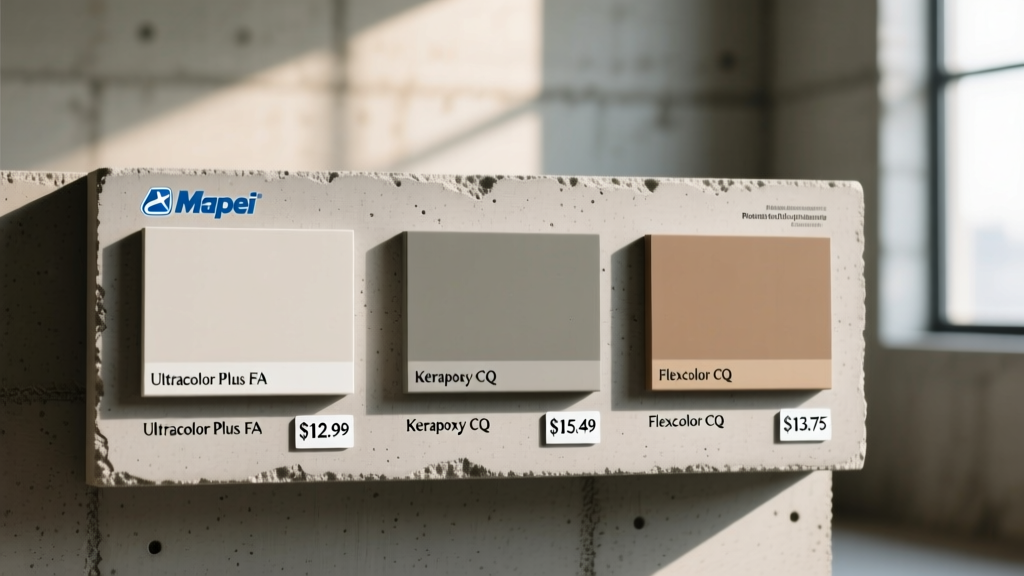
The Illusion of the Swatch: Why Chemistry Dictates Color
Consulting a MAPEI grout color chart is rarely as simple as pointing to a swatch and placing an order. The physical color chip you see on a dealer’s fan deck represents an idealized, controlled sample. In reality, the final cured color of your grout joint is heavily dictated by the chemical composition of the specific MAPEI product line you select, the porosity of your tile, and the ambient lighting of the installation environment.
MAPEI segments its grout ecosystem into three primary chemical categories: cementitious, epoxy, and premixed acrylic. While a color like ‘93 Warm Gray’ exists across multiple lines, its visual texture, light reflectance, and long-term colorfastness will vary drastically depending on whether it is mixed with water, activated with an epoxy hardener, or applied from an acrylic bucket. Understanding the MAPEI Grout Color System requires mapping your color choice directly to the chemical demands of your project.
The Three Pillars of the MAPEI Grout Ecosystem
Before locking in a color code, you must select the appropriate product line. MAPEI’s current lineup is engineered for specific structural and environmental stressors.
1. Ultracolor Plus FA (Cementitious)
Ultracolor Plus FA is MAPEI’s flagship fast-setting, polymer-modified cementitious grout. It utilizes High-Hydrated Cement (HHC) technology, which virtually eliminates efflorescence (the white, powdery salt deposits that plague traditional cement grouts and alter color perception). Because it cures rapidly and uniformly, it resists the ‘picture framing’ effect on the edges of sensitive natural stones. It is available in 40 standard colors and is sold in 11.2 lb (5 kg) bags, typically pricing between $28 and $35 per bag in 2026.
2. Kerapoxy CQ (Epoxy)
Kerapoxy CQ is a two-part, 100% solid epoxy grout that uses color-coated quartz. Unlike traditional epoxies that require a separate color pigment additive, the quartz sand in Kerapoxy CQ is pre-coated with the exact color pigment, ensuring zero color variation between batches and eliminating the risk of unmixed pigment streaks. It is impervious to water, chemicals, and stains, making it the mandatory choice for commercial kitchens, laboratories, and high-moisture residential showers. It is available in 30+ colors, with a two-part unit (Part A + Part B) costing between $75 and $95.
3. Flexcolor CQ (Premixed Acrylic)
Flexcolor CQ is a ready-to-use, acrylic-based grout that also utilizes color-coated quartz. It requires no mixing, no sealing, and cures through evaporation rather than a chemical hydration reaction. While it offers excellent flexibility and stain resistance, its curing time is highly dependent on ambient humidity and temperature. It is available in 30 colors and retails for $55 to $65 per gallon.
Product Line & Color Availability Matrix
The following matrix breaks down the technical specifications, color availability, and ideal use cases for MAPEI’s primary grout lines to help you align your color choice with project requirements.
| Product Line | Chemistry | Color Count | Est. Cost (2026) | Shrinkage Risk | Best Application |
|---|---|---|---|---|---|
| Ultracolor Plus FA | Cementitious (HHC) | 40 Colors | $28-$35 / 11.2lb bag | Very Low | Large-format tile, natural stone, quick-turnaround floors |
| Kerapoxy CQ | 100% Solid Epoxy | 32 Colors | $75-$95 / unit | None | Wet areas, steam showers, commercial kitchens, glass tile |
| Flexcolor CQ | Premixed Acrylic | 30 Colors | $55-$65 / gallon | Low (if cured properly) | Residential backsplashes, dry-area floors, DIY renovations |
The Swatch vs. Reality Gap: Technical Variables
When cross-referencing the MAPEI grout color chart with your tile selection, account for these three technical variables that alter the final visual output.
Grout colors shift under different light sources. A color like ‘113 Dove Gray’ will read significantly cooler (bluer) under 5000K daylight LED bulbs and warmer (browner) under 2700K incandescent lighting. Always view the physical MAPEI swatch in the actual space where the tile will be installed, using the final lighting fixtures, rather than relying on the fluorescent lighting of a showroom.
If you are installing unglazed porcelain, polished natural stone, or highly porous encaustic cement tiles, the tile edge can absorb water and fine pigments from cementitious grouts during installation. This can cause the grout joint to appear lighter at the edges and darker in the center. For highly absorptive tiles with dark grout colors (like ‘38 Charcoal’), industry guidelines recommend using an epoxy like Kerapoxy CQ or pre-sealing the tile edges to prevent pigment migration.
The depth of your grout joint creates micro-shadows. A 1/8-inch joint will make a mid-tone color like ‘77 Frost’ appear slightly darker than a flush 1/16-inch joint. When using large-format tiles with minimal lippage, rectified edges allow for shallower, more color-accurate joints.
Practical Selection Framework: Matching Grout to Environment
Use this decision tree to finalize your MAPEI product and color selection based on site conditions.
- Scenario A: Steam Shower or Submerged Water Feature.
Action: You must use Kerapoxy CQ. Cementitious and acrylic grouts will eventually degrade or harbor mold in continuous high-heat, high-moisture environments. Select your color from the 32-color Kerapoxy chart. Note that epoxy grouts have a slightly higher sheen than cementitious grouts. - Scenario B: Large-Format Porcelain on a Commercial Floor (Quick Turnaround).
Action: Use Ultracolor Plus FA. Its fast-setting nature allows foot traffic in 3 hours. The HHC technology ensures that even if the cleaning crew mops the floor with aggressive alkaline cleaners 48 hours later, the color will not leach or effloresce. - Scenario C: Glass Mosaic Backsplash in a Residential Kitchen.
Action: Use Kerapoxy CQ or Flexcolor CQ. Glass tile is non-porous and shows shadows easily. The color-coated quartz in both products provides a uniform, reflective aesthetic that complements glass, whereas cementitious grouts can look flat and muddy behind transparent glass mosaics.
Pro-Tips for Ordering and Batch Consistency
Color consistency across a large installation is a frequent failure point, even when using premium products. Follow these protocols to ensure the color on the chart matches the color on your floor.
- Calculate and Over-order: Always calculate your square footage and joint volume, then add 15% for waste. Purchase all required material for a single contiguous area at one time.
- Verify Lot Numbers: Inspect the lot numbers printed on the side of every bag of Ultracolor Plus FA or every bucket of Flexcolor CQ. While MAPEI’s manufacturing tolerances are tight, slight pigment variations can occur between production runs. If lot numbers differ, dry-mix all bags of cementitious grout together in a large, clean bin before adding water.
- Water Ratios are Non-Negotiable: For Ultracolor Plus FA, adding even 2 extra ounces of water beyond the manufacturer’s specified ratio will alter the water-to-cement matrix, resulting in a lighter, weaker cured color. Use a digital scale to measure mixing water.
- Wash Water Management: When cleaning cementitious grout, change your sponge and wash water frequently. Using dirty, pigment-laden water to wipe down a lighter grout joint (like ‘50 White’) will embed dirt into the microscopic pores before it fully cures, permanently dulling the color.
Frequently Asked Questions
Can I mix two MAPEI Ultracolor Plus FA colors to create a custom shade?
No. MAPEI strictly prohibits mixing different color codes of Ultracolor Plus FA. The pigments and chemical accelerators are precisely balanced for each specific color. Mixing bags will result in unpredictable curing times, compromised structural integrity, and severe color mottling.
Does Flexcolor CQ require a sealer to maintain its color?
No. Flexcolor CQ is formulated with an acrylic resin that makes it inherently stain-resistant and colorfast. Applying a penetrating or topical sealer over Flexcolor CQ is unnecessary and can actually trap moisture or create a hazy film that alters the intended color of the grout joint.
Why does my Kerapoxy CQ look slightly darker than the paper swatch?
Epoxy resins naturally possess a slightly higher refractive index and gloss level than Portland cement. This inherent sheen causes Kerapoxy CQ to reflect more light, which the human eye often perceives as a slightly darker or more saturated version of the exact same pigment used in the matte cementitious swatches.