Evaluate the Building Materials Company Nichiha on Fiber Cement Products vs. Hardie
We evaluate the building materials company Nichiha on fiber cement products, comparing its architectural panels, pricing, and durability against James Hardie.

The Nichiha Fiber Cement Portfolio: Beyond Standard Lap Siding
When contractors and architects evaluate the building materials company Nichiha on fiber cement products, the first distinction to make is their market positioning. While competitors focus heavily on traditional horizontal lap siding, Nichiha has carved out a premium niche in architectural wall panels (AWP) and specialized textures. All Nichiha fiber cement products are manufactured to meet or exceed ASTM C1186 standards for flat non-asbestos fiber-cement sheets, utilizing a blend of Portland cement, silica sand, and cellulose fibers cured in high-pressure autoclaves.
The core Nichiha lineup includes three primary categories that differentiate it from standard alternatives:
- Architectural Wall Panels (AWP): Large-format panels (typically 4x10 feet) featuring deep, realistic textures like dry-stack stone, brick, and modern metallic finishes. These are 5/8-inch thick, providing superior impact resistance compared to standard 5/16-inch lap siding.
- Vintage Wood and NichiShake: Highly detailed replicants of cedar shingles and rustic wood. Unlike stamped alternatives, Nichiha uses actual wood molds to capture the grain, yielding a shadow profile that closely mimics natural timber.
- Illuminated Panels: A specialized commercial and high-end residential product line featuring integrated LED lighting channels built directly into the fiber cement panel extrusions.
Head-to-Head Matrix: Nichiha vs. James Hardie vs. Allura
To properly evaluate the building materials company Nichiha on fiber cement products, we must compare its physical specifications and installation requirements against the two dominant market alternatives: James Hardie and Allura. The table below outlines the critical technical divergences.
| Feature | Nichiha (AWP & Siding) | James Hardie (HardiePlank) | Allura (Fiber Cement) |
|---|---|---|---|
| Primary Format | Large Panels & Shakes | Horizontal Lap & Vertical | Lap, Panels, & Shingles |
| Standard Thickness | 5/8" (Panels) / 5/16" (Siding) | 5/16" (Lap) / 3/8" (Artisan) | 5/16" (Lap) / 1/2" (Panels) |
| Fastening System | Hidden Clip-Stack System | Blind Nail or Face Screw | Blind Nail or Face Screw |
| Finish Technology | Multi-coat acrylic with UV seal | ColorPlus (baked acrylic) | Factory-applied acrylic |
| Material Cost (per sq. ft.) | $9.00 - $14.50 | $3.50 - $5.50 | $4.00 - $7.00 |
| Warranty | Limited Lifetime (Prorated) | 30-Year Non-Prorated | Limited Lifetime (Prorated) |
Installation Realities: The Clip-Stack System vs. Blind Nailing
The most significant operational difference you will encounter when evaluating Nichiha against James Hardie siding is the fastening methodology. James Hardie and Allura predominantly rely on blind nailing (driving nails into the top edge of the plank so the overlapping plank covers the nail head) or face-screwing with color-matched sealant.
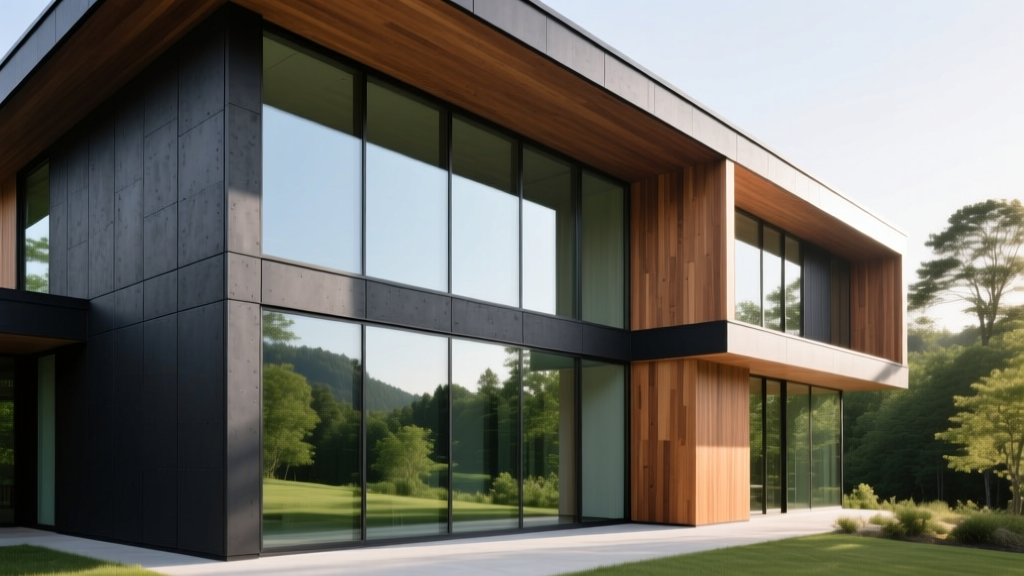
Nichiha’s Architectural Wall Panels utilize a proprietary hidden fastener system known as the Clip-Stack method. Stainless steel clips are screwed into the wall studs or furring strips, and the panels slot into these clips. This creates a built-in rain screen gap (typically 3/8-inch to 1/2-inch) behind the panels without requiring additional furring strips.
Cost Analysis: Material, Labor, and Lifecycle
Cost is often the primary friction point when specifying Nichiha. Because Nichiha focuses on heavy, thick architectural panels rather than lightweight lap siding, the material costs are substantially higher.
Material and Labor Breakdown
For a standard 2,500-square-foot exterior envelope:
- James Hardie HardiePlank: Materials cost roughly $10,000 to $13,750. Installation labor runs $5.00 to $8.00 per square foot, bringing the total installed cost to $22,500 - $33,750.
- Nichiha Architectural Panels: Materials cost $22,500 to $36,250. Because the hidden clip system requires specialized training and meticulous layout, installation labor jumps to $9.00 to $14.00 per square foot. Total installed cost ranges from $45,000 to $71,250.
However, Nichiha’s built-in rain screen gap provides a secondary financial benefit. According to Building Science Corporation research on rain screen walls, ventilated cladding systems significantly reduce moisture accumulation behind the siding, extending the lifespan of the underlying sheathing and WRB. In high-humidity or heavy-rainfall climates, this built-in ventilation can offset the higher upfront cost by preventing premature structural rot.
Decision Framework: When to Choose Nichiha Over Alternatives
Evaluating the building materials company Nichiha on fiber cement products ultimately comes down to the architectural intent and the project budget. Use this framework to make your final specification decision.
Specify Nichiha If:
- You require deep textures and large formats: If the design calls for dry-stack stone, modern metallic finishes, or large-format panels that minimize horizontal seam lines, Nichiha’s AWP line is vastly superior to Hardie’s standard offerings.
- A built-in rain screen is mandated: If local building codes or the architect’s specifications require a ventilated rain screen cavity, Nichiha’s Clip-Stack system eliminates the need to buy and install separate furring strips, saving time on the framing phase.
- Impact resistance is critical: The 5/8-inch thickness of Nichiha panels provides exceptional resistance to hail and physical impact, making it ideal for commercial facades or residential homes in severe weather corridors.
Specify James Hardie or Allura If:
- The design relies on traditional horizontal lap siding: For classic Colonial, Craftsman, or Cape Cod aesthetics, HardiePlank or Allura lap siding offers the correct scale, shadow lines, and cost-efficiency.
- Budget constraints are strict: If the project cannot absorb the $20+ per square foot installed cost of architectural panels, standard fiber cement lap siding provides the same fire resistance and rot immunity at half the price.
- The installation crew lacks panel experience: Most residential siding crews are highly proficient in blind-nailing lap siding. The learning curve for Nichiha’s hidden clip system can result in costly material waste if the crew is untrained.
Frequently Asked Questions
Can Nichiha fiber cement panels be installed directly over rigid foam insulation?
No. Nichiha’s Clip-Stack system requires fasteners to penetrate a minimum of 1 inch into solid wood framing or structural sheathing. If you are using exterior continuous rigid foam insulation, you must install vertical wood furring strips (minimum 1x3 or 1x4) screwed directly into the studs through the foam. The stainless steel clips are then attached to these furring strips to ensure structural stability and maintain the required air gap.
How does Nichiha’s color retention compare to James Hardie’s ColorPlus technology?
Both manufacturers use high-quality, multi-coat baked acrylic finishes that resist UV fading. However, because Nichiha panels are often used in large, uninterrupted commercial facades, any minor fading over 15-20 years is more noticeable than on lap siding, where shadow lines break up the visual plane. Nichiha offers a proprietary touch-up kit, but for large AWP installations, it is highly recommended to order 10% overage and store the leftover panels in a climate-controlled space for future seamless replacements.
Does Nichiha fiber cement require special cutting tools?
Yes. Like all fiber cement products, cutting Nichiha generates respirable crystalline silica dust. You must use polycrystalline diamond (PCD) blades or specialized fiber cement shears. When using a circular saw or miter saw, it must be connected to a HEPA dust extraction vacuum system to comply with OSHA silica exposure limits. Never use abrasive masonry blades, as they degrade rapidly and produce excessive hazardous dust.
Written by
Priya KapoorPriya Kapoor is a real estate market analyst and construction economics researcher with expertise in housing affordability, development feasibility, and infrastructure investment. She holds a Master of Regional Planning from Cornell University and previously worked as a senior analyst at CBRE's Investment Properties group, where she modeled returns for $4B in mixed-use development pipelines. Priya now runs an independent research practice advising developers, municipalities, and REITs on construction cost forecasting and market timing. She publishes the quarterly "BuildMat Market Pulse" report tracking material price indices across 12 commodity categories. Based in Austin, TX, Priya serves on the board of Habitat for Humanity Austin and is a marathon runner.
More from Priya Kapoor
View all
Construction Cost
Cost to Build a 1600 Sq Ft Home in 2026: Full Breakdown
Accurate 2026 cost to build a 1600 sq ft home—material, labor, and regional pricing breakdowns included. Plan your budget with real-time estimates.
Aug 11, 2026

Wood & Lumber
Name the Types of Wood for Pressure Treatment and Preservation
Learn how to name the types of wood best suited for pressure treatment. Compare species treatability, chemical retention levels, and 2026 preservation costs.
Aug 4, 2026

Stone & Masonry
Stone Veneer Suppliers Lindenhurst: 2026 Cost Analysis
Analyze 2026 stone veneer costs in Lindenhurst, NY. Compare local supplier pricing, delivery fees, and Suffolk County installation labor rates.
Aug 4, 2026