Stamped Concrete Is Slippery: The Anti-Slip Maintenance Guide
Discover why stamped concrete is slippery when wet and learn the exact maintenance playbook, cleaning agents, and anti-slip additives to restore safe traction.
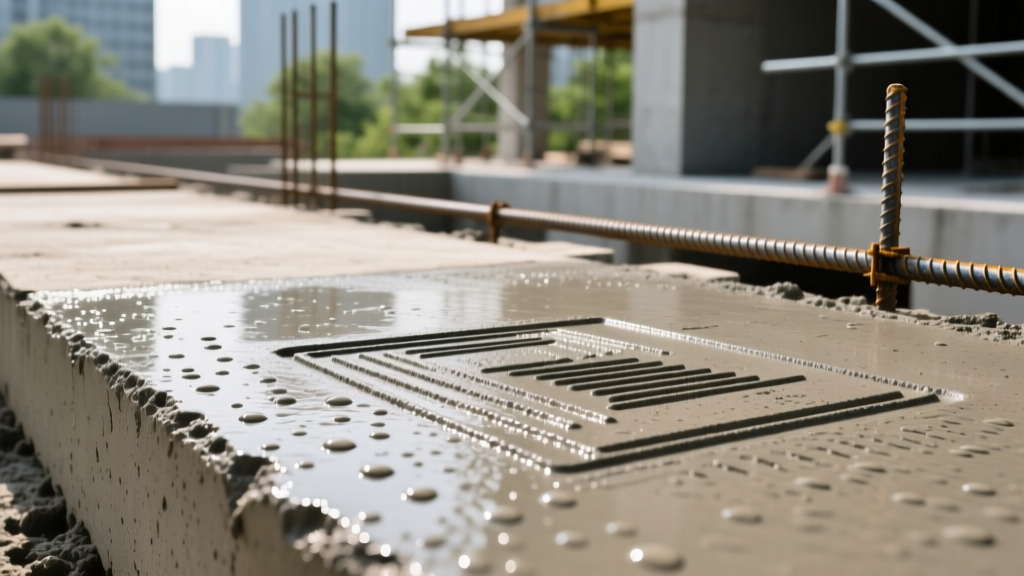
The Physics of the Slip: Why Stamped Concrete Is Slippery
The core reason stamped concrete is slippery when wet lies in the interaction between the stamping process and the protective sealer. Bare, unsealed concrete has a naturally high Dynamic Coefficient of Friction (DCOF), typically measuring above 0.60. However, stamped concrete requires a topical sealer—usually a solvent-based or water-based acrylic—to enhance the color of the antiquing release agents and protect the surface from UV degradation and moisture ingress.
These acrylic and polyurethane sealers form a continuous, non-porous plastic film over the concrete. While this film locks in color, it also fills the micro-texture of the cement paste. When water pools on this sealed surface, hydrostatic pressure eliminates the microscopic friction points, causing the DCOF to plummet to dangerous levels (often below 0.35). For context, OSHA's walking-working surfaces standards and ANSI A137.1 guidelines generally recommend a wet DCOF of 0.42 or higher for safe pedestrian traction.
The Cleaning Trap: How Routine Maintenance Ruins Traction
Ironically, the most common cause of traction loss on stamped concrete is improper cleaning. When maintenance crews or homeowners use the wrong chemicals, they either degrade the anti-slip additives embedded in the sealer or leave behind a microscopic lubricating film.
1. The Surfactant Residue Problem
Using household dish soaps, laundry detergents, or high-alkaline degreasers introduces heavy surfactants to the surface. Surfactants are designed to reduce water's surface tension, which means they act as literal lubricants. If not rinsed with massive volumes of water, these soaps dry into an invisible, slick film that makes the concrete dangerously slippery the next time it rains.
2. Pressure Washing Erosion
Blasting stamped concrete with a 3000+ PSI pressure washer using a zero-degree (red) nozzle will physically strip the acrylic sealer and the anti-slip grit broadcast into it. Once the grit is blown off and the sealer is eroded down to the smooth concrete paste, the surface becomes a slip hazard even when dry.
The 2026 Maintenance Playbook for High-Traction Stamped Concrete
To maintain traction, your cleaning protocol must remove organic debris and dirt without compromising the sealer's chemical integrity or physically dislodging the anti-slip grit.
- Dry Agitation: Use a stiff-bristled push broom (nylon, not wire) to remove abrasive sand and dirt. Wire bristles will scratch the acrylic film, creating micro-grooves that trap water and algae spores.
- Apply pH-Neutral Cleaners: Use a dedicated, pH-neutral concrete cleaner such as Prosoco DailyKlean or Simple Green Oxy Solve Concrete & Driveway Cleaner. These formulations lift dirt using oxygenation or mild chelating agents rather than heavy surfactants.
- Dwell and Scrub: Allow the cleaner to dwell for 5 to 10 minutes. Agitate stubborn stains with a medium-stiff nylon deck brush. Never use muriatic acid, as it will etch the sealer and expose the underlying cement to rapid degradation.
- Low-Pressure Rinse: Rinse the surface using a pressure washer capped at 2,000 PSI with a 15-degree (yellow) or 25-degree (green) fan tip. Keep the wand at least 12 inches from the surface to prevent hydrostatic stripping of the sealer.
- Squeegee or Air-Blow: On pool decks, use a commercial foam squeegee or a backpack blower to remove standing water immediately. This prevents hard water mineral deposits from forming a slick, glassy crust over the sealer.
Restoring Lost Grip: Anti-Slip Additives & Topcoats
When stamped concrete is slippery despite proper cleaning, the original anti-slip additive has likely worn away from foot traffic and UV exposure. According to Concrete Decor's guidelines on slip-and-fall liability, contractors must proactively reapply traction additives during resealing cycles (typically every 18 to 36 months).
Anti-slip additives are micronized polymers or aluminum oxide grits that are broadcast into or mixed directly with the sealer. The choice of grit size is critical based on the application:
- 100-Grit to 120-Grit (Fine): Best for barefoot areas like pool decks and patios. Provides traction without feeling like sandpaper on bare skin.
- 50-Grit to 80-Grit (Medium): Ideal for driveways, commercial walkways, and sloped ramps. Offers aggressive grip but can trap dirt more easily.
- Aluminum Oxide (Hard): Used for high-traffic commercial entries. It is harder than the acrylic sealer, meaning the grit outlasts the binder.
Application Matrix: Top Anti-Slip Additives
| Product Name | Material / Grit | Mix Ratio (Per Gallon) | Best Application | Est. Cost |
|---|---|---|---|---|
| H&C SharkGrip | Polymer Beads | 4 oz (Fine) / 8 oz (Coarse) | Pool decks, barefoot areas | $0.12 / sq ft |
| SureCrete SureGrip | Micronized Polypropylene | 1 lb per 5 gallons | Driveways, stamped patios | $0.08 / sq ft |
| Clear Shield Anti-Slip | Aluminum Oxide | 6 oz per gallon | Commercial ramps, high-traffic | $0.18 / sq ft |
Seasonal Traction Threats: Winter De-icing and Algae
Maintenance playbooks must adapt to seasonal threats that alter the friction profile of stamped concrete.
Winter: The De-Icing Chemical Hazard
Standard rock salt (sodium chloride) and magnesium chloride are catastrophic for stamped concrete. Beyond causing severe spalling and surface scaling, these salts leave behind an oily, hygroscopic residue that draws moisture from the air, keeping the surface perpetually damp and slick.
The Fix: Use Calcium Magnesium Acetate (CMA) based ice melters. CMA is biodegradable, non-corrosive to acrylic sealers, and leaves a gritty, sand-like residue that actually improves traction rather than reducing it. For extreme ice, broadcast kiln-dried silica sand instead of chemical melts.
Summer: Algae and Mildew Biofilms
In shaded or humid environments, stamped concrete develops a microscopic biofilm of algae and mildew. This biofilm acts like a layer of wet ice. Do not use bleach (sodium hypochlorite) to kill algae on stamped concrete; bleach will oxidize and yellow the acrylic sealer, ruining the color.
The Fix: Apply a quaternary ammonium-based algaecide (like Wet & Forget or commercial Quat 44). These compounds kill the algae at the root level over 48 hours without degrading the polymer chains of the concrete sealer. Follow up with a gentle rinse.
Frequently Asked Traction Questions
Can I add sand to my sealer for grip?
No. Play sand or silica sand is too heavy and irregularly shaped. It will sink to the bottom of the sealer bucket, clog your sprayer tip, and create an uneven, abrasive surface that feels like sandpaper. Always use engineered polymer or aluminum oxide additives specifically sized for topical concrete sealers.
Does stamped concrete get more slippery as it ages?
Paradoxically, yes and no. As the sealer wears thin from UV exposure and foot traffic, the surface may become less slick but more prone to staining. However, if the sealer degrades unevenly, it creates micro-pockets where water and dirt accumulate, forming localized slip hazards. Resealing with a fresh coat of anti-slip additive every 24 months is the only way to maintain a consistent DCOF.
Are water-based sealers less slippery than solvent-based?
Water-based polyurethanes and acrylics generally penetrate slightly deeper and leave a thinner surface film compared to high-solids solvent-based acrylics. This thinner film preserves more of the natural stamp texture, resulting in marginally better out-of-the-box traction. However, both require anti-slip additives for wet environments.