Selecting the Right Types of Concrete Anchors for Structural Loads
Compare types of concrete anchors for structural, seismic, and decorative applications. Includes load tables, failure modes, and 2026 product specs.

The Physics of Concrete Anchoring: Mechanical vs. Chemical
When securing structural steel, heavy machinery, or architectural facades to cured concrete, the selection of the correct fastener is a matter of structural integrity, not just convenience. The engineering principles governing types of concrete anchors fall into two primary categories: mechanical interlock/friction and chemical adhesion. Understanding how each transfers tensile and shear loads into the concrete matrix is critical for avoiding catastrophic concrete cone failures or steel yielding.
Mechanical Expansion and Interlock Anchors
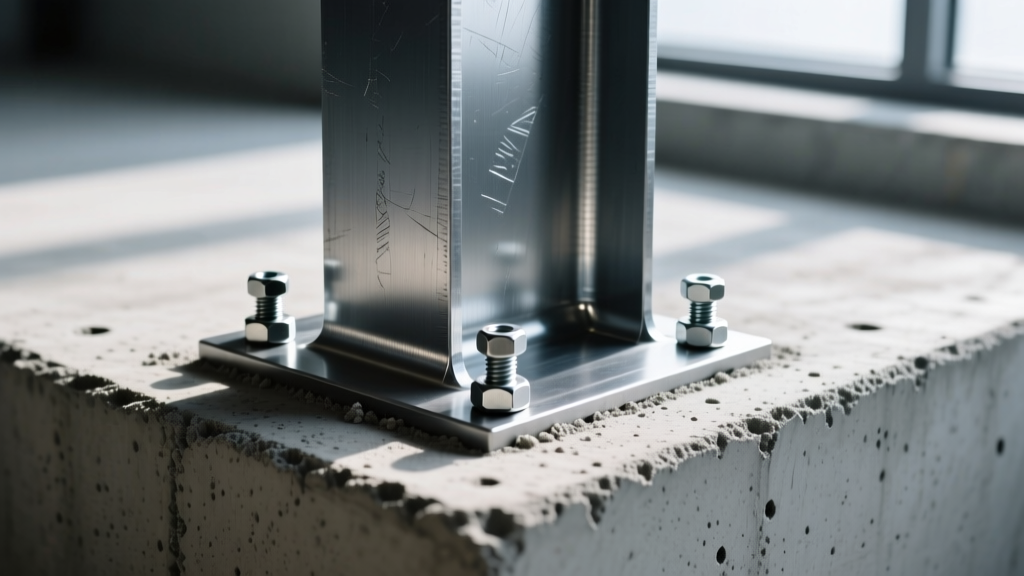
Mechanical anchors rely on physical deformation to create friction or a mechanical key against the concrete pore structure. Torque-controlled expansion anchors (like wedge and sleeve anchors) expand against the walls of the drilled hole when the nut is tightened. This creates massive radial outward pressure. While excellent for rapid installation in uncracked concrete, this expansion stress means they require large edge distances and spacing to prevent the concrete from splitting. Undercut and screw anchors, conversely, cut into or expand behind the concrete at the base of the hole, creating a mechanical interlock with minimal radial expansion stress.
Chemical Adhesive Anchors
Chemical anchors use high-modulus resins (epoxy, vinyl ester, or acrylate) to bond a threaded rod or rebar to the concrete. Because the resin fills the annular gap between the rod and the hole, loads are transferred evenly along the entire embedment depth. This eliminates expansion stress, allowing for much smaller edge distances and tighter group spacing, making chemical anchors the undisputed choice for complex baseplates and seismic retrofitting.
Application Showcase: Matching Anchor Types to Real-World Scenarios
Selecting the right anchor requires analyzing the specific load profile, environmental conditions, and concrete state (cracked vs. uncracked). Below is a showcase of how different types of concrete anchors perform in specialized applications.
Scenario 1: Structural Steel Baseplates in Seismic Zones
In Seismic Design Categories C through F, ACI 318-19 (Chapter 17) mandates that anchors must exhibit ductile failure modes—meaning the steel must yield before the concrete breaks. Standard wedge anchors are brittle and prone to sudden concrete cone failure under cyclic seismic loading.
The Solution: High-performance epoxy adhesives (such as Hilti HIT-RE 500 V4) paired with ductile threaded rods, or specialized undercut anchors. These systems absorb seismic energy through steel deformation rather than shattering the concrete foundation.
Scenario 2: Vibrating Machinery and HVAC Equipment
Dynamic loads and constant vibration can cause torque-controlled expansion anchors to gradually back out if the preload is lost.
The Solution: Sleeve anchors or concrete screw anchors (like the Simpson Strong-Tie Titen HD). Screw anchors cut a precise thread into the concrete, providing excellent resistance to vibrational loosening without relying on continuous outward expansion pressure.
Scenario 3: Overhead Pipe Hangers and Suspended Ceilings
Overhead applications require fast installation and high pullout resistance, but the loads are generally light to moderate (typically under 500 lbs per hanger).
The Solution: Drop-in anchors or wedge anchors. Drop-in anchors are internally threaded and sit flush with the concrete surface, making them ideal for pipe hanger rods where a clean, low-profile finish is required.
Scenario 4: Post-Installed Rebar Doweling for Wall Extensions
When tying a new concrete pour to an existing foundation wall, structural continuity is required.
The Solution: Injectable epoxy systems. By drilling deep holes (often 15 to 20 diameters deep), cleaning them meticulously, and injecting structural epoxy, contractors can achieve pullout strengths that exceed the yield strength of the rebar itself, effectively mimicking cast-in-place continuity.
Load Capacity, Edge Distances, and Failure Modes
The table below compares the engineering limits of the most common types of concrete anchors for a standard 1/2-inch diameter installation in 3,000 psi normal-weight concrete.
| Anchor Type | Specific Product Example | Approx. Tensile Capacity (Uncracked) | Min. Edge Distance | Primary Failure Mode |
|---|---|---|---|---|
| Wedge Anchor (Mechanical) | Red Head Trubolt+ 1/2" | 4,500 lbs | 6.0 inches | Concrete Cone / Blowout |
| Sleeve Anchor (Mechanical) | Powers Fasteners 1/2" | 2,800 lbs | 5.0 inches | Concrete Cone / Pull-through |
| Screw Anchor (Interlock) | Simpson Titen HD 1/2" | 3,900 lbs | 3.5 inches | Steel Yield / Thread Strip |
| Epoxy Adhesive (Chemical) | Hilti HIT-RE 500 V4 (5" embed) | 8,200+ lbs | 3.0 inches | Steel Yield / Bond Failure |
| Drop-In Anchor (Mechanical) | ITW Buildex 1/2" | 3,100 lbs | 5.0 inches | Concrete Cone |
Cost Analysis and Installation Realities
Material cost is only a fraction of the total installed cost of concrete anchoring. Labor, hole preparation, and cure times drastically alter the project economics.
- Wedge & Sleeve Anchors: Material costs range from $0.60 to $1.50 per unit. Installation is nearly instantaneous. Drill, insert, and torque. Ideal for high-volume, low-complexity commercial framing.
- Concrete Screws (Titen HD): Material costs range from $3.50 to $6.00 per unit. They require specialized drill bits and high-torque impact wrenches, but eliminate the need for torque-wrench calibration and hole-depth precision.
- Structural Epoxy: Material costs are high—approximately $65 to $90 per 11oz cartridge, plus the cost of threaded rod. However, the hidden cost is hole preparation. Epoxy requires a strict 4-step cleaning process (blow, brush, blow, brush) using oil-free compressed air and wire brushes. Failure to remove concrete dust reduces bond strength by up to 40%. Furthermore, epoxies require cure times ranging from 1 hour to 24 hours depending on ambient temperature before loading.
Step-by-Step Decision Framework for Anchor Selection
Use this framework to systematically narrow down the correct anchor type for your specific application:
- Identify the Load Type: Is it static (dead load), dynamic (vibration), or seismic? (Dynamic/Seismic = Chemical or Screw).
- Assess the Concrete State: Is the zone in tension (cracked) or compression (uncracked)? (Cracked = Chemical or specialized undercut).
- Measure Edge and Spacing Constraints: Are you anchoring near a free edge (< 6 inches)? (Close edges = Chemical or Screw to avoid blowout).
- Evaluate Installation Environment: Is the hole submerged, overhead, or in freezing temperatures? (Wet/Overhead = Specific hydro-insensitive epoxies like Simpson AT-XP).
- Check Fire Ratings: Does the assembly require a 1-hour or 2-hour fire rating? (Intumescent fireproofing must be applied over the anchor head, or specialized fire-tested chemical anchors must be used).
Critical Installation Failures to Avoid
Even the most highly engineered types of concrete anchors will fail if installed incorrectly. According to OSHA guidelines on structural anchorages and field failure analyses, the most common contractor errors include:
Over-Torquing Mechanical Anchors: Applying torque beyond the manufacturer's specification does not increase holding power. Instead, it crushes the concrete threads inside the hole, leading to a delayed pullout failure under load. Always use a calibrated click-type torque wrench.
Striking rebar during hole drilling compromises the structural integrity of the foundation and ruins the drill bit. Always use a Ground Penetrating Radar (GPR) scanner or a magnetic rebar locator to map the reinforcement matrix before drilling holes deeper than 2 inches.
By matching the specific mechanical or chemical properties of the anchor to the exact load profile, edge constraints, and environmental conditions of the job site, contractors and engineers can ensure long-term structural stability and compliance with modern building codes.
Written by
Priya KapoorPriya Kapoor is a real estate market analyst and construction economics researcher with expertise in housing affordability, development feasibility, and infrastructure investment. She holds a Master of Regional Planning from Cornell University and previously worked as a senior analyst at CBRE's Investment Properties group, where she modeled returns for $4B in mixed-use development pipelines. Priya now runs an independent research practice advising developers, municipalities, and REITs on construction cost forecasting and market timing. She publishes the quarterly "BuildMat Market Pulse" report tracking material price indices across 12 commodity categories. Based in Austin, TX, Priya serves on the board of Habitat for Humanity Austin and is a marathon runner.
More from Priya Kapoor
View all
Construction Cost
Cost to Build a 1600 Sq Ft Home in 2026: Full Breakdown
Accurate 2026 cost to build a 1600 sq ft home—material, labor, and regional pricing breakdowns included. Plan your budget with real-time estimates.
Aug 11, 2026

Wood & Lumber
Name the Types of Wood for Pressure Treatment and Preservation
Learn how to name the types of wood best suited for pressure treatment. Compare species treatability, chemical retention levels, and 2026 preservation costs.
Aug 4, 2026

Stone & Masonry
Stone Veneer Suppliers Lindenhurst: 2026 Cost Analysis
Analyze 2026 stone veneer costs in Lindenhurst, NY. Compare local supplier pricing, delivery fees, and Suffolk County installation labor rates.
Aug 4, 2026