Cost to Build a 12x12 Shed: Material & Method Comparison
Compare the cost to build a 12x12 shed across wood, metal, and resin materials, plus DIY versus contractor pricing and foundation options.

Baseline Costs for a 144-Square-Foot Footprint
Calculating the exact cost to build a 12x12 shed requires moving beyond generic square-footage averages. A 12x12 footprint yields 144 square feet of usable floor space, a highly versatile dimension that accommodates everything from a riding lawnmower and workbench to a dedicated home gym. In 2026, the national average to construct a shed of this size ranges from $2,800 for a basic DIY metal kit on a gravel pad to over $9,500 for a custom, stick-built wooden structure with a reinforced concrete slab and electrical rough-ins.
The final price tag is dictated by three primary variables: structural materials, foundation type, and labor method. According to industry data tracked by Forbes Home Improvement, material selection alone accounts for 50% to 65% of the total project budget, while site preparation and foundation work consume another 15% to 20%.
- Low-End (Metal Kit, Gravel Pad, DIY): $2,800 – $3,600
- Mid-Range (Resin/Vinyl Kit, Timber Skids, DIY/Pro Install): $4,200 – $6,100
- High-End (Custom Wood, Concrete Slab, Pro Build): $7,500 – $9,500+
Material Showdown: Wood vs. Metal vs. Resin
The structural shell is the most significant cost driver. Below is a direct comparison of the three dominant shed materials, analyzing both raw material costs and long-term performance metrics for a 12x12 footprint.
| Material Type | Material Cost (144 sq ft) | Cost per Sq. Ft. | Lifespan | Primary Vulnerability |
|---|---|---|---|---|
| Wood (Stick-Built) | $5,040 – $9,360 | $35 – $65 | 25–40 years | Moisture rot, termite damage |
| Metal (Steel Kit) | $2,160 – $3,600 | $15 – $25 | 15–25 years | Rust, denting, condensation |
| Resin / Vinyl (Kit) | $2,880 – $5,040 | $20 – $35 | 20–30 years | UV fading, structural sagging |
Deep Dive: Wood Framing and Siding Economics
For a custom 12x12 wood shed, framing typically utilizes 2x4 studs placed 16 inches on center (O.C.) to meet standard load-bearing requirements for roof snow loads. The choice of exterior sheathing and siding drastically alters the budget. Standard T1-11 plywood siding costs between $1.50 and $2.50 per square foot, but it requires rigorous sealing and painting every 3 to 5 years. Conversely, upgrading to LP SmartSide engineered wood siding costs $2.50 to $4.00 per square foot. While the upfront material cost increases by roughly $150 to $250 for the 144-square-foot exterior, SmartSide's proprietary zinc-borate treatment and resin binders offer a 5-year no-fade warranty and drastically reduce long-term maintenance costs.
Deep Dive: Metal and Resin Alternatives
Metal kits, such as those manufactured by Arrow, utilize galvanized steel panels. While the initial cost to build a 12x12 shed using a metal kit is exceptionally low, these structures often lack insulated wall cavities, making them prone to severe condensation issues in humid climates unless you factor in the cost of a closed-cell spray foam application (adding $1.50 to $3.00 per board foot). Resin sheds, like the Lifetime 8x12 or 12x12 models, utilize high-density polyethylene (HDPE) panels reinforced with powder-coated steel trusses. They eliminate rot and rust entirely but cannot be easily modified to add custom shelving or electrical conduit without compromising the structural integrity of the hollow-wall panels.
Foundation Selection and Cost Impact
A 12x12 shed weighs anywhere from 1,200 lbs (empty resin kit) to over 4,500 lbs (fully loaded wood structure). The foundation must distribute this load to prevent differential settling, which warps door frames and cracks siding. Bob Vila's construction guides emphasize that skipping proper site prep is the leading cause of premature shed failure.
- Concrete Slab (4-inch thick, 3000 PSI with #3 rebar grid): Costs $864 to $1,440 ($6.00–$10.00 per sq. ft.). This is mandatory for heavy-duty workshops, structures housing heavy machinery, or regions with expansive clay soils. It requires forming, excavation, and a professional concrete pour.
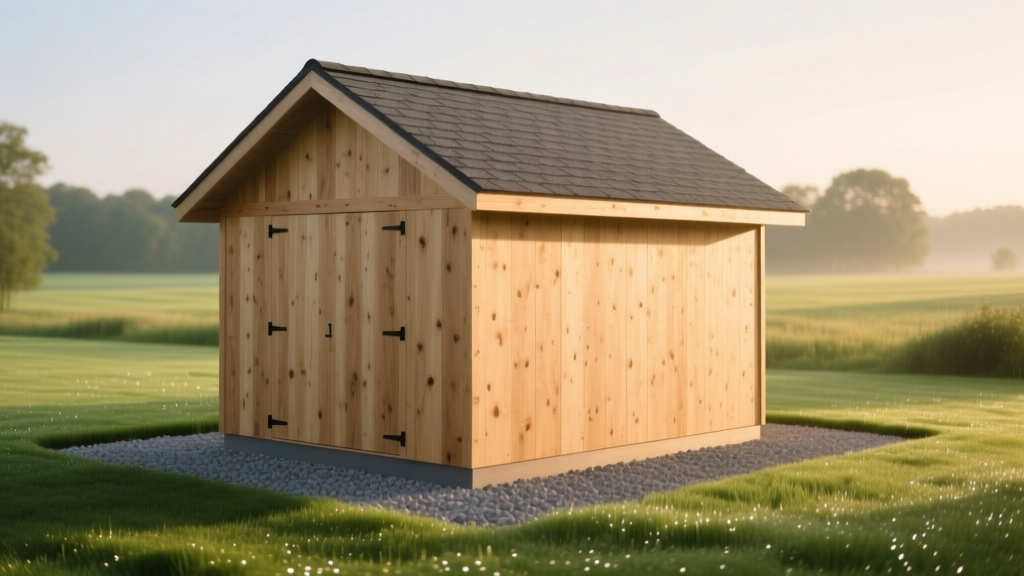
- Crushed Gravel Pad (4-inch depth, 57 or 57-graded crushed stone): Costs $216 to $432 ($1.50–$3.00 per sq. ft.). The most cost-effective and structurally sound option for standard storage sheds. The gravel allows for rapid drainage, preventing moisture wicking into the floor joists.
- Treated Timber Skids (4x4 pressure-treated lumber): Costs $100 to $250 total. Best suited for flat, stable terrain and prefabricated kits. Skids must be elevated slightly above grade using concrete deck blocks to prevent ground-contact rot.
Construction Methods: Stick-Built, Prefab Kits, and Custom Contractors
How you assemble the 144-square-foot structure dictates the labor portion of your budget, which typically ranges from $0 (sweat equity) to over $4,000 for specialized contractors.
1. The DIY Stick-Built Route
Building from scratch gives you total control over dimensions, roof pitch (a 6/12 pitch is ideal for shedding snow while maintaining interior headspace), and interior finishing. However, a 12x12 stick-built shed requires cutting and assembling approximately 85 to 110 individual framing members. Expect to invest 60 to 90 hours of labor. While you save on contractor markups, you must purchase tools like a pneumatic framing nailer, circular saw, and speed squares if you do not already own them.
2. Prefabricated and Panelized Kits
Companies like Tuff Shed or local Amish builders offer panelized kits where the walls and roof trusses are pre-assembled in a factory and delivered to your site. The cost to build a 12x12 shed using a mid-tier panelized kit ranges from $4,500 to $6,500, which often includes basic on-site assembly by a two-person crew. This method reduces construction time to a single day and ensures factory-precise framing, though you are limited to the manufacturer's standard floor plans and aesthetic options.
3. Custom Professional Build
Hiring a licensed general contractor or specialized shed builder to design and construct a custom 12x12 structure will cost between $65 and $100+ per square foot ($9,360 to $14,400+). This premium covers architectural drafting, permit pulling, heavy equipment rental for site grading, and master-carpenter labor. This route is only financially justifiable if the shed is being built as an Accessory Dwelling Unit (ADU), a fully insulated home office, or a high-end studio requiring complex HVAC and plumbing rough-ins.
Do not overlook municipal zoning laws. In many jurisdictions, a 12x12 shed (144 sq. ft.) exceeds the threshold for permit-exempt accessory structures, which is often capped at 100 or 120 square feet. Expect to pay $150 to $400 for a standard building permit. Furthermore, if your property requires a setback variance or if you need to trench a 50-foot electrical line from your main panel to the shed (costing $1,500 to $2,500 for a licensed electrician), your budget must expand accordingly. Always consult your local building department before purchasing materials.
The Final Decision Framework
To determine the most financially sound approach for your specific situation, apply this decision matrix:
- Choose a Metal Kit + Gravel Pad ($3,000 avg) if your sole requirement is secure, dry storage for yard equipment, you have a strict budget, and you do not plan to spend extended time inside the structure.
- Choose a Panelized Wood Kit + Timber Skids ($5,500 avg) if you want the aesthetic of a traditional wooden shed to match your home's architecture, need moderate durability, but lack the advanced carpentry skills required for stick-framing a roof.
- Choose Custom Stick-Built + Concrete Slab ($8,500+ avg) if you are building a climate-controlled workspace, home gym, or ADU that requires heavy load-bearing walls, interior drywall finishing, and permanent electrical integration.
Ultimately, the cost to build a 12x12 shed is highly elastic. By accurately assessing your functional requirements and matching them to the appropriate material and foundation tier, you can prevent costly over-engineering while ensuring the structure withstands local environmental stressors for decades. For further reading on regional labor rates and material fluctuations, Angi's comprehensive shed cost database provides localized pricing data updated throughout the year.
Written by
Elena RodriguezElena Rodriguez is a civil engineer and technical writer specializing in concrete technology, masonry systems, and ASTM/ACI compliance. She earned her B.S. in Civil Engineering from Texas A&M University and spent a decade at a materials testing laboratory, performing over 2,000 concrete compressive strength tests and masonry prism evaluations. Elena is an ACI-certified Field Testing Technician (Grade I) and a member of ASTM Committee C12 on Natural Building Stone. She currently consults on forensic engineering cases involving concrete failures and moisture intrusion. Based in San Antonio, TX, Elena is a proud member of the Society of Women Engineers (SWE) and coaches her daughter's FIRST Robotics team.
More from Elena Rodriguez
View all
Walls & Panels
Cost Analysis: Light Gauge Steel Framing Advantages and Disadvantages
Evaluate light gauge steel framing advantages and disadvantages through a strict cost analysis lens, comparing material, labor, and lifecycle expenses.
Aug 4, 2026

Walls & Panels
Gypsum Board Types: Exact Specifications, Thickness & Dimensions
Compare standard, Type X, and moisture-resistant gypsum board types. Get exact specifications, thicknesses, dimensions, and ASTM standards for your project.
Aug 4, 2026

Fire Resistance
Best Fire-Resistant Outdoor Decking Materials: 2026 Buyer Guide
Discover the best fire-resistant outdoor decking materials for 2026. Compare Class A PVC, aluminum, and hardwood options for WUI compliance and safety.
Aug 4, 2026