Smart Ways to Lower the Average Cost to Build a Pool in Arizona
Discover actionable strategies to lower the average cost to build a pool in Arizona, from beating caliche soil fees to choosing energy-efficient equipment.
Understanding the Baseline: Average Cost to Build a Pool in Arizona
When budgeting for a backyard oasis in the Grand Canyon State, the average cost to build a pool in Arizona typically ranges from $65,000 to $110,000 for a standard gunite installation. However, this baseline is heavily influenced by local geological and environmental factors that do not exist in other regions. Arizona’s intense UV exposure, high evaporation rates, and notoriously hard soil conditions can quickly inflate a standard pool quote by 15% to 25% if you are not strategic. Lowering your total expenditure does not mean sacrificing structural integrity; it requires a targeted approach to material selection, excavation planning, and long-term operational efficiency.
The Caliche Tax: Mitigating Excavation Overruns
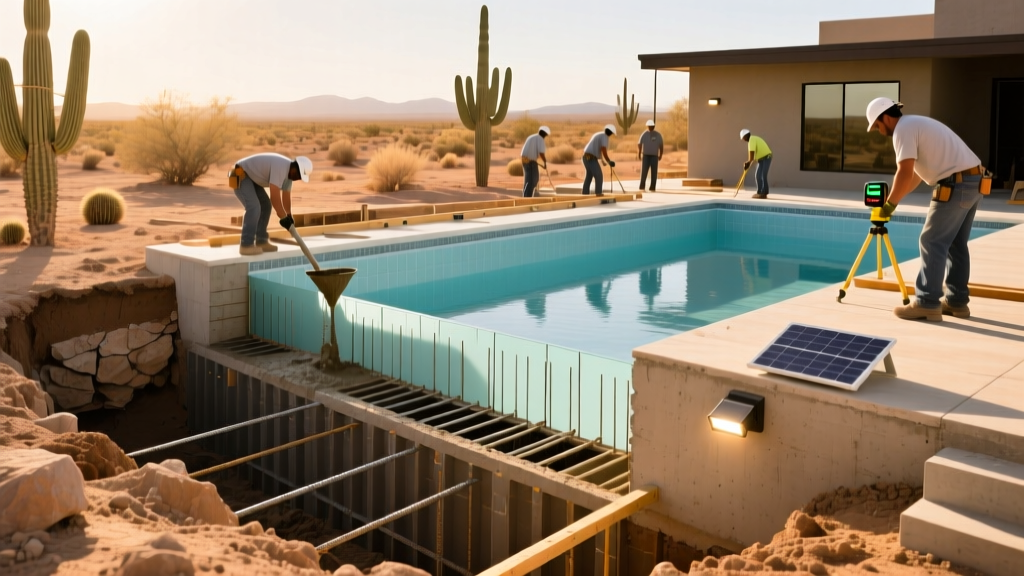
The single most unpredictable variable in Arizona pool construction is caliche—a dense, concrete-like layer of calcium carbonate found just below the topsoil in regions like Phoenix, Scottsdale, and Tucson. Standard excavation bids assume normal dirt. When an excavator hits caliche, the dig requires specialized heavy machinery, such as tractor-mounted rippers or even controlled blasting, which can add $3,000 to $8,000 to your final bill.
Shell Material Comparison: Gunite vs. Fiberglass vs. Vinyl
While gunite (a dry-mix spray concrete) is the traditional standard in Arizona, alternative materials offer significant upfront savings and faster installation times. Fiberglass pools, in particular, have seen massive quality improvements in UV-resistant gel coats, making them highly viable for the desert climate.
| Material | AZ Average Cost | Install Time | Desert Climate Pros & Cons |
|---|---|---|---|
| Gunite | $75,000 - $115,000 | 8 - 14 Weeks | Highly customizable but requires acid washing and frequent replastering due to hard water scaling. |
| Fiberglass | $55,000 - $85,000 | 3 - 6 Weeks | Non-porous surface resists algae and hard water stains. Limited to pre-manufactured shapes and sizes. |
| Vinyl Liner | $40,000 - $60,000 | 4 - 8 Weeks | Lowest upfront cost, but intense AZ UV rays degrade the liner rapidly, requiring replacement every 5-7 years. |
Money-Saving Verdict: If your yard accommodates a standard rectangular or kidney shape, a fiberglass shell will save you $15,000 to $30,000 upfront compared to gunite, largely due to reduced labor, eliminated steel rebar tying, and significantly less shotcrete rebound waste.
Equipment Selection: Beating the Arizona Heat and Grid
The mechanical heart of your pool dictates your monthly utility bills. Arizona’s long swimming season means your pump will run nearly year-round. According to the U.S. Department of Energy, upgrading to a variable speed pool pump can reduce pool pumping energy costs by up to 90% compared to single-speed models.
- The Pump: Specify a variable speed pump like the Pentair IntelliFlo VSF or Hayward EcoPro. While they cost $800 to $1,200 more upfront than a single-speed pump, Arizona’s high summer electricity rates (often exceeding $0.14 per kWh) mean the unit will pay for itself in energy savings within 14 to 18 months.
- Plumbing Pipe Sizing: Insist on 2-inch Schedule 40 PVC for all main suction and return lines, rather than the 1.5-inch pipes some budget builders use. Larger pipes reduce hydraulic friction, allowing the variable speed pump to run at lower, highly efficient RPMs without sacrificing water turnover.
- UV Protection: Above-ground plumbing in Arizona will become brittle and crack within three years if exposed to direct UV radiation. Require your builder to use UV-resistant PVC or apply a high-quality, UV-blocking acrylic paint to all exposed pipes and equipment pads.
Design Footprint Hacks to Slash Construction Quotes
Every square foot of water surface area and every linear foot of perimeter coping directly impacts your bottom line. Implementing these design modifications can shave thousands off your final invoice:
- Embrace the Plunge Pool: Downsizing from a traditional 15x30 foot pool to a 10x20 or 12x24 foot plunge pool reduces excavation, steel, concrete, and water volume by nearly 40%. In Arizona’s heat, a smaller, deeper pool (5 to 6 feet deep) stays significantly cooler than a large, shallow wading pool.
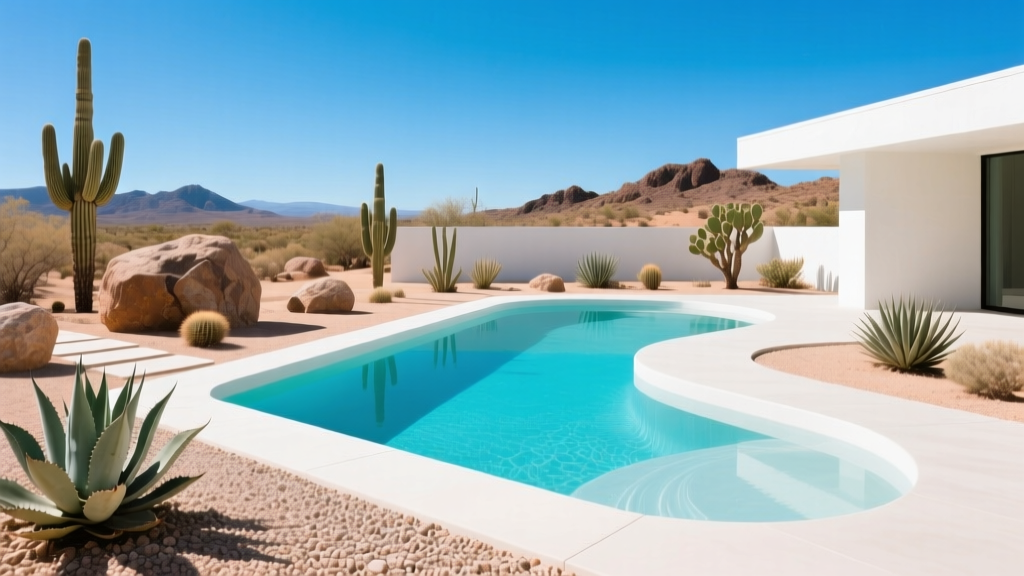
- Stick to Geometric Shapes: Freeform pools require complex wooden forming for the bond beam and result in higher shotcrete rebound waste. A strict rectangular or geometric design maximizes material efficiency and reduces the mason’s labor hours for tile and coping installation.
- Ditch the Integrated Spa: Adding a raised spillway spa to a gunite pool requires a separate plumbing manifold, an additional heater, and complex hydraulic balancing. This single feature routinely adds $10,000 to $18,000 to the project. If you want hot water, install a standalone, pre-fabricated acrylic hot tub on the adjacent patio for a fraction of the cost.
- Opt for Standard Coping: Instead of expensive travertine or custom bullnose stone, use standard pre-cast concrete coping. It can be stained or stamped to mimic natural stone at 60% of the cost.
Timing Your Build for Maximum Leverage
The pool construction industry in Arizona is highly seasonal. Builders are overwhelmed from March through June as homeowners rush to finish projects before the summer heat peaks. If you break ground in late October or November, contractors are actively looking to keep their crews busy during the winter slowdown. You can often negotiate a 5% to 10% discount on the total contract price, or secure free upgrades (like an automated pool cover or premium LED lighting packages) simply by building in the off-season.
Long-Term Operational Savings: Evaporation and Heating
Arizona’s low humidity and high winds create a massive evaporation problem. An uncovered pool in Phoenix can lose up to 1.5 inches of water per week during the summer, translating to thousands of gallons of lost, chemically treated water. The EPA’s WaterSense program highlights that using a pool cover can reduce evaporation by 70% to 95%.
While an automated safety cover is ideal, it costs upwards of $6,000. A highly effective, budget-friendly alternative is a liquid solar cover (like Natural Chemistry’s Cover-Free). This biodegradable, non-toxic liquid forms a microscopic monolayer on the water’s surface, slowing evaporation and retaining heat for less than $20 a month. Additionally, if you plan to heat the pool in the winter, skip the gas heater entirely. Arizona receives abundant winter sunshine; a solar pool heating system, consisting of roof-mounted polypropylene panels, costs roughly $3,000 to $5,000 to install and utilizes free thermal energy, eliminating the massive monthly propane or natural gas bills associated with traditional heaters.
Verifying Builder Quality and Standards
Cutting costs should never mean cutting corners on structural engineering. When reviewing bids, ensure the builder’s structural plans meet or exceed the standards outlined by the International Association of Certified Home Inspectors (InterNACHI) for pool construction. Specifically, verify that the gunite shell design calls for a minimum of 3/8-inch rebar spaced at 10-inch centers (or 1/2-inch at 12-inch centers) and that the concrete mix design achieves a minimum compressive strength of 4,000 PSI. A cheaper builder might space the steel at 14 inches or use a weaker 2,500 PSI mix, which will inevitably lead to structural cracking as the expansive Arizona soils shift during the monsoon season. Always demand a copy of the engineered soil and structural plans before signing.
Written by
Priya KapoorPriya Kapoor is a real estate market analyst and construction economics researcher with expertise in housing affordability, development feasibility, and infrastructure investment. She holds a Master of Regional Planning from Cornell University and previously worked as a senior analyst at CBRE's Investment Properties group, where she modeled returns for $4B in mixed-use development pipelines. Priya now runs an independent research practice advising developers, municipalities, and REITs on construction cost forecasting and market timing. She publishes the quarterly "BuildMat Market Pulse" report tracking material price indices across 12 commodity categories. Based in Austin, TX, Priya serves on the board of Habitat for Humanity Austin and is a marathon runner.
More from Priya Kapoor
View all
Construction Cost
Cost to Build a 1600 Sq Ft Home in 2026: Full Breakdown
Accurate 2026 cost to build a 1600 sq ft home—material, labor, and regional pricing breakdowns included. Plan your budget with real-time estimates.
Aug 11, 2026

Wood & Lumber
Name the Types of Wood for Pressure Treatment and Preservation
Learn how to name the types of wood best suited for pressure treatment. Compare species treatability, chemical retention levels, and 2026 preservation costs.
Aug 4, 2026

Stone & Masonry
Stone Veneer Suppliers Lindenhurst: 2026 Cost Analysis
Analyze 2026 stone veneer costs in Lindenhurst, NY. Compare local supplier pricing, delivery fees, and Suffolk County installation labor rates.
Aug 4, 2026