Average Cost to Build a Pool in California: A Detailed Breakdown
Discover the average cost to build a pool in California. Get a detailed breakdown of materials, labor, Title 24 compliance, and hidden site expenses.
The Baseline: Average Cost to Build a Pool in California
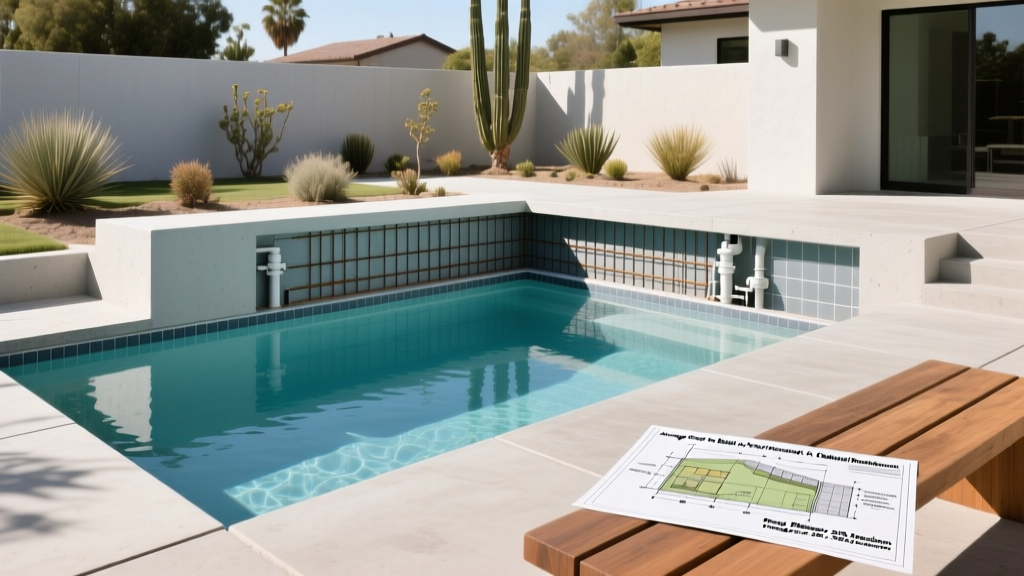
Calculating the average cost to build a pool in California requires looking beyond national averages. Due to stringent state building codes, high labor rates, and complex soil conditions, California pool construction carries a premium. For a standard 400-square-foot residential gunite (concrete) pool, the average cost ranges from $95,000 to $165,000. Fiberglass alternatives typically range from $75,000 to $120,000, though crane access limitations in densely populated areas can spike installation fees.
Quick Cost Snapshot (400 sq. ft. Pool)
- Gunite/Shotcrete: $95,000 – $165,000
- Fiberglass: $75,000 – $120,000
- Vinyl Liner: $55,000 – $85,000 (Rare in CA due to UV degradation and code restrictions)
- Average Cost per Square Foot: $235 – $415
Material and Construction Method Costs
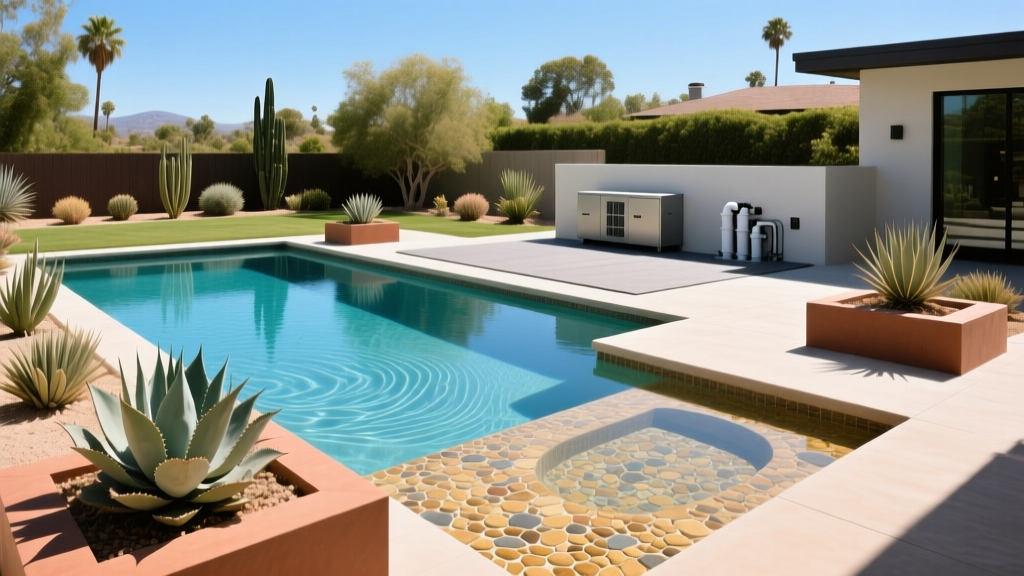
The choice of shell material dictates the baseline budget, but California's climate and seismic activity heavily favor gunite. Gunite offers the structural rigidity required to withstand soil shifts and allows for custom freeform designs that fit irregular suburban lots.
| Material | Base Cost Range | Lifespan | California-Specific Considerations |
|---|---|---|---|
| Gunite | $95k - $165k | 50+ years | Requires 28-day cure time; best for seismic zones; highly customizable. |
| Fiberglass | $75k - $120k | 25-30 years | Crane access required; limited to pre-manufactured shapes; gelcoat can fade in intense SoCal sun. |
| Vinyl | $55k - $85k | 10-15 years | Linings degrade quickly under high UV index; rarely permitted in new CA builds. |
Mandatory California Upgrades: Title 24 and Water Conservation
A significant portion of the average cost to build a pool in California is driven by the California Energy Commission's Title 24 Building Energy Efficiency Standards. These regulations mandate specific equipment that increases upfront costs but drastically reduces long-term utility expenses.
Energy Efficiency Mandates
- Variable Speed Pumps: Single-speed pumps are illegal for new pool construction in California. You must install a variable speed pump, such as the Pentair IntelliFlo3 VSF or Hayward TriStar VS, which cost between $1,800 and $2,800 (compared to $600 for a single-speed model).
- Plumbing Sizing: To reduce hydraulic head loss and improve pump efficiency, Title 24 requires minimum 2-inch diameter suction lines and 1.5-inch return lines. Upgrading from standard 1.5-inch PVC adds roughly $1,200 to $2,500 in material and trenching labor.
- LED Lighting: All underwater and landscape lighting must be LED. Standard incandescent fixtures are prohibited.
- Solar-Ready Plumbing: New builds must include capped, dedicated plumbing lines routed to the roof to accommodate future solar thermal heating panels, adding $800 to $1,500 to the initial plumbing rough-in.
Water Conservation and Drainage
Due to persistent drought conditions, local water authorities like the Metropolitan Water District of Southern California enforce strict water usage and drainage rules. Pools must be equipped with automatic safety covers or liquid solar covers to reduce evaporation. Furthermore, backwashing filters directly into storm drains is illegal; plumbing must be routed to the sanitary sewer or a dedicated dry well, which can add $2,500 to $5,000 for trenching and connection fees.
Site-Specific Hidden Costs in California
National cost estimators frequently fail to account for California's diverse and challenging topography. Use this decision matrix to anticipate hidden site costs based on your property's characteristics.
Expansive Soils (SoCal Valleys)
Adobe and expansive clay soils swell when wet and shrink when dry, causing gunite shells to crack.
Required Fix: Over-excavation (removing 2-3 feet of native soil) and backfilling with a compacted gravel base. Adds $4,000 - $8,000.
Bedrock and Granite (NorCal / Foothills)
Standard excavation equipment cannot dig through solid granite or sandstone bedrock.
Required Fix: Hydraulic hammer attachments or rock blasting. Adds $3,000 - $12,000 depending on yardage.
Hillside and Sloped Lots
Pools on slopes require extensive retaining walls and structural engineering to prevent lateral earth movement.
Required Fix: Engineer-stamped caissons and shotcrete retaining walls. Adds $15,000 - $40,000+.
Coastal Zones
Properties within the Coastal Commission jurisdiction face intense environmental scrutiny.
Required Fix: Coastal Development Permit (CDP) fees, biological surveys, and extended timeline delays. Adds $3,000 - $10,000 in soft costs.
Step-by-Step Cost Allocation: Where Your Budget Goes
Understanding how contractors allocate funds helps you identify where to value-engineer your project without compromising structural integrity or code compliance.
| Construction Phase | Percentage of Total | Estimated Cost ($120k Build) | Key Cost Drivers |
|---|---|---|---|
| Design, Engineering & Permits | 8% - 12% | $9,600 - $14,400 | Soils reports, structural engineering, city plan check fees. |
| Excavation & Soil Prep | 10% - 15% | $12,000 - $18,000 | Haul-away dump fees (very high in CA), over-excavation. |
| Steel, Plumbing & Electrical | 18% - 22% | $21,600 - $26,400 | Title 24 compliant equipment, 2-inch plumbing, copper bonding. |
| Shotcrete/Gunite Shell | 20% - 25% | $24,000 - $30,000 | Concrete mix design, pump truck access, nozzleman labor. |
| Interior Finish & Tile | 12% - 16% | $14,400 - $19,200 | PebbleTec Plus ($18/sq ft) vs standard white plaster ($6/sq ft). |
| Decking & Coping | 10% - 15% | $12,000 - $18,000 | Travertine coping, stamped concrete vs natural stone pavers. |
| Startup & Chemical Balancing | 2% - 4% | $2,400 - $4,800 | Initial water fill, acid wash, 30-day startup chemical regimen. |
Expert Framework: Maximizing ROI on Your California Pool
When evaluating bids, do not simply select the lowest price. In California's regulatory environment, an underpriced bid often means the contractor is planning to cut corners on Title 24 compliance or structural steel, which will result in failed city inspections or premature shell cracking.
Pro-Tip for California Homeowners: Always verify that your contractor's bid includes a 'soils report contingency.' If the excavator hits unmapped bedrock or a high water table, the contract should specify an exact per-cubic-yard rate for rock removal or dewatering pumps, rather than leaving it as an open-ended 'time and materials' blank check.
To optimize your budget, invest heavily in the permanent structural elements: thicker gunite shells (minimum 12 inches thick with #4 rebar on 10-inch centers), premium interior finishes like Quartzscapes or PebbleTec that resist California's hard water calcium scaling, and oversized plumbing. Conversely, you can defer costs on aesthetic elements like water features, elaborate lighting automation, and premium natural stone decking, which can be upgraded in later years without tearing out the pool shell.
Written by
Sarah WhitfieldSarah Whitfield is a chartered quantity surveyor (MRICS) and construction cost analyst with 15 years of experience in material pricing, procurement strategy, and project budgeting. She earned her degree in Construction Management from the University of Reading (UK) and has worked on projects ranging from $2M custom homes to $180M mixed-use developments across North America and Europe. Sarah currently leads cost estimating for BuildMat Insight, maintaining a proprietary database of 4,000+ material price points updated quarterly. She is a frequent contributor to RSMeans cost data panels and has presented at the International Cost Engineering Council (ICEC) congress. Based in Denver, CO, Sarah is an avid trail runner and volunteer mentor for Women in Construction.
More from Sarah Whitfield
View all
Wood & Lumber
What Are the Different Types of Wood? A Builder's Guide
Compare structural softwoods, finish hardwoods, and engineered lumber. Analyze Janka ratings, MOE values, and 2026 pricing for construction.
Aug 4, 2026

Walls & Panels
Steel Framing vs Wood Framing: Corrosion and Moisture Defense
Compare steel framing vs wood framing for moisture resistance. Learn about galvanized coatings, condensation risks, and corrosion protection strategies.
Jul 21, 2026

Stone & Masonry
How to Cut Stone Veneer: Wet Saw vs Grinder Comparison
Compare the best tools for cutting stone veneer. We review wet saws, angle grinders, and chop saws to help you achieve clean, chip-free cuts.
Jul 21, 2026