Average Cost to Build a Tiny House: Budget & Saving Strategies
Discover the true average cost to build a tiny house. Explore actionable money-saving strategies for trailers, framing, insulation, and utilities.
The True Baseline: Average Cost to Build a Tiny House
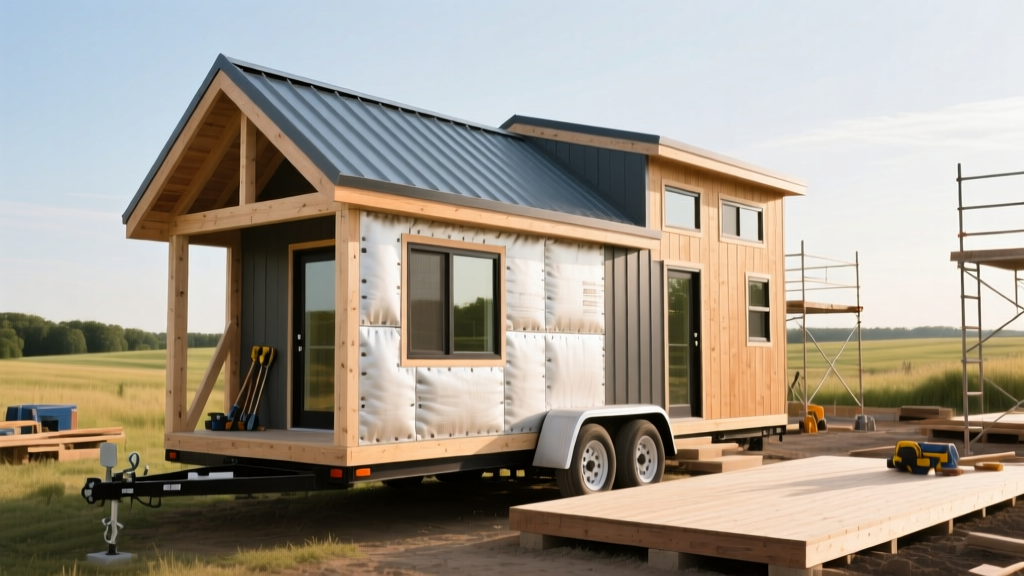
When calculating the average cost to build a tiny house, the final number depends entirely on your labor contribution, chassis type, and material grade. In the current market, a professionally built Tiny House on Wheels (THOW) ranges from $85,000 to $140,000. However, an owner-builder utilizing strategic material sourcing and DIY labor can realistically complete a high-quality 200-to-250-square-foot THOW for $35,000 to $55,000. Foundation-built tiny houses (often classified as Accessory Dwelling Units or ADUs) shift the budget heavily toward site work, averaging $150 to $250 per square foot once land prep and utility trenching are factored in.
| Build Type | Estimated Cost Range | Primary Cost Drivers |
|---|---|---|
| DIY THOW (Owner-Built) | $35,000 - $55,000 | Trailer, appliances, interior finishes |
| Pro-Built THOW (Turnkey) | $85,000 - $140,000 | Labor (40% of cost), custom millwork, RVIA certification |
| Foundation Build (ADU) | $45,000 - $75,000+ | Permits, concrete slab/pier, utility trenching, land |
To keep your build at the lower end of these spectrums without sacrificing structural integrity or energy efficiency, you must optimize the 'big three' budget sinks: the chassis, the building envelope, and the utility systems.
The Chassis: Don't Compromise, But Optimize
The trailer is the foundation of any THOW. A catastrophic failure here means the loss of the entire structure. Never use standard utility trailers; they lack the integrated flashing, drop-axles, and heavy-duty crossmembers required for residential framing.
Money-Saving Trailer Strategies
- Buy Direct from Specialty Fabricators: Skip the middleman RV dealers. Order a custom flatbed or deck-over tiny house trailer directly from manufacturers like Tiny Home Builders or Trailer Made. Expect to pay $5,500 to $7,500 for a 24-foot, 10k GVWR custom chassis.
- Choose a Flatbed Over a Deck-Over: Deck-over trailers sit higher, forcing you to build a 'step-down' floor frame to maintain legal highway height limits (13'6"). Flatbed trailers with drop-axles allow your subfloor to sit between the wheel wells, maximizing interior ceiling height without complex, lumber-heavy framing modifications.
Framing and Sheathing: Labor vs. Material Trade-offs
Wood framing remains the most cost-effective and lightweight option for THOWs. While steel framing saves weight, it requires specialized self-drilling screws, thermal break detailing to prevent condensation, and costs roughly 20% more in raw materials.
Advanced Framing Techniques
For foundation-built tiny houses, utilize Optimum Value Engineering (OVE), also known as advanced framing. According to the U.S. Department of Energy, spacing studs 24 inches on-center (rather than the traditional 16 inches) and using two-stud corners reduces lumber use by up to 15% while increasing the cavity space for insulation. Note: For THOWs subject to highway vibration, stick to 16-inch on-center 2x4 framing to maintain structural rigidity and meet RVIA fastening standards.
The Sheathing Dilemma: ZIP System vs. OSB + Housewrap
Huber's ZIP System sheathing costs approximately $40 to $48 per 4x8 panel, compared to $25 for standard OSB plus $150 for a roll of Tyvek housewrap. On paper, ZIP System is more expensive. In practice, it is a massive budget and time saver for DIYers.
- Labor Savings: ZIP System integrates the weather-resistant barrier into the panel. You simply tape the seams with proprietary ZIP tape. This eliminates the tedious process of stapling, taping, and flashing housewrap around 30+ tiny house corners and window bucks, saving 2 to 3 days of labor.
- Air Sealing: A tiny house has a high surface-area-to-volume ratio, making air leakage a primary driver of heating costs. ZIP system provides a continuous, code-recognized air barrier that drastically reduces the load on your mini-split HVAC system.
Insulation Strategies for Extreme Climates on a Budget
Insulation is where budget builds often fail, leading to mold from interstitial condensation or exorbitant heating bills. You must balance R-value, weight, and vapor control.
| Material | Cost per Board Foot | R-Value per Inch | Pros & Cons for Tiny Houses |
|---|---|---|---|
| Closed-Cell Spray Foam | $1.20 - $1.60 | R-6.5 to R-7 | Pros: Vapor barrier, adds structural shear strength, fills irregular cavities. Cons: Expensive, requires professional or costly DIY kits (e.g., Tiger Foam). |
| Rockwool Comfortbatt | $0.75 - $0.95 | R-4.2 (R-15 for 2x4) | Pros: Fire-resistant, hydrophobic (won't hold water), excellent soundproofing, DIY-friendly. Cons: Requires separate vapor barrier (6-mil poly) in cold climates. |
| Rigid XPS Foam Board | $0.80 - $1.10 | R-5 | Pros: High R-value, lightweight, great for subfloors and roof decks. Cons: Melts if exposed to heat, requires meticulous seam taping. |
Plumbing and Utility Hacks
Traditional residential copper or PVC plumbing is too heavy and rigid for a THOW. Standard PEX-B with crimp rings requires expensive crimping tools and creates bulky joints inside tight tiny house wall cavities.
Switch to PEX-A Expansion Fittings
Use Uponor PEX-A tubing with expansion fittings. The PEX-A material expands when stretched with a specialized (but relatively cheap) expansion tool, then shrinks tightly back over the fitting. This creates a joint that is actually stronger than the pipe itself, eliminates the need for bulky copper crimp rings, and drastically reduces the risk of leaks caused by highway vibration.
Toilet Selection: Composting vs. RV Hookups
If you plan to move frequently or live off-grid, a traditional flush toilet and black water tank will cost you thousands in installation and limit where you can park. High-end composting toilets like the Nature's Head retail for over $1,000. To save money without sacrificing hygiene, look at modern dry-flush or compact composting models like the Cuddy (approx. $600) or incinerating alternatives if you have abundant solar power. For water conservation, always specify EPA WaterSense certified fixtures, which can reduce indoor water use by 20%, shrinking the size (and cost) of the fresh water tanks you need to install.
Decision Matrix: Where to Splurge vs. Save
Allocating your budget correctly prevents costly retrofits. Use this framework to finalize your material list:
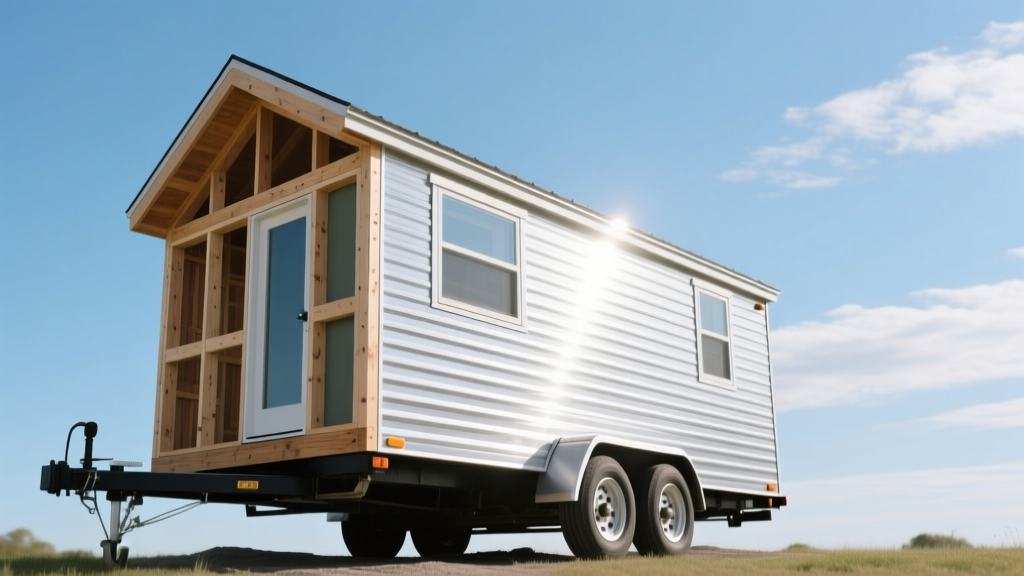
- SPLURGE: The Trailer & Axles. A failed axle on the highway will total your build. Buy a 10k+ GVWR custom tiny house trailer with electric brakes on all four wheels.
- SPLURGE: Flashing & Air Sealing. Spend the extra money on high-butyl flashing tapes (like Siga or ZIP) and meticulous window flashing. Water intrusion destroys tiny houses faster than any other factor.
- SAVE: Interior Millwork. Skip custom solid-wood cabinetry. Use high-quality birch plywood for cabinet boxes and source pre-finished doors. Use open shelving in the kitchen to save $1,500+ on upper cabinet materials and hardware.
- SAVE: Roofing Material. While standing seam metal roofs look premium, they are heavy and expensive ($12-$18/sq ft installed). A 60-mil TPO (Thermoplastic Polyolefin) single-ply membrane glued to a flat or low-slope roof deck costs roughly $4-$6/sq ft, weighs a fraction of metal, and offers a 20-year lifespan with minimal maintenance.
By prioritizing structural resilience in the chassis and envelope while aggressively value-engineering the interior finishes and utility systems, you can keep your average cost to build a tiny house well under the $50,000 mark while achieving a durable, four-season dwelling.
Written by
Marcus ChenMarcus Chen is a licensed structural engineer (PE) and building materials analyst with over 12 years of experience across residential, commercial, and industrial construction. He holds a Master of Science in Civil Engineering from UC Berkeley and spent six years at Thornton Tomasetti before transitioning to independent consulting and technical writing. Marcus specializes in material selection for seismic-prone regions, concrete reinforcement strategies, and lifecycle cost analysis. His work has been cited by the American Concrete Institute (ACI) and the Structural Engineers Association of California (SEAOC). When he is not on a job site or at his desk, you will find him hiking the Sierra Nevada or restoring a 1920s craftsman bungalow in Oakland, CA.
More from Marcus Chen
View all
Construction Cost
How Much Did the Eiffel Tower Cost to Build?
How much did the Eiffel Tower cost to build in 1889? We adjust for inflation and compare its budget to modern skyscraper construction.
Aug 4, 2026

Fire Resistance
What Is a Fire Resistant Material? Testing & Certification Guide
Discover what is a fire resistant material through ASTM and UL testing. Learn how fire ratings, certifications, and assemblies work in construction.
Aug 4, 2026

Construction Cost
How Much Did the Burj Khalifa Cost to Build?
How much did the Burj Khalifa cost to build? We break down the $1.5B project and extract 5 money-saving strategies for your next build.
Jul 30, 2026