How Much Does It Cost to Build a Picnic Table? Finance Guide
Discover how much it costs to build a picnic table. Compare material prices, DIY vs pro budgets, and financing options for HOAs and municipalities.
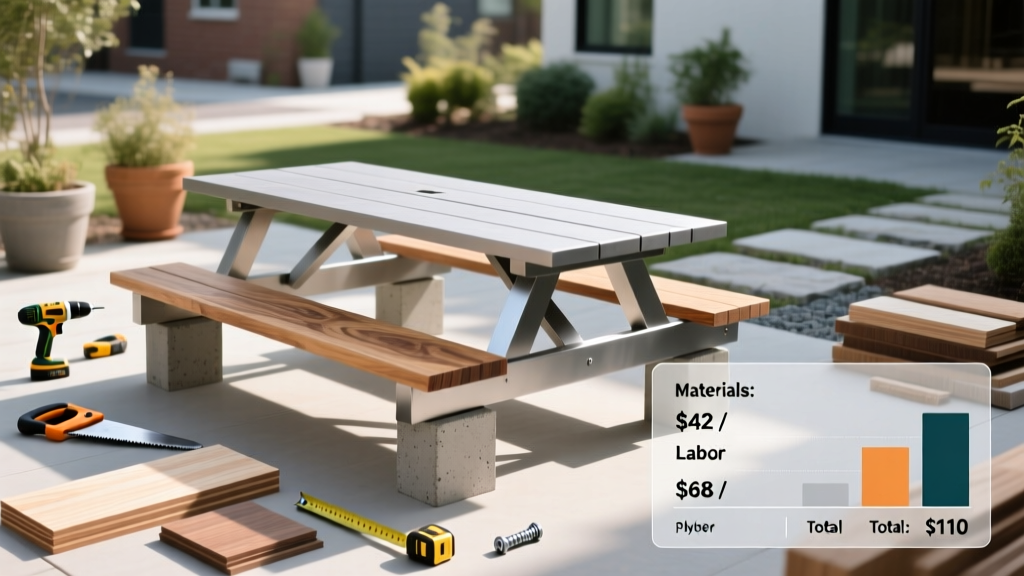
The True Cost of Building a Picnic Table
When determining how much it costs to build a picnic table, the final price tag depends heavily on the material grade, structural scale, and labor source. For a standard 8-foot residential DIY build, material costs range from $150 to $450. However, commercial-grade, ADA-compliant tables installed by professionals in municipal parks typically cost between $1,800 and $4,500 per unit. Understanding these baselines is only the first step; structuring the capital to fund the project—whether through personal credit, Homeowner Association (HOA) reserve draws, or municipal grants—requires a strategic financing approach.
Material Cost Breakdown by Wood Species
The primary cost driver in any picnic table build is the lumber. Selecting the right species involves balancing upfront capital expenditure against long-term maintenance liabilities. According to the University of Minnesota Extension, natural decay resistance varies wildly among species, directly impacting lifecycle costs.
| Wood Species | Upfront Lumber Cost (8-ft Table) | Lifespan (Unsealed) | Maintenance Requirement | Best Financing Fit |
|---|---|---|---|---|
| Pressure-Treated Pine | $120 - $180 | 10 - 15 Years | Annual Sealing | Credit Card / Out-of-Pocket |
| Western Red Cedar | $250 - $400 | 15 - 20 Years | Bi-annual Sealing | Personal Loan / HOA Reserve |
| Redwood (Construction Heart) | $450 - $650 | 20 - 25 Years | Low (Natural Oils) | HOA Capital Improvement |
| Tropical Hardwood (Ipe/Teak) | $700 - $1,100+ | 30 - 50+ Years | Minimal | Municipal Bond / Park Grant |
Financing Pathways by Project Scale
Funding a single backyard picnic table requires entirely different financial instruments than outfitting a community park or HOA common area with a dozen commercial units. Below is a strategic breakdown of financing mechanisms tailored to the project scope.
1. Residential & DIY Financing (Budgets Under $500)
For individual homeowners building a single cedar or pine table, the capital requirement is low enough that traditional bank loans are inefficient. Instead, leverage promotional retail financing.
- 0% APR Store Cards: Major home improvement retailers often offer 6-month special financing on purchases over $299. By purchasing your lumber, miter saw blades, and exterior sealant (e.g., TWP 100 Series) in a single transaction, you can float the cost interest-free.
- Micro-Personal Loans: If the picnic table is part of a larger $5,000 backyard landscaping overhaul, bundling the material costs into a 12-to-24-month personal loan (typically 8% to 12% APR) preserves your liquid cash flow.
2. HOA and Community Funding (Budgets $2,000 - $15,000)
When an HOA replaces rotting picnic tables in a neighborhood pavilion, the board must adhere to fiduciary governance. Funding typically comes from two sources:
- Operating Budget vs. Reserve Fund: Routine replacement of a single $300 table falls under the annual operating budget. However, replacing a fleet of 10 commercial tables ($8,000+) is a capital improvement. This requires a draw from the HOA’s Reserve Fund.
- Special Assessments: If the reserve study is underfunded, the board may levy a special assessment. To avoid homeowner pushback, many HOAs finance the $10,000 project via an HOA-specific commercial line of credit, spreading the repayment over 3 years through standard dues rather than a lump-sum assessment.
3. Municipal & Park Grants (Budgets $15,000+)
Municipalities installing heavy-duty, ADA-accessible picnic tables (which require extended ends for wheelchair clearance and poured concrete footings) face high labor and material costs. The National Recreation and Park Association (NRPA) highlights several funding avenues for these civic projects:
- Community Development Block Grants (CDBG): Administered by HUD, these federal grants can fund park infrastructure in low-to-moderate-income neighborhoods, covering both the commercial tables and the accessible concrete pads beneath them.
- Corporate Sponsorships & "Adopt-a-Park": Many municipalities offset the $3,500 per-unit cost of commercial fiberglass or thermoplastic-coated steel tables by selling plaque placements to local businesses, effectively achieving 100% private financing for public assets.
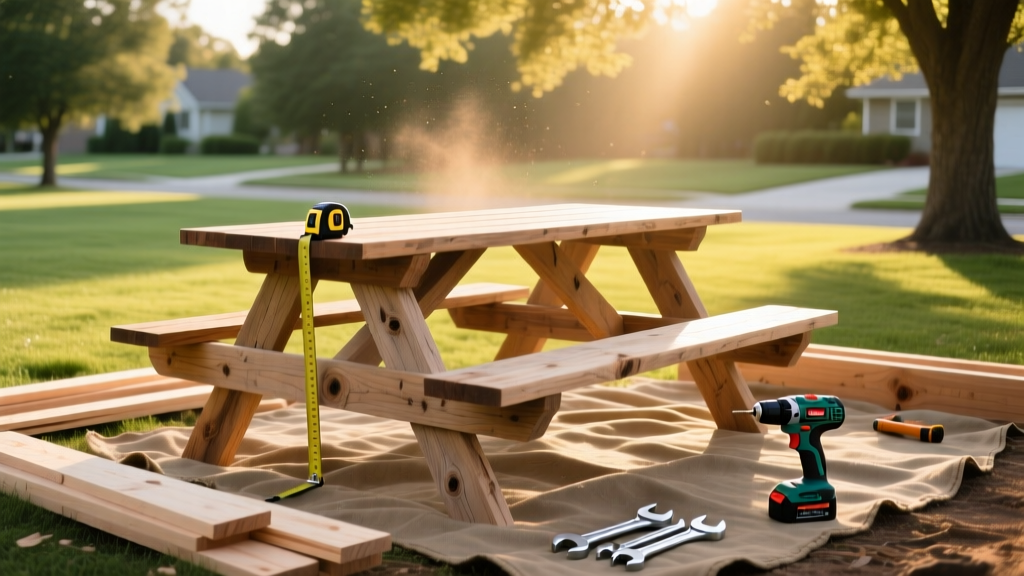
DIY vs. Professional Installation: ROI & Cost Matrix
Deciding whether to self-perform the labor or hire a contractor drastically alters the financing requirement. Professional installation introduces labor rates ($65–$120/hour), site prep, and concrete anchoring costs.
| Factor | DIY Build (Residential) | Professional Installation (Commercial) |
|---|---|---|
| Total Average Cost | $250 - $550 | $1,800 - $4,500 |
| Labor Cost | $0 (Sweat Equity) | $600 - $1,500 |
| Site Preparation | None (Surface Placed) | $300 - $800 (Concrete Footings) |
| Warranty | None | 1-5 Year Structural Warranty |
| Financing Complexity | Low (Retail Credit) | High (Capital Budgeting / Grants) |
Lifecycle Costing: The Net Present Value (NPV) of Wood Selection
Financially savvy builders do not just look at the initial receipt; they calculate the Net Present Value (NPV) of the asset over a 20-year horizon. A pressure-treated pine table costs $150 upfront but requires $40 in sealant and 4 hours of labor annually. Over 15 years, the maintenance costs eclipse the initial material savings.
The 20-Year Rule: If you are financing a community project with borrowed capital, always opt for the highest durability material your debt-service coverage ratio allows. Borrowing $800 at 7% APR for an Ipe hardwood table that requires zero maintenance for 30 years is mathematically superior to borrowing $200 for pine and paying for annual municipal maintenance crews out of the operating budget.
Step-by-Step Budgeting Framework
To secure accurate financing, build your estimate using this exact landed-cost formula:
- Base Lumber: Calculate board-feet based on your cut list (Standard 8ft table requires roughly 14 2x6s and 4 4x4s).
- Waste Factor: Add 15% for miscuts and wood defects.
- Corrosion-Resistant Hardware: Budget $45 for 1/2" hot-dipped galvanized carriage bolts, nuts, and exterior-grade lag screws.
- Consumables: $25 for exterior wood glue (polyurethane-based), $15 for sandpaper discs (60 to 120 grit).
- Finishing: $55 per gallon of penetrating oil sealer (covers ~150 sq ft; one table requires roughly half a gallon).
- Delivery/Freight: Add $60-$120 if you lack a truck and require flatbed delivery from the lumber yard.
By mapping your exact material requirements to the appropriate financing vehicle—whether a 0% retail card for a weekend DIY project or a municipal grant for a park overhaul—you ensure the picnic table is not just structurally sound, but financially viable from day one.
Written by
David NakamuraDavid Nakamura is a licensed architect (AIA) and construction technology writer focused on sustainable building methods, mass timber engineering, and high-performance building envelopes. He holds a Master of Architecture from the University of Washington and is a certified Passive House Consultant (CPHC). David spent eight years at the Seattle firm Mithun, where he led the design of three LEED Platinum projects, before founding his own practice specializing in net-zero residential design. He serves on the editorial advisory board of GreenBuilder Magazine and has authored peer-reviewed papers on cross-laminated timber (CLT) connections for the Journal of Structural Engineering. In his spare time, David teaches woodworking at Pratt Fine Arts Center and kayaks the Puget Sound.
More from David Nakamura
View all
Construction Cost
Labor Cost to Build a Deck Per Sq Ft: 2026 Installation Guide
Discover the exact labor cost to build a deck per sq ft in 2026. This installation guide breaks down contractor rates, complexity factors, and hidden fees.
Aug 4, 2026

Construction Cost
How Much Does It Cost to Build a 3 Bedroom House? Financing Guide
Learn exactly how much it costs to build a 3 bedroom house and explore 2026 financing options, construction loan types, and budget frameworks for your build.
Aug 4, 2026

Construction Cost
Cost to Build a Tennis Court: 2026 Guide
How much does it cost to build a tennis court in 2026? Breakdowns for asphalt, concrete, and synthetic surfaces plus fencing and lighting.
Jul 30, 2026