How to Finance the Cost to Build a Container House
Discover how to finance the cost to build a container house. Compare construction loans, FHA Title I, and personal loans with 2026 rate insights.
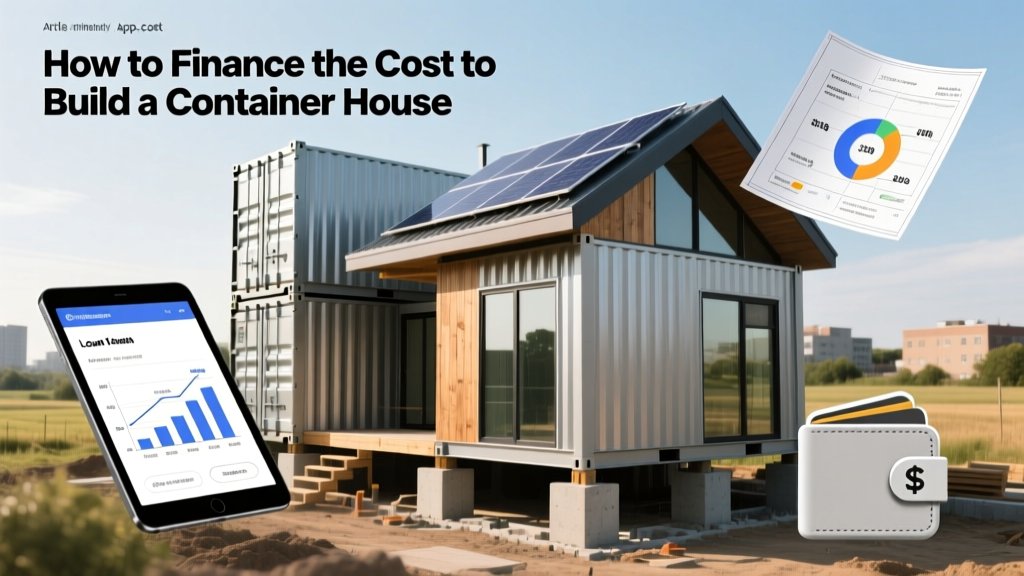
The Financial Reality of Container Construction
Shipping container homes bypass traditional stick-built supply chains, but they introduce severe friction in the residential lending market. The average cost to build a container house ranges from $150 to $250 per square foot for a fully finished, code-compliant structure. A standard 1,280-square-foot dual-container layout (using two 40-foot High Cube units) requires between $192,000 and $320,000 in capital. Securing financing for this requires navigating non-standard appraisal metrics, specialized loan products, and strict foundation mandates.
Unlike traditional homes where a buyer can secure a standard 30-year fixed mortgage post-construction, container builds require upfront capital structuring. Lenders view corrugated steel structures as non-traditional or modular construction, which triggers specialized underwriting guidelines regarding structural integrity, insulation, and long-term depreciation.
Why Traditional Mortgages Reject Container Homes
If you attempt to finance a container home using a standard conventional mortgage after the build is complete, you will likely face immediate denial due to the Sales Comparison Approach used by appraisers. Appraisers must find three to five comparable properties ("comps") sold within the last six months within a specific radius. Because container homes are statistically rare in most MLS databases, appraisers cannot establish a definitive market value.
Furthermore, government-sponsored enterprises (GSEs) like Fannie Mae and Freddie Mac require non-traditional homes to be permanently affixed to a foundation that meets specific engineering standards. If your container home is placed on pier blocks or a temporary skid, it is classified as personal property (chattel), not real estate, instantly disqualifying it from conventional real estate mortgages.
4 Viable Financing Routes for Container Construction
Route 1: Construction-to-Permanent Loans (The Gold Standard)
For ground-up container builds on owned land, a single-close construction-to-permanent loan is the most viable path. As outlined by the Consumer Financial Protection Bureau, these loans cover the build phase with interest-only payments, then automatically convert to a standard 30-year mortgage once the certificate of occupancy (CO) is issued.
- Down Payment: Typically 20% to 25% (lenders view non-traditional builds as higher risk).
- Draw Schedule: Funds are released in phases. A standard container draw schedule allocates 20% for site prep/foundation, 30% for container delivery and crane placement, 25% for steel cutouts and roofing, 15% for MEP (mechanical, electrical, plumbing) rough-ins, and 10% for interior finishes.
- Requirement: You must provide a fixed-price contract with a licensed general contractor; owner-builder container projects are rarely approved for this loan type.
Route 2: FHA Title I Property Improvement Loans
If you already own a primary residence and want to build a container home as an Accessory Dwelling Unit (ADU) or backyard office, the FHA Title I program is highly effective. According to HUD guidelines, this loan is secured by the existing property and can be used for structural additions.
- Maximum Loan Amount: $25,000 for a single-family structure (ideal for a single 20-foot container studio).
- Term: Up to 20 years.
- Advantage: Does not require a new appraisal of the land, only an assessment of the existing home's equity and the proposed ADU plans.
Route 3: HELOCs and Unsecured Personal Loans
For buyers who own their land outright, a Home Equity Line of Credit (HELOC) on an existing primary residence provides the cheapest capital. If you lack equity, unsecured personal loans from credit unions or specialized lenders (like LightStream or SoFi) can fund smaller builds. Personal loans cap around $100,000 with interest rates ranging from 8% to 15% in 2026, making them suitable only for single-container tiny homes or off-grid cabins where the total cost to build a container house remains under six figures.
Route 4: RV and Chattel Loans (For Off-Grid/Tiny Containers)
If your container home is built on a heavy-duty trailer chassis and retains its mobility, it can be financed as a Recreational Vehicle. This requires the build to meet NFPA 1192 or NOAH (National Organization for Alternative Housing) standards. Chattel loans feature shorter terms (10 to 15 years) and higher interest rates, but bypass local real estate appraisal requirements entirely.
Critical Warning: The Foundation Permanence Rule
To qualify for any real estate-backed loan (Construction-to-Perm or FHA), your container home must be welded to a permanent, frost-line-compliant foundation. Pier-and-beam or helical pile foundations are acceptable only if they are engineered to resist uplift and lateral loads per local seismic codes. Containers placed on concrete slabs without structural tie-downs will fail the final underwriting inspection.
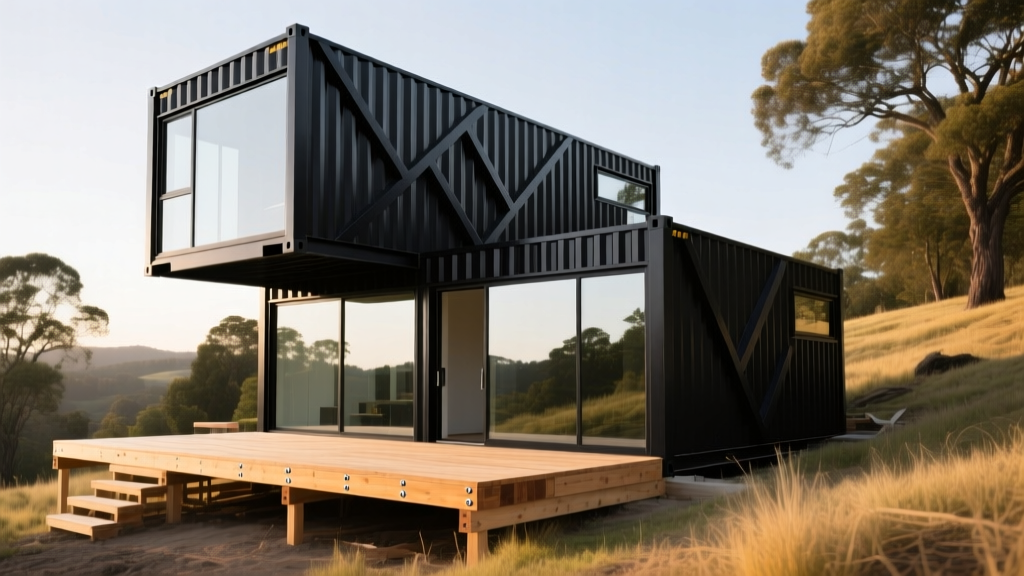
Container Home Financing Decision Matrix
| Loan Type | Max Amount | Est. Rate (2026) | Best Use Case |
|---|---|---|---|
| Construction-to-Perm | $750,000+ | 6.5% - 8.0% | Primary residence, multi-container builds |
| FHA Title I | $25,000 | 5.5% - 7.0% | Backyard ADU, single 20ft container studio |
| HELOC | Up to 85% LTV | 7.5% - 9.5% | Landowners funding custom builds |
| Chattel / RV Loan | $150,000 | 8.0% - 11.0% | Mobile tiny homes on trailer chassis |
Hidden Costs That Derail Loan Approvals
When submitting your budget to a construction loan underwriter, omitting the following container-specific costs will result in a rejected draw schedule or a mid-build capital shortfall.
1. Structural Engineer Stamps for Cutouts
The corrugated steel walls of a shipping container provide its structural integrity. Cutting large openings for windows, doors, or pass-throughs between joined containers weakens the load-bearing capacity. Lenders and local building inspectors require a licensed structural engineer to design steel box-tube reinforcement for every cutout over 4 feet. Budget $800 to $1,500 per engineering stamp, plus $150 per hour for specialized on-site MIG welding.
2. Closed-Cell Spray Foam Insulation
Steel is a massive thermal bridge. Using traditional fiberglass batts inside a container traps condensation against the interior steel walls, leading to rapid, hidden rust and mold. Building codes and rigorous appraisers mandate closed-cell spray foam to create an impermeable vapor barrier. You must apply a minimum of 2 inches (R-14) to walls and 3 inches to the ceiling. At $1.50 to $3.00 per board foot, this adds $4,500 to $7,000 to a standard 1,280 sq ft build. Reference the International Residential Code (IRC) for specific vapor retarder requirements in your climate zone.
3. Crane Mobilization and Rigging
A standard 40-foot High Cube container weighs 8,500 lbs empty. Placing it onto a foundation requires a 50-ton to 100-ton mobile crane. Crane mobilization fees (transporting the crane to your site) cost $1,500 to $3,000 per day, plus $250 to $400 per hour of operation. If your site has overhead power lines or poor soil bearing capacity, you may need to rent specialized crane mats, adding another $1,200 to the logistics budget.
Step-by-Step: Securing Your Container Home Loan
- Acquire and Zone the Land: Before approaching lenders, verify that local zoning ordinances permit modular or steel-frame construction. Some HOAs and municipal boards explicitly ban exposed corrugated exteriors, requiring you to budget for exterior cladding (like stucco or wood siding) to secure the loan.
- Finalize Architectural and Engineering Plans: Lenders will not issue a pre-approval based on Pinterest sketches. You need stamped architectural plans, a structural engineering report, and a detailed line-item budget from a licensed contractor.
- Apply for Construction Pre-Approval: Submit your plans, land appraisal, and contractor credentials to a portfolio lender or credit union. Portfolio lenders are preferable, as they keep the loan on their own books rather than selling it to Fannie Mae, allowing for more flexible underwriting on non-traditional homes.
- Establish the Draw Escrow: Once approved, the loan funds are placed in escrow. Work with your contractor to establish a 5-to-6 phase draw schedule tied to municipal inspections (e.g., Draw 2 is only released after the foundation passes the municipal concrete pour inspection).
Written by
Sarah WhitfieldSarah Whitfield is a chartered quantity surveyor (MRICS) and construction cost analyst with 15 years of experience in material pricing, procurement strategy, and project budgeting. She earned her degree in Construction Management from the University of Reading (UK) and has worked on projects ranging from $2M custom homes to $180M mixed-use developments across North America and Europe. Sarah currently leads cost estimating for BuildMat Insight, maintaining a proprietary database of 4,000+ material price points updated quarterly. She is a frequent contributor to RSMeans cost data panels and has presented at the International Cost Engineering Council (ICEC) congress. Based in Denver, CO, Sarah is an avid trail runner and volunteer mentor for Women in Construction.
More from Sarah Whitfield
View all
Wood & Lumber
What Are the Different Types of Wood? A Builder's Guide
Compare structural softwoods, finish hardwoods, and engineered lumber. Analyze Janka ratings, MOE values, and 2026 pricing for construction.
Aug 4, 2026

Walls & Panels
Steel Framing vs Wood Framing: Corrosion and Moisture Defense
Compare steel framing vs wood framing for moisture resistance. Learn about galvanized coatings, condensation risks, and corrosion protection strategies.
Jul 21, 2026

Stone & Masonry
How to Cut Stone Veneer: Wet Saw vs Grinder Comparison
Compare the best tools for cutting stone veneer. We review wet saws, angle grinders, and chop saws to help you achieve clean, chip-free cuts.
Jul 21, 2026